

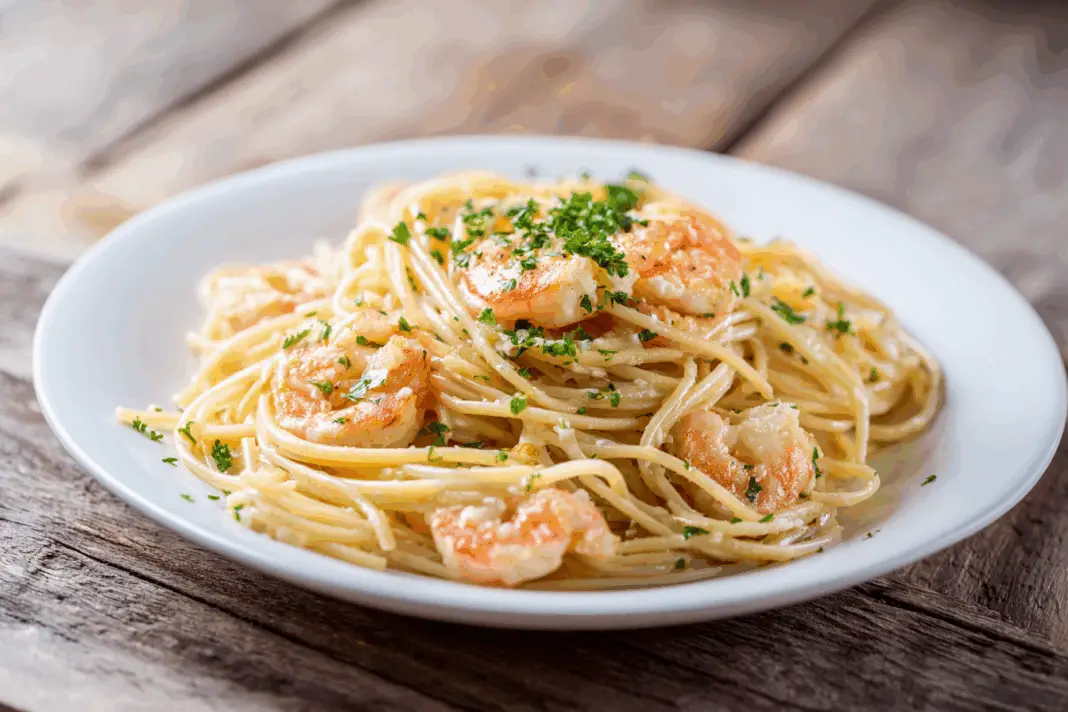
Ever find yourself standing in front of the fridge at 6 PM, wondering how to make something that feels special without spending two hours in the kitchen? That’s where this Mediterranean garlic shrimp pasta comes in. It takes about 20 minutes from start to finish, uses ingredients most people already have, and somehow manages to taste like something from a fancy Italian restaurant. The secret is in the simple sauce made with white wine, garlic, fresh lemon, and tomatoes that all come together while your pasta boils. No complicated techniques, no specialty equipment, just good food fast.
Why this pasta works for busy weeknights
The genius of this recipe is that everything happens at once. While your pasta cooks in salted boiling water, the shrimp takes maybe four minutes in a hot pan with olive oil. Raw shrimp goes from grey and floppy to that pretty pink color fast, so there’s no waiting around. Once the shrimp is done, it sits on a plate while the sauce comes together in the same pan, which means fewer dishes to wash later. The whole thing happens so quickly that by the time you’ve set the table and poured a glass of wine, dinner is ready.
What makes this shrimp pasta recipe different from complicated Italian dishes is how forgiving it is. There’s no cream that might curdle or delicate timing that ruins everything if the phone rings. The sauce is basically garlic, onions, white wine, lemon juice, and fresh tomatoes tossed with hot pasta. If dinner runs five minutes late, nothing gets ruined. If someone shows up hungry earlier than expected, this recipe still works. It’s the kind of meal that makes weeknight cooking feel manageable instead of stressful.
Picking the right pasta shape matters
Not all pasta works the same way with light sauces. Long, thin pasta like spaghetti or angel hair is perfect here because the strands catch the garlicky lemon wine sauce without drowning in it. When someone twirls their fork, they get pasta, shrimp, and sauce all in one bite. Thicker or tube-shaped pastas like penne or rigatoni don’t work as well because they’re meant for chunky, heavy sauces that can fill up those little tubes. With this light Mediterranean sauce, those shapes would just taste bland.
If the goal is eating something that feels restaurant-quality, presentation matters too. Thin pasta looks more elegant on the plate and lets the pink shrimp and bright red tomatoes stand out. Plus, it cooks faster than thick pasta, which keeps this meal in the 20-minute zone. Some people prefer whole grain pasta for extra fiber, and that works fine here as long as it’s a long, thin shape. Just remember to salt the pasta water well because that’s where most of the pasta’s seasoning comes from. Under-salted pasta water makes the whole dish taste flat.
How to cook shrimp without ruining it
Shrimp is one of those proteins that goes from perfect to rubbery in about 30 seconds if someone isn’t paying attention. The trick is cooking it separately from everything else so there’s control over exactly when it’s done. In a hot pan with a tablespoon of olive oil over medium-high heat, large shrimp needs about two minutes per side. It’s ready when it turns from grey to that opaque pinkish-white color and starts to curl up slightly. Overcooked shrimp feels like chewing on pencil erasers, so better to pull it off the heat a little early.
Most grocery stores sell shrimp already peeled and deveined, which saves a ton of time. If the shrimp is frozen, it needs to thaw completely before cooking. The easiest way is leaving it in the fridge overnight, but for last-minute meals, putting the frozen shrimp in a bowl of cold water for about 15 minutes works fine. Never cook frozen shrimp straight from the freezer because it releases too much water in the pan and ends up steaming instead of getting that nice sear. Pat the thawed shrimp dry with paper towels before cooking so it browns instead of just turning pink and sad.
Building the sauce while pasta cooks
Once the shrimp is out of the pan, that same pan becomes the base for the sauce. There’s already shrimp flavor in there from cooking, plus little brown bits stuck to the bottom that add tons of taste. Start with chopped red onion and minced garlic cooked in a little olive oil over medium-low heat. Add some dried oregano, salt, and red pepper flakes here. The key is not burning the garlic, which turns bitter and ruins everything. Cook it just until it smells amazing, maybe one to two minutes while stirring constantly.
Then comes the white wine, which deglazes the pan and picks up all those stuck-on bits. Use something drinkable like Pinot Grigio or Sauvignon Blanc, not cooking wine from a bottle that’s been sitting around for months. Let the wine bubble and reduce for about a minute, then add lemon zest and fresh lemon juice. The lemon is what makes this sauce bright and restaurant-worthy instead of heavy. At the very end, toss in chopped fresh parsley and diced tomatoes for just 30 to 40 seconds. The tomatoes should still have some bite to them, not turn into mush.
The pasta water trick everyone should know
Before draining the pasta, scoop out at least a cup of that starchy cooking water and set it aside. This is the secret ingredient that professional chefs use to make sauce stick to pasta. That cloudy water is full of starch that acts like glue, helping the sauce coat every strand instead of just pooling at the bottom of the bowl. When the drained pasta goes into the pan with the sauce, add a few splashes of pasta water and toss everything together over medium heat for about 30 seconds.
The sauce should look glossy and cling to the pasta, not watery or separated. If it seems too thick, add more pasta water a little at a time. If it’s too thin, let it cook for another 30 seconds while tossing. This is also when the cooked shrimp goes back in, just long enough to warm through. The whole thing should look cohesive, like the pasta, shrimp, and sauce all belong together. Some people like adding a sprinkle of Parmesan cheese at this point, which melts into the sauce and adds another layer of flavor.
Making this meal ahead of time
Sometimes the best way to handle busy weeknights is doing some prep the night before. For this recipe, cook the pasta and make the sauce one evening, then store them separately in the fridge in containers with tight lids. Don’t cook the shrimp until right before serving the next day because it only takes four minutes and reheated shrimp gets rubbery fast. When it’s time to eat, warm up the sauce and pasta together in a pan over medium heat, adding a splash of pasta water to loosen things up.
Once everything is hot, cook the fresh shrimp and toss it in. This method actually makes weeknight dinners even faster because all the chopping and sauce-making is already done. Leftovers keep in the fridge for about two days, assuming the shrimp was fresh or properly frozen before cooking. To reheat, warm everything over medium heat with a little liquid added so the pasta doesn’t dry out. Keep the shrimp separate until the last minute to avoid overcooking it. A creamy shrimp pasta variation also works well for make-ahead meals.
What to serve alongside shrimp pasta
This pasta is pretty much a complete meal on its own, but adding a simple salad makes it feel more like a proper dinner. A basic green salad with olive oil and vinegar works fine, or something with more substance like a white bean salad or panzanella when tomatoes are in season. The key is keeping the sides simple so they don’t compete with the pasta. Crusty bread is always a good call because there’s usually extra sauce at the bottom of the bowl that’s too good to waste.
For vegetables, something green and simple works best. Roasted broccoli, sautéed green beans, or even a handful of arugula tossed with the hot pasta at the end all work. Skip anything with a heavy cream sauce or strong cheese since the pasta already has plenty going on. A chilled white wine like the one used in the sauce makes sense here, or even just sparkling water with lemon. The meal itself is light enough that people won’t feel stuffed afterward, which is nice for weeknight dinners when there’s still homework or laundry to deal with.
Common mistakes to avoid
The biggest mistake people make with this recipe is overcooking the shrimp. It’s tempting to leave it in the pan longer just to be sure, but shrimp cooks so fast that an extra minute turns it tough and chewy. Pull it off the heat when it’s just turned pink and still looks slightly translucent in the very center. It finishes cooking when it goes back in the hot pasta at the end. Another common problem is not salting the pasta water enough. It should taste like the ocean, not like regular tap water with a pinch of salt.
Using pre-minced garlic from a jar instead of fresh cloves makes the sauce taste flat and slightly metallic. Fresh garlic only takes a minute to chop and makes a huge difference. Same with bottled lemon juice versus fresh lemons. The bottled stuff tastes processed and doesn’t have that bright, fresh quality that makes this sauce special. Finally, don’t skip the pasta water step. Just draining the pasta and dumping it in the pan with sauce doesn’t work the same way. That starchy water is what makes everything come together and taste restaurant-quality instead of like separate components thrown on a plate.
Why fresh ingredients make a difference
This recipe only has a handful of ingredients, so each one really matters. Fresh tomatoes taste completely different from canned ones here because they only cook for about 30 seconds and still have texture and sweetness. Vine-ripened tomatoes from the farmers market are ideal, but even regular grocery store tomatoes work fine if they’re ripe. Fresh parsley adds a bright, herby note that dried parsley just can’t match. It’s worth spending two dollars on a bunch of fresh parsley instead of using the dusty jar from the back of the spice cabinet.
The lemon is another place where fresh makes all the difference. Zesting the lemon releases oils that smell amazing and taste completely different from lemon juice alone. Use a microplane or the small holes on a box grater to get just the yellow part of the peel, not the bitter white pith underneath. Fresh garlic cloves that get minced right before cooking have a sharp, pungent flavor that mellows into something sweet and delicious. Pre-minced garlic in oil sits around in a jar and loses most of that fresh garlic punch. For a meal that only takes 20 minutes, using fresh ingredients is what makes it taste like something from a restaurant instead of just another quick dinner.
Sometimes dinner doesn’t need to be complicated to feel special. A simple pasta with shrimp, garlic, lemon, and wine checks all the boxes for a meal that’s fast, satisfying, and impressive enough for company. The whole thing happens while the pasta boils, uses one pan for the sauce and shrimp, and tastes like something that took way more effort than it actually did. Next time the clock hits 6 PM and the fridge looks uninspiring, this recipe is the answer.
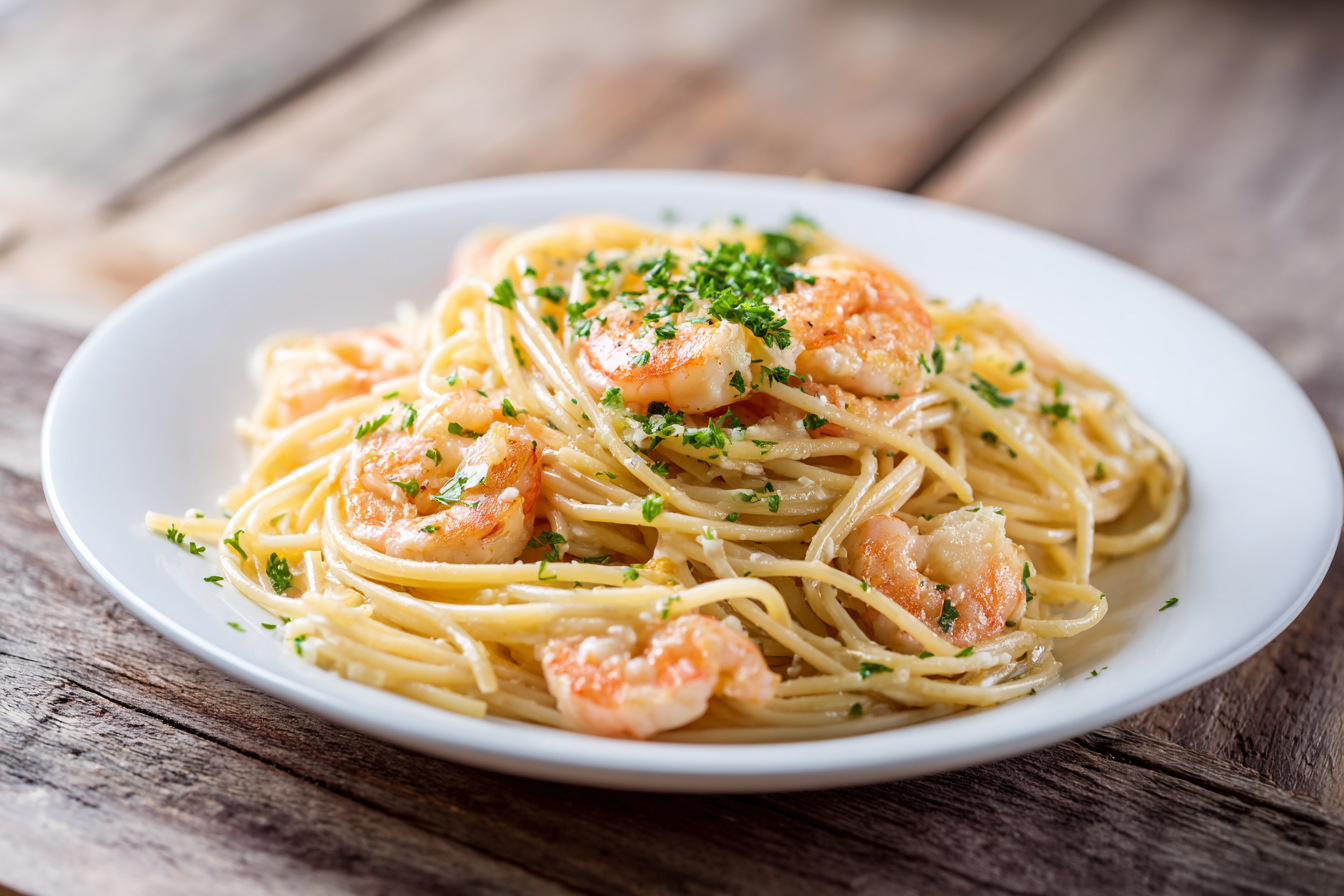
Mediterranean Garlic Shrimp Pasta
Cuisine: Italian, Mediterranean4
servings10
minutes10
minutes513
kcalA bright and garlicky shrimp pasta tossed in white wine and lemon sauce that tastes like fine dining at home.
Ingredients
3/4 lb thin spaghetti
Kosher salt and black pepper
Extra virgin olive oil
1 lb large shrimp, peeled and deveined
1/2 red onion, chopped
5 garlic cloves, minced
1 teaspoon dry oregano
1/2 teaspoon red pepper flakes
1 cup dry white wine (Pinot Grigio)
1 lemon, zested and juiced
Large handful chopped fresh parsley (about 1 cup packed)
2 to 3 vine ripe tomatoes, chopped
Parmesan cheese, to taste
Directions
- Bring a large pot of salted water to boil and cook the pasta according to package directions, about 9 minutes. Before draining, reserve at least one cup of the starchy pasta cooking water. Drain the pasta well and set aside.
- While pasta cooks, heat 1 tablespoon extra virgin olive oil in a large pan over medium-high heat until shimmering but not smoking. Add the shrimp in a single layer and cook for 2 to 3 minutes per side until they turn pink and opaque. Transfer cooked shrimp to a plate and set aside.
- In the same pan, add a little more olive oil if needed and reduce heat to medium-low. Add the chopped onions, minced garlic, oregano, and red pepper flakes with a pinch of salt. Cook for 1 to 2 minutes, stirring constantly to prevent the garlic from burning.
- Pour in the white wine and scrape up any browned bits stuck to the bottom of the pan. Let the wine cook and reduce for about 1 minute, then add the lemon zest and fresh lemon juice. Stir to combine.
- Add the chopped parsley and diced tomatoes to the pan. Toss everything together for just 30 to 40 seconds so the tomatoes warm through but still have a good bite. Season with kosher salt to taste.
- Add the drained pasta to the pan with the sauce and toss to coat evenly. Add a few splashes of the reserved pasta water to help the sauce coat the noodles and reach desired consistency. The sauce should look glossy and cling to the pasta.
- Return the cooked shrimp to the pan and toss gently until warmed through, about 30 seconds. Remove from heat immediately to prevent overcooking the shrimp.
- Finish with a sprinkle of grated Parmesan cheese and additional red pepper flakes if desired. Serve immediately with extra lemon wedges on the side.
Notes
- If making ahead, cook pasta and prepare sauce one night in advance. Store separately in the fridge. Cook shrimp fresh just before serving for best texture.
- Leftovers can be stored in the fridge for up to 2 nights. Reheat gently over medium heat with a splash of liquid, adding shrimp at the end to avoid overcooking.
- Use drinkable white wine like Pinot Grigio or Sauvignon Blanc for the best flavor. Avoid cooking wine from a bottle.
- Frozen shrimp must be completely thawed and patted dry before cooking to get a proper sear instead of steaming.
- Don’t skip salting the pasta water generously. It should taste like the ocean for properly seasoned pasta.
Frequently asked questions
Q: Can I use frozen shrimp for this recipe?
A: Yes, but make sure to thaw it completely first. Put frozen shrimp in a bowl of cold water for about 15 minutes or leave it in the fridge overnight. Pat the shrimp dry with paper towels before cooking so it gets a nice sear instead of just steaming in the pan.
Q: What if I don’t have white wine?
A: Substitute with chicken broth or vegetable broth mixed with a tablespoon of white wine vinegar or lemon juice. The wine adds acidity and depth, so the vinegar or extra lemon helps mimic that brightness. The sauce won’t taste exactly the same but it still works.
Q: How do I know when shrimp is done cooking?
A: Shrimp is done when it turns from grey and translucent to pink and opaque. It usually curls into a C-shape when cooked. If it curls all the way into an O-shape, it’s overcooked. Pull it off the heat when it’s just turned pink since it finishes cooking when added back to the hot pasta.
Q: Can I make this pasta dish without tomatoes?
A: Absolutely. The tomatoes add color and a bit of freshness but aren’t essential. The sauce works fine with just garlic, onion, white wine, lemon, and parsley. Some people add a handful of baby spinach or arugula at the end instead of tomatoes for a different variation.
