

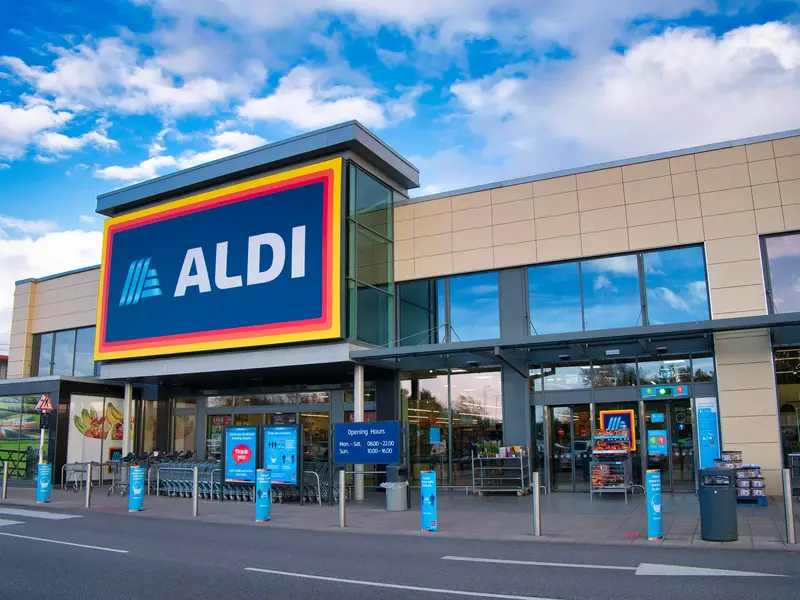
If you’ve been sleeping on Aldi, 2026 is the year the discount grocery chain is going to be pretty hard to ignore. The German-born retailer is turning 50 in America this year, and instead of throwing a quiet birthday party, it’s basically remodeling the house, repainting the walls, and inviting the entire neighborhood over. We’re talking hundreds of new stores, a complete packaging overhaul, a Times Square debut, and a digital makeover that actually sounds useful. Here’s everything that’s changing — and what it means for your grocery bill.
180 New Stores Across 31 States
Let’s start with the sheer scale of what Aldi is doing. The company plans to open more than 180 new stores this year, spread across 31 states. By the time December rolls around, Aldi expects to be operating close to 2,800 locations. That’s up from roughly 2,600 right now. And this isn’t some vague corporate promise — it’s part of a $9 billion, five-year investment plan with a target of 3,200 stores by the end of 2028.
To put that growth in perspective, CEO Atty McGrath said one in three American households shopped at Aldi in 2025. The chain also added 17 million new customers last year alone. That’s not a niche grocery store anymore. That’s a major national player making a serious run at the big dogs.
Maine, Colorado, and the Push West
For years, Aldi has been concentrated in the Midwest, East Coast, and parts of the South. That’s changing fast. Maine will become Aldi’s 40th state with a new store opening in Portland. If you live in Maine and you’ve been hearing friends in other states rave about Aldi’s $3 wine or those infamous Aldi Finds, your time has finally come.
But the bigger story is out West. Colorado will get its first Aldi stores within the next five years, with more than 50 locations planned for the Denver and Colorado Springs markets. That expansion comes with its own distribution center to keep those shelves stocked. Phoenix is getting 10 new stores in 2026, with plans for 40 total by 2030. Las Vegas, which just got its first four Aldi stores in 2025, will double its store count by the end of the decade.
The Southeastern Grocers Takeover
This is probably the most interesting piece of the expansion puzzle. In 2024, Aldi purchased Southeastern Grocers, the parent company of Winn-Dixie and Harveys Supermarket. Instead of building new stores from scratch in the Southeast — which takes time, permits, land deals, and a lot of money — Aldi is converting those existing stores into Aldi locations.
About 80 of those conversions will happen in 2026, with more than 200 total expected by the end of 2027. Aldi has already flipped nearly 90 of the acquired stores. So if your local Winn-Dixie suddenly looks different and the prices dropped, now you know why. It’s a smart strategy — why build when you can renovate?
An Aldi in Times Square? Seriously.
Yes, the discount grocer known for quarter-operated shopping carts and no-frills checkout lines is opening a location in one of the most expensive zip codes on Earth. The new Times Square store will sit at 312 West 42nd Street inside The Ellery, a new luxury residential building. At roughly 25,000 square feet, it’ll be about double the size of a typical Aldi.
For New Yorkers who know the pain of paying $7 for a box of cereal at a bodega, this is a big deal. Affordable groceries in Midtown Manhattan? That’s the kind of thing that makes people rethink their entire weekly routine. Whether it stays affordable given NYC rent remains to be seen, but on paper, this is a power move.
The Biggest Packaging Overhaul in Aldi History
Here’s where things get really interesting for regular Aldi shoppers. If you’ve ever stood in an Aldi aisle holding a bag of chips labeled “Clancy’s” or a frozen pizza from “Mama Cozzi’s” and wondered who actually makes this stuff, the answer has always been: Aldi does. They just didn’t put their name on it. That’s about to change in a big way.
Aldi is rolling out its largest packaging refresh ever. More than 90% of products on Aldi shelves are private label, and many of those obscure brand names are going away. In their place? The Aldi name, front and center. The company is launching its first-ever namesake brand, meaning you’ll see “Aldi” right on the box, bag, or container.
Not everything is getting renamed, though. Fan-favorite brands like Clancy’s, Specially Selected, Simply Nature, Mama Cozzi’s, and Barissimo will stick around. But they’ll get a visual update — each one will now carry the words “an Aldi Original” on the packaging so shoppers know exactly who’s behind the product.
Red Bag Chicken Gets Its Official Name
This one is going to make the Aldi Reddit community lose its collective mind. If you know, you know: Kirkwood Breaded Chicken Breast Fillets — affectionately known by Aldi loyalists as “Red Bag Chicken” — is getting officially renamed to Red Bag Chicken. That’s right. Aldi is literally adopting the nickname its customers gave the product.
Scott Patton, Aldi’s chief commercial officer, said the company drew heavy inspiration from its fanbase while revamping the packaging. It’s a small detail, but it says a lot about how Aldi operates. Most big grocery chains would never let customers name their products. Aldi leaned into it. The rebrand started quietly rolling out on select items in September 2025, with products like Baker’s Corner dark melting wafers, deli meats, cheese slices, guacamole, and potato salad already showing up with updated packaging.
A Website That Might Actually Be Useful
Let’s be honest — Aldi’s online presence has never been its strong suit. The stores are great. The website? Not so much. That’s getting a full redesign in early 2026. The new site will include tailored product recommendations for easy reordering, expanded nutritional information, shoppable recipes, and built-in meal planning tools.
More practically, the redesign is supposed to make curbside pickup smoother and add home delivery options. If you’ve ever tried to plan an Aldi trip online and given up in frustration, this is aimed squarely at you. The idea is to let shoppers plan their in-store visits ahead of time, find specific products, and generally have a digital experience that matches the efficiency of the physical stores.
Three New Distribution Centers Coming Soon
You can’t open 180 stores without the infrastructure to support them. Aldi has three new distribution centers on the way: Baldwin, Florida in 2027; Goodyear, Arizona in 2028; and Aurora, Colorado in 2029. Each one is strategically positioned to support the regions where Aldi is growing fastest.
The company is also expanding its existing distribution center in Haines City, Florida, adding a chilled center specifically for perishable foods. That matters because Aldi has been pushing hard into fresh produce, meat, cheese, and bread — categories where supply chain speed is everything. A spokesperson highlighted items like Autumn Crisp grapes and exclusive Erandy Blackberries as examples of the kind of fresh products they want to get onto shelves faster.
Sustainability Goals Are Part of the Plan
Aldi has set some concrete sustainability targets for 2026, and they’re worth mentioning because they’ll actually affect what you see on the shelf. The company aims to transition all private-label packaging to be fully recyclable and increase recycled material in plastic content by 30%. Packaging labels will also be updated to make recycling instructions clearer and easier to follow.
There’s also a push for more supply chain transparency around coffee and seafood sourcing, though it’s not yet clear exactly how that will show up in stores or on product labels. These aren’t headline-grabbing changes, but for shoppers who pay attention to packaging and sourcing, you’ll start noticing differences.
Why This All Matters for Your Wallet
The common thread running through all of these changes is that Aldi is betting hard on one idea: Americans want cheaper groceries and they’re tired of pretending they don’t. Private-label food sales surged 4.4% year over year in the first half of 2025, and store brand market share hit all-time highs — 21.2% by value and 23.2% by volume, according to Circana data. Aldi has been riding that wave better than almost anyone. Its store traffic jumped 7.1% year over year in the first half of 2025.
By slapping its own name on products, expanding into new states, and making the online experience less painful, Aldi is trying to convert the curious into the loyal. One in four U.S. households already shops there. With 2,800 stores by December and a brand identity that’s cleaner and bolder than ever, that number is only going one direction. Whether you’re a die-hard Aldi fan or someone who’s never set foot in one, 2026 is the year this chain stops being the scrappy underdog and starts acting like it belongs at the top of the grocery game.
