

Americans eat roughly 50 billion burgers a year. That’s not a typo. Fifty billion. We are a nation that runs on ground beef and optimism, and we have built an entire industry around the idea that a patty between two buns can be assembled and handed through a window in under three minutes. Most of the time, it works. Sometimes, it really doesn’t.
A recent national ranking evaluated 21 of the most popular burger chains in the country, scoring them on taste, ingredient quality, consumer perception, and overall satisfaction. Somebody had to finish last. And the chain sitting at the very bottom — number 21 out of 21 — probably isn’t the one you’d guess first. It’s not McDonald’s. It’s not Burger King. It’s Jack in the Box.
But Jack isn’t the only chain catching heat. Let’s walk through the ones struggling the most, starting from the absolute worst and working our way up to the chains that are actually getting it right.
Jack in the Box
Dead last. The chain with the creepy round-headed mascot and a menu that reads like a fever dream — burgers, tacos, egg rolls, all under one roof — has officially been crowned the worst burger chain in America. And it’s not because of one single catastrophic failure. It’s death by a thousand cuts.
Customer reviews consistently hammer the same points: greasy patties, soggy buns, excessive mayonnaise, and prices that don’t match the quality. The chain operates more than 2,200 locations, mostly out West, and the complaints are remarkably consistent from one to the next. That kind of uniformity would be impressive if it were about anything positive.
But the food might not even be the biggest problem. The service complaints are brutal. Customers report wait times exceeding 20 minutes — at a fast-food restaurant — along with incorrectly assembled orders and staff that ranges from indifferent to openly hostile. The chain has also been called out for having the worst sauce in all of fast food, which is a real accomplishment when you think about how many bad sauces are out there.
Then there’s the identity crisis. Jack in the Box tries to be everything to everyone, and the result is a menu so scattered that nothing gets the attention it deserves. Customers have also voiced frustration over discontinued items like the Sriracha curly fries and the Hella-peño burger, which were apparently among the few things people actually liked.
White Castle
White Castle survives on nostalgia and Harold & Kumar references, and honestly, that might be the only thing keeping the lights on. The chain’s sliders are iconic in the way a car accident is memorable — you don’t forget it, but you wouldn’t seek it out on purpose.
The core problem is the cooking method. White Castle doesn’t grill its patties in any traditional sense. Instead, they place thin frozen patties on a bed of steaming onions. Steam travels through pre-made holes in the meat, cooking it with indirect heat. The result? Zero sear, zero crust, and a finished product that’s incredibly soggy. One Reddit user pointed out that the restaurant burgers are barely better than the frozen versions you can buy at the grocery store, which is a devastating comparison for any restaurant to face.
There’s also the satisfaction problem. The sliders are small. Really small. You need to eat about eight of them to feel full, and by that point, you’ve spent real money on what is essentially a pile of tiny, mushy, onion-scented regret. Critics describe the 1921 slider — their fancier option — as dramatically underseasoned. Restaurants are often compared to bus station bathrooms in terms of ambiance. And those onion bits? Apparently they stay in your car for years.
Burger King
The self-proclaimed royalty of burgers has been dethroned by just about everyone. Burger King lands near the bottom of multiple national rankings, and the complaints have a familiar ring: dry, overcooked patties, wilted vegetables, and an overall dining experience that has slipped dramatically in recent years.
One reviewer described the Whopper as looking like it had been sat on, with flame-broiled promises translating to dried-out patties that could double as drink coasters. The vegetables? “Barely clinging to life, as if stored in someone’s pocket for a week.” That’s not a good review. The chain also lacks close oversight of its beef sourcing, which doesn’t exactly inspire confidence when you’re biting into something and wondering why the texture is off.
Despite having name recognition that nearly matches McDonald’s, Burger King can’t seem to convert brand awareness into actual customer satisfaction. It’s one thing to know a restaurant exists. It’s another to actively want to eat there.
Dairy Queen
Everyone loves a Blizzard. Nobody is driving to DQ for the burgers. And yet, there they are on the menu, disappointing people one gray patty at a time.
The disconnect at Dairy Queen is almost funny. Their ice cream game is legitimately good — Blizzards, dipped cones, sundaes. Then you order a burger and it’s like a completely different company made it. One road-tripper described their family’s DQ burger experience as a “fast-food tragedy” that still gets brought up at Thanksgiving years later. Patties have a peculiar gray color that suggests they were “threatened with heat from across the room rather than actually cooked.” The buns absorb moisture like a ShamWow. The vegetables taste like they were refrigerated next to something that died.
DQ burgers consistently earn lukewarm reviews, with quality varying wildly between locations. The brand knows where its money is. The ice cream menu gets the attention. The burgers exist because someone decided they had to.
McDonald’s
The biggest burger chain on the planet finished 17th out of 21 in the national ranking. That’s not the bottom, but for a company that dominates global fast food, it’s not a great look. The main criticism? Flash-frozen patties. McDonald’s moves more burgers than anyone, but the quality trade-offs that come with that scale are hard to ignore.
Surveys point to uneven food quality, mixed service experiences, and an ongoing freshness problem. McDonald’s wins on convenience and affordability — nobody’s arguing that. But when you rank purely on how the burger actually tastes, they’re playing from behind. Many customers believe the chain could do better with its flavor profiles but simply chooses volume over everything else.
Wendy’s
This one stings because Wendy’s used to be the chain people pointed to when they wanted proof that fast food could be good. Square patties that refused to cut corners. Fresh, never frozen beef. A founder who actually seemed to care. Now? Customer satisfaction has been on a steady decline, dropping from a score of 78 in 2023 to 75 on the American Customer Satisfaction Index.
The complaints are piling up: raw burgers, hollow fries, mobile orders that aren’t ready when you arrive. Even the breakfast menu, which was promoted as a major win, has started catching bad reviews. One Reddit commenter put it plainly — they used to really like Wendy’s, but it’s not nearly as good as just a few years ago, and they have no idea what happened. Others agreed, adding that burgers “are not even close to the same anymore.” The chain ranked 16th in the national evaluation, which is middle-of-the-pack but feels like a steep fall for a brand that once stood for something better.
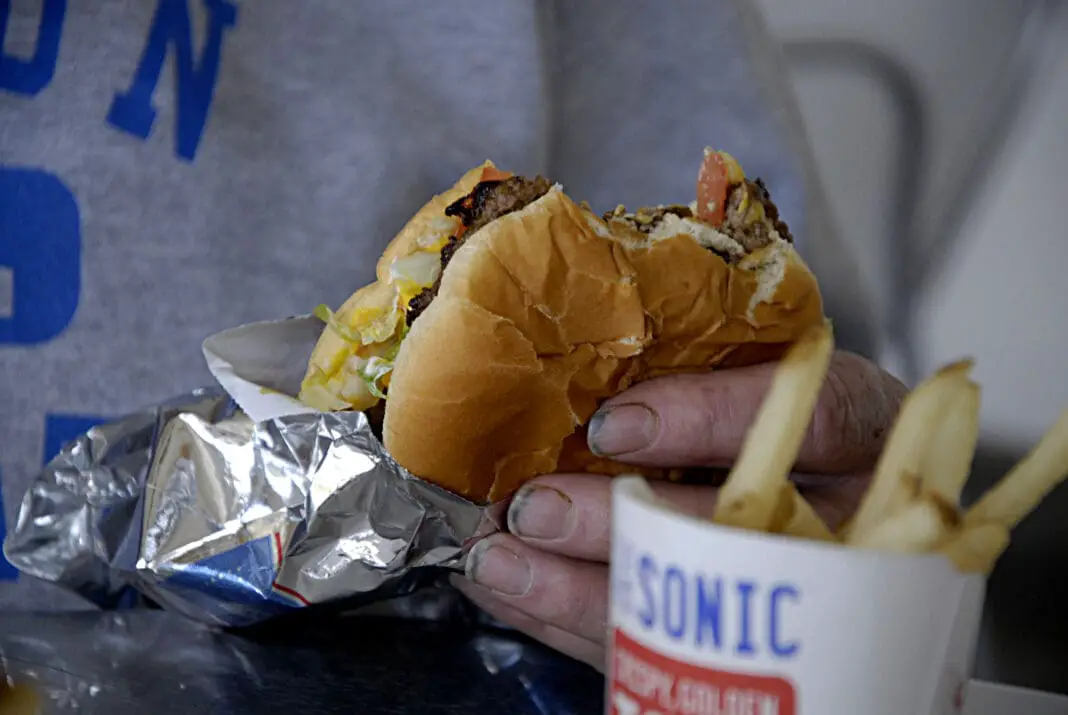
Sonic Drive-In
Sonic’s problem isn’t that it’s always bad. It’s that you never know which Sonic you’re going to get. The chain uses frozen patties — which are supposed to create consistency — but quality swings wildly from location to location. Some spots produce perfectly decent burgers. Others hand you something that tastes like it was cooked two hours ago and left to die under a heat lamp.
Past employees have described cooked burgers sitting on the warm side of the grill for 30 minutes before being served, which guarantees a dry, overcooked result every time. When a former worker is telling you the food sits around that long, it’s hard to order with confidence.
The Chains Actually Doing It Right
At the top of the same ranking, In-N-Out Burger claimed the number one spot. The chain grinds its own fresh beef chuck, keeps the menu simple, and delivers consistent quality across every location. Anthony Bourdain made it his first stop on every California trip and called it the only fast-food chain he actually liked. Market Force Information named it America’s favorite burger chain in 2022, and USA Today named its Double-Double the second best burger in the country in 2024.
Five Guys and Shake Shack rounded out the top three. Shake Shack uses a blend of fresh, whole muscle sirloin, brisket, and short rib from top suppliers including Pat LaFrieda for its New York locations. Culver’s placed fourth, earning recognition for fresh ingredients and hands-on prep methods — though even Culver’s has seen its customer satisfaction score dip slightly, from 81 to 80.
The pattern is obvious. The chains winning are the ones using fresh beef, keeping menus focused, and paying attention to consistency. The ones losing are trying to do too much, cutting corners on ingredients, and hoping brand recognition alone will carry them. It won’t. Not when Americans eat 50 billion burgers a year and have plenty of options to choose from.
