


The cookies at your local bakery always seem better than homemade ones, don’t they? Those thick, gooey centers and crispy edges make store-bought cookies feel like magic. But here’s the thing: bakeries use specific tricks that most home recipes skip. They rely on particular ingredients and techniques that create that signature texture everyone loves. With a few adjustments to a standard recipe, anyone can make cookies that rival what you’d pay five dollars for at a fancy bakery. The secret isn’t complicated, and you probably already have most of what you need in your kitchen right now.
Why melted butter changes everything
Most cookie recipes tell you to cream softened butter with sugar until it’s light and fluffy. That’s fine for regular cookies, but it’s not what bakeries do when they want extra chewy results. When you melt the butter before mixing it into the dough, something different happens. The melted fat coats the flour particles differently, which creates a denser, chewier texture instead of a cakey one. The cookie stays thick and gooey in the middle while still getting those crispy edges everyone wants.
Using melted butter also means you don’t need an electric mixer, which makes the whole process faster and easier. Just whisk the melted butter with your sugars in a bowl, add the eggs and vanilla, then stir in the dry ingredients. The dough comes together in about 15 minutes of actual work. The trade-off is that the dough will be slicker and softer than regular cookie dough, almost greasy-looking. That’s completely normal and exactly what you want for these bakery-style cookies.
Brown sugar makes cookies stay soft
The ratio of brown sugar to white sugar determines whether your cookies turn out soft and chewy or crispy and thin. Brown sugar contains molasses, which is hygroscopic – meaning it pulls moisture from the air and holds onto it. When you use more brown sugar than white sugar in your dough, those cookies stay softer for days instead of going stale and hard overnight. Most classic recipes use equal parts of both sugars, but bakery recipes flip that ratio heavily toward brown sugar.
For truly chewy cookies, aim for about three-quarters cup of brown sugar to half a cup of white sugar. The white sugar is still important because it helps the cookies spread out slightly and creates those crispy edges. Without any white sugar, your cookies would be too dense and wouldn’t have that textural contrast between the edges and center. Pack the brown sugar into your measuring cup so you get an accurate amount – those air pockets can throw off your measurements and affect the final texture of your cookies.
An extra egg yolk adds richness
Regular chocolate chip cookies use two whole eggs, but bakery versions often sneak in an extra yolk. Egg whites add structure and help cookies spread, while yolks add fat, richness, and tenderness. By adding just one extra yolk to your dough, you get cookies that taste more decadent without being heavy or greasy. The additional fat from the yolk also helps bind the dough together and creates that soft, almost underbaked texture in the center that makes these cookies so addictive.
Make sure your eggs are at room temperature before mixing them into the melted butter and sugar. Cold eggs will cause the melted butter to solidify into little clumps, which makes it harder to get a smooth dough. If you forgot to take your eggs out ahead of time, just place them in a bowl of warm tap water for about 10 minutes. The eggs will warm up enough to mix properly without starting to cook. This small step makes a noticeable difference in how your dough comes together.
Cornstarch creates the perfect texture
Here’s an ingredient most people don’t expect in chocolate chip cookies: cornstarch. Adding just a teaspoon or two makes the cookies incredibly tender and helps them stay thick instead of spreading too thin. Cornstarch interferes with gluten formation, which means your cookies won’t develop that tough, chewy texture that happens when you overmix regular dough. The result is a cookie that’s soft and almost melts in your mouth while still having enough structure to hold together.
Cornstarch also helps absorb excess moisture from the melted butter, which prevents the cookies from becoming greasy. Some bakers use cake flour instead, which naturally has less protein and creates a similar tender texture. But cornstarch is easier because you probably already have it in your pantry, and you only need a tiny amount. Mix it with your flour and baking soda before adding the wet ingredients so it distributes evenly throughout the dough.
Chilling the dough is not optional
This step separates bakery cookies from flat, disappointing ones. After mixing your dough, cover it and stick it in the refrigerator for at least two hours, though overnight is even better. When cold dough hits a hot oven, the outside edges start to set before the center has a chance to spread too much. This creates those thick, tall cookies with slightly crispy edges and gooey centers. Skip the chilling, and your cookies will spread into thin, flat puddles that lack that signature bakery thickness.
Chilling also allows the flour to fully hydrate and the sugars to dissolve into the butter, which develops deeper caramel notes in the baked cookies. If you’re really in a hurry, you can freeze the dough for 30 minutes instead of refrigerating it, but longer is always better. Some professional bakers let their dough chill for 24 to 72 hours before baking because it makes such a noticeable difference in the final product. The dough keeps in the fridge for up to three days, so you can mix it on Sunday and bake fresh cookies throughout the week.
Shape the dough tall, not round
When you scoop the chilled dough onto your baking sheet, resist the urge to roll it into perfect smooth balls. Instead, use a cookie scoop to portion out the dough, then pull each ball in half and stack the halves on top of each other with the rough, torn sides facing up. This creates tall, lumpy columns of dough instead of neat spheres. Those rough edges and peaks will bake into textured, craggy tops that look exactly like cookies from an expensive bakery.
The tall shape also helps the cookies bake up thick instead of spreading out wide. A cookie scoop that holds about three tablespoons of dough works perfectly for large bakery-style cookies. If you only have a smaller scoop, that’s fine – just use a heaping scoop and make sure to shape the dough tall. Leave at least three inches between each cookie on the baking sheet because they will spread somewhat during baking. Using parchment paper or a silicone mat prevents sticking and makes cleanup much easier.
Bake at a lower temperature
Most cookie recipes tell you to bake at 350 or 375 degrees, but bakery cookies often bake at 325 degrees instead. The lower temperature gives the cookies more time to spread slightly and develop those crispy edges before the centers set completely. This prevents the outside from overbaking and getting hard while the inside stays raw. The cookies take a few minutes longer, but the result is worth the wait – perfectly golden edges with centers that look slightly underbaked when you pull them from the oven.
Take the cookies out when they still look a bit wet in the very center and the edges are just starting to turn golden brown. They’ll continue cooking on the hot baking sheet for several minutes after you remove them from the oven. If you wait until they look completely done, they’ll end up overbaked and dry once they cool. Let them sit on the baking sheet for at least five minutes before transferring them to a cooling rack. This gives them time to firm up enough to move without falling apart.
Use high quality chocolate
The chocolate you choose makes a huge difference in how your cookies taste. Cheap chocolate chips often contain stabilizers that prevent them from melting properly, which means you won’t get those gooey puddles of chocolate in your finished cookies. Look for chocolate chips or chunks from brands like Ghirardelli, Guittard, or even Trader Joe’s. Better yet, buy a bar of good chocolate and chop it into chunks yourself. The irregular pieces create pockets of melted chocolate throughout the cookie.
Some bakeries use a combination of dark and milk chocolate to create more complex sweetness. The bitterness of dark chocolate balances the sweetness of the cookie dough, while milk chocolate adds creamy richness. Try using about one cup of semisweet or dark chocolate chips along with three-quarters cup of chopped milk chocolate. Toss the chocolate with the dough at the very end of mixing, and don’t worry if some pieces fall off – just press them into the tops of the shaped dough balls before baking.
Finish with flaky sea salt
This final touch separates good cookies from unforgettable ones. As soon as you pull the baking sheet from the oven, sprinkle a few flakes of good sea salt over each cookie while they’re still hot. The salt crystals will stick to the surface and add little bursts of salty contrast against all that sweetness. It sounds weird if you’ve never tried it, but the combination of sweet chocolate and salty flakes makes these cookies incredibly addictive.
Use a flaky salt like Maldon or Jacobsen rather than regular table salt or kosher salt. Those finer salts will dissolve into the cookie and make it taste salty instead of giving you that perfect sweet-salty balance. You only need a small pinch on each cookie – about three or four flakes. Some people worry about making cookies too salty, but remember that the dough already has salt mixed in, and this finishing salt is just for accent. Once you try cookies with that final sprinkle of sea salt, you’ll never want to skip it again.
Making bakery-quality cookies at home comes down to a few key changes to the standard recipe. Melted butter, extra brown sugar, an additional egg yolk, and a bit of cornstarch transform the texture completely. Add in proper chilling time, tall dough shapes, and a lower baking temperature, and you’ll have cookies that look and taste like they came from an expensive bakery. The best part is that you can make the dough ahead and keep it in the fridge or freezer, so fresh cookies are always just minutes away.
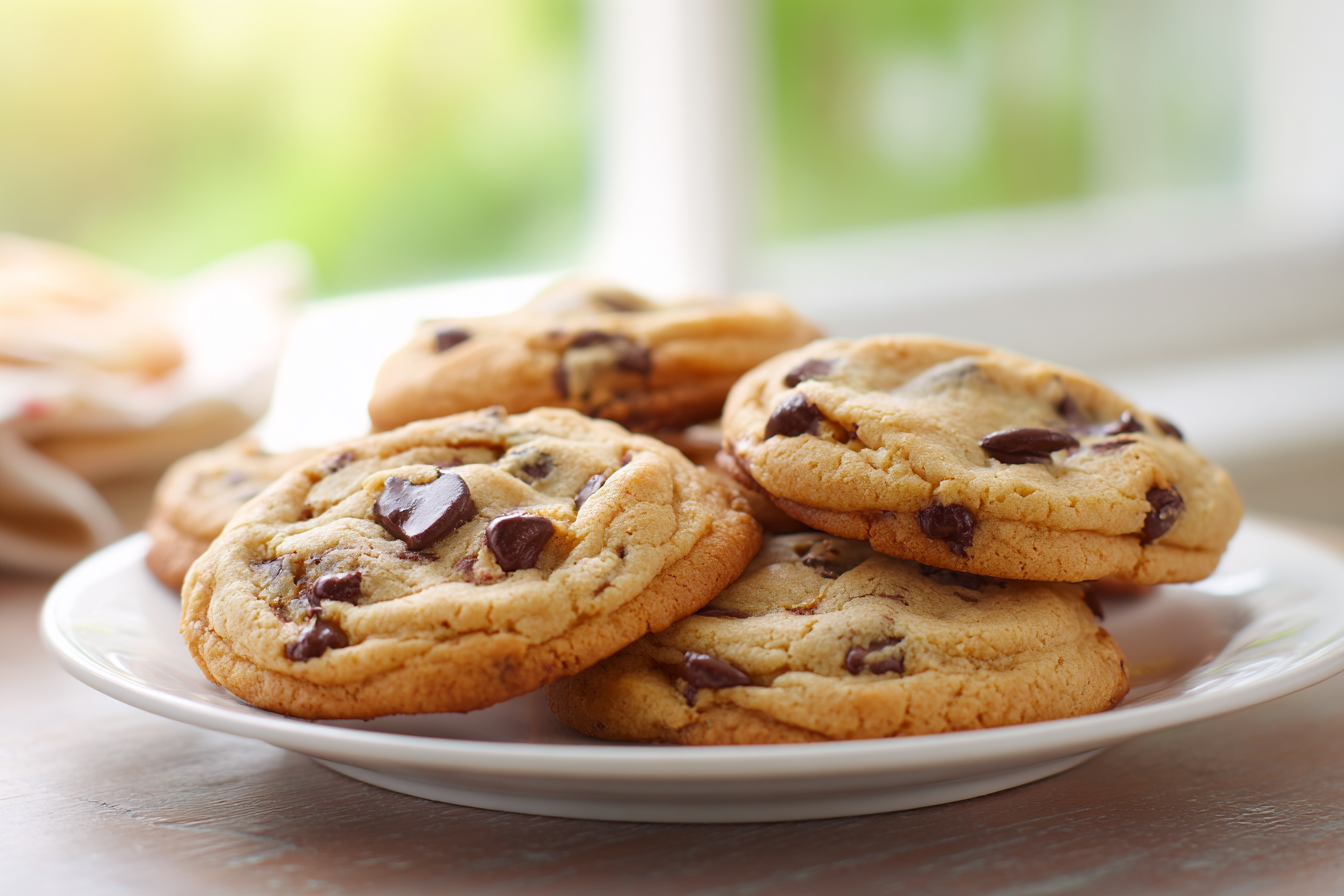
Bakery Style Chocolate Chip Cookies
Cuisine: American20
cookies15
minutes13
minutes285
kcalUltra thick chocolate chip cookies with golden edges and impossibly gooey centers that taste exactly like your favorite bakery treats.
Ingredients
2 and 1/4 cups (281g) all-purpose flour
1 teaspoon baking soda
1 and 1/2 teaspoons cornstarch
1/2 teaspoon salt
3/4 cup (170g) unsalted butter, melted and cooled 5 minutes
3/4 cup (150g) packed light brown sugar
1/2 cup (100g) granulated sugar
1 large egg plus 1 egg yolk, at room temperature
2 teaspoons vanilla extract
1 and 1/4 cups (225g) semisweet chocolate chips or chunks
Flaky sea salt for topping
Directions
- Whisk together the flour, baking soda, cornstarch, and salt in a medium bowl until well combined. Set this bowl aside while you prepare the wet ingredients. Make sure your flour is measured correctly by spooning it into your measuring cup and leveling it off with a knife, or use a kitchen scale for the most accurate results.
- In a large bowl, whisk the melted butter with both sugars until the mixture is smooth and no lumps of sugar remain. The mixture should look thick and glossy. This takes about 30 seconds of vigorous whisking. Let the butter cool for five minutes after melting so it doesn’t cook the eggs in the next step.
- Add the egg, egg yolk, and vanilla extract to the butter mixture and whisk until everything is completely combined and smooth. The mixture will look thin and slightly separated at first, but keep whisking and it will come together. Make sure there are no streaks of egg visible before moving to the next step.
- Pour the wet ingredients into the bowl with the flour mixture and stir with a wooden spoon or rubber spatula until the flour is almost completely incorporated. The dough will be soft, thick, and shiny. When there are just a few streaks of flour remaining, add the chocolate chips and fold them in until evenly distributed throughout the dough.
- Cover the bowl tightly with plastic wrap and refrigerate for at least 2 hours, but preferably overnight or up to 3 days. The dough needs this time to chill completely so the cookies bake up thick instead of spreading thin. Don’t skip this step or your cookies will be flat and disappointing.
- When you’re ready to bake, preheat your oven to 325°F and line two large baking sheets with parchment paper or silicone baking mats. Let the chilled dough sit at room temperature for about 10 minutes if it’s too hard to scoop. Use a large cookie scoop (about 3 tablespoons) to portion out the dough onto the prepared baking sheets.
- Take each ball of dough and pull it in half, then stack the two halves on top of each other with the torn, rough sides facing up. This creates tall, craggy columns of dough that will bake into thick cookies with textured tops. Space the cookies at least 3 inches apart on the baking sheets because they will spread during baking.
- Bake for 11 to 13 minutes, until the edges are golden brown but the centers still look slightly wet and underdone. The cookies will look puffy and soft when you take them out. Let them cool on the baking sheet for 5 minutes, then immediately sprinkle each cookie with a few flakes of sea salt. Transfer to a wire rack to cool completely, though they’re absolutely incredible when still warm.
Notes
- Measure flour correctly by spooning it into your measuring cup and leveling it off, or weigh it on a scale. Too much flour will make dry, cakey cookies that don’t spread properly.
- Make sure your eggs are at room temperature before mixing. Cold eggs will cause the melted butter to solidify. Place whole eggs in warm water for 10 minutes to bring them to room temperature quickly.
- Chilling the dough is essential for thick cookies. The longer you chill, the better the cookies will be. Dough can be refrigerated for up to 3 days or frozen for up to 3 months.
- These cookies are meant to be large – about 3 tablespoons of dough each. Smaller cookies won’t have the same gooey center texture.
- Bake until the edges are golden but centers look underdone. They’ll continue cooking on the hot pan after you remove them from the oven.
- Store cooled cookies in an airtight container at room temperature for up to 5 days. To refresh them, warm in a 325°F oven for 3-5 minutes.
Common questions about bakery style cookies
Q: Can I use regular butter instead of melted butter?
A: You can, but your cookies won’t have the same chewy texture. Creaming softened butter with sugar creates air pockets that make cookies lighter and cakier. Melted butter creates a denser, chewier cookie that’s much closer to what bakeries make. The melted butter is really what sets these apart from standard chocolate chip cookies.
Q: Why are my cookies spreading too much even after chilling?
A: This usually happens if your butter was too warm when you melted it, or if you didn’t chill the dough long enough. Make sure to let the melted butter cool for five minutes before mixing, and chill the dough for at least two hours. Also check that you’re not using too little flour – measure carefully or use a scale for best results.
Q: Can I freeze the cookie dough?
A: Absolutely. After chilling the dough, scoop it into balls and freeze them on a baking sheet until solid, then transfer to a freezer bag. They’ll keep for up to three months. Bake frozen cookies straight from the freezer, adding an extra minute or two to the baking time. This is perfect for having fresh cookies whenever you want them.
Q: Do I really need the cornstarch?
A: The cornstarch makes a noticeable difference in the texture, creating a more tender cookie that stays thick. If you absolutely can’t find cornstarch, you could substitute an equal amount of flour, but your cookies will be slightly less soft. For the best bakery-style results, it’s worth picking up a box of cornstarch.
