


Ever wonder why some pasta dishes leave you with three extra pots to wash while you’re already exhausted from cooking? The traditional chicken Alfredo usually means boiling pasta in one pot, making sauce in another, and somehow trying to coordinate everything so it’s all hot at the same time. Then there’s the strainer to deal with, the starchy water splashing everywhere, and that moment of panic when you realize you forgot to save some pasta water for the sauce. This chicken Alfredo orzo recipe changes everything by cooking the pasta right in the sauce, which means less cleanup and more time to actually enjoy your dinner.
Why orzo makes this recipe so much easier
Orzo looks like rice, but it’s actually pasta, and that shape makes a huge difference when you’re trying to simplify dinner. Unlike long noodles that need lots of water and a big pot, orzo cooks perfectly in just enough liquid to create a creamy sauce. The small size means it absorbs all those good flavors from the chicken, garlic, and Parmesan while it cooks, so every bite tastes amazing instead of just having sauce on the outside.
The cooking method works because orzo releases starch as it simmers, naturally thickening your sauce without needing a ton of cream or flour. You’ll use about three cups of chicken broth for every cup and a half of orzo, which seems like a lot but it all gets absorbed during cooking. This means no draining required, and you end up with perfectly creamy pasta that didn’t need any extra steps. Plus, orzo cooks in about ten minutes, so you’re not standing over the stove forever waiting for water to boil.
Getting the chicken right without drying it out
The biggest challenge with any chicken pasta dish is keeping the meat juicy and tender, especially when you’re cooking everything in one pot. Raw chicken breast can easily turn rubbery if it cooks too long, and nobody wants to bite into dry chicken when they’re expecting creamy Alfredo. That’s why using rotisserie chicken from the store makes so much sense here, since it’s already cooked, seasoned, and super moist from the rotisserie cooking process.
If you prefer cooking your own chicken, season boneless skinless breasts with garlic salt, paprika, regular salt, and black pepper before pan-searing them in olive oil for about five to six minutes per side. Make sure the internal temperature reaches 165°F, then let the chicken rest under foil while you make the sauce. Slice it into strips or chunks once it’s rested, which keeps all those juices inside instead of running out onto your cutting board. The resting step really matters because cutting into chicken immediately after cooking releases all the moisture you worked so hard to keep.
Building the sauce with cream cheese instead of heavy cream
Traditional Alfredo sauce uses heavy cream, butter, and Parmesan, which is delicious but can feel really heavy after eating it. Using cream cheese instead gives you that same creamy texture with a little tang that balances out all the richness. You only need about two ounces, which is roughly four tablespoons, and it melts right into the hot orzo at the end of cooking without any lumps or fuss.
The trick is adding the cream cheese when the heat is on the lowest setting, so it has time to soften and incorporate smoothly without breaking. Stir it in thoroughly until you can’t see any white chunks, then add your grated Parmesan cheese, fresh lemon juice, and black pepper. Some recipes use a full cup and a half of heavy cream, but the cream cheese method keeps things lighter while still delivering that signature Alfredo creaminess. If you want an even lighter version, low-fat cream cheese works fine, or you can skip it entirely and rely on the starch from the orzo plus the Parmesan to create the sauce.
Adding garlic without burning it
Garlic makes everything better, but burned garlic makes everything bitter and unpleasant. When you’re cooking garlic at the beginning of a recipe, you’ve got maybe thirty seconds before it goes from golden and fragrant to brown and acrid. The key is heating your oil first until it’s shimmering, then adding minced garlic and stirring constantly while it cooks. Don’t walk away, don’t check your phone, just stand there and stir.
If you’re worried about timing, you can add the garlic along with the orzo instead of cooking it separately. The pasta shields the garlic from direct heat and prevents burning while still releasing all that great flavor into the dish. Another option is using jarred minced garlic or frozen garlic cubes, which are already partially cooked and less likely to burn. Fresh garlic tastes best, but convenience products work perfectly fine when you’re making a quick weeknight dinner and don’t want to deal with peeling and mincing cloves.
Why you need to stir more than you think
Orzo has a sneaky habit of sticking to the bottom of your pan if you’re not paying attention. Unlike long pasta that floats around in lots of water, orzo sits on the bottom where it can easily stick and burn, especially once the liquid starts reducing. You’ll need to stir it every couple of minutes while it’s simmering, scraping the bottom of the pan to make sure nothing is getting stuck down there.
Using a high-sided skillet with a lid helps because you can cover the pan between stirs to trap steam and heat, which cooks the orzo more evenly. If you notice the liquid is absorbing too quickly and the orzo isn’t tender yet, add a splash of water or more chicken broth and keep simmering. The whole cooking process takes about seven to ten minutes once the liquid is simmering, so you’re not stirring for hours. Just set a timer, stir every two minutes, and you’ll be fine. A wooden spoon or silicone spatula works better than metal because it won’t scratch your pan and makes it easier to scrape up any bits that want to stick.
Sneaking vegetables into a creamy pasta dish
Baby spinach is perfect for this recipe because it wilts down to almost nothing but adds color, a little nutrition, and a fresh taste that cuts through all that cream and cheese. Add it at the very end when the heat is low, and just stir until the leaves wilt, which takes about a minute. You can use a couple big handfuls, and they’ll cook down so much you’ll barely notice them in the final dish, but they make it feel a little less indulgent.
If spinach isn’t your thing, frozen peas work great too, and you don’t even need to thaw them first. Just toss them in during the last few minutes of cooking the orzo, and they’ll heat through perfectly. Chopped asparagus is another good option if you cut it into half-inch pieces, and it adds a nice crunch that contrasts with the soft pasta. The point is to add something green so you feel a little better about eating a bowl of creamy pasta for dinner, and these vegetables are mild enough that even picky eaters usually don’t complain about them.
Making it taste like restaurant Alfredo at home
The secret to restaurant-quality Alfredo is using freshly grated Parmesan cheese instead of the pre-grated stuff in the green container. Fresh Parmesan melts smoothly into the sauce and has a much richer, nuttier taste that makes the whole dish better. Pre-grated cheese contains additives to prevent clumping, which also prevents it from melting properly, so you end up with a grainy sauce instead of a silky one.
Buy a wedge of Parmesan and grate it yourself using a box grater or microplane, and you’ll immediately taste the difference. Another restaurant trick is finishing the dish with a squeeze of fresh lemon juice, which brightens all the rich flavors and keeps the sauce from tasting too heavy. Start with one tablespoon of lemon juice and add more if you want, tasting as you go. The lemon doesn’t make it taste citrusy, it just wakes everything up and makes you want to take another bite. Black pepper is also important because it adds a little heat and complexity that plain cream and cheese don’t have on their own.
What to do when your sauce gets too thick
Sometimes your orzo absorbs more liquid than expected, or you accidentally cook it a little too long, and suddenly your creamy sauce looks more like a pasta casserole. Don’t panic, because this is super easy to fix. Just add a little bit of chicken broth, regular broth, or even plain water and stir it in over low heat until the sauce loosens up to the consistency you want.
Add the liquid gradually, maybe a quarter cup at a time, because it’s easier to thin out a sauce than to thicken it back up. If you accidentally make it too thin, just let it simmer for another minute or two, and the orzo will absorb the extra liquid. This same trick works for leftovers that have thickened up in the fridge overnight. Orzo continues absorbing liquid even after cooking, so refrigerated leftovers always need a splash of water or broth when you reheat them. Heat them gently in a pan on the stove or in the microwave with a damp paper towel over the top to add moisture back in.
Serving suggestions that won’t dirty more dishes
The whole point of a one-pot meal is keeping cleanup simple, so don’t ruin that by making elaborate side dishes. A loaf of crusty bread is perfect because you can buy it from the bakery section, slice it, and serve it right from the cutting board. It’s great for soaking up any extra sauce, and it makes the meal feel more complete without requiring another pot or pan.
If you want something green on the side, a bagged salad with bottled dressing takes two minutes and uses just a bowl. Or skip the side completely and trust that the spinach or peas you added to the orzo counts as your vegetable. This is dinner, not a cooking show, and sometimes simple is exactly what you need. The chicken Alfredo orzo is filling enough on its own that most people won’t miss having three other things on their plate, especially when everything tastes this good together.
This chicken Alfredo orzo proves that restaurant-quality pasta doesn’t require multiple pots, complicated techniques, or an hour of your time. The no-drain method saves cleanup, the cream cheese keeps it lighter, and cooking everything together means all those flavors meld into something really special. Next time you’re staring at the kitchen wondering what to make for dinner, remember that creamy, cheesy pasta is just fifteen minutes away.
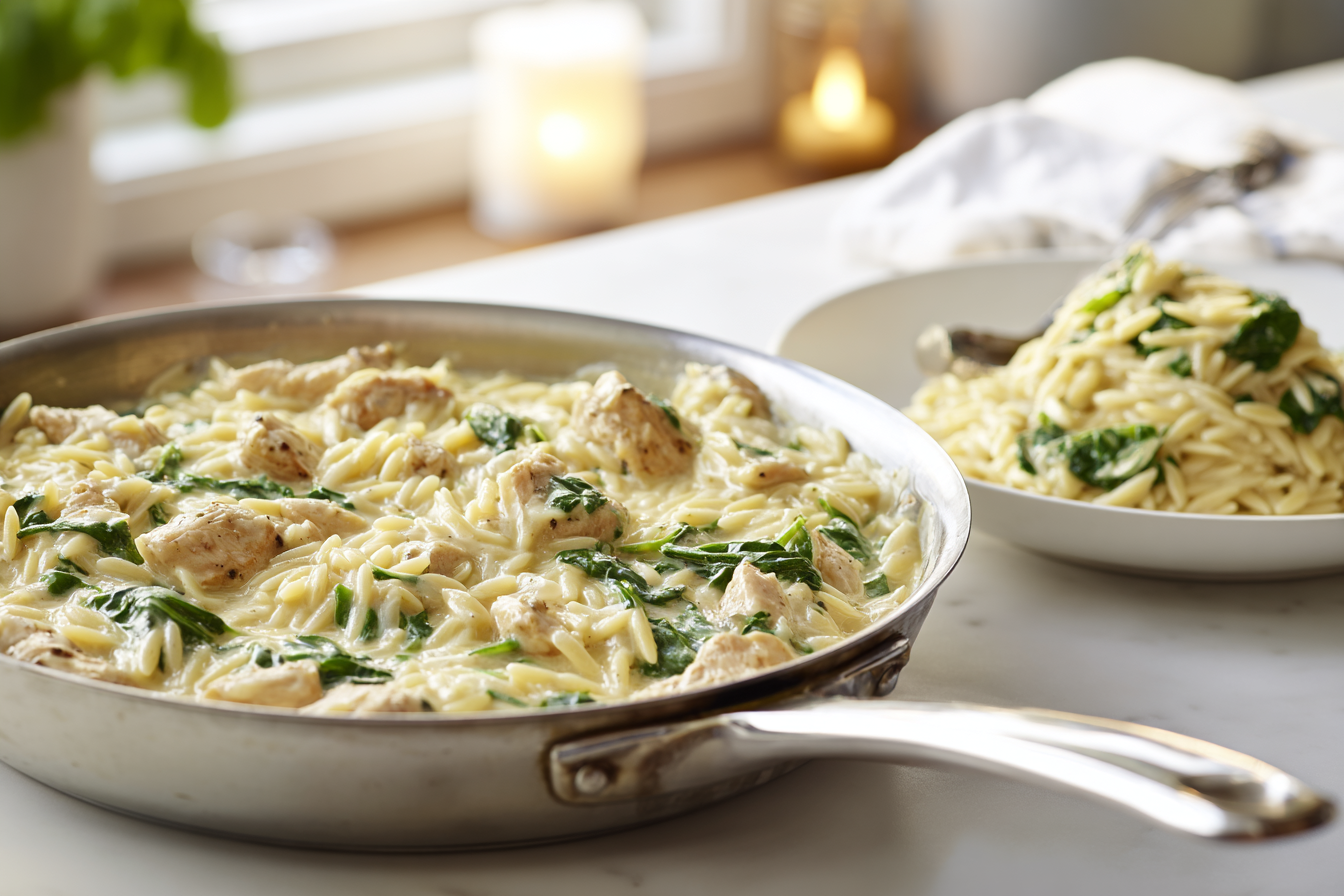
Chicken Alfredo Orzo
Cuisine: Italian4
servings10
minutes20
minutes650
kcalThis creamy one-pot chicken Alfredo orzo cooks the pasta right in the sauce, which means no draining and less cleanup for an easy weeknight dinner.
Ingredients
2 boneless skinless chicken breasts (about 1 pound)
1/2 teaspoon garlic salt
1/2 teaspoon paprika
1/2 teaspoon kosher salt
1/4 teaspoon black pepper
1 tablespoon olive oil
2 teaspoons minced garlic
1 1/2 cups orzo pasta
3 cups chicken broth
1/4 cup (1/2 stick) unsalted butter
1 1/2 cups heavy whipping cream
1 1/2 cups freshly grated Parmesan cheese
2 cups baby spinach
Fresh parsley for garnish
Directions
- Pat the chicken breasts dry with paper towels and season both sides evenly with garlic salt, paprika, kosher salt, and black pepper. Heat olive oil in a large, high-sided skillet over medium-high heat until it shimmers. Add the seasoned chicken breasts and cook for 5 to 6 minutes per side, flipping once, until golden brown and the internal temperature reaches 165°F.
- Transfer the cooked chicken to a plate and tent loosely with aluminum foil to keep warm while it rests. Resting allows the juices to redistribute throughout the meat, keeping it moist when you slice it later. Don’t skip this step or you’ll end up with dry chicken.
- In the same skillet over medium heat, melt the butter completely. Add the minced garlic and cook for about 1 minute, stirring constantly, until fragrant but not browned. Pour in the chicken broth and stir to combine with the butter and garlic.
- Add the orzo pasta to the broth mixture and stir well. Bring the liquid to a gentle simmer, then reduce the heat to medium-low. Cover the skillet with a lid and cook for 10 minutes, stirring every 2 to 3 minutes to prevent the orzo from sticking to the bottom of the pan.
- Once the orzo is tender and most of the liquid has been absorbed, reduce the heat to low. Pour in the heavy cream and stir until fully combined with the orzo. Add the grated Parmesan cheese gradually, stirring constantly until it melts into the sauce and creates a smooth, creamy texture.
- Add the baby spinach to the pan and stir gently for 1 to 2 minutes until the leaves wilt down into the sauce. Slice the rested chicken breasts into strips or bite-sized pieces. Add the sliced chicken back to the skillet and stir to combine, allowing it to warm through in the sauce.
- Taste the orzo and adjust seasoning with additional salt and black pepper if needed. If the sauce seems too thick, add a splash of chicken broth or water and stir until you reach your desired consistency. Turn off the heat once everything is combined and heated through.
- Serve the chicken Alfredo orzo immediately, garnished with fresh chopped parsley if desired. Spoon generous portions into bowls and enjoy while it’s hot. This dish is best eaten right away, but leftovers can be stored in an airtight container in the refrigerator for up to 3 days.
Notes
- For a shortcut, use 2 cups of shredded rotisserie chicken instead of cooking raw chicken breasts. Just add it at the end with the spinach to warm through.
- Use freshly grated Parmesan cheese rather than pre-grated for the smoothest, creamiest sauce. Pre-grated cheese contains anti-caking agents that prevent it from melting properly.
- If your sauce gets too thick, add chicken broth or water a little at a time until you reach the right consistency. Orzo continues to absorb liquid as it sits.
- Frozen peas or chopped asparagus can replace the spinach if you prefer different vegetables. Add them during the last few minutes of cooking the orzo.
- Stir the orzo frequently while it cooks to prevent sticking and burning on the bottom of the pan. A wooden spoon or silicone spatula works best for scraping.
Common questions about making chicken Alfredo orzo
Q: Can I use a different type of pasta instead of orzo?
A: This recipe is specifically designed for orzo because it cooks quickly and absorbs liquid perfectly to create a creamy sauce. You could try small pasta shapes like ditalini or mini shells, but you’ll need to adjust the cooking time and possibly the amount of liquid. Larger pasta shapes won’t work well with this no-drain method.
Q: How do I keep leftovers from getting dry and clumpy?
A: Orzo absorbs liquid as it sits, so refrigerated leftovers will always be thicker than when you first made them. When reheating, add a few tablespoons of chicken broth, water, or milk and stir it in before heating. Reheat gently on the stove over low heat or in the microwave with a damp paper towel on top to add moisture back in.
Q: Can I make this recipe dairy-free?
A: Traditional Alfredo requires dairy to get that creamy texture and cheesy taste, so making it completely dairy-free changes the dish significantly. You could try using coconut cream instead of heavy cream and nutritional yeast instead of Parmesan, but the result will taste quite different from classic Alfredo. It might be better to choose a different recipe designed to be dairy-free from the start.
Q: What should I do if my sauce breaks or looks curdled?
A: This usually happens if the heat is too high when you add the cream and cheese. Remove the pan from heat immediately and whisk vigorously to bring it back together. If that doesn’t work, add a tablespoon of cold cream or a splash of cold chicken broth while whisking. Always add dairy products over low heat and stir constantly to prevent breaking.
