

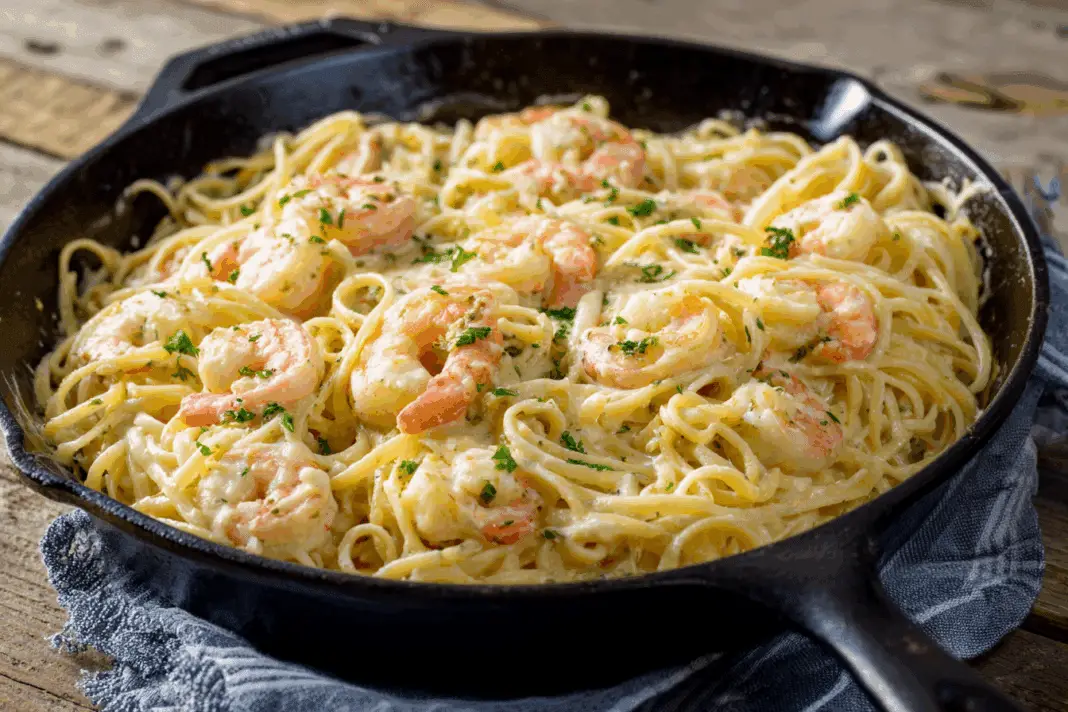
Weeknight dinners can be tricky when everyone’s hungry and time is running short. This creamy garlic shrimp pasta comes together in one skillet in about 30 minutes, which means less cleanup and more time to actually sit down and enjoy your meal. The combination of tender shrimp, garlic butter, and a silky cream sauce makes this dish feel special enough for date night but simple enough for a Tuesday evening when you just need something that works.
Getting the shrimp right makes all the difference
Most of us aren’t buying fresh shrimp straight off the boat, and that’s completely fine. The frozen shrimp at your grocery store works perfectly for this recipe. Look for bags labeled “21 to 30 count per pound” if you want larger shrimp, but honestly any size works as long as you watch it carefully while cooking. The key is making sure your shrimp is completely thawed before you start cooking. Running it under cold water for a few minutes does the trick, or you can leave it in the refrigerator overnight if you’re planning ahead.
When you’re ready to cook, pat the shrimp completely dry with paper towels. This might seem like an extra step you don’t need, but wet shrimp will steam instead of getting that nice sear you want. Season your shrimp with smoked paprika, salt, and pepper before it hits the pan. That smoked paprika adds a depth that regular paprika just can’t match. Cook the shrimp in batches if your pan is getting crowded because overcrowding leads to steaming, and steamed shrimp won’t have the same texture as properly seared shrimp.
The pasta water is more important than you think
Here’s something that sounds weird but actually matters: you need to save some of that starchy pasta water before you drain your noodles. Set a measuring cup near your sink so you don’t forget this step in the chaos of cooking. That cloudy, salty water is full of starch that helps the cream sauce stick to your pasta instead of sliding off into a puddle at the bottom of your bowl. Professional chefs use this trick all the time, and there’s no reason home cooks shouldn’t do the same thing.
Cook your pasta until it’s just al dente, which means it still has a slight bite to it. Check it a minute or two before the package directions say it should be done. The pasta will continue cooking when you toss it with the hot sauce, and nobody wants mushy noodles. Linguine works great for this recipe, but penne, fettuccine, or even spaghetti will do the job. Use whatever you have in your pantry because this isn’t the time to make a special trip to the store for a specific pasta shape.
Building the sauce without making it too heavy
The sauce starts with butter and garlic sizzling in the same pan you cooked your shrimp in. Don’t wipe out that pan because all those brown bits stuck to the bottom are pure flavor. When you add your liquid, those bits will dissolve and make your sauce taste like you spent hours on it. Watch your garlic closely during this step because burned garlic tastes bitter and will ruin the whole dish. As soon as it smells amazing, which takes about 30 seconds, you’re ready to move on.
Now comes the decision point: heavy cream or milk with cornstarch. Heavy cream makes a thicker, richer sauce that coats everything beautifully. If you’re watching calories or just don’t want something quite so heavy, mixing milk with a bit of cornstarch gives you a lighter sauce that still tastes creamy. Both versions are delicious, and I’ve made this recipe both ways depending on what I have in the fridge. The heavy cream version is silkier, but the milk version lets you actually taste more of the garlic and parmesan.
Fresh parmesan cheese is worth the extra two minutes
Those green canisters of pre-grated parmesan that live in everyone’s pantry? They’re fine for sprinkling on top, but they won’t melt smoothly into your sauce. The anti-caking agents that keep the cheese from clumping in the container also prevent it from melting properly. You’ll end up with a grainy, separated sauce instead of the smooth, creamy coating you want. Grab a block of real parmesan and use the smallest holes on your box grater, or buy the fresh grated stuff from the deli section.
Add the parmesan to your cream sauce and whisk it until everything melts together. This is when you start adding splashes of that reserved pasta water to get the consistency right. The sauce should coat the back of a spoon but still be thin enough to toss with the pasta. If it seems too thick, add more pasta water a tablespoon at a time. The starchy water helps emulsify everything so the sauce clings to each strand of pasta instead of pooling at the bottom of the serving bowl.
Timing everything so nothing gets overcooked
Shrimp cooks fast, which is great when you’re hungry but tricky when you’re trying to time everything perfectly. Start your pasta water boiling first, then work on the shrimp while the water heats up. Once your pasta is cooking, you have about 10 minutes to get the shrimp done and the sauce ready. This might feel rushed the first time you make it, but the second time through you’ll realize how the timing actually works in your favor.
Remove the shrimp from the pan as soon as it turns pink. It takes about a minute per side, maybe two if your shrimp is really large. The shrimp will go back into the warm sauce at the end, and that residual heat will finish cooking it through. Overcooked shrimp gets rubbery and tough, which is disappointing when everything else about the dish is so good. Set your cooked shrimp aside on a plate while you build the sauce in the same pan, and resist the urge to keep cooking it just to be sure.
Adding vegetables without making it complicated
This recipe is perfect as written, but sometimes you want to add vegetables to make it feel more complete. Broccoli florets work really well because they cook in about the same time as the pasta. Just toss them into the boiling water about three minutes before the pasta is done. Spinach is even easier since you can stir it right into the sauce at the end and let it wilt from the heat. Cherry tomatoes add a pop of color and a bit of acidity that balances the richness of the cream.
Some people like to add sliced bell peppers or mushrooms, which you would cook in the skillet before you cook the shrimp. Use that same tablespoon of butter and olive oil, get the vegetables tender, then remove them to the plate with the shrimp. Everything goes back in at the end when you toss the pasta with the sauce. The vegetables add nutrition and bulk without changing the basic character of the dish. Just don’t go overboard because the shrimp and garlic cream sauce should still be the stars here.
Why this tastes better than restaurant versions
Restaurant pasta dishes are delicious partly because they use way more butter and salt than most people would use at home. This recipe gives you that rich, restaurant-quality taste without going completely overboard on the heavy ingredients. You’re using real cream and butter, but in amounts that won’t make you feel like you need a nap after dinner. The garlic flavor comes through clearly instead of being buried under a mountain of cream.
Making this at home also means your shrimp is cooked perfectly instead of being reheated from a batch that was made hours ago. The pasta isn’t sitting under a heat lamp getting gummy. Everything comes together fresh in your own kitchen, and you control exactly how much garlic goes in. If you love garlic, add an extra clove or two. If you prefer less heat, skip the red pepper flakes. The beauty of cooking at home is adjusting things to match what you actually want to eat.
Making this work when you’re cooking for one
The full recipe serves about four people, but you can easily cut everything in half for a smaller portion. Use an 8-inch skillet instead of a 12-inch one, and cook half a pound of pasta with half a pound of shrimp. The sauce ingredients scale down perfectly, and you’ll still have enough pasta water to get the consistency right. Cooking for one doesn’t mean you should eat boring food or resort to takeout every night.
The leftovers actually hold up better than you might expect. Store them in a container in the fridge and eat within three days. Reheat gently in a skillet with a splash of water or milk to loosen up the sauce. The pasta won’t be quite as creamy as it was fresh, but it’s still really good. Some people even like eating the leftovers cold as a pasta salad, which sounds weird but actually works. The cream sauce firms up when it’s cold and coats the pasta like a thick dressing.
Keeping costs reasonable without sacrificing quality
Shrimp can be expensive, especially if you’re feeding a family. Watch for sales and stock up when prices drop, keeping bags of frozen shrimp in your freezer for nights when you need something quick. The rest of the ingredients are pretty basic: pasta, butter, garlic, cream, and parmesan. You probably have most of this stuff already, which makes this recipe much cheaper than ordering similar dishes from a restaurant.
If shrimp prices are really high, you can stretch the recipe by using just three-quarters of a pound of shrimp and adding some Italian sausage or chicken. The garlic cream sauce works with any protein, so don’t feel locked into using only shrimp. You could even make it vegetarian by skipping the meat entirely and loading it up with vegetables. The sauce is so good that it carries the whole dish regardless of what protein you choose. This is one of those flexible recipes that adapts to what’s in your budget and your fridge.
This creamy garlic shrimp pasta hits all the right notes when you need dinner fast but don’t want something boring. The one-skillet method means cleanup is easy, and the whole thing comes together in less time than it takes to have food delivered. Once you make this a few times, you’ll have the timing down and it’ll become one of those recipes you make without even looking at the instructions anymore.
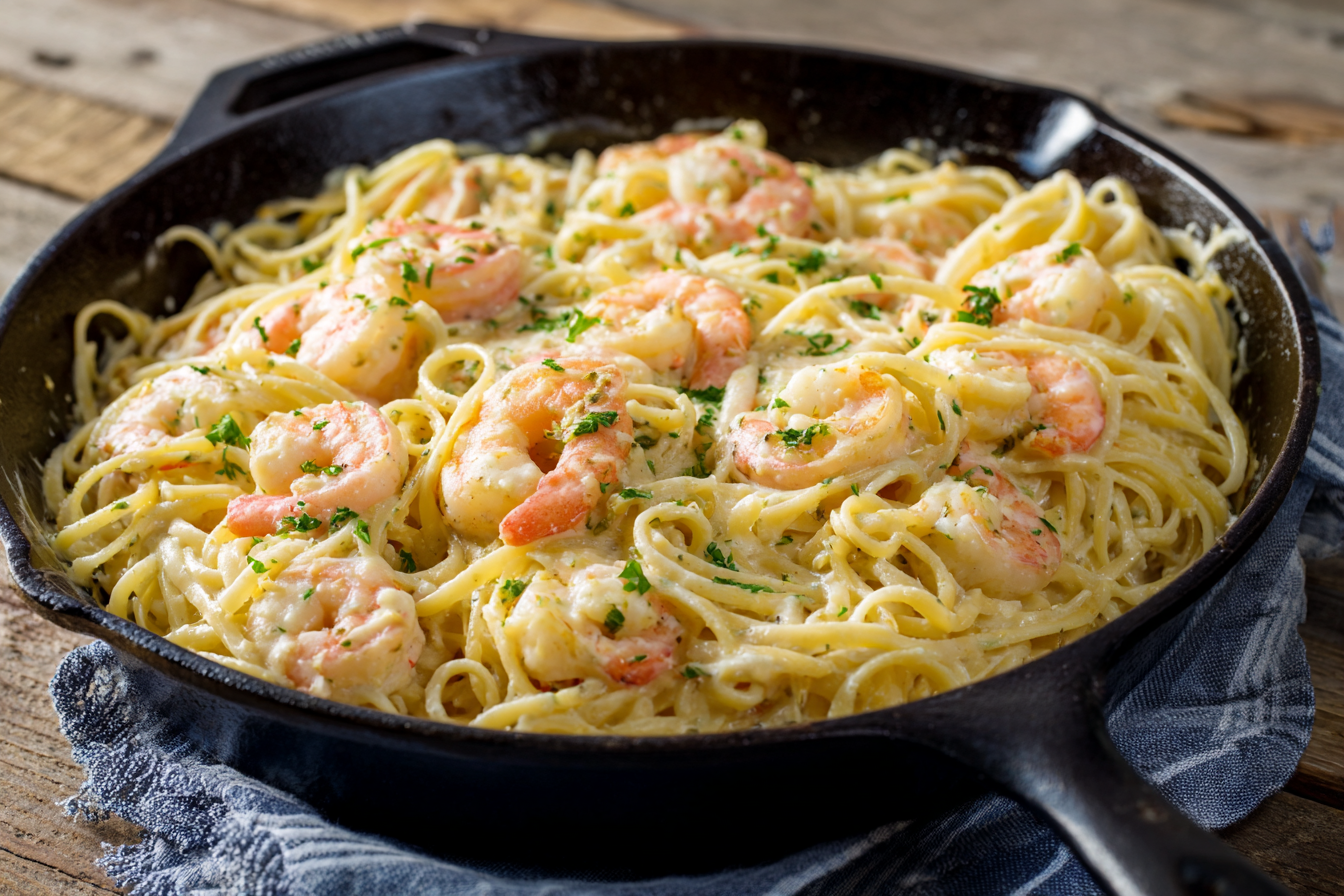
Creamy Garlic Shrimp Pasta in One Skillet
Cuisine: American4
servings10
minutes20
minutes450
kcalThis restaurant-quality pasta comes together in one skillet with tender shrimp, garlic butter, and silky cream sauce that’s ready in 30 minutes.
Ingredients
12 ounces linguine or spaghetti
1 pound large shrimp, peeled and deveined
1½ teaspoons smoked paprika
Salt and black pepper to taste
2 tablespoons butter, divided
1 tablespoon olive oil
3 to 4 cloves garlic, minced
1½ cups heavy cream or milk with 2 teaspoons cornstarch
1 cup freshly grated Parmesan cheese
Fresh parsley for garnish
Directions
- Bring a large pot of salted water to a boil and add the pasta. Cook according to package directions until al dente, checking a minute or two before the suggested time. Before draining, use a measuring cup to scoop out about 1 cup of the starchy pasta water and set it aside. Drain the pasta and set it aside while you work on the shrimp and sauce.
- Pat the shrimp completely dry with paper towels. In a medium bowl, toss the shrimp with the smoked paprika, a pinch of salt, and some black pepper. Make sure each piece is evenly coated with the seasoning so every bite has that smoky depth.
- Heat 1 tablespoon of butter and the olive oil in a large skillet over medium heat until the butter melts and starts to ripple. Add half the shrimp in a single layer and cook for about 1 minute per side, just until they turn pink and opaque. Remove to a plate and repeat with the remaining shrimp, trying to keep as much of the butter mixture in the pan as possible.
- Add the remaining tablespoon of butter to the same skillet and let it melt. Add the minced garlic and cook for about 30 seconds, stirring constantly so it doesn’t burn. You’ll know it’s ready when your kitchen smells amazing and the garlic just starts to turn golden.
- If using milk, whisk it together with the cornstarch in a measuring cup until smooth. Pour the cream or milk mixture into the skillet and whisk it around to pick up all those flavorful brown bits stuck to the pan. Let the sauce bubble gently for 1 to 2 minutes until it starts to thicken slightly.
- Add the Parmesan cheese to the sauce and stir until it melts completely into the cream. Season with a pinch of salt and pepper, then start adding the reserved pasta water a few tablespoons at a time. Keep adding until the sauce reaches a consistency that will coat the pasta nicely without being too thick or too thin.
- Add the drained pasta to the skillet and use tongs to toss everything together, lifting and turning the noodles so each strand gets coated with the creamy garlic sauce. If the sauce seems too thick, add a bit more of that pasta water you saved. The pasta should look glossy and well-coated.
- Add the cooked shrimp back to the pan and gently toss to combine and warm through for about 1 minute. Taste and adjust the seasoning with more salt and pepper if needed. Sprinkle with freshly chopped parsley and serve immediately while the sauce is at its creamiest. Pass extra Parmesan at the table for anyone who wants more.
Notes
- If using frozen shrimp, thaw completely before cooking by running under cold water or leaving in the refrigerator overnight.
- The cornstarch is only needed if you’re using milk instead of heavy cream for a lighter sauce.
- Freshly grated Parmesan melts much better than pre-shredded cheese and prevents a grainy texture in the sauce.
- Serve immediately for the creamiest results, though leftovers can be reheated with a splash of milk or water.
- You can add vegetables like broccoli, spinach, or cherry tomatoes without changing the basic recipe.
Frequently asked questions
Q: Can I use cooked shrimp instead of raw shrimp?
A: Yes, you can use pre-cooked shrimp, but add them at the very end just to warm them through. Since they’re already cooked, they only need about 30 seconds in the warm sauce or they’ll get rubbery. You’ll miss out on that nice sear from cooking raw shrimp, but it’s a good shortcut when you’re really pressed for time.
Q: What if I don’t have smoked paprika?
A: Regular paprika works fine, though you won’t get quite the same depth. You could also try a pinch of cayenne pepper for heat or skip the paprika entirely and just use salt and pepper. The garlic and cream sauce is flavorful enough that the dish will still taste great without it.
Q: Can I make this ahead of time?
A: This pasta is really best served fresh because the sauce thickens as it sits. If you need to prep ahead, you can cook the shrimp and make the sauce separately, then cook fresh pasta and combine everything right before serving. The extra few minutes of reheating is worth it for maintaining that creamy texture.
Q: Why did my sauce turn out grainy?
A: This usually happens when you use pre-shredded Parmesan cheese or when the heat is too high. Pre-shredded cheese has anti-caking agents that prevent smooth melting. Always grate your own Parmesan from a block, and keep the heat at medium or medium-low when adding the cheese so it melts gradually instead of clumping.
