


Most weeknight dinners end up being the same rotation of rice, potatoes, or plain pasta because those are quick and don’t require much thought. But what if there was something just as easy that felt more special? This creamy mushroom orzo delivers restaurant-quality results in one pot with minimal effort. The best part is that you don’t need to stand over the stove stirring constantly like you would with risotto. Everything cooks together, creating a rich, creamy sauce that clings to tiny rice-shaped pasta while earthy mushrooms add substance and depth.
Why orzo works better than regular pasta here
Orzo looks like rice but it’s actually pasta, which makes it perfect for dishes where you want a creamy consistency without making an actual risotto. The small shape means it cooks quickly and releases starch into the liquid around it, naturally thickening the sauce as it simmers. Unlike long noodles that need lots of water and draining, orzo absorbs the cooking liquid directly, picking up all those rich mushroom and garlic notes along the way. You’ll find it in the pasta aisle at any grocery store, usually near the specialty shapes.
The texture of cooked orzo sits somewhere between pasta and risotto, giving you that satisfying bite without the arm workout. When you cook it in broth instead of plain water, every single piece soaks up that seasoning. This technique means you’re building layers of taste right into the grain itself. Plus, the starch that releases during cooking acts as a natural thickener, so you get a creamy consistency with less cream than you’d think. It’s one of those smart shortcuts that makes you look like you spent way more time in the kitchen than you actually did.
Getting mushrooms to actually brown instead of steam
The biggest mistake people make with mushrooms is crowding them in the pan. When you pile them all in at once, they release moisture and end up steaming in their own liquid instead of getting that golden-brown color. That browning is where all the deep, meaty taste comes from, so it’s worth taking an extra few minutes to do it right. Cook your mushrooms in two batches with plenty of space between them, and resist the urge to constantly stir them around. Let them sit undisturbed for a couple minutes so the bottoms can properly caramelize.
Another trick is waiting to add salt until after the mushrooms have browned. Salt draws out moisture, which is great for some things but not when you’re trying to get a good sear. Chestnut mushrooms work perfectly for this recipe because they have a firmer texture and richer taste than basic white button mushrooms. If you want to get fancy, mixing in some shiitake or cremini adds even more complexity. Just make sure whatever variety you choose, slice them to roughly the same thickness so they cook evenly. That golden-brown color isn’t just for looks—it’s where the real mushroom intensity lives.
The white wine step you shouldn’t skip
Adding wine to a weeknight dinner might seem fancy, but it makes a noticeable difference in the final dish. White wine adds acidity that cuts through the richness of the cream and butter, keeping everything balanced instead of heavy. You don’t need an expensive bottle—anything dry that you’d actually drink works fine. Pour it in after cooking the onions and garlic, then let it bubble away for about five minutes until it’s almost completely evaporated. This cooking process mellows out the harsh alcohol taste while concentrating the fruity, tangy notes.
Some recipes skimp on the reduction time, but that’s a mistake. If you don’t cook off enough of the liquid, the wine taste will be too strong and almost sour. When it’s properly reduced, you won’t taste “wine” specifically—you’ll just notice the dish has more depth and a subtle brightness. If you really don’t want to use wine, you can substitute with extra chicken broth and a squeeze of lemon juice at the end. But honestly, that half cup of wine adds something special that’s hard to replicate. Most of the alcohol burns off during cooking anyway, leaving behind just the good stuff.
Building the sauce without it breaking
Cream-based sauces can be temperamental if you’re not careful about temperature. The key is making sure your cream is at room temperature before adding it to the pot, and that your stock isn’t piping hot either. If you pour cold cream into a very hot liquid, or vice versa, the cream can split and turn grainy instead of smooth. Let your cream sit out on the counter for 20 minutes while you’re prepping everything else. Similarly, if you’re using store-bought broth, there’s no need to heat it up first—room temperature or even slightly cool is actually better.
Once you add the cream and broth to the orzo, keep the heat at a gentle simmer rather than a rolling boil. Vigorous bubbling can also cause dairy to separate. Stir the pot frequently as the orzo cooks to prevent sticking and to help distribute the starches evenly. Those starches are what give you that silky, clingy sauce that coats each piece of orzo. Near the end of cooking, if your sauce looks too thick, add a splash more broth. If it seems too thin, just let it simmer uncovered for a few more minutes. The consistency should be creamy but not gloppy, loose enough to flow but thick enough to coat a spoon.
Fresh herbs make it taste homemade
Dried herbs have their place, but fresh thyme and parsley really brighten up this dish in a way that dried versions can’t match. Fresh thyme has a slightly minty, earthy quality that pairs perfectly with mushrooms. You only need a couple teaspoons, and the easiest way to remove the leaves from the stems is to hold the top of a sprig and run your fingers down the stem—the leaves pop right off. Add the thyme early in the cooking process so its oils have time to infuse into the sauce.
Parsley gets added at the end, right before serving, to preserve its bright green color and fresh taste. It might seem like just a garnish, but it actually adds a light, peppery note that balances out the richness. If you want to experiment, fresh basil is another excellent option that brings a slightly sweet, aromatic quality. Some cooks like adding a handful of baby spinach in the last minute of cooking for extra color and nutrition without changing the core character of the dish. Whatever fresh herbs you choose, add them with a generous hand—this is where your dinner goes from good to something people will ask you to make again.
Parmesan adds more than just salt
Pre-shredded parmesan from a bag is convenient, but it’s coated with cellulose to prevent clumping, which also prevents it from melting smoothly. A block of real Parmigiano-Reggiano that you grate yourself melts beautifully and has a much more complex, nutty taste. You don’t need a fancy grater—a basic box grater works fine. The finer you grate it, the more easily it will melt into the sauce. Add about half a cup to the pot once the orzo is cooked, stirring it in off the heat so it melts gently without clumping.
Beyond adding saltiness, parmesan brings what’s called umami—that savory, almost meaty depth that makes food taste more satisfying. It amplifies the earthiness of the mushrooms and adds body to the cream sauce. Keep extra grated cheese on the table so people can add more to their own bowls. Some folks like their pasta really cheesy, while others prefer a lighter hand. Either way, that final sprinkle on top adds a nice textural contrast to the creamy orzo underneath. If you’re feeling adventurous, a mix of parmesan and a little pecorino romano adds extra sharpness.
One pot means less cleanup
The beauty of this recipe is that everything happens in a single large pot or deep skillet. You brown the mushrooms, remove them temporarily, then cook the onions and garlic in the same pot. That means all those browned bits on the bottom get incorporated back into the sauce when you add the wine and scrape them up. Those bits are pure concentrated taste that would otherwise get washed down the drain if you were using multiple pans. Once you add the orzo, broth, and cream, everything simmers together until done.
Not only does this save you from washing extra dishes, it also means all the different elements have time to meld together as they cook. The mushrooms finish cooking gently in the creamy liquid, the garlic mellows out, and the thyme infuses throughout. When dinner’s over, you’ve only got one pot to deal with instead of a sinkful of cookware. That makes this recipe perfect for busy weeknights when the last thing you want is a big cleanup session. A quick soak in hot soapy water while you eat makes even the stuck-on bits easy to wipe away later.
What to serve alongside it
This orzo is rich enough to work as a main dish for a light dinner, especially if you add some extra vegetables like spinach or asparagus. But it also makes an excellent side dish for grilled chicken, steak, or roasted salmon. The creamy, earthy character complements simple proteins without competing for attention. A crisp green salad with a lemony vinaigrette provides a refreshing contrast to the richness. Roasted vegetables like broccoli, green beans, or Brussels sprouts also pair nicely.
If you want to make this more substantial as a main course, consider stirring in some cooked Italian sausage, rotisserie chicken, or sautéed shrimp. The base recipe is versatile enough to handle added protein without becoming too heavy. Some people like adding a handful of frozen peas in the last few minutes of cooking for pops of sweetness and color. Sun-dried tomatoes are another good addition that brings acidity and chewiness. The recipe is forgiving enough that you can experiment based on what’s in your refrigerator, making it different every time you cook it while keeping the same delicious foundation.
Storing and reheating leftovers properly
Creamy pasta dishes sometimes get weird in the fridge as the sauce separates and the pasta absorbs liquid. This orzo holds up better than most because of all that starch, but it will still thicken considerably as it cools. Store leftovers in an airtight container for up to three days in the refrigerator. When you’re ready to eat it again, reheat it gently on the stovetop over low heat rather than zapping it in the microwave, which can make the texture rubbery.
Add a splash of chicken broth, milk, or even water as you reheat to loosen the sauce back up. Stir frequently and be patient—slow reheating prevents the cream from breaking. You can also freeze this dish for up to a month, though the texture of the cream might change slightly upon thawing. Let it defrost in the fridge overnight, then reheat the same way you would refrigerated leftovers. A sprinkle of fresh parmesan and herbs when serving makes reheated portions taste almost as good as when you first made them. This is one of those recipes that actually makes great leftovers for lunch the next day.
Having a recipe like this in your back pocket changes how you think about weeknight cooking. It’s quick enough for a Tuesday but impressive enough for company. The one-pot method keeps cleanup minimal while delivering maximum taste, and the ingredient list is straightforward without being boring. Once you make it a few times, you’ll start tweaking it to match your preferences, maybe adding more garlic or trying different mushroom varieties. That’s when you know a recipe has really become part of your regular rotation.
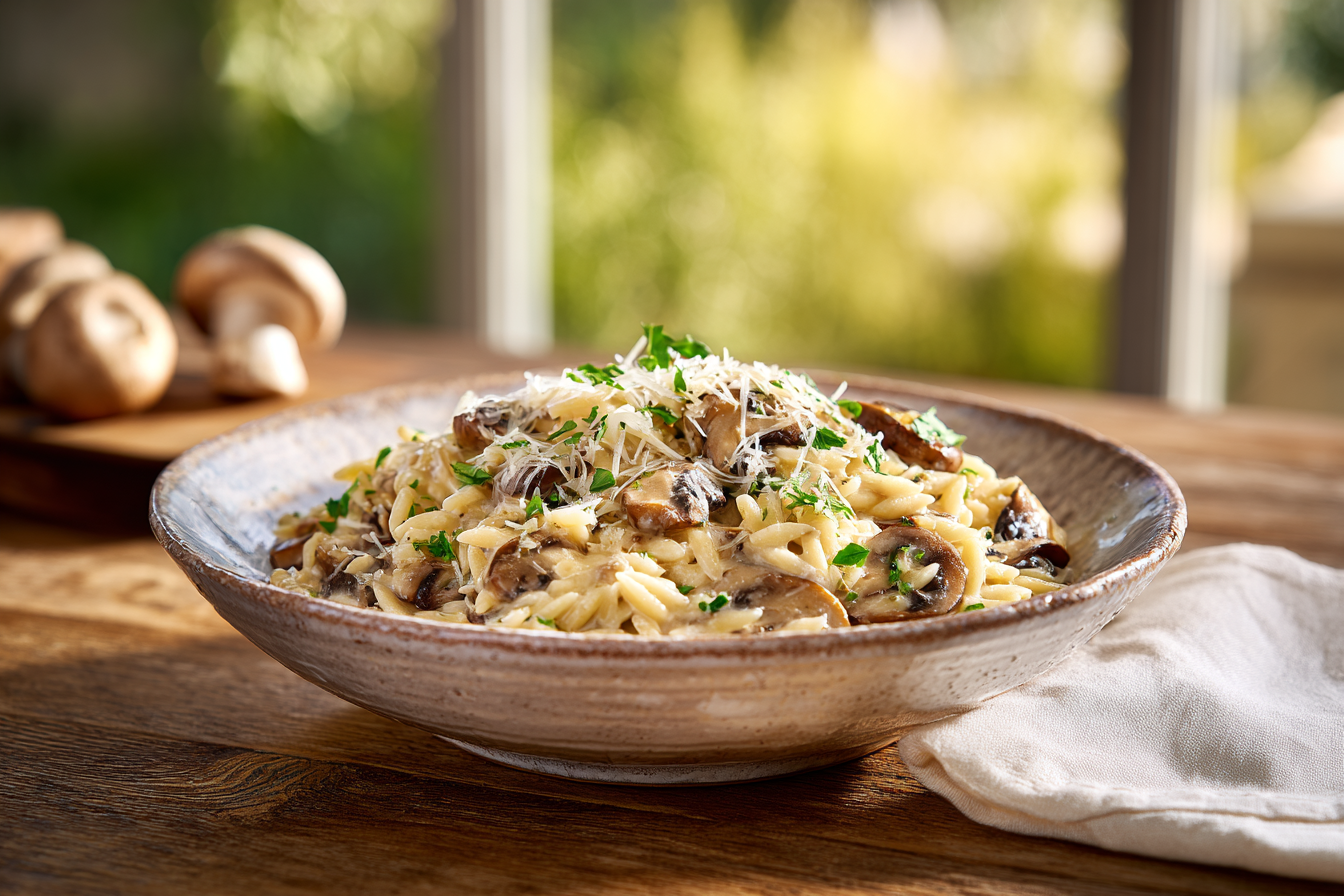
Creamy Mushroom Orzo with Parmesan
Cuisine: Italian4
servings5
minutes35
minutes732
kcalRich, creamy one-pot orzo loaded with browned mushrooms, garlic, white wine, and parmesan for an easy weeknight dinner that tastes like you spent hours cooking.
Ingredients
2 cups (400g) uncooked orzo
1 pound (500g) mushrooms, sliced (chestnut or mixed varieties)
3½ cups (875ml) chicken stock, at room temperature
1 cup (250ml) heavy cream, at room temperature
½ cup (120ml) dry white wine
½ cup (40g) freshly grated Parmesan cheese, plus more for serving
2 tablespoons butter, divided
2 fat cloves garlic, minced
1 medium onion, finely diced
1 tablespoon finely diced fresh parsley, plus more for garnish
2 teaspoons finely diced fresh thyme
Olive oil, as needed
Salt and black pepper, to taste
Directions
- Heat a large pot over medium heat and add a drizzle of olive oil. Add half of the sliced mushrooms in a single layer, making sure not to overcrowd the pan. Let them cook undisturbed for 2-3 minutes until the bottoms turn golden brown, then flip and continue cooking until nicely browned on both sides. Season with a pinch of salt and pepper, then transfer to a bowl and repeat with the remaining mushrooms, adding more oil as needed.
- Reduce heat to medium and melt 1 tablespoon of butter in the same pot. Add the diced onion and cook, stirring occasionally, until it begins to soften and turn translucent, about 3-4 minutes. Add the minced garlic and continue cooking for another minute until fragrant. The onions should be starting to brown around the edges.
- Pour in the white wine and increase heat slightly to bring it to a simmer. Let it bubble and reduce for about 5 minutes, stirring occasionally and scraping up any browned bits from the bottom of the pot. The wine should reduce by at least half and smell mellow and slightly sweet rather than harsh. This step is important for developing depth of flavor.
- Add the uncooked orzo to the pot along with all the cooked mushrooms. Pour in the chicken stock and heavy cream, making sure both are at room temperature to prevent curdling. Sprinkle in the parsley, thyme, and a generous pinch of salt and pepper. Stir everything together well.
- Bring the mixture to a simmer, then reduce heat to low. Cook uncovered, stirring frequently to prevent sticking, for about 15-20 minutes until the orzo is tender and has absorbed most of the liquid. The sauce should be creamy and coat the back of a spoon. If it seems too thick, add a splash more stock; if too thin, simmer a bit longer.
- Remove the pot from heat and stir in the remaining tablespoon of butter and the grated Parmesan cheese. The butter adds extra richness and helps create a silky texture, while the cheese melts into the sauce and adds salty, nutty depth. Stir gently until everything is well combined and the cheese has melted completely.
- Taste the orzo and adjust seasoning with additional salt and pepper if needed. The dish should be creamy but not gloppy, with distinct mushroom pieces throughout and a rich, savory taste. If it seems at all dry, stir in a few tablespoons of reserved stock or cream.
- Serve immediately in warm bowls, topped with extra grated Parmesan and a sprinkle of fresh parsley. The orzo will continue to thicken as it sits, so it’s best enjoyed right away while the sauce is at its creamiest.
Notes
- Use room temperature cream and stock to prevent the cream from curdling when added to the pot. Cold dairy meeting hot liquid can cause separation.
- Brown the mushrooms in two batches to avoid overcrowding. Cramming them all in at once causes steaming instead of browning, which means less flavor.
- Reduce the white wine completely for about 5 minutes until it’s almost evaporated. Undercooked wine will taste harsh and sour in the finished dish.
- Freshly grate Parmesan from a block rather than using pre-shredded. It melts much better and has significantly more flavor.
- Substitute vegetable stock for chicken stock to make this vegetarian. The dish will be slightly less rich but still delicious.
- Leftovers can be stored in the fridge for 2-3 days. Reheat gently on the stovetop with a splash of stock or milk to loosen the sauce.
Frequently asked questions
Q: Can I make this without wine?
A: Yes, though the wine adds acidity and depth that’s hard to replicate. If you skip it, use extra chicken stock and add a squeeze of fresh lemon juice at the end to brighten the dish. The wine’s alcohol mostly evaporates during cooking, leaving behind just the fruity, tangy notes that balance the cream.
Q: What’s the best way to reheat leftover orzo?
A: Reheat it slowly on the stovetop over low heat with a splash of chicken broth, milk, or cream to loosen the sauce. Stir frequently to prevent sticking. Avoid microwaving if possible, as it can make the texture rubbery and cause the cream to separate.
Q: Can I add protein to make this a complete meal?
A: Absolutely. Cooked Italian sausage, grilled chicken, sautéed shrimp, or even rotisserie chicken all work great stirred in at the end. You can also add vegetables like spinach, peas, or asparagus for extra substance without overwhelming the mushroom base.
Q: Why did my sauce turn grainy instead of smooth?
A: This usually happens when cold cream meets very hot liquid, causing it to split. Make sure both your cream and stock are at room temperature before adding them to the pot. Also avoid boiling the sauce vigorously once the cream is added—keep it at a gentle simmer.
