

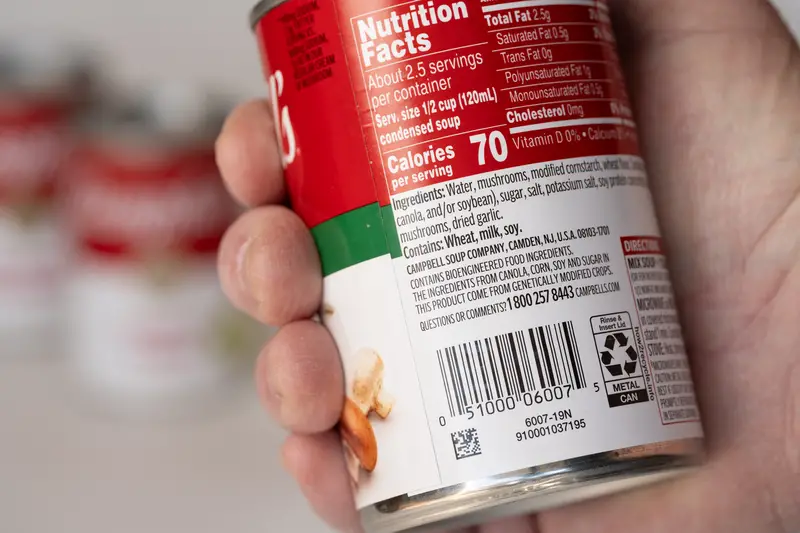
That can of soup sitting on the grocery store shelf might seem like the perfect quick lunch, but there’s a good chance it’s hiding some seriously questionable stuff. Most people just grab whatever looks good on the front of the can without bothering to flip it around and check what’s actually inside. The thing is, some of those ingredients and numbers on the back can be pretty alarming once you know what to look for. Some canned soups pack more salt than you’re supposed to eat in an entire day, while others sneak in enough sugar to rival a bowl of ice cream.
Sky-high sodium levels make most cans a problem
When you see a can of soup advertising itself as hearty or thick, there’s usually a mountain of salt hiding inside. Some brands pack in over 3,000 milligrams of sodium in a single can, which is more than what doctors say you should eat in an entire day. Snow’s New England Style Clam Chowder has 3,020 milligrams per can, while Campbell’s Cream of Chicken sits at 2,175 milligrams. Even if you only eat half the can, that’s still way too much salt for one meal. The problem is that most Americans already eat around 3,500 milligrams of sodium daily without even trying.
The recommended amount sits at 2,300 milligrams per day, with 1,500 being ideal for most people. Too much salt can mess with your blood pressure and create serious heart problems down the line. The good news is that some companies make low-sodium versions, like Health Valley Organic No Salt Added Minestrone with only 100 milligrams per can. If you want to keep things reasonable, look for soups with 140 milligrams or less per serving, which is what actually counts as low-sodium according to heart health experts.
Hidden sodium compounds sneak past most shoppers
Even when you’re watching for sodium on the label, companies use all sorts of tricky names that basically mean salt. Monosodium glutamate gets added to make things taste better, while disodium phosphate keeps the acidity balanced so the soup lasts longer on the shelf. Sodium phosphate works as a thickener and helps preserve the product for months or even years. All of these compounds add to your total sodium intake, but they don’t always register in your brain as salt when you’re reading through the ingredients list quickly.
Companies also use sodium citrate, sodium nitrate, sodium benzoate, and sodium caseinate in their recipes. Each one serves a different purpose, from preservation to texture improvement, but they all contribute to that total sodium count at the top of the nutrition label. Even soups labeled as “reduced-sodium” can still pack in surprisingly high levels because manufacturers need some salt to keep the food from spoiling. The best approach is to check both the sodium number and scan through the ingredients for any words that include sodium in them.
Low protein means you’ll be hungry again soon
Nothing’s worse than eating lunch and feeling hungry again an hour later. Protein is what keeps you feeling full and satisfied, plus it helps your body build muscle and recover from workouts or injuries. Most people need between 46 and 56 grams of protein each day, and soup can actually help you hit that target if you choose the right kind. Progresso makes a line of high-protein soups that pack in 20 to 23 grams per can, including their Tomato Sausage & Lentil soup and Mediterranean-style Meatball & Chicken soup.
The catch is that high protein doesn’t automatically make a soup healthy overall. Campbell’s Chunky Hearty Beef and Barley has 20 grams of protein, which sounds great until you realize the can contains two servings and 1,580 milligrams of sodium total. Compare that to Progresso’s Tomato Sausage & Lentil with 680 milligrams of sodium for the whole can, and you can see why checking multiple numbers matters. Look for soups with at least 15 grams of protein per serving to keep yourself satisfied until your next meal.
Creamy soups pack in saturated fat through thickeners
When you make soup at home, you might add some cream or butter to make it thick and rich. Canned soup companies do the same thing, except they often use full-fat milk, heavy cream, and cheese as the main ingredients to create that texture. These additions bring a lot of saturated fat along with them, which can add up quickly when you’re eating the whole can. New England clam chowder and cream of mushroom soup tend to be the worst offenders because they rely on dairy products to achieve that thick, comforting consistency.
While scientists are still debating exactly how bad saturated fat is compared to what we used to think, moderation is still important. The saturated fats in processed foods aren’t quite the same as what you’d find in fresh ingredients, and eating too much has been linked to high cholesterol. When shopping for creamy soups, try to find options with less than 4 grams of saturated fat per serving. Just remember that “per serving” part, because many cans contain more than one serving, which doubles or triples those fat numbers.
Serving sizes make nutrition labels confusing on purpose
Companies love to play games with serving sizes, and soup is one of the worst offenders. You grab a can thinking it’s your lunch, but the label says it contains 2 or 2.5 servings. Who actually saves half a can of soup for the next day? Most people eat the whole thing in one sitting, which means you need to multiply all those nutrition numbers by 2 or 2.5 to see what you’re really eating. Campbell’s Tomato Soup lists 2.5 servings per can, so if you eat it all, you’re getting way more sodium and sugar than the label makes it seem at first glance.
Some brands are starting to be more honest about this. Progresso’s high-protein soups say “as packaged” for the serving size, meaning the whole can is one serving and the numbers you see are what you’re actually getting. When you’re comparing different soups at the store, check the serving sizes first before looking at anything else. A soup with 800 milligrams of sodium per serving might seem better than one with 600, but if the first one has two servings per can and the second has three, the math changes completely.
Not enough fiber leaves you unsatisfied after eating
Fiber is what keeps your digestive system working properly and helps you feel full for longer after eating. Beans and vegetables are naturally high in fiber, which is why homemade soup can be such a filling meal. The problem is that processed canned soups sometimes skimp on these ingredients or use versions that don’t have as much fiber left in them. When you’re shopping, look for soups with at least 3 grams of fiber per serving to make sure you’re getting something that will actually keep you satisfied.
Some canned soups actually do a decent job with fiber content. Pacific Foods Organic Vegetable Lentil Soup has 4 grams per can, while Amy’s Vegan Split Pea Soup brings 12 grams and their Red Bean and Vegetable version has 9 grams. Lentils, split peas, and beans are your best friends when it comes to finding fiber in soup. If you see these ingredients listed near the top of the label, that’s usually a good sign. Fiber also helps regulate blood sugar and can lower cholesterol, so it’s worth seeking out soups that actually contain a decent amount.
Added sugar turns soup into a dessert in disguise
Who expects their soup to have as much sugar as a bowl of ice cream? Campbell’s Tomato Bisque has 37.5 grams of sugar per can, which is more than what’s in six Oreos or a serving of Ben & Jerry’s Cherry Garcia. That’s absolutely wild for something that’s supposed to be a simple, healthy lunch. The American Heart Association says men should limit added sugar to 36 grams per day and women to 25 grams, so one can of this soup puts you over the limit before you’ve eaten anything else.
Sugar sneaks into canned soup for a few reasons. It balances out acidity in tomato-based soups and helps mask the taste of all that salt. Some companies add it to make their soup taste better than competitors, creating a slightly sweet taste that people find appealing without realizing what they’re eating. The problem is that most Americans already eat way more sugar than they think, precisely because it hides in unexpected places like soup. Check the sugar content on any tomato-based soup before buying, and skip anything with more than 10 grams per serving.
Bulging cans signal dangerous bacteria growing inside
When a can bulges outward or looks swollen, that’s not just cosmetic damage. Gas builds up inside when bacteria start growing and spoiling the food, which pushes against the metal and creates that bulge. In the worst cases, the seal might not have worked properly during manufacturing, letting in clostridium botulinum bacteria. This particular bug loves the low-oxygen, low-acid, high-moisture environment inside cans, and it produces a toxin that can cause botulism, which is potentially deadly.
Botulism isn’t common these days, but it still happens. A 2015 outbreak got traced back to canned potatoes, and a terrible incident in 1919 involving canned olives killed 18 people and led to the first food recall in American history. The scariest part is that you can’t see, smell, or taste the bacteria, so the bulge is your only warning sign. If you drop a can at home and it gets a small dent or scratch, that’s usually fine, but avoid buying heavily dented or bulging cans at the store. It’s just not worth the risk.
BPA in can linings creates long-term exposure concerns
The inside of most cans gets coated with a liner to prevent the metal from affecting the taste of the food and to stop corrosion. For years, this liner contained BPA, which is a chemical that can leak into your food. Many companies have started phasing out BPA because of concerns about what happens when people are exposed to it over long periods of time. The problem is that not all manufacturers have made the switch, and some of the replacement chemicals might have similar issues that just haven’t been studied as much yet.
Look for cans that say “BPA-free” on the label if this matters to you. Some brands advertise this right on the front, while others might mention it in smaller print on the back or side. You can also check the recycling code on the bottom of the can, though this gets a bit technical. Glass jars and cardboard cartons are alternatives that some soup companies use instead of metal cans, which completely avoids the issue. Pacific Foods and Amy’s often package their soups in cartons or glass, giving you options beyond traditional cans.
Next time you’re standing in the soup aisle, take an extra minute to flip those cans around and actually read what’s on the back. The front of the package is designed to make everything look appealing and healthy, but the real story is in those ingredient lists and nutrition labels. Once you know what to avoid, finding decent canned soup gets a lot easier, and you won’t end up accidentally eating a day’s worth of salt or sugar in one sitting.
