

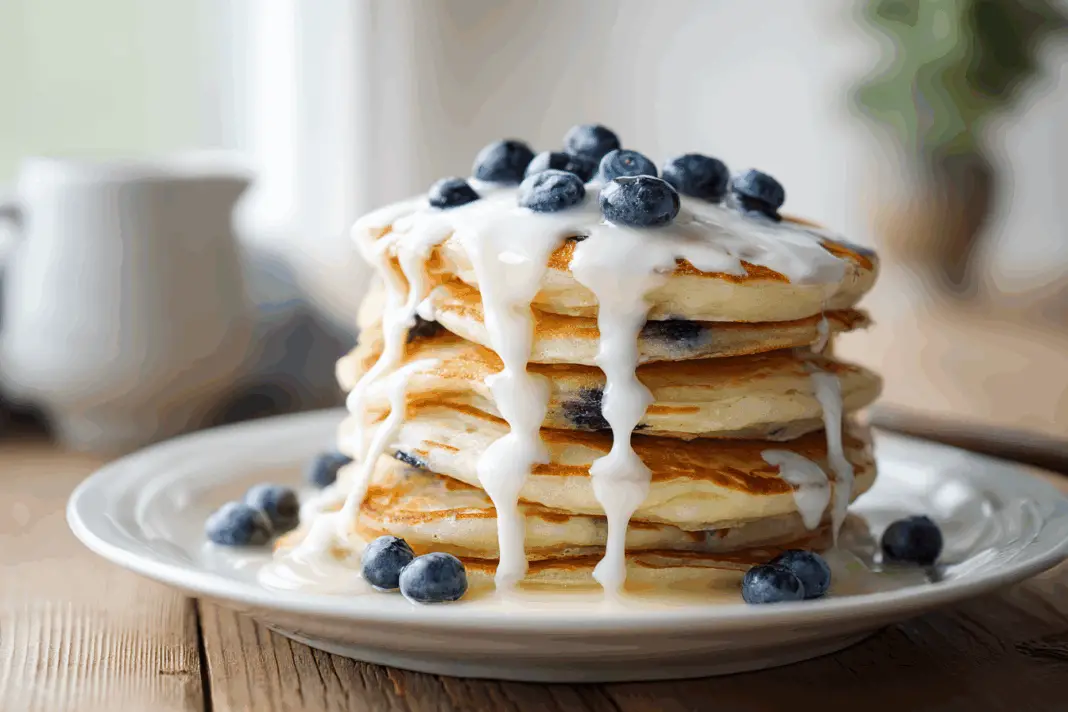
There’s something about waking up on a weekend morning with absolutely nothing to do except make breakfast. Most people reach for cereal or toast, but pancakes are where the magic happens. The trouble with most pancake recipes is they come out flat, tough, or just plain boring. These lemon blueberry pancakes are different though. They puff up thick and high, almost like little clouds on your plate, and the lemon adds this bright zing that makes everything taste more awake. Add fresh blueberries and a sweet vanilla drizzle, and you’ve got something that makes getting out of bed actually worth it.
Why whipped egg whites make all the difference
The secret behind these extra fluffy pancakes comes down to one simple trick that most people skip. Instead of just cracking eggs into the batter and calling it done, you separate one egg white and whip it up until it’s foamy and full of air bubbles. This takes about a minute with a whisk and makes a huge difference. When you fold that whipped egg white into the batter, it creates these tiny air pockets that expand when the pancakes hit the hot pan.
The result is pancakes that puff up almost like a soufflé, with this light and airy texture inside. They’re thick enough to hold all those juicy blueberries without falling apart, and they have this slightly custardy center if you time everything right. The edges set up quickly while the middle stays soft and tender. It’s like the difference between a regular store-bought cake and one that’s been made from scratch with actual care. Once you try pancakes made this way, the regular flat ones just don’t compare anymore.
Getting the lemon flavor just right
When it comes to lemon in baking, most recipes play it safe with just a tiny bit of zest or juice. These pancakes don’t mess around though. You’re using the juice and zest from two whole lemons, which sounds like a lot until you taste how perfectly it balances with the sweet blueberries. The zest is where most of the lemon oil lives, and rubbing it into the sugar before mixing releases all those aromatic oils that make everything smell amazing.
Fresh lemon juice is really important here because the bottled stuff just tastes flat and artificial. A real lemon gives you that bright, tart punch that wakes up the batter without making things too sour. The acid in the lemon juice also reacts with the baking soda to create extra lift and fluffiness. If you’ve only got one lemon in your fridge, you can make it work, but two lemons really brings everything together. The lemon doesn’t overpower the blueberries either. Instead, it makes them taste even more berry-like and fresh.
The right way to add blueberries
Here’s where a lot of people mess up their blueberry pancakes. If you stir frozen or fresh blueberries directly into the batter before cooking, a few things go wrong. First, frozen berries can turn your batter an unappetizing purple-gray color as they thaw and bleed. Second, the weight of all those berries makes them sink to the bottom, so you end up with uneven distribution. Some pancakes get loaded with fruit while others barely have any.
The better method is to pour your pancake batter into the hot pan first, then gently press five or six blueberries into the top of each pancake. This keeps the berries from falling through the batter, and it makes flipping so much easier because everything stays contained. The berries on top cook into the pancake as it sets, and all that sweet juice stays locked inside instead of running all over your pan. When you cut into the stack later, you get these little bursts of warm blueberry that haven’t turned mushy or fallen apart. Both fresh and frozen blueberries work fine, but don’t bother thawing frozen ones first.
Why buttermilk beats regular milk
Buttermilk shows up in a lot of pancake recipes, and there’s a good reason for that. It’s thicker than regular milk, which helps create a batter that doesn’t spread too thin in the pan. More importantly though, buttermilk is acidic, and when it meets baking soda, you get a chemical reaction that produces carbon dioxide bubbles. Those bubbles are what give you that light, fluffy texture everyone wants in pancakes.
If you don’t have buttermilk sitting around, Greek yogurt mixed with regular milk works just as well. The thick consistency and tangy taste do the same job. Some recipes call for adding lemon juice to regular milk to make a quick substitute, which works in a pinch since you’re already using lemon in this recipe anyway. The key is making sure your batter stays thick rather than runny. Thick batter holds its shape when you pour it into the pan, creating those tall, fluffy pancakes instead of thin crepes. The slight tanginess from buttermilk also complements the lemon and blueberry without fighting with them.
Temperature control makes or breaks your pancakes
The most common pancake mistake happens before the batter even hits the pan. People crank the heat up to medium-high or high, thinking it’ll cook faster, then wonder why their pancakes burn on the outside while staying raw in the middle. These thick, fluffy pancakes need gentle, steady heat to cook all the way through without scorching. Medium-low heat is your friend here, especially if you’re using an electric stove that holds heat longer than gas.
Your pan needs time to warm up evenly before you start cooking. Let it heat for a few minutes, then test it by sprinkling a few drops of water on the surface. If the water sizzles and evaporates immediately, you’re ready. If your butter starts turning brown or smoking right away, the pan is too hot. These pancakes take about two to three minutes per side, and they should develop a nice golden-brown color without burning. The edges will look set and slightly dry before you flip. If things are browning too fast or too slow, adjust your heat accordingly and give the pan a minute to stabilize.
Making the vanilla drizzle while pancakes cook
Sure, maple syrup tastes good on pancakes, but this lemon zest drizzle takes things in a different direction. It’s basically a simple glaze made from powdered sugar, lemon juice, lemon zest, and a splash of milk. You whisk everything together in a bowl until it’s smooth and pourable, which takes maybe two minutes. The consistency should be thick enough to coat the back of a spoon but thin enough to drizzle without clumping.
The beauty of this drizzle is how it echoes the lemon that’s already in the pancakes without being too sweet or heavy. Maple syrup can sometimes overpower delicate things, but this glaze lets the lemon and blueberry shine through. You can make it while your first batch of pancakes cooks, and it stays pourable at room temperature. Some people like adding a drop of vanilla extract to the drizzle for extra depth, which works really well. The bright citrus flavor complements the warm, slightly tangy pancakes better than any store-bought syrup ever could. If you want to get fancy, you can even make a blueberry compote to go alongside it.
The best pans and spatulas for flipping
Flipping thick, fluffy pancakes loaded with blueberries can feel intimidating, especially when you’re worried about batter flying everywhere. The right equipment makes this so much easier. A good nonstick pan or well-seasoned cast iron griddle lets you use less butter and prevents sticking. Some people swear by electric griddles because you can control the exact temperature and cook multiple pancakes at once.
When it comes to spatulas, a large, thin fish spatula works better than those thick plastic turners. The thin edge slides under the pancake easily without tearing it apart, and the larger surface area supports the whole pancake when you flip. You want to slide the spatula about three-quarters of the way under the pancake before lifting and flipping in one confident motion. Hesitating or flipping too slowly can cause batter to drip or berries to fall out. If a blueberry does escape, just nudge it back under the pancake with your spatula. After flipping, let the second side cook until it’s the same golden-brown color as the first. These pancakes are thick enough that they need the full cooking time on both sides.
Keeping pancakes warm while you finish cooking
Unless you have a huge griddle, you’re probably cooking these pancakes in batches. The first batch comes out perfect and hot, but by the time you finish the last one, the early pancakes have gone cold and lost that fresh-off-the-pan magic. The restaurant trick is keeping finished pancakes warm without continuing to cook them. The easiest method is turning your oven to the lowest setting, usually around 200 to 250 degrees, and putting a serving platter inside.
As each pancake finishes cooking, transfer it to the warm platter in the oven and keep the door closed. This holds the temperature without drying them out or making them tough. If you’re just cooking for yourself or one other person, you can skip the oven and use a simpler trick. Microwave a plate for about 30 seconds until it’s warm, then stack your finished pancakes on it and keep the microwave door closed. The residual heat from the plate keeps everything warm and soft while you cook the rest. Either way, everyone gets to eat hot pancakes at the same time instead of watching the first person eat while waiting for more.
What to do with leftover batter and pancakes
This recipe makes about ten pancakes, which might be too much for one or two people but not quite enough for a big crowd. The batter keeps in the fridge for a few hours if you want to make some now and more later, but don’t push it past that. The leavening agents start losing their power once everything gets mixed together, and your later pancakes won’t be as fluffy. If you do refrigerate the batter, give it a gentle stir before using it again since things might have separated a bit.
Leftover cooked pancakes actually freeze really well, which makes them perfect for meal prep. Let them cool completely, then stack them with small pieces of parchment paper between each one so they don’t stick together. Put the whole stack in a freezer bag and freeze for up to three months. When you want pancakes during the week, just pop one or two in the toaster or microwave until heated through. The lemon and blueberry hold up surprisingly well to freezing. They won’t be quite as perfect as fresh, but they’re way better than anything you’d buy frozen at the store. You can make a double batch on Sunday and have quick breakfasts ready for the whole week.
Making pancakes from scratch might seem like more work than opening a box mix, but these lemon blueberry ones prove that homemade doesn’t have to be complicated. The whipped egg white, fresh lemon, and careful cooking technique create something way better than the flat, boring pancakes most people settle for. Once you get the hang of the timing and temperature, you can turn these out just as quickly as the packaged stuff. Weekend mornings deserve something special, and these fluffy stacks with their bright citrus zing and bursts of blueberry definitely qualify.
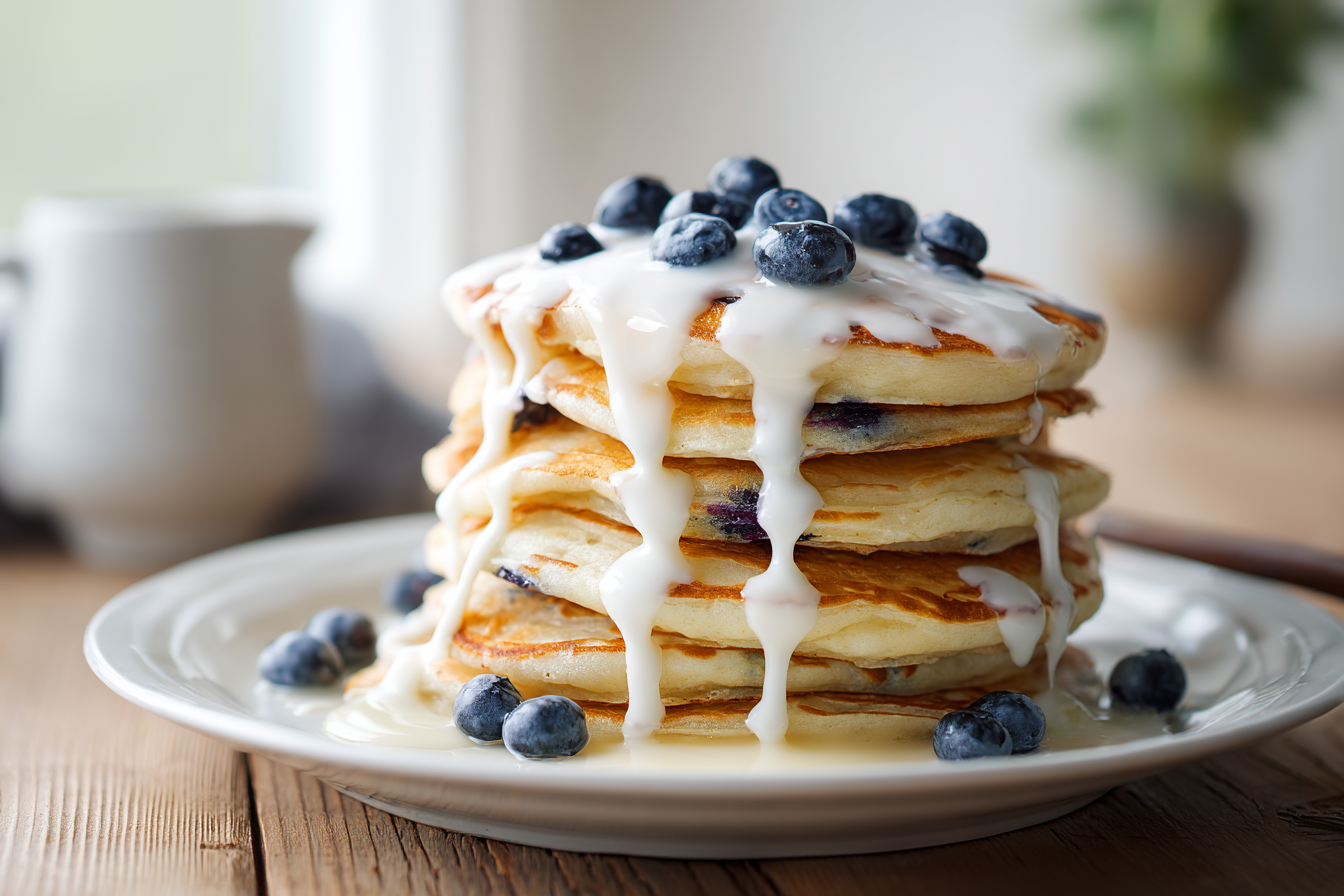
Fluffy Lemon Blueberry Pancakes With Warm Vanilla Drizzle
Cuisine: American10
servings15
minutes20
minutes208
kcalLight and airy pancakes loaded with fresh blueberries and bright lemon, topped with a sweet vanilla lemon drizzle that beats maple syrup any day.
Ingredients
2 cups all purpose flour
1 tablespoon granulated sugar
1/2 teaspoon baking soda
1 cup whole milk (can substitute buttermilk)
3 large eggs (2 whole eggs plus 1 egg white)
1/2 teaspoon vanilla extract
2 lemons (juice and zest)
1/2 cup whole blueberries (fresh or frozen)
2-3 tablespoons unsalted butter for cooking
- For the Lemon Vanilla Drizzle:
1 cup powdered sugar
1 lemon (juice and zest)
2 teaspoons whole milk
1/2 teaspoon vanilla extract
Directions
- In a medium mixing bowl, whisk together the flour, sugar, and baking soda until well combined and set aside. This ensures all your dry ingredients are evenly distributed before adding the wet ingredients. Make sure there are no lumps of baking soda.
- In a separate bowl, whisk together the milk, vanilla extract, and two whole eggs until everything is thoroughly combined and slightly frothy. The mixture should be smooth with no streaks of egg yolk visible. Set this wet mixture aside while you prepare the egg white.
- Separate the remaining egg and place just the egg white in a small bowl. Whisk vigorously for about 60 seconds until the egg white becomes very fluffy and has visible bubbles throughout. This whipped egg white is what gives the pancakes their signature fluffy texture, so don’t skip this step.
- Pour the wet milk mixture into the flour mixture and stir gently until just combined. Add the lemon juice and zest, stirring until incorporated throughout the batter. Gently fold in the whipped egg white using a spatula, mixing just until the white disappears into the batter. The batter should be thick with some small lumps remaining, which is perfectly fine.
- Heat a large nonstick skillet or griddle over medium-low heat and add 1 tablespoon of butter, letting it melt and coat the pan. Working in batches, scoop about 2 tablespoons of batter for each pancake onto the hot surface. After pouring the batter, gently press 5-6 blueberries into the top of each pancake rather than mixing them into the batter.
- Let the pancakes cook undisturbed for 2-3 minutes until you see small bubbles forming on the surface and the edges look set and slightly dry. Use a large spatula to carefully peek underneath, and when you see golden-brown edges, flip the pancake in one confident motion. Cook for another 2-3 minutes on the second side until both sides are evenly golden brown.
- Transfer cooked pancakes to a warm plate and repeat the cooking process with remaining batter, adding 1 tablespoon of butter to the pan between batches as needed. If your pan starts getting too hot and the butter begins to burn, reduce the heat slightly and wipe out any burnt bits with a paper towel before continuing.
- While the pancakes cook, make the drizzle by whisking together the powdered sugar, lemon juice, lemon zest, milk, and vanilla extract in a small bowl until smooth and pourable. The consistency should be thick enough to coat a spoon but thin enough to drizzle easily. Serve the hot pancakes immediately with a generous drizzle of the lemon vanilla sauce over the top.
Notes
- For the fluffiest results, make sure to whip the egg white for the full 60 seconds until it’s very foamy and full of air bubbles. This creates the light, almost soufflé-like texture that makes these pancakes special.
- If using frozen blueberries, do not thaw them first. Add them directly to the pancakes frozen to prevent the purple color from bleeding into the batter.
- The batter should be thick, not thin and pourable like crepes. If your batter seems too thin, add a tablespoon more flour. If it’s too thick to scoop easily, add a splash more milk.
- Fresh lemon juice and zest make a huge difference in taste compared to bottled lemon juice. The fresh stuff has a brighter, more vibrant citrus punch.
- Keep finished pancakes warm in a 200-250°F oven on a baking sheet while you cook the remaining batches so everyone can eat hot pancakes together.
- Leftover pancakes can be frozen with parchment paper between each one and reheated in the toaster or microwave for quick weekday breakfasts.
Frequently asked questions
Q: Can I make the batter the night before?
A: The batter doesn’t hold up well overnight because the leavening agents start working as soon as they mix with liquid. You can whisk the dry ingredients together the night before and store them in an airtight container, then just add the wet ingredients in the morning. This saves time without sacrificing the fluffy texture.
Q: Why are my pancakes burning on the outside but raw in the middle?
A: Your pan is too hot. These thick pancakes need gentle heat to cook all the way through without burning. Turn your burner down to medium-low or low and give the pan a minute to cool slightly before continuing. If they’re already browning too much, you can also cover the pan with a lid after flipping to help steam the center.
Q: Can I substitute something for buttermilk?
A: Regular whole milk works fine in this recipe, or you can make a quick buttermilk substitute by mixing two-thirds cup of milk with one-third cup of Greek yogurt. The yogurt adds the same tanginess and thickness that buttermilk provides, and it reacts with the baking soda for extra fluffiness.
Q: How do I keep pancakes from sticking to the pan?
A: Make sure your pan is properly heated before adding batter, and use a nonstick skillet or well-seasoned cast iron. Adding a bit of butter to the pan before each batch helps, but if your butter starts burning, wipe the pan clean and start fresh. Sometimes pans need to be re-seasoned if food consistently sticks.
