

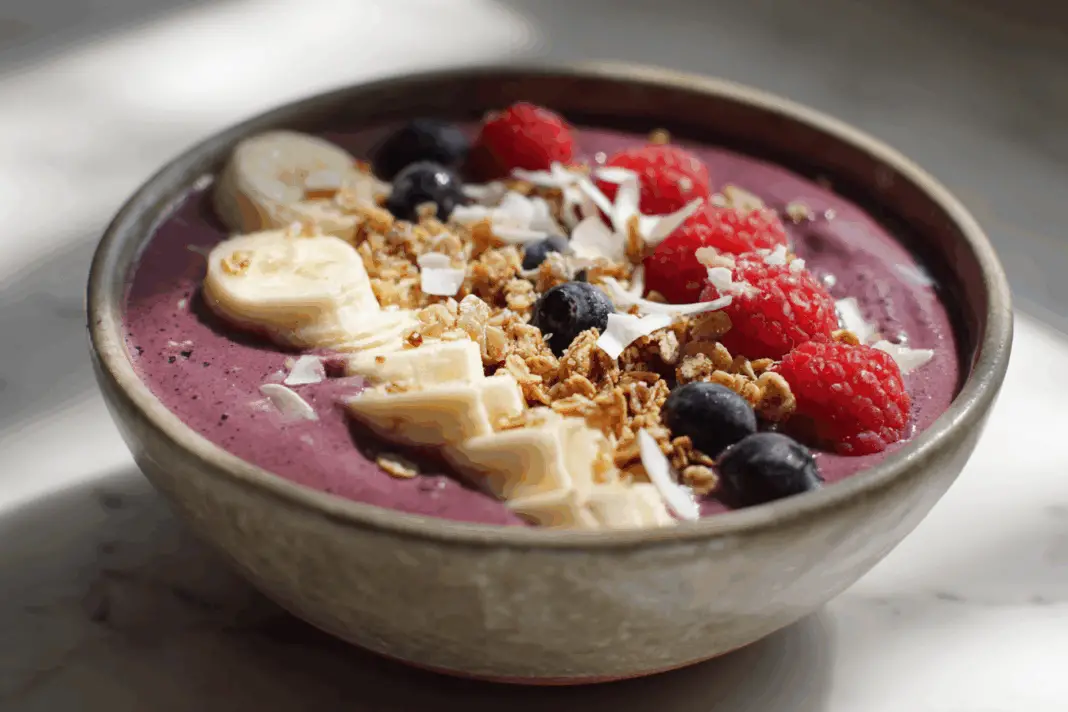
Smoothie bowls have become the breakfast that makes you feel like you’re having dessert first thing in the morning. Instead of drinking your smoothie through a straw and feeling hungry an hour later, this thick and creamy version gets eaten with a spoon and keeps you satisfied until lunch. The secret is using frozen fruit to create that perfect ice cream-like texture, then topping it with crunchy granola and fresh berries that actually sit on top instead of sinking through. It’s basically the grown-up version of having a sundae for breakfast, except this one won’t make you crash before your first coffee break.
Why frozen bananas make all the difference
The biggest mistake people make with smoothie bowls is using fresh fruit and ending up with something thin enough to drink. Frozen bananas are the secret weapon here because they create that thick, creamy base that feels more like soft serve ice cream than a regular smoothie. You want bananas that are really ripe with brown spots all over them before you freeze them, because that’s when they’re sweetest and most flavorful. The starch has converted to sugar at that point, which means you don’t need to add any honey or maple syrup to make this taste good.
Freezing bananas the right way makes a huge difference in how easy they are to blend. Always peel them first because trying to peel a frozen banana is basically impossible and not worth the frustration. Slice them into chunks before freezing so your blender doesn’t have to work as hard, and store them in a sealed bag where they’ll keep for two to three months. Having a stash of frozen bananas ready to go means you can make smoothie bowls whenever the craving hits without waiting for fruit to freeze.
Getting that perfect thick consistency every time
The texture is what separates a smoothie bowl from a regular smoothie, and it all comes down to using as little liquid as possible. Start with just one-third cup of almond milk or whatever milk you prefer, and only add more if your blender absolutely refuses to move. Too much liquid and you’ll end up with something you need to drink instead of eat, which defeats the whole purpose of having a bowl situation. A high-powered blender makes this easier, but even a regular blender works if you’re patient and willing to stop and push things down toward the blades a few times.
All your fruit should be frozen for the best results, not just the bananas. Frozen berries are actually better than fresh ones for this because they’re picked at peak ripeness and flash-frozen right away. Wild blueberries work especially well because they’re smaller and blend more smoothly than regular blueberries. The goal is a mixture so thick that you can stick a spoon in it and the spoon stands up on its own. That’s when you know you’ve nailed the consistency and your toppings will actually stay on top instead of disappearing into the bowl.
Choosing between raspberries and strawberries for color
Both raspberries and strawberries work great in this recipe, but they give you slightly different results. Raspberries create this gorgeous purple-pink color when blended with blueberries, and they have a slightly tart edge that balances out the sweetness from the bananas. Strawberries make the color a bit more red-pink and taste sweeter overall. Either way, you’re getting a bowl that looks amazing enough to photograph before you eat it, which is half the fun of making these things.
Frozen berries are way more affordable than fresh ones, especially when berries aren’t in season. A bag of mixed frozen berries from the grocery store works perfectly fine and costs less than buying three separate containers of fresh berries. Store brand frozen berries taste just as good as the fancy ones for this purpose since everything gets blended together anyway. The only time fresh berries really matter is when you’re using them as toppings on your finished bowl, where their appearance and texture actually make a difference.
Adding avocado without tasting it
This sounds weird if you’ve never tried it, but adding half an avocado to your smoothie bowl makes it incredibly creamy without adding any avocado taste. The berries and banana completely cover up the avocado flavor, but you get all the benefits of those healthy fats that keep you full longer. It’s the same trick that makes chocolate avocado pudding work, where the avocado just acts as a creamy base without announcing its presence. If you’re skeptical, try it once and you’ll be surprised at how well it disappears into the background.
Using avocado also means you can use even less liquid because the avocado itself adds moisture and helps everything blend together smoothly. Make sure your avocado is ripe but not overripe, because you want it soft enough to blend easily but not so ripe that it tastes funky. The avocado basically acts like natural cream without any dairy, which is perfect if you’re trying to avoid milk or just want an extra boost of nutrition. Some people even sneak kale or spinach into their berry smoothie bowls using the same principle, though the color will definitely change if you go that route.
The almond crunch topping that makes it special
A smoothie bowl without toppings is just a smoothie you’re eating with a spoon, which is why the crunch factor matters so much. Granola with almonds gives you that satisfying crunch that makes this feel like a complete meal instead of just a snack. The combination of creamy and crunchy textures in the same bite is what makes smoothie bowls so much more interesting than regular smoothies. You can use any granola you like, but ones with almonds and a touch of vanilla work especially well with berry smoothies.
Regular cereal works as a more affordable alternative to granola if you’re making these bowls often and don’t want to spend a fortune on fancy granola. Look for cereals with whole grains and actual nuts in them rather than the sugar-bomb kids’ cereals. Cascadian Farm makes a French Vanilla Almond Granola that’s perfect for this, or you can try their Cranberry Almond Crunch for something a bit different. The key is having something substantial enough that it doesn’t immediately get soggy when it touches the smoothie, so avoid anything too delicate or flaky.
Fresh fruit toppings that add visual appeal
This is where you can get creative and make your bowl look like something from a cafe instead of your regular Tuesday morning. Sliced strawberries, fresh blueberries, and banana coins arranged on top make the whole thing look impressive even though it only takes an extra minute. The fresh fruit on top tastes different from the frozen fruit in the base, giving you two different berry experiences in one bowl. It’s not necessary for taste, but it definitely makes eating breakfast more fun when it looks this good.
Other toppings worth trying include sliced mango, which adds a tropical sweetness, or fresh raspberries if you used strawberries in your base. Kiwi slices look really pretty and add a bright green color that contrasts with the purple-pink smoothie. You don’t need to go overboard with ten different toppings, though. Three or four different elements arranged nicely is plenty to make your bowl look great and taste even better. The goal is to have different textures and temperatures happening at once, with the cold creamy base and the room temperature toppings.
Seeds and coconut for extra nutrition
Chia seeds and ground flaxseed are those tiny additions that make you feel like you’re really doing something good for yourself without changing the taste much. A sprinkle of chia seeds adds some crunch and omega-3s without being overwhelming or noticeable. Flax seeds need to be ground to get any nutritional benefit, but once they’re ground they have this mild nutty taste that works well with berries. Both of these are optional, but they’re an easy way to boost the nutrition content if that matters to you.
Coconut flakes add a tropical vibe and another type of crunch that’s different from the granola. Look for unsweetened coconut flakes if you can find them, since the smoothie base is already sweet enough from the fruit. Some people toast their coconut flakes first for extra flavor, but that’s definitely a bonus step rather than a requirement. Hemp seeds are another option that adds protein and healthy fats without much taste. The nice thing about all these seeds and add-ins is that you can customize based on what you have in your pantry rather than buying a bunch of special ingredients.
Making smoothie bowls work on busy mornings
The whole process from blender to bowl takes about five minutes, which is faster than making eggs or waiting for oatmeal to cook. The trick is having your frozen fruit ready to go and your toppings where you can grab them quickly. If you prep a bunch of frozen banana bags on Sunday, you’re set for the whole week without any extra morning effort. Keep a container of pre-washed berries in the fridge and your granola in an easy-to-reach spot, and you can throw this together even on your most rushed mornings.
Some people even portion out their smoothie ingredients in individual freezer bags so they can just dump one bag into the blender and go. Each bag gets two frozen bananas, a half cup of blueberries, a half cup of raspberries or strawberries, and whatever else you want to include. Then in the morning you just add your liquid and blend. It’s basically the homemade version of those expensive smoothie packs you can buy at grocery stores, except way cheaper and you control exactly what goes in them. The bowls are filling enough that you won’t need a snack before lunch, which saves time in the long run too.
Why eating with a spoon beats drinking smoothies
There’s actual science behind why eating your smoothie instead of drinking it makes you feel more satisfied. When you eat something with a spoon, your brain registers it as a meal rather than just a drink. You slow down and take more time to finish it, which gives your body a chance to realize it’s getting full. Drinking a smoothie can be done in two minutes flat, but eating a smoothie bowl takes at least ten minutes with all the different textures and toppings to work through.
The toppings make a huge difference in how satisfying the whole experience feels. Each spoonful is different depending on whether you get more granola, more fresh fruit, or more of the creamy base. It keeps your breakfast interesting from the first bite to the last one, instead of just chugging the same taste over and over. Plus there’s something about eating breakfast from an actual bowl that feels more substantial and meal-like than drinking from a cup or bottle. It’s the same amount of food technically, but your brain doesn’t know that and treats it like a real sit-down breakfast.
Smoothie bowls have earned their place as a breakfast that actually works for busy mornings without sacrificing taste or satisfaction. The combination of frozen fruit creating that perfect creamy base, crunchy granola on top, and fresh berries adding pops of flavor makes every bite different and interesting. You get something that feels indulgent and special while still being quick enough to make before work and substantial enough to keep you going until lunch. Whether you stick with the basic recipe or start experimenting with different fruits and toppings, this is one breakfast trend that’s worth the hype and simple enough to become part of your regular routine.
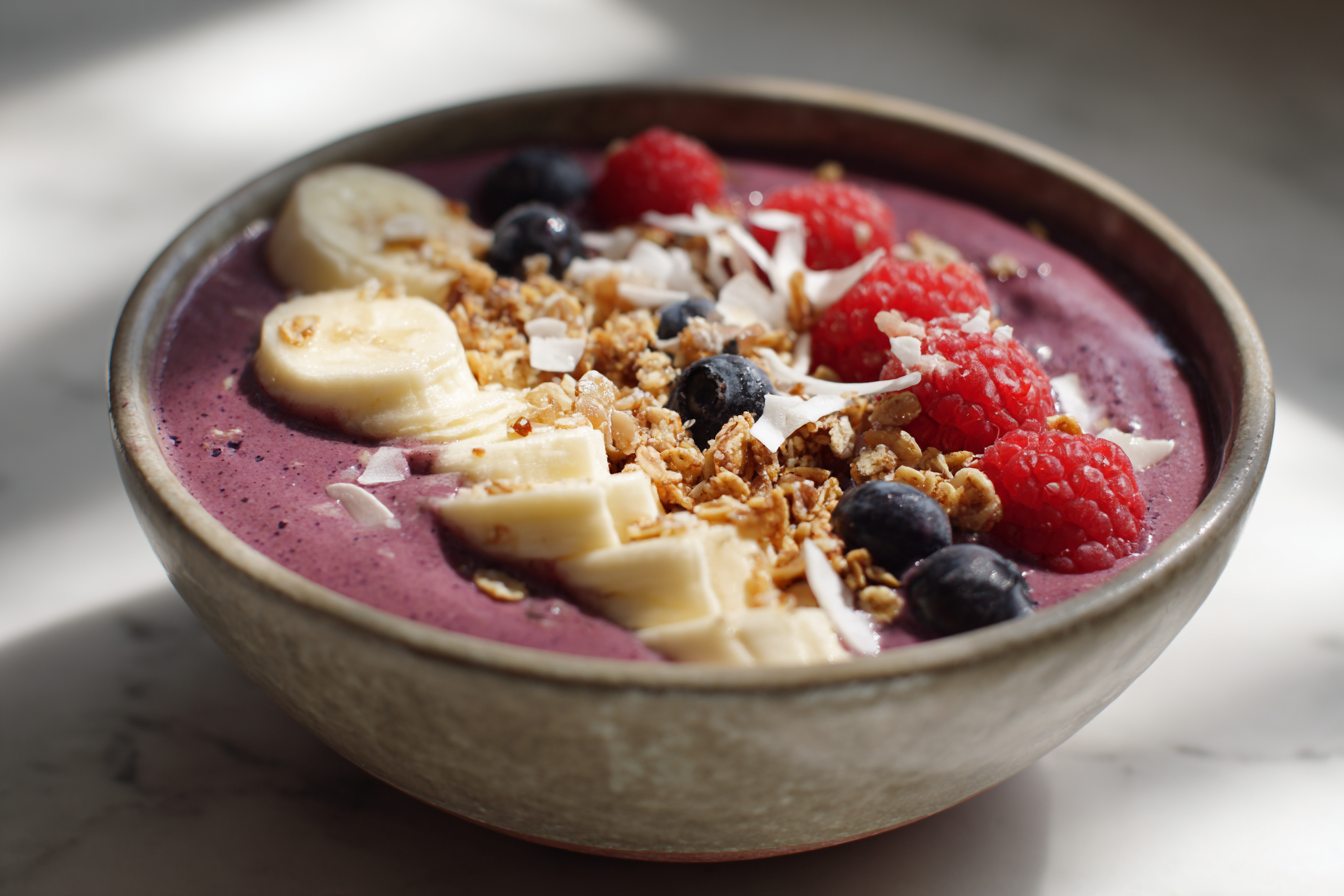
Fresh Berry Smoothie Bowl With Almond Crunch
Cuisine: American2
servings5
minutes305
kcalThis thick and creamy berry smoothie bowl tastes like ice cream for breakfast and keeps you full until lunch.
Ingredients
2 to 3 frozen ripe bananas, pre-sliced
1 cup frozen blueberries
1 cup frozen raspberries or strawberries
1/4 to 1/3 cup unsweetened almond milk or milk of choice
1 large handful chopped kale (optional)
1/2 avocado, peeled and pit removed (optional)
1/2 cup granola with almonds
Fresh strawberries and blueberries for topping
Chia seeds, coconut flakes, and sliced banana for topping
Directions
- Let your frozen bananas sit at room temperature for about five minutes to make blending easier. While they’re thawing slightly, gather your other frozen fruit and toppings so everything is ready to go.
- Add the frozen banana pieces, frozen blueberries, and frozen raspberries or strawberries to your blender. If using optional ingredients like kale or avocado, add those now as well.
- Pour in just one-quarter cup of almond milk to start. The goal is to use as little liquid as possible to keep the mixture thick and creamy like soft serve ice cream.
- Blend on high speed, stopping to scrape down the sides as needed. If your blender is struggling and the mixture won’t move at all, add another tablespoon or two of milk. Keep blending until the mixture is completely smooth with no chunks of fruit remaining.
- Test the consistency by sticking a spoon into the smoothie. It should be thick enough that the spoon stands up on its own without falling over. If it’s too thin, you’ve added too much liquid.
- Divide the smoothie mixture between two bowls, using a spatula to scrape out every bit from the blender. The mixture should be thick enough that it doesn’t spread out immediately when spooned into the bowl.
- Add your granola with almonds on top, sprinkling it across half the bowl or making a line down the center. Arrange fresh strawberries and blueberries around the granola for color and freshness.
- Finish with a sprinkle of chia seeds, coconut flakes, and sliced banana. Add any other toppings you like, but don’t overload the bowl or you’ll cover up that beautiful purple-pink color underneath. Eat immediately with a spoon while the smoothie is still frozen and the toppings are crunchy.
Notes
- Always use ripe bananas with brown spots before freezing them. Unripe bananas that are still green or solid yellow will taste starchy and won’t provide enough sweetness.
- Freeze bananas by peeling them first, slicing into chunks, and storing in a sealed freezer bag for up to three months. Trying to peel frozen bananas is nearly impossible.
- Wild blueberries blend more smoothly than regular blueberries and are often sold in the frozen section at stores like Whole Foods under their 365 brand.
- If your smoothie turns out too thin, you can add a few ice cubes and blend again to thicken it up, though this will dilute the berry taste slightly.
- A high-powered blender like a Vitamix makes this much easier, but a regular blender works fine if you’re patient and willing to stop and push ingredients down a few times.
- The avocado is completely optional but adds amazing creaminess without any avocado taste. The berries and banana completely mask it.
Frequently asked questions
Q: Can you make smoothie bowls the night before?
A: Not really, because the texture changes when frozen smoothie sits overnight. The toppings will get soggy and the smoothie itself becomes icy rather than creamy. You can prep your ingredients in bags the night before, but blend it fresh in the morning for best results. It only takes five minutes anyway.
Q: Why is my smoothie bowl not thick enough?
A: You’re probably using too much liquid. Start with just a quarter cup and only add more if absolutely necessary to get the blender moving. Also make sure all your fruit is completely frozen, not just cold. Fresh fruit will make your smoothie too thin no matter how little liquid you use.
Q: Can you use fresh berries instead of frozen?
A: Fresh berries won’t give you that thick ice cream texture that makes smoothie bowls special. You’ll end up with a regular smoothie consistency that’s too thin to hold toppings. Frozen berries are also cheaper when berries aren’t in season, so there’s no real reason to use fresh ones in the base.
Q: What can I use instead of almond milk?
A: Any milk works fine, including regular dairy milk, oat milk, coconut milk, or even just water. Coconut milk makes it extra creamy, while water keeps it lighter. Some people even use coconut water for a slightly tropical taste. The type of liquid doesn’t matter as much as using very little of it.
