

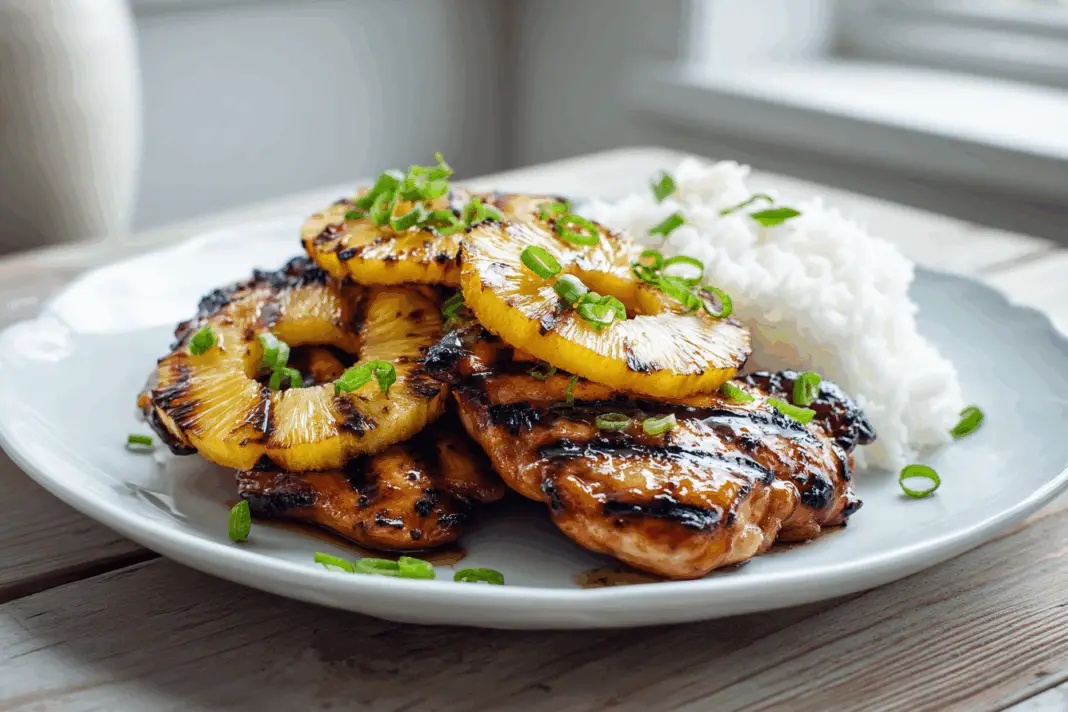
The smell of teriyaki chicken on a hot grill is one of those things that immediately makes you hungry. But here’s the thing most people don’t realize: getting that perfect sweet and tangy sauce with juicy, tender chicken isn’t as complicated as you might think. You don’t need fancy ingredients or special equipment. This grilled pineapple teriyaki chicken recipe delivers that authentic taste you’d get from a food truck in Hawaii, right in your own backyard. The secret is in the marinade and knowing which cut of chicken to use.
Why chicken thighs make all the difference
Most people automatically reach for chicken breasts when they’re grilling, but that’s actually a mistake when it comes to teriyaki chicken. Chicken breasts dry out way too easily on the grill, no matter how careful you are. The meat just doesn’t have enough fat to stay juicy through the cooking process. You end up with something that tastes more like cardboard than the tender, moist chicken you were hoping for.
Boneless, skinless chicken thighs are the real winner here. They have more fat running through the meat, which keeps them juicy even when they’re exposed to high heat. That dark meat also has more depth than white meat, which pairs perfectly with the sweet and salty teriyaki sauce. If you’ve been struggling to get your grilled teriyaki chicken right, switching to thighs will solve about 90% of your problems. They’re also usually cheaper than breasts, which is a nice bonus.
Making your own teriyaki sauce is easier than buying it
Store-bought teriyaki sauce seems convenient until you flip the bottle over and see all those weird ingredients you can’t pronounce. Plus, most bottled versions are either way too sweet or taste more like salt than anything else. The good news is that making your own teriyaki marinade takes about five minutes and uses ingredients you probably already have. You need soy sauce, brown sugar, pineapple juice, garlic, and fresh ginger. That’s it.
Mix one cup of soy sauce with one cup of packed brown sugar and one cup of pineapple juice. Add four chopped garlic cloves and a tablespoon of minced fresh ginger. The brown sugar balances out the saltiness of the soy sauce, while the pineapple juice adds that tropical sweetness and helps tenderize the chicken. Fresh ginger gives it that authentic kick you can’t get from bottled sauce. This marinade works double duty too – you use it to marinate the chicken, then boil the leftover marinade to make a sauce for serving. Nothing goes to waste.
The overnight marinade actually matters
When a recipe says to marinate for at least four hours, it’s not just a suggestion. The chicken needs time to soak up all those sweet and savory notes from the sauce. If you only marinate for an hour or two, you’ll get sauce on the outside but bland chicken on the inside. That’s not what you want. The longer the chicken sits in that marinade, the more the acids from the pineapple juice break down the meat fibers and let all those good ingredients penetrate deep into the chicken.
The best approach is to throw everything into a bowl or plastic bag the night before you plan to grill. Put it in the fridge and forget about it until the next day. When you’re ready to cook, the chicken will be fully loaded with that teriyaki goodness all the way through. Some people worry about marinating too long, but with this recipe, even 24 hours works perfectly fine. The pineapple juice is acidic enough to tenderize but not so strong that it turns the chicken mushy.
Don’t throw away that marinade
Here’s where a lot of people make a big mistake. They marinate their chicken, then pour all that marinade down the drain because they think it’s not safe to use. That’s throwing away perfectly good sauce! The trick is knowing how to make it safe to eat after it’s been touching raw chicken. You can’t just brush it on the cooked chicken straight from the bowl – that would definitely make someone sick. But with one simple step, you can turn it into a delicious sauce.
Pour the used marinade into a saucepan and bring it to a full boil. Once it’s boiling, reduce the heat and let it simmer for at least five to ten minutes. This kills any bacteria from the raw chicken and also thickens the sauce slightly, making it perfect for drizzling over your finished dish. Keep some of this cooked sauce in a separate bowl for brushing on the chicken while it grills, and save the rest for serving. This method gives you way more bang for your buck and ensures nothing goes to waste.
Getting your grill temperature right
Grilling chicken seems straightforward, but the temperature makes a huge difference between juicy meat and dried-out disappointment. You want your grill at medium-high heat, which is around 400 degrees if your grill has a thermometer. Too hot and the outside will char before the inside cooks through. Too low and the chicken will just steam instead of getting those nice grill marks and that slightly smoky taste you’re after.
Let your grill preheat for at least 10 minutes before you put the chicken on. When you place the thighs on the grates, you should hear that satisfying sizzle. Cook them for about five to seven minutes per side, depending on how thick they are. The most important thing is checking the internal temperature – you want it to hit 165 degrees in the thickest part of the meat. Invest in a cheap meat thermometer if you don’t have one already. It takes all the guesswork out of grilling and prevents you from either undercooking or overcooking your chicken.
When to add the teriyaki sauce while grilling
Timing is everything when it comes to brushing on that teriyaki sauce. If you slather it on too early, the sugar in the sauce will burn and turn bitter before your chicken is cooked through. You’ll end up with a blackened mess that doesn’t taste good at all. The sugar content in teriyaki sauce is high enough that it caramelizes quickly, which is great for creating that sticky glaze, but terrible if it happens too soon.
Wait until your chicken is mostly cooked before you start brushing on the sauce. Once the meat is no longer pink on the outside and has about two or three minutes left to cook, that’s when you brush on your first layer of the cooked teriyaki sauce. Let it cook for a minute, flip the chicken, and brush the other side. You can add another layer right before you take the chicken off the grill. Then, once it’s rested and ready to serve, pour even more sauce over the top. This layering technique gives you that authentic sticky coating without any burnt bits.
Grilling the pineapple rings transforms them
Fresh pineapple is great, but grilled pineapple is on another level entirely. When you put those pineapple rings on the hot grill, the natural sugars caramelize and create this sweet, slightly smoky treat that pairs perfectly with the teriyaki chicken. You can use fresh pineapple rings or even canned ones – both work fine. If you’re using canned, just make sure to drain them well so they’re not too wet when they hit the grill.
Put the pineapple rings on the grill during the last few minutes of cooking your chicken. They only need about one to two minutes per side – just long enough to get those attractive grill marks and warm through. Don’t walk away because they can go from perfectly caramelized to burnt pretty quickly. Once they’re done, place one ring on top of each piece of chicken before serving. The combination of the sweet grilled pineapple with the savory teriyaki chicken is what makes this dish feel special, like something you’d order at a restaurant.
Letting the chicken rest isn’t optional
The absolute worst thing you can do after grilling perfect chicken is cut into it immediately. When you slice hot chicken straight off the grill, all those juices that you worked so hard to keep in the meat will run right out onto your cutting board. You’ll be left with dry chicken even though you did everything else right. It seems like such a small detail, but resting your meat is one of the most important steps that people skip.
Take your chicken off the grill and wrap it loosely in aluminum foil. Let it sit for at least five to ten minutes before you cut into it or serve it. During this time, the juices redistribute throughout the meat instead of pooling in the center. When you finally cut into it, the chicken will be moist all the way through. This resting period also gives you time to get your sides ready and pour that final coating of teriyaki sauce over everything. The chicken stays hot because of the foil, so don’t worry about it getting cold.
Serving it like an authentic plate lunch
If you want the full Hawaiian experience, serve this teriyaki chicken the way they do at actual plate lunch spots. That means a big scoop of white rice – not brown rice, not quinoa, just plain steamed white rice. The rice soaks up all that extra teriyaki sauce and balances out the strong sweet and salty notes of the chicken. Add a simple side of macaroni salad (the Hawaiian kind, which is creamy and slightly sweet), and you’ve got yourself a complete meal.
You can also slice the chicken into strips instead of serving whole thighs if you want it to be easier to eat. Sprinkle some chopped green onions over the top for a pop of color and a little fresh bite. Some people like adding sesame seeds too, which looks nice and adds a subtle nutty crunch. This isn’t fancy restaurant food – it’s comfort food that fills you up and tastes amazing. Serve it on regular plates, and don’t stress about making it look perfect. The best teriyaki chicken is the kind that gets devoured before anyone even thinks about taking a picture.
This grilled pineapple teriyaki chicken recipe delivers everything you want from a backyard cookout without requiring any special skills or hard-to-find ingredients. The combination of a simple homemade marinade, the right cut of chicken, and proper grilling technique creates something that tastes way better than anything you’d get from a bottle. Once you make this a few times, it’ll become one of those recipes you just throw together without even looking at the instructions.
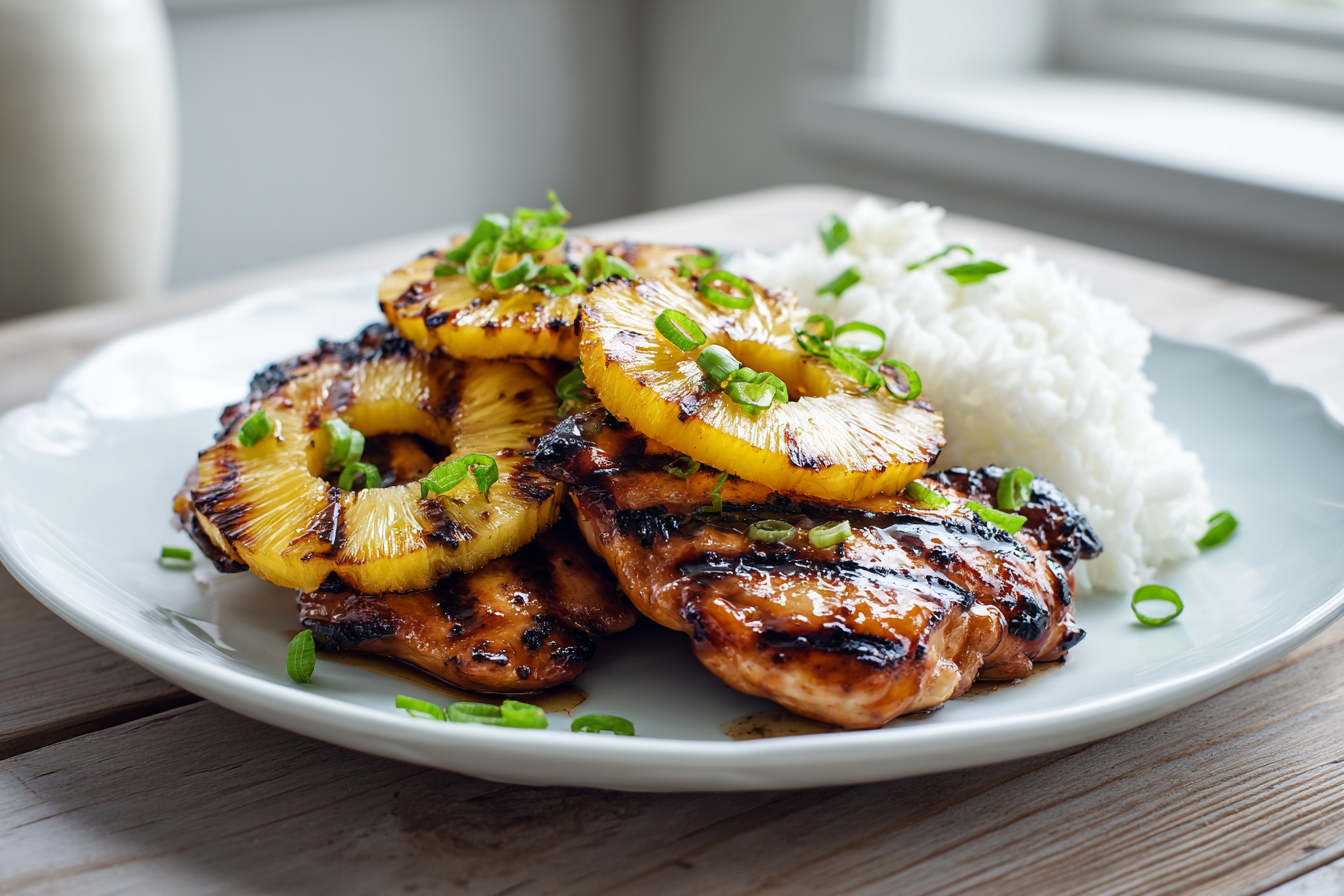
Grilled Pineapple Teriyaki Chicken
Cuisine: Hawaiian4
servings30
minutes40
minutes300
kcalThis grilled pineapple teriyaki chicken delivers authentic Hawaiian taste with a simple homemade marinade and juicy chicken thighs that stay tender on the grill.
Ingredients
1 ½ pounds boneless skinless chicken thighs
1 cup soy sauce
1 cup brown sugar, packed
1 cup pineapple juice
4 cloves garlic, chopped
1 tablespoon minced fresh ginger
6 pineapple rings (fresh or canned)
Chopped green onions for garnish
Sesame seeds for garnish (optional)
Directions
- Place the chicken thighs in a large bowl or resealable plastic bag. In a medium mixing bowl, combine the soy sauce, brown sugar, pineapple juice, chopped garlic, and minced ginger. Stir everything together until the brown sugar completely dissolves into the liquid. Pour this marinade over the chicken, making sure all pieces are well coated.
- Seal the bag or cover the bowl tightly and refrigerate for at least 4 hours, though overnight works even better. The longer the chicken marinates, the more the pineapple juice tenderizes the meat and allows all those sweet and savory notes to penetrate deep into the chicken. Turn the bag or stir the bowl occasionally if you remember, to ensure even marinating.
- When ready to cook, remove the chicken from the marinade and set it aside on a plate. Do not discard the marinade – pour it into a medium saucepan instead. Bring the marinade to a full rolling boil over medium-high heat, then reduce the heat to maintain a gentle simmer. Let it cook for 5-10 minutes, stirring occasionally, until it thickens slightly and any bacteria from the raw chicken is completely killed.
- Preheat your grill to medium-high heat, around 400 degrees F. Let it heat up for at least 10 minutes so the grates get nice and hot. Oil the grill grates well to prevent sticking. Place the marinated chicken thighs on the grill and close the lid. Cook for 5-7 minutes without moving them, allowing nice grill marks to form.
- Flip the chicken and cook for another 5-7 minutes on the second side. During the last 2-3 minutes of cooking, brush the cooked teriyaki sauce generously over the chicken using a clean brush. Check the internal temperature with a meat thermometer – it should read 165 degrees F in the thickest part of the meat. Brush on another layer of sauce right before removing from the grill.
- While the chicken finishes cooking, place the pineapple rings directly on the grill grates. Cook for just 1-2 minutes per side, until you see nice caramelized grill marks forming. Watch them closely because they can burn quickly due to their natural sugar content. Remove them from the grill as soon as they’re done.
- Transfer the cooked chicken to a clean plate or cutting board and wrap loosely with aluminum foil. Let it rest for 5-10 minutes – this allows the juices to redistribute throughout the meat instead of running out when you cut into it. The chicken will stay hot because of the foil, and this resting time prevents dry, tough meat.
- Place one grilled pineapple ring on top of each chicken thigh. Pour the remaining warm teriyaki sauce over the chicken and pineapple. Sprinkle with chopped green onions and sesame seeds if desired. Serve immediately with steamed white rice and your favorite sides for an authentic Hawaiian plate lunch experience.
Notes
- Chicken thighs are strongly recommended over chicken breasts for this recipe because they stay much juicier on the grill and won’t dry out.
- You can use low-sodium soy sauce if you’re watching your salt intake – the recipe will still taste great.
- If you don’t have a grill, you can broil this chicken in the oven for about 5 minutes per side, watching carefully to prevent burning.
- Leftovers can be stored in an airtight container in the refrigerator for up to 4-5 days and reheated in the microwave or oven.
- For even cooking, you can pound the chicken thighs slightly with a meat mallet before marinating to ensure they’re all the same thickness.
Frequently asked questions
Q: Can I use chicken breasts instead of thighs for this recipe?
A: You can, but chicken breasts tend to dry out much faster on the grill. If you do use breasts, watch them very carefully and consider pounding them thinner so they cook more evenly. Thighs are really the better choice for this particular recipe because they stay juicy.
Q: Is it really safe to use the marinade after raw chicken has been in it?
A: Absolutely, as long as you bring it to a full boil and then simmer it for at least 5-10 minutes. This kills any bacteria from the raw chicken. Never use marinade straight from the raw chicken without cooking it first – that would definitely make someone sick.
Q: Can I make this recipe without a grill?
A: Yes, you can broil the chicken in your oven instead. Set your broiler to high and place the chicken on a baking sheet about 6 inches from the heat source. Broil for about 5 minutes per side, watching carefully to prevent burning. You won’t get the smoky grill taste, but it’ll still be delicious.
Q: How do I know when the chicken is done without a thermometer?
A: The best way is to get a cheap meat thermometer – they’re only a few dollars and take all the guesswork out. If you don’t have one, cut into the thickest part of the chicken. The meat should be completely opaque with no pink color, and the juices should run clear, not pink or red.
