

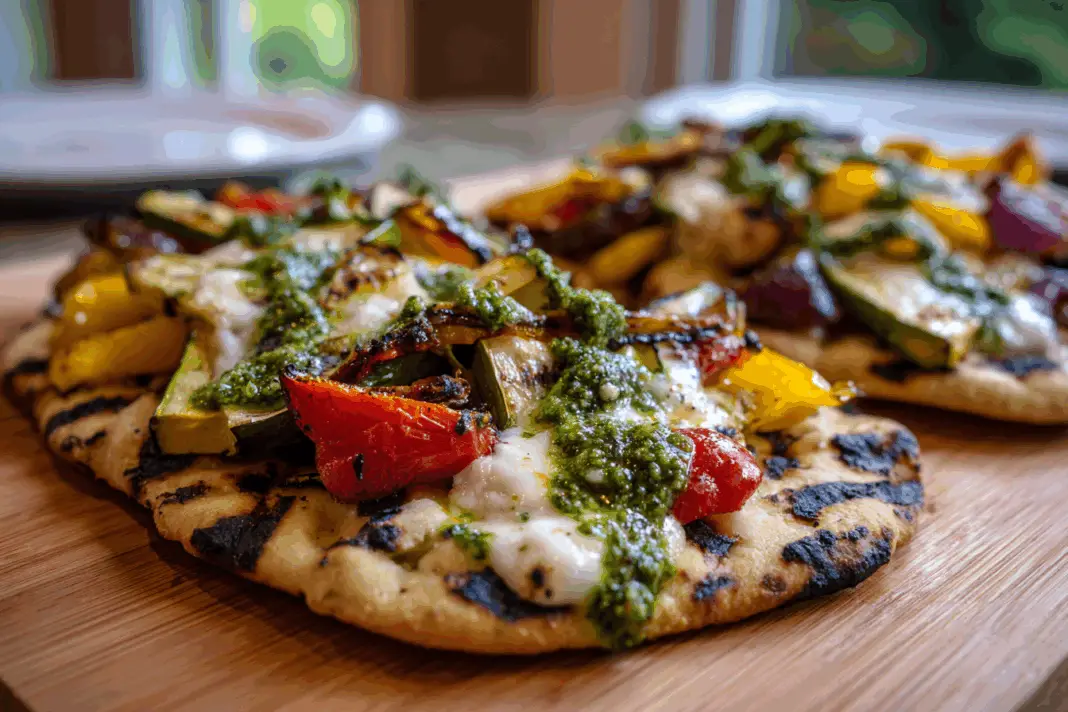
There’s something about Friday evenings in the summer that makes you want to skip the kitchen entirely and head straight to the grill. Making homemade flatbread pizza on the grill turns out to be one of those meals that sounds fancy but comes together faster than ordering takeout. The grill adds a smoky char that an oven just can’t match, and the whole process takes less than ten minutes once everything hits the grates. The best part? You can load these up with whatever vegetables are sitting in your fridge, slather on some pesto, add a bit of cheese, and dinner is done.
Why grilling flatbread beats using your oven
When it’s already hot outside, the last thing anyone wants to do is crank up the oven and make the house even warmer. Grilling keeps all that heat outside where it belongs. The grill also cooks the flatbread incredibly fast, usually in about five minutes total. That quick cooking time means the crust gets crispy and slightly charred while the toppings stay fresh and don’t get dried out. The high heat from the grill creates those beautiful grill marks that make the flatbread look like it came from a fancy restaurant.
Another reason to grill is the smoky taste that comes through in every bite. This subtle smokiness pairs perfectly with fresh vegetables and herbs. One important tip is to have everything ready before the dough hits the grill. Once that flatbread is cooking, things move quickly and there’s no time to run back inside to grab forgotten ingredients. Set up a tray with all your toppings, cheese, pesto, and oil right next to the grill so everything is within arm’s reach.
Making your own dough or taking the shortcut
Homemade pizza dough is actually pretty simple to make if you have an hour to let it rise. Mix together warm water, yeast, olive oil, honey, flour, and salt. Let the yeast get foamy for a few minutes, then knead everything until the dough becomes smooth and elastic. This takes about five to seven minutes of kneading. Once the dough is ready, put it in an oiled bowl, cover it, and let it rise in a warm spot for about an hour until it doubles in size.
If time isn’t on your side, store-bought naan bread works perfectly as a shortcut. You can find naan in the bakery section of most grocery stores, usually near the specialty breads. Some people prefer using pre-made flatbreads because they eliminate the wait time and still give you that great grilled crust. Either way works fine. The homemade dough gives you a bit more chew and a fresher taste, but the store-bought version gets dinner on the table in half the time with almost no effort.
Roasting vegetables brings out their sweetness
Raw vegetables on pizza can turn out watery and bland, but roasting them first changes everything. Toss cherry tomatoes, sliced bell peppers, mushrooms, red onion, zucchini, yellow squash, and olives with olive oil, salt, and pepper. Spread them out on a baking sheet and roast at 425 degrees for about 12 to 15 minutes. The vegetables should be tender and starting to brown around the edges. This roasting process caramelizes the natural sugars in the vegetables and concentrates their taste.
Some people choose to grill their vegetables directly on the grill using a vegetable basket instead of roasting them in the oven. This method works great and keeps all the cooking outdoors. Just make sure to stir the vegetables often so they cook evenly and get those nice charred spots. Whether you roast or grill them, the key is to get the vegetables cooked through and slightly caramelized before they go on the flatbread. This ensures they won’t release too much moisture onto the crust and make it soggy.
Pesto adds a burst of fresh herb taste
Pesto serves as the sauce on these flatbreads instead of traditional tomato sauce. You can absolutely buy a jar of pesto from the store, but making it fresh takes just a few minutes and tastes noticeably brighter. Throw fresh basil leaves, garlic cloves, nuts (pine nuts, almonds, walnuts, or pepitas all work), lemon juice, olive oil, and Parmesan cheese into a food processor. Pulse everything until it forms a thick paste, then slowly add the olive oil until the pesto reaches the consistency you want.
Homemade pesto keeps in the fridge for about a week in a jar with a tight lid. Making a bigger batch means you’ll have extra for pasta, sandwiches, eggs, or spreading on toast throughout the week. The fresh version has a vibrant green color and herbaceous taste that store-bought versions sometimes lack. When spreading pesto on the flatbread, use about half a cup for two flatbreads. Spread it evenly but not too thick, as the pesto should complement the other toppings rather than overpower them.
Going light on cheese keeps things balanced
When making regular pizza, piling on lots of cheese makes sense. But these flatbreads are different. The focus here is on the fresh vegetables and herbs, with cheese acting more like a supporting player. Use about half a cup of shredded mozzarella for two flatbreads. That might seem like a small amount, but it’s enough to melt nicely and help hold the toppings in place without covering up all the other components you worked to prepare.
Mozzarella works best because it melts smoothly and has a mild taste that doesn’t compete with the pesto and vegetables. Some people like to add a bit of Parmesan on top after the flatbread comes off the grill for an extra salty kick. The cheese melts quickly on the hot grill, usually in just two to three minutes. Watch the bottom of the flatbread carefully during this time to make sure it doesn’t burn. The cheese should be melted and slightly bubbly when the flatbread is ready to come off the heat.
Getting the grill ready and managing the heat
Preheat the grill to medium-high heat, which is usually around 400 to 450 degrees. If the grill is too hot, the bottom of the flatbread will burn before the toppings have a chance to heat through. If it’s not hot enough, the crust will turn out soft and pale instead of crispy and charred. Medium-high gives you that sweet spot where everything cooks quickly but evenly. Clean the grill grates well and brush them with a little oil to prevent sticking.
When you’re ready to start cooking, stretch the dough into a rough circle about 12 inches across. It doesn’t need to be perfect, and an irregular shape actually looks more rustic and appealing. Brush one side of the dough with olive oil and place that side down on the grill. Close the lid and let it cook for one to two minutes until the edges start to firm up and the bottom has grill marks. Brush the top with oil, flip it over, and then quickly add your toppings.
Topping and finishing the flatbread on the grill
Once the flatbread is flipped, work quickly to add the toppings. Spread the pesto over the grilled side, then scatter the roasted vegetables evenly across the surface. Sprinkle the shredded mozzarella over everything. Close the grill lid immediately to trap the heat and help the cheese melt. This second side cooks for about two to three minutes. Keep an eye on the bottom by lifting the edge with tongs to check for burning. The flatbread is done when the cheese has melted and the bottom is crispy with dark grill marks.
Have a platter or cutting board ready near the grill to transfer the finished flatbread. Right after taking it off the heat, sprinkle fresh chopped herbs like chives, oregano, and parsley over the top. These fresh herbs add a pop of color and a bright, grassy taste that complements the cooked vegetables. Let the flatbread cool for just a minute before slicing it into pieces. Cutting it too soon can cause the toppings to slide off while everything is still super hot and loose.
Switching up vegetables based on the season
The mushroom, tomato, onion, pepper, olive, and squash combination is a classic summer mix, but these flatbreads work with just about any vegetable. In spring, try using asparagus, roasted potatoes, or artichoke hearts. Fall calls for roasted butternut squash, caramelized onions, and kale. Even Brussels sprouts work if you shave them thin and roast them until crispy. The key is to use vegetables that roast well and won’t release too much water onto the crust.
Some vegetables need a bit more prep than others. Heartier vegetables like potatoes or squash should be cut thin so they cook through during roasting. Leafy greens like arugula or spinach can be added fresh after the flatbread comes off the grill rather than roasting them. This keeps them crisp and prevents them from wilting too much. Experimenting with different vegetable combinations keeps these flatbreads interesting week after week. The formula stays the same—roast the vegetables, spread the pesto, add cheese, and grill—but the end result tastes completely different depending on what vegetables you choose.
Serving suggestions and what to pair with flatbread
These flatbreads work as a main course for dinner or as an appetizer if you’re having people over. One flatbread usually serves two people as a main dish, or four people as an appetizer if you cut it into smaller pieces. A simple green salad with a light vinaigrette makes a good side dish. The salad adds some crunch and freshness that balances out the rich pesto and cheese. A cold soup like gazpacho or a corn chowder also pairs nicely, especially on really hot days.
For drinks, a cold beer or a crisp white wine works perfectly with the grilled vegetables and herbs. Iced tea or lemonade are good non-alcoholic options. If you want to serve these as appetizers, cut each flatbread into eight small squares so guests can easily grab a piece. These flatbreads are best eaten right away while they’re still warm and the crust is crispy. They don’t reheat particularly well because the crust loses its crunch, so try to make only as many as you’ll eat in one sitting.
Grilled veggie flatbreads with pesto and mozzarella turn out to be one of those meals that feels special but doesn’t require much fuss. Once you get the hang of managing the grill temperature and having all your ingredients prepped beforehand, these come together incredibly quickly. The combination of smoky grilled crust, fresh roasted vegetables, herbaceous pesto, and just enough melted cheese creates something that tastes way more complicated than it actually is. Next time you’re looking for a summer dinner that keeps the house cool and gets you outside, fire up the grill and give these flatbreads a try.
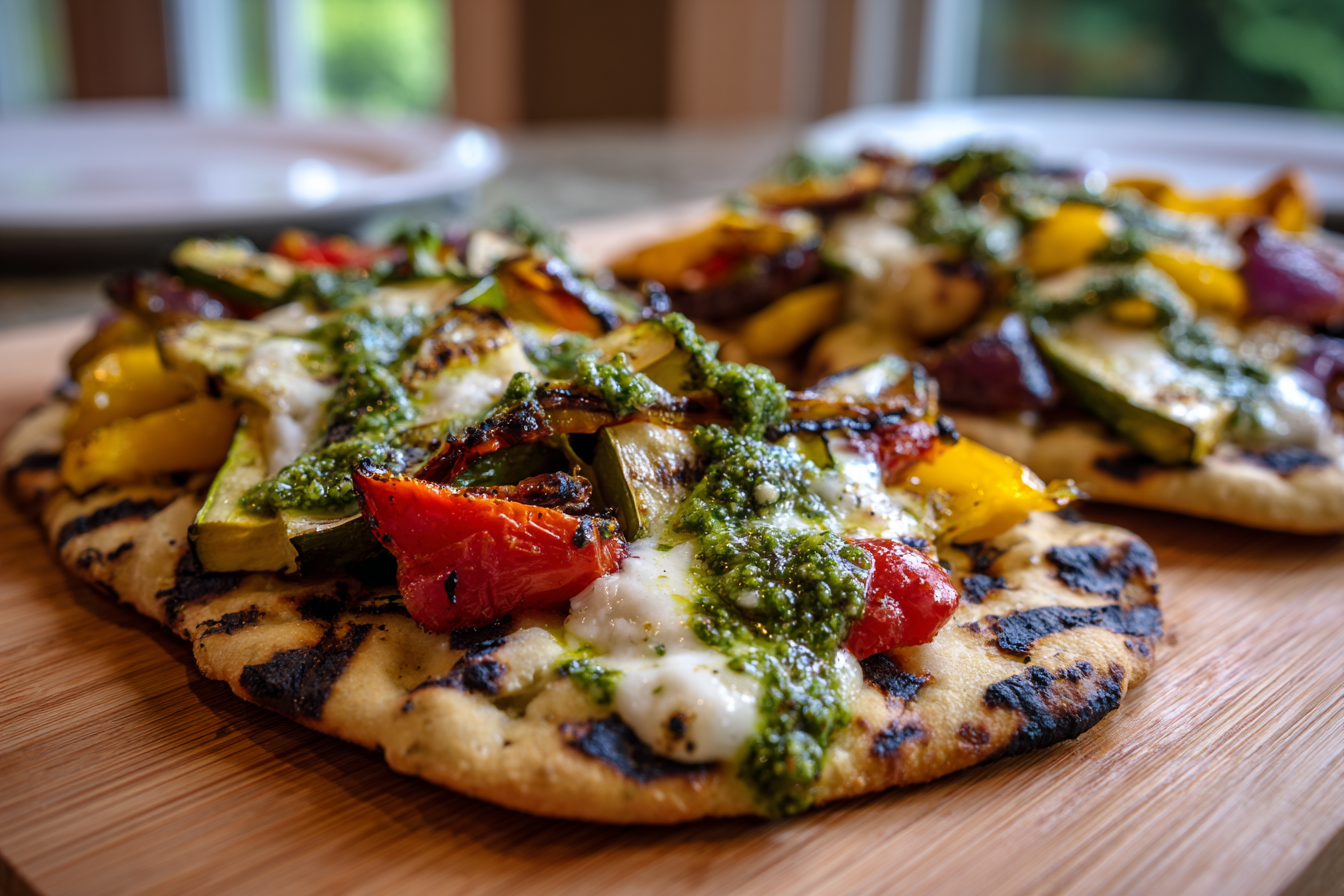
Grilled Veggie Flatbread with Pesto and Mozzarella
Cuisine: Italian4
servings40
minutes10
minutes677
kcalSmoky grilled flatbread topped with roasted summer vegetables, fresh pesto, and melted mozzarella cheese that comes together in less than ten minutes on the grill.
Ingredients
1 cup warm water
2 ¼ teaspoons active dry yeast
3 tablespoons olive oil
1 tablespoon honey
2 ½ to 3 cups white whole wheat flour
1 teaspoon kosher salt
½ cup halved cherry tomatoes
1 red onion, sliced
8 ounces button mushrooms, sliced
1 red bell pepper, sliced
1 yellow bell pepper, sliced
½ cup mixed black and green olives, halved
1 small yellow squash or zucchini, sliced
2 tablespoons olive oil for vegetables
Salt and pepper to taste
⅓ cup olive oil for brushing
½ cup prepared pesto
½ cup shredded mozzarella cheese
1 tablespoon chopped fresh chives
1 tablespoon chopped fresh oregano
1 tablespoon chopped fresh parsley
Directions
- Combine the warm water, yeast, olive oil, and honey in a large mixing bowl or the bowl of a stand mixer fitted with the dough hook. Let the mixture sit for three to four minutes until it becomes foamy on top, which means the yeast is active and ready. Add the flour starting with two and a half cups along with the salt, then mix everything together until well combined.
- Knead the dough either by hand on a floured surface or using the mixer’s dough hook for five to seven minutes until it becomes smooth and elastic. You may need to add more flour gradually if the dough feels too sticky. Transfer the finished dough to an oiled bowl, cover it with a clean kitchen towel, and let it rise in a warm spot for about one hour until it doubles in size.
- When there are thirty minutes left in the dough rising time, preheat your oven to 425 degrees. Prepare a baking sheet by lining it with a baking mat or spraying it with cooking spray. In a large bowl, toss together the cherry tomatoes, red onion, mushrooms, both bell peppers, olives, and squash with two tablespoons of olive oil, salt, and pepper until everything is evenly coated.
- Spread the vegetables in a single layer on the prepared baking sheet. Roast them in the preheated oven for 12 to 15 minutes until all the vegetables are tender and beginning to brown on the edges. Remove the vegetables from the oven and set them aside while you prepare the grill.
- Preheat your grill to medium-high heat, around 400 to 450 degrees. Divide the risen dough in half and shape each piece into a ball. Place the dough balls on a large platter along with the roasted vegetables, pesto, cheese, olive oil for brushing, and the chopped fresh herbs so everything is ready to go near the grill.
- Working with one flatbread at a time, stretch the dough into a rough circle about 12 inches across. Brush one side generously with olive oil and place that oiled side down directly on the grill grates. Close the lid and let it cook for one to two minutes until the edges begin to firm up and the bottom has visible grill marks.
- Brush the top of the flatbread with olive oil and carefully flip it over using tongs. Quickly spread half of the pesto over the grilled surface, followed by half of the roasted vegetables spread evenly across the flatbread. Sprinkle half of the shredded mozzarella cheese over the vegetables, then close the grill lid immediately.
- Let the flatbread cook for an additional two to three minutes with the lid closed until the cheese is melted and bubbly. Use tongs to lift the edge and check that the bottom is crispy and charred but not burned. Remove the flatbread from the grill, sprinkle with half of the fresh herbs, and set it aside while you repeat the entire process with the second flatbread.
Notes
- You can substitute store-bought naan bread for the homemade dough to save time. Just grill the naan for about one minute per side before adding toppings.
- Vegetables can also be grilled in a vegetable basket directly on the grill instead of roasting them in the oven if you prefer to keep all cooking outdoors.
- Have all ingredients prepped and ready on a platter near the grill before you start cooking, as the flatbread cooks very quickly once it hits the grates.
- Fresh arugula or spinach can be added after the flatbread comes off the grill for extra greens without wilting them too much.
- Leftover pesto keeps in the refrigerator for up to one week in a sealed jar and works great on pasta, sandwiches, or eggs.
Frequently asked questions
Q: Can I make the dough ahead of time?
A: Yes, you can make the dough up to 24 hours ahead and keep it in the refrigerator. Let it come to room temperature for about 30 minutes before stretching and grilling. The cold dough actually develops more taste as it sits.
Q: What if I don’t have a grill?
A: You can make these flatbreads in your oven instead. Preheat the oven to 450 degrees and bake the flatbread on a pizza stone or baking sheet for about 8 to 10 minutes until the crust is golden and the cheese melts.
Q: Can I freeze the dough?
A: The dough freezes well for up to three months. Wrap it tightly in plastic wrap and place it in a freezer bag. Thaw it overnight in the refrigerator before using, then let it come to room temperature before stretching.
Q: What other toppings work well on these flatbreads?
A: Try roasted potatoes and asparagus in spring, or butternut squash and kale in fall. Caramelized onions, sun-dried tomatoes, artichoke hearts, and fresh spinach also make great additions. Just make sure heartier vegetables are cooked through before topping the flatbread.
