


There’s something about a bright, tangy lemon cake that just makes everything better. Whether you’re having people over for coffee or just want something sweet to snack on throughout the week, a proper lemon drizzle loaf hits differently than your average cake. It’s moist without being heavy, sweet but balanced with that punch of citrus, and it stays fresh for days. What sets this cake apart is the double lemon treatment: you brush a lemony syrup into the warm cake, then finish it with a crisp glaze that hardens into a sugary shell.
The secret to keeping lemon cake moist for days
Most people think a moist cake is all about adding more butter or oil, but that’s only part of the story. The real trick to keeping this lemon loaf cake tender and fresh for up to a week comes down to two things: using the right kind of fat and not skipping the syrup step. This recipe calls for both butter and a bit of yogurt, which keeps the crumb soft without making it greasy. The yogurt adds moisture and a slight tang that makes the lemon pop even more.
The lemon syrup that you brush on while the cake is still warm does double duty. It soaks into the crumb and locks in moisture, which is why this cake doesn’t dry out after a day or two like some others do. According to this tested recipe, poking holes all over the hot cake and brushing the syrup on right away is essential. The cake acts like a sponge, absorbing all that sweet-tart liquid and staying incredibly moist for days.
Why cake flour makes all the difference here
If you’ve ever made a lemon cake that turned out dense or tough, the problem might have been your flour. Regular all-purpose flour has more protein than cake flour, which means more gluten develops when you mix the batter. More gluten equals a tougher, chewier texture, which isn’t what you want in a tender loaf cake. Cake flour has less protein, so it creates a softer, more delicate crumb that practically melts in your mouth.
This matters especially for this recipe because we’re going for that classic British lemon drizzle texture: light, plush, and tender. Testing showed that using all-purpose flour made the cake drier and denser, while cake flour gave it that perfect soft crumb. If you absolutely can’t find cake flour, you can make a substitute by measuring out all-purpose flour, removing two tablespoons per cup, and replacing them with cornstarch. It’s not quite the same, but it gets you closer.
Getting the most lemon punch into every bite
A common complaint about lemon cakes is that they just don’t taste lemony enough. You take a bite expecting a burst of citrus and instead get something that tastes vaguely like lemon candy. The fix is simple: use both lemon zest and fresh lemon juice, and use them generously. The zest contains all those fragrant oils that give you that bright, sunny lemon scent and taste, while the juice brings the tangy, acidic punch.
Here’s a trick that really amps up the lemon: before you do anything else, rub the lemon zest into the sugar with your fingers. This releases all those essential oils and infuses them right into the sugar, so every bite of cake tastes like lemon. Professional bakers swear by this method because it distributes the lemon throughout the batter more evenly than just stirring it in. Use at least two large lemons for the zest, and save the juice for both the syrup and the glaze on top.
The difference between room temperature and softened butter
This sounds picky, but it actually matters when you’re making a cake with a tender crumb. Room temperature butter is around 65 to 68 degrees, which is cool to the touch but soft enough to press your finger into. Softened butter is a bit warmer, around 68 to 72 degrees, and that’s what you want for creaming with sugar. At that temperature, the butter is pliable enough to trap air bubbles when you beat it, which helps the cake rise and stay light.
If your butter is too cold, it won’t mix properly with the sugar and you’ll end up with a dense cake. If it’s too warm and starts looking shiny or greasy, it won’t hold air and your cake will be flat and heavy. The best test is the finger press: if it leaves a clean dent and the butter still holds its shape, you’re good. If it collapses or looks oily, pop it in the fridge for five to ten minutes. Getting this right is one of those small things that separates an okay cake from a really great one.
Why you should poke holes in the hot cake
This might seem weird if you’ve never made a drizzle cake before, but trust the process. As soon as the cake comes out of the oven, you grab a skewer or a sharp knife and poke holes all over the top. Then you brush the lemon syrup over it while it’s still hot. The heat and the holes help the syrup soak deep into the cake instead of just sitting on top. This is what creates that moist, lemony interior that makes drizzle cakes so addictive.
If you wait until the cake cools down, the syrup won’t absorb as well and you’ll end up with a dry cake and sticky puddles on the plate. The syrup needs to go on while everything is still hot and porous. Traditional recipes call for brushing it on in stages, letting each layer soak in before adding more. It takes a few minutes but makes a huge difference in the final texture. Plus, that’s when your kitchen starts smelling absolutely amazing.
How to get that perfect crackly glaze on top
The glaze is what takes this from a nice lemon cake to a proper lemon drizzle loaf. You want it thick enough to create a sweet, crunchy shell on top, but thin enough that it drips down the sides in those pretty white streaks. The key is getting the consistency just right: it should be thick like school glue, not runny like milk. Mix powdered sugar with fresh lemon juice and a splash of milk or cream, adding liquid gradually until it looks right.
Wait until the cake is completely cool before adding the glaze, otherwise it’ll just melt and run off. Pour it over the top and let it naturally drip down the sides. Some people like to sprinkle a bit of coarse sugar on top while the glaze is still wet for extra crunch. One popular version suggests using heavy cream instead of milk in the glaze because it creates a more opaque, professional-looking finish. Either way works, but the cream does look a bit fancier if you’re making this for company.
The right pan size actually matters
Not all loaf pans are created equal, and using the wrong size can mess up your baking time and texture. This recipe is designed for a standard one-pound loaf pan, which measures about 8.5 by 4.5 inches. That’s different from the bigger 9 by 5 inch pans that many people have in their cupboards. If you use a bigger pan, the batter will spread out thinner and bake faster, which can lead to a dry, flat cake.
The narrower pan lets the cake bake more slowly and evenly, so you get a nice high loaf with a tender crumb. Metal pans work better than glass or ceramic because they conduct heat more evenly. Baking experts recommend using aluminized steel pans for the most consistent results. If you only have a 9 by 5 inch pan, just keep a close eye on it and start checking for doneness about ten minutes earlier than the recipe says.
Mixing the batter without making it tough
Overmixing is one of the biggest mistakes people make with cake batter, and it’s an easy trap to fall into. Once you add the flour to the wet ingredients, you want to mix just until everything comes together and you don’t see any more dry streaks. The more you mix, the more gluten develops, and that means a tougher, chewier cake instead of a tender one. This is especially true with this recipe since we’re using yogurt, which needs gentle handling.
Use a rubber spatula to fold the flour in by hand if you can, or run your mixer on the lowest speed for just a few seconds. The batter might look a little lumpy, and that’s okay. Those lumps will smooth out in the oven. Experienced bakers say to stop mixing as soon as the flour disappears, even if the batter isn’t perfectly smooth. A few small lumps are way better than a tough, rubbery cake. Remember, you’re making a tender loaf, not kneading bread dough.
How long this cake actually stays fresh
One of the best things about this lemon drizzle loaf is that it doesn’t go stale after a day like some cakes do. Thanks to the butter, yogurt, and that syrup soaking, it stays moist and delicious for up to a week when stored properly. Just keep it in an airtight container at room temperature for the first couple of days. After that, you can move it to the fridge if you want it to last longer, though it might firm up a bit in the cold.
You can also freeze this cake if you want to make it ahead for a party or just keep some stashed for emergencies. Wrap the cooled cake tightly in plastic wrap and then foil before freezing. The best method is to freeze it without the glaze, then add that after it thaws. It’ll keep in the freezer for up to three months. Just let it come to room temperature on the counter for a few hours before slicing. It tastes just as good as the day you made it.
A good lemon drizzle loaf should be bright, tender, and satisfying without being too heavy. This recipe delivers on all three, with that perfect balance of sweet and tart, plus a texture that stays moist for days. Whether you’re making it for a weekend breakfast, an afternoon snack, or to bring to a friend’s house, it’s the kind of cake that disappears fast. Once you nail the technique, it becomes one of those recipes you make over and over again.
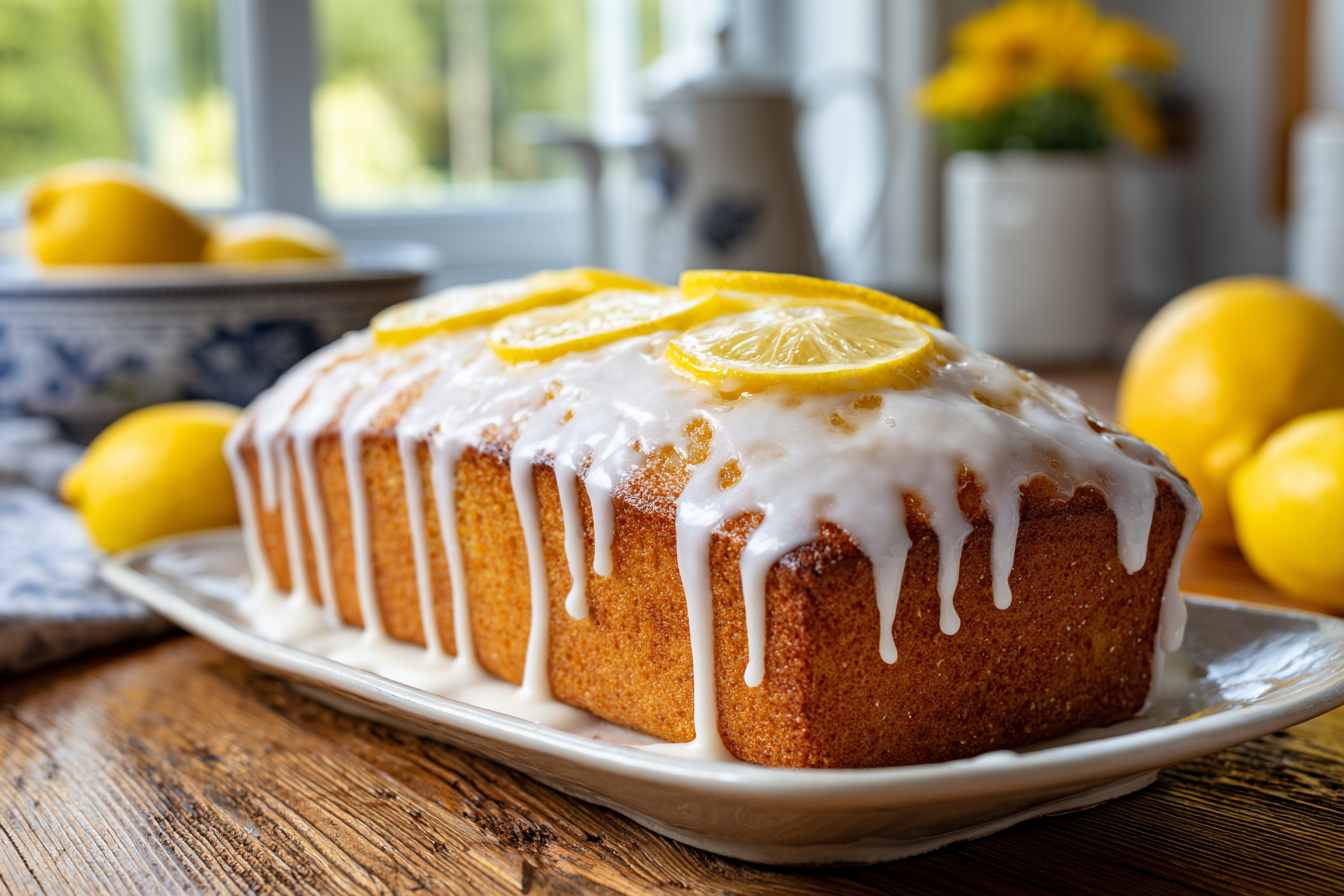
Lemon Drizzle Loaf with Crisp Citrus Glaze
Cuisine: British10
slices15
minutes45
minutes320
kcalThis bright and tender lemon loaf cake is brushed with tangy lemon syrup while warm, then topped with a crisp sweet glaze that hardens into a sugary shell.
Ingredients
125 grams unsalted butter, softened to room temperature
225 grams granulated sugar
Zest of 2 large lemons
½ teaspoon vanilla extract
2 large eggs, room temperature
280 grams cake flour
2 teaspoons baking powder
115 grams full-fat Greek yogurt
40 grams granulated sugar (for syrup)
3 tablespoons fresh lemon juice (for syrup)
150 grams powdered sugar, sifted (for glaze)
2 to 3 tablespoons fresh lemon juice (for glaze)
Directions
- Preheat your oven to 350°F (180°C). Line a 22 x 12 cm (about 8.5 x 4.5 inch) loaf pan with parchment paper, leaving some overhang on the long sides so you can lift the cake out easily later. Grease the parchment lightly with butter or cooking spray.
- In a large mixing bowl, combine the lemon zest and granulated sugar. Use your fingers to rub the zest into the sugar for about 30 seconds until the mixture becomes fragrant and slightly damp. This releases the essential oils from the zest and infuses the sugar with bright lemon scent. Add the softened butter and beat with an electric mixer on medium speed until pale and fluffy, about 3 to 4 minutes.
- Add the vanilla extract, then crack in the eggs one at a time, beating well after each addition. Make sure each egg is fully incorporated before adding the next. Scrape down the sides of the bowl with a rubber spatula to ensure everything mixes evenly.
- In a separate bowl, whisk together the cake flour and baking powder until combined. With your mixer on low speed, add about half of the flour mixture to the butter mixture and mix just until you see a few streaks of flour remaining. Add the Greek yogurt and mix briefly, then add the remaining flour and mix on low just until no dry flour is visible. Be careful not to overmix or the cake will be tough.
- Pour the batter into your prepared loaf pan and spread it evenly to the edges with a spatula. Tap the pan gently on the counter a couple times to release any air bubbles. Bake for 40 to 45 minutes, until the top is golden brown and a skewer inserted into the center comes out clean with just a few moist crumbs. If the top starts browning too quickly, loosely cover it with aluminum foil after about 25 minutes.
- While the cake bakes, make the lemon syrup by stirring together 40 grams of granulated sugar and 3 tablespoons of fresh lemon juice in a small bowl or measuring cup. Stir until the sugar starts to dissolve. Set aside.
- As soon as the cake comes out of the oven, poke holes all over the top with a skewer or sharp knife, going about halfway down into the cake. Slowly brush the lemon syrup over the hot cake, allowing it to soak in before adding more. Use all of the syrup, even if it seems like a lot. Let the cake cool in the pan for 10 minutes, then use the parchment overhang to lift it out onto a wire rack. Allow it to cool completely before glazing, at least 45 minutes.
- Once the cake is completely cool, make the glaze by whisking together the sifted powdered sugar and 2 tablespoons of lemon juice in a small bowl. The mixture should be thick like school glue. If it’s too thick, add another tablespoon of lemon juice. If it’s too thin, add more powdered sugar a spoonful at a time. Pour the glaze over the top of the cake and use a spoon or offset spatula to spread it to the edges, letting it drip naturally down the sides. Let the glaze set for about 15 minutes before slicing.
Notes
- Use fresh lemons for both the zest and juice. Bottled lemon juice doesn’t have the same bright, fresh taste and the cake won’t be as good.
- Cake flour makes a big difference in texture. If you must substitute, use 280 grams all-purpose flour minus 35 grams, then add 35 grams cornstarch and sift together twice.
- Make sure your butter is properly softened to 68-72°F. It should leave a clean indent when you press your finger in but still hold its shape.
- Don’t skip poking holes in the hot cake before adding the syrup. This is what makes the cake incredibly moist inside.
- Store the glazed cake in an airtight container at room temperature for up to 3 days, or in the refrigerator for up to a week.
- To freeze, wrap the unglazed cake tightly in plastic wrap and foil. Freeze for up to 3 months. Thaw at room temperature and add the glaze before serving.
Frequently asked questions
Q: Can I use all-purpose flour instead of cake flour?
A: You can, but the texture will be denser and slightly drier. Cake flour has less protein, which creates a more tender crumb. If you only have all-purpose flour, remove 2 tablespoons per cup and replace with cornstarch, then sift it twice to lighten it up.
Q: Why does my lemon cake taste bland even though I added lemon?
A: You probably didn’t use enough zest, or you skipped rubbing it into the sugar. The zest contains all the fragrant lemon oils that give the cake its bright taste. Use at least two large lemons for zest, and rub it into the sugar with your fingers before mixing to release those oils.
Q: Can I make this cake ahead of time?
A: Absolutely. This cake actually tastes better the next day after the lemon syrup has had time to really soak in. You can make it up to three days ahead and keep it in an airtight container at room temperature, or freeze it for up to three months without the glaze.
Q: What if I don’t have Greek yogurt?
A: Sour cream works great as a substitute and gives the same tangy richness. Regular plain yogurt can work too, but drain off any excess liquid first. In a pinch, you can use whole milk, but the cake won’t be quite as moist or tender.
