

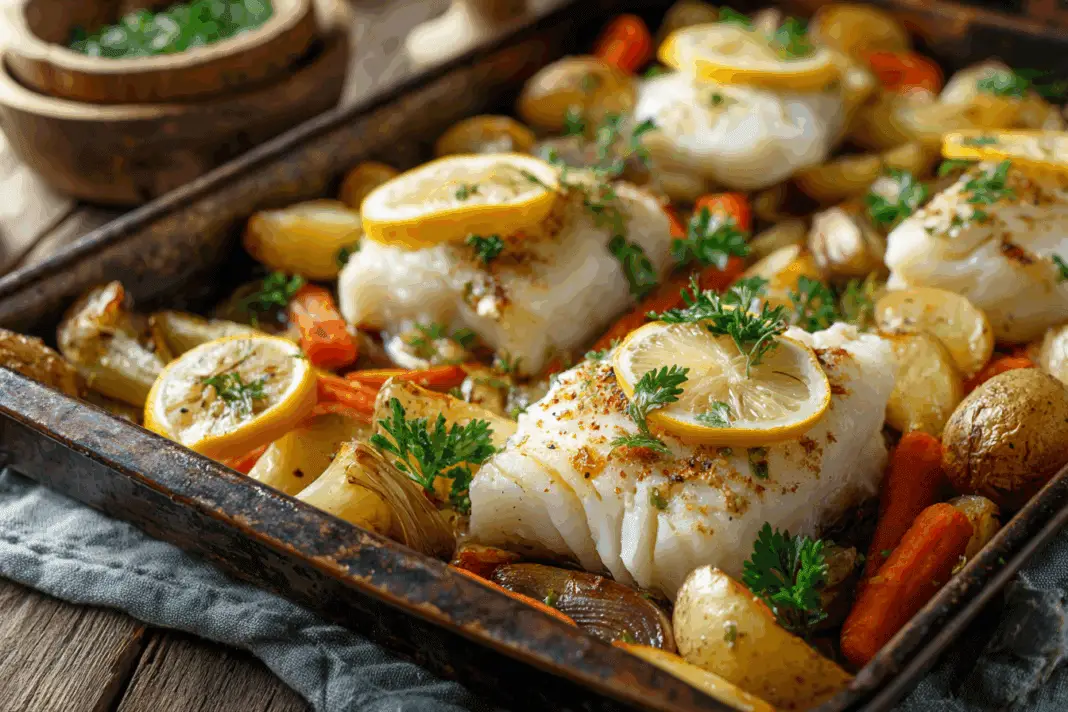
Walking past the fish counter at the grocery store can be intimidating when you’re trying to figure out what to make for dinner tonight. Cod fillets often catch your eye because they look fresh and manageable, but then comes the question of what to do with them. This sheet pan recipe solves that problem by combining tender cod with colorful roasted vegetables, all seasoned with bright lemon and herbs. Everything cooks together on one pan, which means less cleanup and more time to relax after dinner.
Why sheet pan dinners make weeknights easier
When you get home from work and need dinner ready fast, the last thing you want is a bunch of pots and pans piling up in the sink. Sheet pan meals fix this problem by letting you cook your protein and sides all at once. You just prep everything, toss it on a baking sheet, and slide it into the oven. While dinner cooks, you can help with homework, catch up on emails, or just sit down for a minute.
The beauty of this baked cod recipe is that it only uses one pan but gives you a complete meal. The vegetables get a head start in the oven since they take longer to cook than fish. After about twenty minutes, you add the cod fillets to the center of the pan and everything finishes cooking together. The fish stays tender and flaky while the vegetables get nicely roasted with crispy edges. No juggling multiple cooking times or dirtying extra dishes.
Picking the right vegetables for roasting
Not all vegetables roast the same way, which is why choosing the right combination matters. Potatoes work great because they add substance to the meal and get wonderfully crispy on the outside while staying soft inside. Yukon Gold potatoes are perfect for this, though regular russet or red potatoes work fine too. Carrots bring natural sweetness when roasted, and their bright orange color makes the dish look appealing on the plate.
Fennel might seem like an unusual choice if you’ve never cooked with it before, but it adds a subtle anise flavor that mellows out beautifully when roasted. You can also swap in other vegetables depending on what’s in your fridge. Bell peppers, zucchini, cherry tomatoes, and green beans all roast well and finish cooking in about the same time. The key is cutting everything into similar-sized pieces so they cook evenly. If you’re using zucchini and peppers, slice them a bit thinner since they cook faster than root vegetables.
Making a simple lemon herb dressing
The dressing for this recipe comes together in about two minutes and does double duty by seasoning both the vegetables and the fish. You whisk together olive oil, fresh lemon juice, a splash of white wine vinegar, garlic powder, dried thyme, salt, and pepper in a small bowl. The lemon juice adds brightness that cuts through the richness of the fish, while the thyme brings an earthy, herby note that works perfectly with roasted vegetables.
Using garlic powder instead of fresh garlic saves time and keeps things simple, though you can definitely mince fresh garlic if you prefer. The white wine vinegar adds extra tanginess, but apple cider vinegar works as a substitute if that’s what you have on hand. You’ll use half the dressing to coat the vegetables before they go in the oven, then save the other half to brush over the cod fillets when you add them to the pan. This ensures everything gets properly seasoned and the fish stays moist during cooking.
Getting your vegetables started first
Starting the vegetables before the fish is the secret to getting everything done at the same time. Potatoes and carrots need about thirty-five minutes total in the oven, while cod only needs twelve to fifteen minutes. If you put everything in together, you’d end up with either raw vegetables or overcooked fish, and nobody wants that. Cut your potatoes and carrots into three-quarter-inch pieces so they’re all roughly the same size.
Toss the vegetables with half the lemon dressing on your lined baking sheet, making sure everything gets coated. Spread them out in a single layer so they roast instead of steam. Pop the pan in a four-hundred-degree oven for twenty minutes. During this time, the vegetables start softening and developing those nice golden edges. When the timer goes off, pull the pan out and push the vegetables to the sides to make room for the cod fillets in the center. This setup means everything finishes cooking at the same time.
Choosing between Atlantic and Pacific cod
When you’re at the fish counter, you might see both Atlantic and Pacific cod available. Atlantic cod tends to have a more tender, flaky texture that many people prefer for baking. It breaks apart easily with a fork and has a mild, slightly sweet taste. Pacific cod is a bit firmer and denser, which makes it better for dishes where you need the fish to hold together, like fish tacos or stir-fries.
For this baked preparation, either type works fine, so go with whatever looks freshest at the store. Fresh cod should smell like the ocean, not fishy or ammonia-like. The flesh should look moist and slightly translucent, not dried out or discolored. If fresh cod isn’t available, frozen fillets work too. Just thaw them completely in the refrigerator overnight and pat them dry with paper towels before using. The drier the fish, the better it will brown in the oven.
Adding the fish at the right time
After the vegetables have roasted for twenty minutes, it’s time to add your cod fillets. Pull the baking sheet from the oven and carefully push the partially cooked vegetables toward the edges, creating space in the middle for the fish. Place your cod fillets in this cleared area, making sure they’re not overlapping. Season each fillet with a bit of salt and pepper, then brush or spoon the remaining lemon herb dressing over the top.
If you want extra lemon flavor, lay thin lemon slices on top of each fillet before returning the pan to the oven. The fish needs about twelve to fifteen minutes to cook through, depending on thickness. You’ll know the cod is done when it turns completely white and opaque, no longer looking translucent in the center. It should flake easily when you press it with a fork. Overcooked cod becomes tough and dry, so keep an eye on it during the last few minutes of cooking.
What to serve alongside this meal
This sheet pan dinner already includes your protein and vegetables, so you technically have a complete meal. But if you want to bulk it up a bit, there are some easy additions that don’t require much extra work. A simple green salad with a lemony vinaigrette complements the roasted elements nicely and adds some fresh crunch. You could also serve it with rice, couscous, or quinoa to soak up the delicious pan juices.
Crusty bread is another good option for mopping up that lemon herb oil left on the pan. Some people like adding a yogurt-based sauce or tzatziki on the side for extra richness. If you’re really hungry, roasted chickpeas tossed with the vegetables add protein and make the meal more filling. The nice thing about this recipe is its flexibility. You can keep it light with just the fish and vegetables, or add more components depending on how hungry everyone is and what you have available.
Storing and reheating leftovers properly
If you end up with leftovers, they’ll keep in the refrigerator for up to three days when stored in an airtight container. Make sure to get them into the fridge within two hours of cooking to keep them safe to eat. Fish can be tricky to reheat because it dries out easily if you’re not careful. The microwave works in a pinch, but it tends to make the cod rubbery and the vegetables soggy.
A better method is reheating everything in a covered baking dish in a three-fifty-degree oven for about ten to twelve minutes. The gentle heat warms everything through without overcooking. You can also reheat the vegetables and fish separately in a covered skillet over low heat on the stovetop. Another option is eating the leftovers cold on top of a salad the next day. The lemon herb dressing acts like a marinade, so the fish actually tastes great at room temperature or chilled.
Adapting the recipe for different seasons
The original version of this recipe uses fall and winter vegetables like potatoes, carrots, and fennel. But the basic method works year-round if you swap in seasonal produce. During summer, try it with zucchini, cherry tomatoes, bell peppers, and green beans. These lighter vegetables pair beautifully with the lemon and herbs while taking advantage of what’s fresh and cheap at the farmers market.
In spring, asparagus and snap peas make excellent additions, though they cook faster than root vegetables so you might need to adjust timing. Keep the potatoes year-round since they add satisfying substance to the meal and are always available. You can also experiment with different herb combinations. Fresh dill, basil, or oregano all work well with fish. The key is keeping the cooking times similar so everything finishes at once. Harder vegetables like butternut squash or Brussels sprouts need the full head start, while softer ones like tomatoes or spinach can be added later.
This lemon herb baked cod with roasted vegetables proves that weeknight dinners don’t have to be complicated or time-consuming. With one pan, simple ingredients, and straightforward techniques, you get a satisfying meal that works any night of the week. The combination of tender flaky fish, caramelized vegetables, and bright citrus dressing feels special enough for company but easy enough for a regular Tuesday.
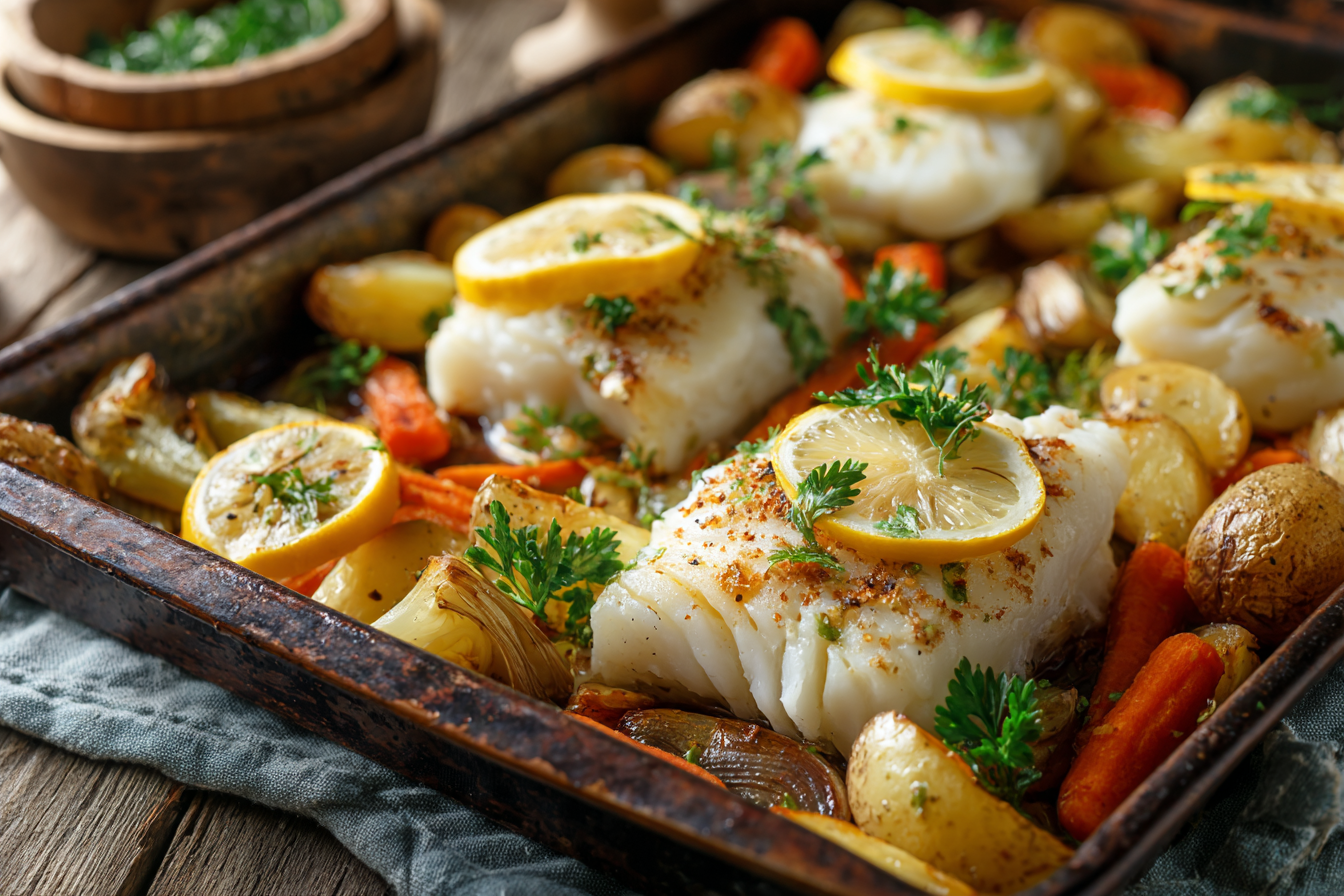
Lemon Herb Baked Cod With Roasted Vegetables
Cuisine: American Recipes2
servings10
minutes35
minutes595
kcalTender cod fillets and colorful roasted vegetables come together on one pan with a bright lemon herb dressing for an easy, delicious dinner ready in under an hour.
Ingredients
2 cups yellow potatoes, chopped into 3/4-inch pieces (Yukon Gold)
1 cup carrots, peeled and chopped into 3/4-inch pieces
2 cups fennel, cut into 3/4-inch pieces
1/4 cup olive oil
1/2 a lemon, juice only
1 tablespoon white wine vinegar or apple cider vinegar
1/2 teaspoon garlic powder or 2 freshly minced cloves
1/2 teaspoon dried thyme
2 fillets Atlantic cod, approximately 4-6 ounces each
Salt and pepper, to taste
Fresh parsley, chopped for garnish
Lemon slices for topping, optional
Directions
- Preheat your oven to 400 degrees F and line a large baking sheet with parchment paper. This prevents sticking and makes cleanup much easier later. While the oven heats, gather all your ingredients so everything is ready to go.
- In a small bowl, whisk together the olive oil, lemon juice, white wine vinegar, garlic powder, dried thyme, and a pinch each of salt and pepper until well combined. This lemon herb dressing will coat both the vegetables and the fish, so make sure it’s thoroughly mixed.
- Place the chopped potatoes, carrots, and fennel onto the prepared baking sheet. Pour half of the lemon herb dressing over the vegetables and toss everything together with your hands or a spoon until evenly coated. Spread the vegetables out in a single even layer so they roast properly instead of steaming.
- Bake the vegetables in the preheated oven for 20 minutes. During this time, they’ll start softening and developing some golden brown edges. Don’t skip this step, as the vegetables need a head start since they take longer to cook than the fish.
- After 20 minutes, carefully remove the baking sheet from the oven. Push the partially cooked vegetables toward the edges of the pan, creating space in the center. Place the cod fillets in this cleared space, making sure they’re not overlapping.
- Pour and brush the remaining lemon herb dressing over the top of each cod fillet, coating them evenly. Season the fish with additional salt and pepper to taste. If using lemon slices, lay them on top of the fillets now for extra citrus flavor and a pretty presentation.
- Return the sheet pan to the oven and bake for an additional 12 to 15 minutes. The cod is done when it turns completely opaque white and flakes easily when pressed with a fork. Check the thickest part of the fish to make sure it’s cooked through with no translucent areas remaining.
- Remove the sheet pan from the oven and let it rest for a minute or two. Garnish with freshly chopped parsley for a pop of color and fresh flavor. Serve immediately while everything is hot, with the pan juices spooned over the fish and vegetables.
Notes
- Atlantic cod is preferred for its tender, flaky texture, but Pacific cod also works well and tends to be slightly firmer. Either variety will give you delicious results in this recipe.
- Yukon Gold potatoes can be substituted with Russet, red potatoes, or fingerlings. Cut them all to the same size for even cooking.
- For seasonal variations, try summer vegetables like zucchini, bell peppers, cherry tomatoes, and green beans. These cook faster, so adjust timing accordingly.
- Leftovers can be stored in an airtight container in the refrigerator for up to 3 days. Reheat gently in a covered dish in a 350-degree oven for best results, or enjoy cold on top of a salad.
- Make sure to cut all vegetables to similar sizes so they roast evenly. Pieces that are too large will stay undercooked while smaller ones may burn.
- Other fish options include salmon, halibut, haddock, or trout. Cooking times may vary depending on thickness, so check for doneness by looking for opaque, flaky flesh.
Frequently asked questions
Q: Can I use frozen cod fillets for this recipe?
A: Yes, frozen cod works fine as long as you thaw it completely in the refrigerator overnight before cooking. Pat the fillets dry with paper towels to remove excess moisture, which helps them brown better in the oven. Avoid thawing fish at room temperature as it can become unsafe to eat.
Q: What if I don’t like fennel or can’t find it?
A: Fennel can easily be replaced with other vegetables like Brussels sprouts, broccoli florets, or additional bell peppers. Choose vegetables with similar cooking times to ensure everything finishes at the same time. You won’t get that subtle anise flavor, but the dish will still be delicious.
Q: How can I tell when the cod is fully cooked?
A: Properly cooked cod should be completely opaque white throughout with no translucent or glassy areas in the center. It should flake easily when you press it gently with a fork. The internal temperature should reach 145 degrees F if you’re using a meat thermometer.
Q: Do I need to flip the fish or vegetables during cooking?
A: No flipping is necessary for this recipe. The vegetables roast on one side while developing nice caramelization, and the fish cooks evenly from the oven heat without needing to be turned. This makes the whole process even easier with less handling required.
