


Ever wonder why restaurant salmon always seems to turn out perfectly moist while yours at home can be hit or miss? The secret might be simpler than you think. Steaming salmon with citrus and fresh herbs creates restaurant-quality fish without any fancy equipment or complicated techniques. This method locks in moisture, keeps your kitchen from smelling fishy, and requires almost no cleanup. Plus, when you pair it with steamed greens, you’ve got a complete dinner ready in about 30 minutes.
Why steaming beats other cooking methods
Most people pan-sear or bake their salmon, but both methods come with drawbacks. Pan-searing splatters oil everywhere and can leave your kitchen smelling like fish for days. Baking works fine, but it’s easy to overcook salmon in a hot oven, leaving you with dry, chalky fish. Steaming solves both problems beautifully. The gentle heat keeps the fish incredibly moist while cooking it through evenly.
The best part about steaming salmon is how forgiving it is. You don’t need perfect timing or constant attention. The steam created by the liquid and vegetables gently cooks the fish without drying it out. And because everything cooks in one covered pan lined with parchment paper, cleanup takes about two minutes. You literally just toss the paper and wipe down the pan.
The magic of cooking in parchment paper
Cooking fish in parchment paper is basically a foolproof technique that French chefs have used forever. You place your salmon on a sheet of parchment along with aromatics like sliced onions, garlic, fresh herbs, and citrus. Then you fold the paper over and crimp the edges to create a sealed packet. As it cooks, the ingredients release steam and moisture that gets trapped inside the packet, essentially poaching the fish in its own flavorful juices.
This technique works so well because nothing escapes that paper packet. All the lemon juice, white wine, olive oil, and herb aromas infuse directly into the salmon instead of evaporating into your oven or kitchen. When you open the packet after cooking, you’re hit with this amazing burst of lemony, garlicky steam. The fish comes out tender and flaky, and you can pour all those delicious pan juices right over the top before serving.
Building the right base for your fish
The vegetables underneath your salmon serve multiple purposes. They create a barrier between the fish and the hot pan, preventing any sticking or burning. They also release moisture as they cook, creating the steam that gently cooks your salmon. Finally, they become a delicious side dish that soaks up all the citrus and herb juices. You can use zucchini ribbons, yellow squash, carrots, or any combination that sounds good to you.
Making vegetable ribbons takes just a few minutes with a regular vegetable peeler. Run the peeler down the length of a zucchini or carrot to create thin, noodle-like strips. These cook quickly and look really pretty on the plate. If you don’t feel like making ribbons, you can also use baby spinach, thinly sliced onions, or even broccoli florets. Just make sure whatever vegetables you choose are sliced thin enough to cook through in the same time as the fish.
Getting the citrus component right
Lemon is the classic choice for salmon, and for good reason. The bright acidity cuts through the rich, oily fish perfectly. But you can also experiment with oranges, limes, or even grapefruit. The key is slicing your citrus as thin as possible so it releases its juice quickly during cooking. Really thin slices also look prettier when you layer them over the fish.
Don’t skip adding both the sliced citrus and fresh citrus juice to your packet. The slices infuse the fish with subtle citrus notes while looking beautiful, but the juice creates that acidic liquid that helps steam the fish and adds punch to the pan juices. Some recipes also call for adding citrus zest, which brings even more bright, aromatic oils into the mix. About two teaspoons of zest from a lemon or orange makes a noticeable difference.
Fresh herbs make all the difference
While dried herbs work in a pinch, fresh herbs really shine in this recipe. Parsley and dill are the classic combination for salmon, bringing a fresh, slightly peppery taste that complements the fish without overpowering it. Roughly chop about a third of a cup of each and toss them with the salmon before cooking. The heat releases their essential oils, perfuming the entire dish.
You can also get creative with your herb choices. Fresh basil works wonderfully, especially if you’re making a creamy sauce to go with your salmon. Tarragon has a slightly licorice-like taste that pairs beautifully with fish. Cilantro and mint bring a more unexpected, refreshing element. Whatever herbs you choose, add them generously. Fresh herbs lose some of their intensity when cooked, so you want plenty in there to begin with.
The right cooking time matters
Salmon thickness varies quite a bit depending on where you buy it and which part of the fish it comes from. A typical salmon fillet is about an inch thick at its thickest point. For fillets this size, cooking for about 13 to 15 minutes total works perfectly. You want to start on medium-high heat for the first five minutes to generate steam quickly, then reduce to medium for the remaining time.
The biggest mistake people make is opening the packet or lifting the lid to check on the fish. Don’t do it! Every time you open that packet, you release the steam that’s cooking your fish. Trust the process and let it cook undisturbed. After the cooking time is up, remove the pan from heat and let it rest for five minutes before opening. This resting time lets the fish finish cooking gently with residual heat and makes it less likely to fall apart when you serve it.
Adding greens to complete the meal
While your salmon steams away, you have plenty of time to quickly prepare some greens. Baby spinach is probably the easiest option since it wilts in just a few minutes. Heat a large skillet with a bit of olive oil, throw in some diced pancetta or bacon if you want extra richness, add sliced onions, and then pile in your spinach. It’ll look like way too much spinach at first, but it shrinks down dramatically.
Season your greens simply with just salt, pepper, and maybe a splash of vegetable broth to help them wilt. You don’t want to overpower them with strong seasonings since they’re serving as a bed for your lemony, herby salmon. The fish provides plenty of taste, so the greens just need to be a fresh, slightly bitter counterpoint. Swiss chard, kale, or collard greens also work great if you prefer something heartier than spinach.
Wine and liquid add moisture
Adding about a third of a cup of dry white wine to your salmon packet might seem optional, but it really does make a difference. The wine adds acidity and depth while creating extra steam to cook the fish. If you don’t cook with alcohol, you can substitute with extra vegetable or chicken broth, or even just water with a squeeze of lemon juice.
The liquid combines with the olive oil to create a light sauce at the bottom of your packet. When you open the packet after cooking, make sure to spoon this liquid over your salmon and vegetables. It’s packed with all the herb, garlic, and citrus essence that cooked out during steaming. Some people serve the salmon right from the skillet so everyone can see the beautiful presentation and access those pan juices easily.
Serving suggestions that work
This salmon is light and bright, so it pairs well with simple sides that won’t compete. Steamed white rice mixed with fresh mint is a perfect match. The rice soaks up all those lemony pan juices while the mint echoes the fresh herb theme. Quinoa works great too and cooks in about the same time as your salmon, making timing easy.
For a complete meal, add a simple green salad or some roasted vegetables on the side. Roasted broccoli, asparagus, or Brussels sprouts all complement the fish nicely. You could also serve crusty bread to soak up the juices. The whole meal comes together in about 30 minutes, making it perfect for weeknight dinners when you want something special but don’t have hours to spend in the kitchen. Leftovers reheat surprisingly well, or you can flake the cold salmon over a salad the next day.
Steaming salmon with citrus and fresh herbs delivers restaurant-quality results without any special skills or equipment. The parchment paper method keeps everything moist and flavorful while making cleanup a breeze. Paired with quickly steamed greens and a simple grain, you have a complete, satisfying dinner that feels special enough for guests but easy enough for a regular Tuesday night. Once you try this method, you might never go back to pan-searing again.
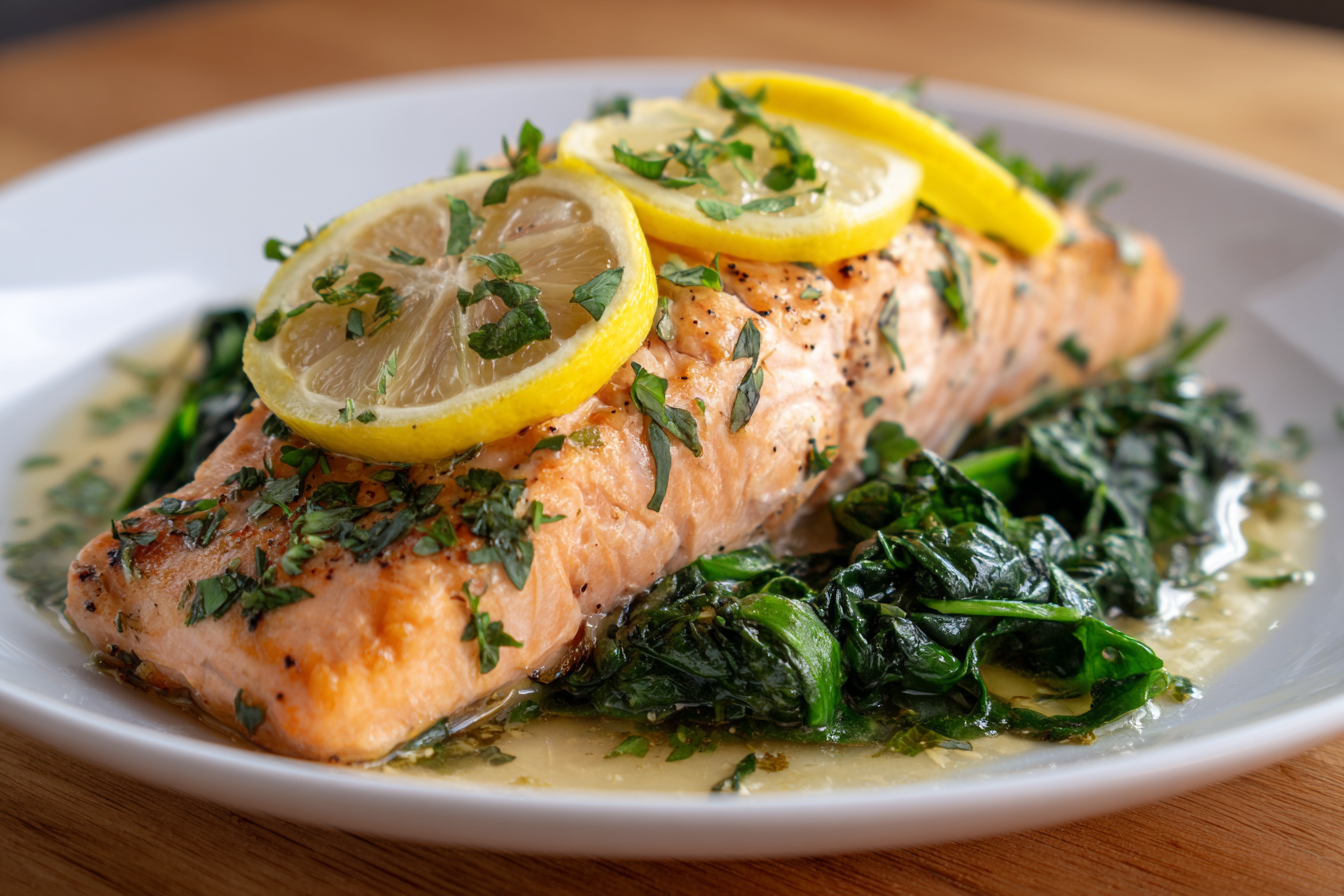
Light Citrus Salmon With Steamed Greens
Cuisine: Mediterranean4
servings10
minutes20
minutes420
kcalThis no-fuss steamed salmon with lemon, herbs and greens delivers tender, flaky fish and requires almost zero cleanup thanks to parchment paper cooking.
Ingredients
1½ lbs skin-on salmon, cut into 4 equal pieces
1 yellow onion, thinly sliced
6 garlic cloves, thinly sliced
⅓ cup roughly chopped fresh parsley
⅓ cup roughly chopped fresh dill
1 teaspoon kosher salt
½ teaspoon freshly cracked black pepper
¼ cup olive oil, divided
2 lemons, sliced as thin as possible
⅓ cup dry white wine
7 oz baby spinach (about 1 bag)
¼ cup diced pancetta or bacon (optional)
1 small red onion, halved and thinly sliced
1 tablespoon olive oil (for spinach)
2 tablespoons vegetable broth
Directions
- Cut a 2-foot length of parchment paper and center it in a 10-inch heavy bottom skillet that has a lid. Make sure the paper comes up the sides of the pan with some overhang so you can fold it over the salmon later. Set the lined skillet aside while you prepare the salmon mixture.
- In a medium bowl, combine the salmon pieces, sliced yellow onion, garlic, parsley, dill, salt, and pepper. Drizzle with 2 tablespoons of the olive oil and gently toss everything together, being careful not to break up the salmon. The herbs and aromatics should coat the fish evenly.
- Transfer all of the salmon and herb mixture to the lined skillet, arranging the fish pieces skin side down. Spread the onions, garlic, and herbs around and over the salmon. Layer the lemon slices in a single layer over the top of each piece of fish, then drizzle with the remaining 2 tablespoons olive oil and the white wine.
- Fold the parchment paper over the salmon to completely cover it, then crimp and fold the edges together tightly to seal the packet. You want to trap all the steam inside, so make sure there are no gaps. Cover the skillet with its lid to create a double seal.
- Place the covered skillet over medium-high heat and cook for 5 minutes without opening the lid. After 5 minutes, reduce the heat to medium and continue cooking for another 8 to 10 minutes, depending on how thick your salmon fillets are and whether you prefer your fish medium or well done. Remove from heat and let rest for 5 minutes with the lid still on.
- While the salmon cooks, prepare the spinach. Heat 1 tablespoon olive oil in a large skillet over medium heat. If using pancetta or bacon, add it now and cook for 4 to 5 minutes until golden and crispy. Add the sliced red onion and cook for another 2 minutes until softened.
- Add all the baby spinach to the skillet along with the vegetable broth and a pinch of pepper. Toss everything together and cook for 2 to 3 minutes until the spinach is just wilted but still bright green. Don’t overcook it or it will become mushy and lose its color. Transfer to a serving platter or individual plates.
- Carefully remove the lid from the salmon skillet and open the parchment paper, watching out for the hot steam. Place a piece of salmon on each bed of spinach, spooning the lemony pan juices, cooked onions, and garlic over the top. The skin should peel off easily if you want to remove it. Serve immediately with rice, quinoa, or crusty bread.
Notes
- If your salmon fillets are very thick (more than 1 inch), add an extra 2 to 3 minutes to the cooking time.
- You can substitute the white wine with chicken or vegetable broth if you prefer not to cook with alcohol.
- Fresh herbs work best in this recipe, but if you only have dried, use about 1 tablespoon each of dried parsley and dill instead.
- The salmon skin should peel right off after cooking, or you can remove it before cooking if you prefer.
- Leftovers can be stored in the fridge for up to 2 days and reheated gently in the microwave or flaked over a salad.
Frequently asked questions
Q: Can I use frozen salmon for this recipe?
A: Yes, but make sure to thaw it completely first. Pat the salmon very dry with paper towels before using it, since frozen salmon tends to release more moisture. If the fish is too wet, it can make the final dish watery instead of letting the citrus and herb notes shine through.
Q: What if I don’t have parchment paper?
A: You can use aluminum foil instead, though parchment is better because the fish won’t stick to it. If using foil, lightly oil it first. Some people also use those silicone baking mats cut to size, which work great and are reusable.
Q: How do I know when the salmon is done?
A: The salmon should be opaque on the outside and slightly translucent in the very center for medium doneness. It should flake easily when you press it gently with a fork but still feel moist. If you prefer your salmon more well done, just add another 2 minutes to the cooking time.
Q: Can I make this with other types of fish?
A: Absolutely. This method works great with any thick fish fillet like halibut, cod, or sea bass. Thinner fish like tilapia or sole will cook faster, so reduce the cooking time by about 3 to 4 minutes. Just keep an eye on it the first time you try a different fish to get the timing right.
