

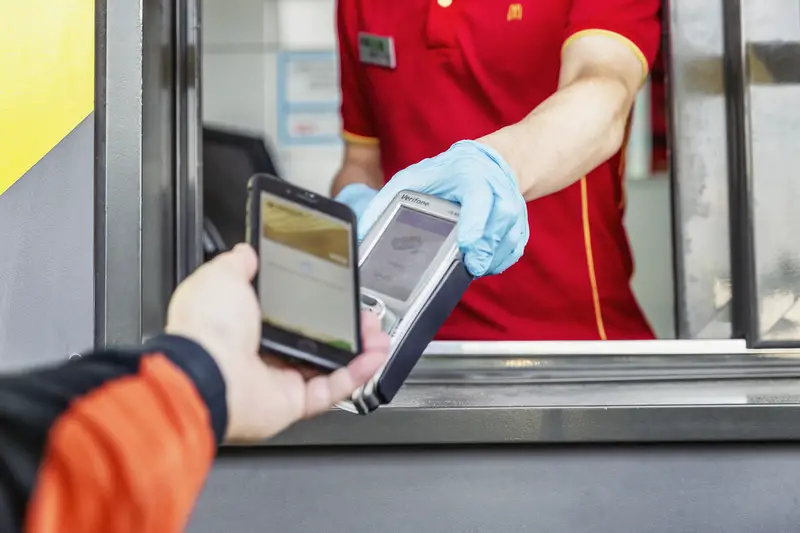
If you’ve sat in a McDonald’s drive-thru line recently, staring at your steering wheel, wondering why it takes eleven minutes to get a McChicken and a Coke, you’re not alone. About 70% of all McDonald’s orders come through the drive-thru window. That’s a staggering amount of business funneled through a single lane with a crackly speaker and a teenager trying to hear you over traffic noise. McDonald’s knows this is a problem. And in 2026, they’re overhauling roughly 27,000 drive-thru locations worldwide in what might be the biggest physical and technological change the chain has made in decades.
This isn’t some vague corporate promise, either. The changes are already rolling out. Some of them are visible — new lanes, new windows, new pickup options. Others are invisible — AI working behind the scenes, weighing your bag before it gets handed to you, predicting when the ice cream machine is about to break down. Here’s what’s actually happening and what it means the next time you pull up to the Golden Arches.
Multi-Lane Drive-Thrus Are Replacing the Single-Lane Bottleneck
The most obvious change you’ll notice is physical. McDonald’s is expanding drive-thrus from the standard single-lane setup to multi-lane formats at thousands of locations. Some high-traffic stores will have up to three lanes, which is wild if you think about how cramped most McDonald’s parking lots already are.
The idea is pretty straightforward: more lanes mean more customers served at once. If you’ve ever been to a Chick-fil-A during lunch rush and watched their employees with iPads work the double lanes like air traffic controllers, you’ve seen this concept in action. McDonald’s is clearly watching what Chick-fil-A is doing and thinking, “We need that, but at 43,000 restaurants.”
Many U.S. locations already have double-lane systems in place as of 2026, with nationwide completion expected by 2027. The chain is also testing an on-the-go restaurant format with few or no indoor seats — just drive-thru, takeout, and delivery. If that becomes the norm, the whole idea of what a McDonald’s looks like could shift pretty dramatically.
A Dedicated Fast Lane for Mobile Orders
Here’s where things get interesting for the app crowd. McDonald’s is adding a dedicated express lane specifically for people who ordered ahead on their phone. You place your order on the app, drive to the restaurant, skip the regular line entirely, and pick up your food in a separate lane.
There’s even been talk of a conveyor belt system that delivers your bag to the window in this express lane, which sounds like something out of a Jetsons episode but is apparently being tested right now. McDonald’s reported hundreds of millions of mobile orders in a single quarter back in 2023, so the demand for this kind of thing clearly exists. The company isn’t building this for fun — they’re building it because mobile ordering is already a massive chunk of their business and it’s only growing.
This also means a potential third drive-thru window at some locations, dedicated entirely to mobile pickup. If you’re the type who plans ahead and orders from the parking lot, you’re about to be rewarded for it.
Google Cloud Is Powering the Whole Thing
Behind every visible change is a massive technology partnership with Google Cloud. In 2023, McDonald’s announced a multi-year global deal with Google to install a new restaurant platform called Edge, which provides the computing power needed to run AI and smart devices across all 43,000 restaurants. That’s not a small project. That’s rewiring the entire nervous system of the world’s biggest fast-food chain.
The Google partnership covers everything from voice-activated AI chatbots at the ordering speaker to internet-connected kitchen equipment that can predict when a fryer is about to fail. McDonald’s CIO Brian Rice has talked about how modern restaurants are juggling counter orders, drive-thru orders, delivery app orders, and curbside pickup all at the same time, and that the pressure on crew members is enormous. The tech is supposed to take some of that weight off their shoulders.
Whether Google’s AI can actually handle a mumbled order for “a number four with no pickles, extra mac sauce, and a Hi-C if you still have it” during a Friday lunch rush remains to be seen. But McDonald’s is betting big that it can.
The IBM Experiment That Crashed and Burned
To understand why McDonald’s is being so careful this time, you have to know what happened before. Back in 2019, McDonald’s bought a company called Apprente that specialized in voice-based conversational tech. Then in 2021, they brought in IBM to accelerate the AI drive-thru project.
It did not go well. Testing at stores in Chicago showed about 85% order accuracy, which sounds decent until you realize that means roughly one in every seven orders had something wrong with it. At a chain that serves 63 million people daily, that’s millions of messed-up orders. Only 20% of orders could be handled entirely without a human stepping in. Franchisees weren’t thrilled. Customers were confused. By 2024, McDonald’s pulled the plug on the IBM AI system entirely.
The failure was embarrassing, and it made headlines. But McDonald’s insists the new Google-powered system is a different animal — better voice processing, real-time cloud updates, and improved performance in noisy environments. They’re also not the only ones trying this. Wendy’s has its FreshAI system. Taco Bell, White Castle, and Checkers have all tested similar tech. Checkers actually managed to deploy automated ordering at hundreds of locations and even added Spanish as an option. So McDonald’s is now playing catch-up in a race they thought they were leading.
AI Scales That Weigh Your Bag Before You Get It
This one is quietly brilliant. McDonald’s has deployed something called Accuracy Scales across thousands of locations in a dozen markets. The concept is simple: every order has a target weight. When a crew member bags your food, the scale checks whether the weight matches what should be in there. If it doesn’t — say your fries are missing or someone forgot a burger — the system flags it before the bag reaches your hand.
It’s such an obvious solution that you wonder why nobody thought of it sooner. No AI voice recognition needed. No fancy algorithms trying to parse your accent. Just a scale that says, “Hey, this bag is too light. Something’s missing.” It works at drive-thru windows, self-ordering kiosks, and delivery channels. For anyone who’s ever driven away, reached into the bag, and found their Quarter Pounder was replaced by an existential void, this is long overdue.
Ready on Arrival Means Your Food Starts Cooking Before You Get There
McDonald’s is also expanding a feature called Ready on Arrival to more markets, including the U.S., Japan, and the U.K. It works through the McDonald’s app using geofencing technology — basically, the app can detect when you’re getting close to the restaurant, and it tells the kitchen to start making your food.
The goal is that by the time you pull up, your order is already done or nearly done. No waiting at the second window while they drop fresh fries. No awkward “pull forward to spot number three” situations. You show up, you grab your stuff, you leave. The way drive-thru was always supposed to work but rarely does during peak hours.
Smart Kitchen Equipment That Fixes Itself (Sort Of)
The AI upgrades aren’t just customer-facing. McDonald’s is putting sensors on kitchen equipment — fryers, ice cream machines, and other appliances — that can proactively detect problems before they cause a breakdown.
Yes, this includes the ice cream machine. The internet’s favorite joke about McDonald’s — that the ice cream machine is always broken — might finally have an expiration date. If a sensor detects that a machine is trending toward failure, it can alert workers or trigger a maintenance request before the thing goes down completely. It won’t fix everything, but it should reduce the number of times you hear “sorry, the machine is down” when all you wanted was a McFlurry.
The kitchen tech also includes digital menu boards that can switch from breakfast to lunch in real time, which sounds minor until you remember the chaos of trying to order a Big Mac at 10:47 a.m. and being told breakfast doesn’t end for another thirteen minutes.
What This Means for the People Working the Window
The big question with any AI rollout is always about jobs. McDonald’s has been careful to say these tools are designed to support employees, not replace them. The AI takes orders, the scales check bags, the sensors monitor machines — but humans are still making the food, running the restaurant, and handling the thousand little things that go wrong every shift.
Brian Rice’s comments about the stress of managing multiple service channels at once ring true to anyone who’s worked in food service. When you’ve got the drive-thru backed up, a DoorDash driver waiting at the counter, and a kiosk order printing in the back, things fall apart fast. If AI can handle the order-taking part — even imperfectly — that frees up a person to focus on accuracy, speed, or just not losing their mind during the lunch rush.
Whether that promise holds up once the accountants start looking at labor costs is another story. But for now, McDonald’s is framing this as a quality-of-life improvement for crew members, not a headcount reduction.
The bottom line: the McDonald’s drive-thru you’ve known your whole life is being rebuilt from the ground up. More lanes, smarter tech, fewer wrong orders, and food that might actually be ready when you pull up. Whether all of this works as advertised is the billion-dollar question. But after the IBM disaster, McDonald’s clearly learned that promising AI and delivering AI are two very different things. This time, they’re spending the money to get it right — or at least closer to right. Your next trip through the Golden Arches might feel noticeably different, and that’s kind of the whole point.
