

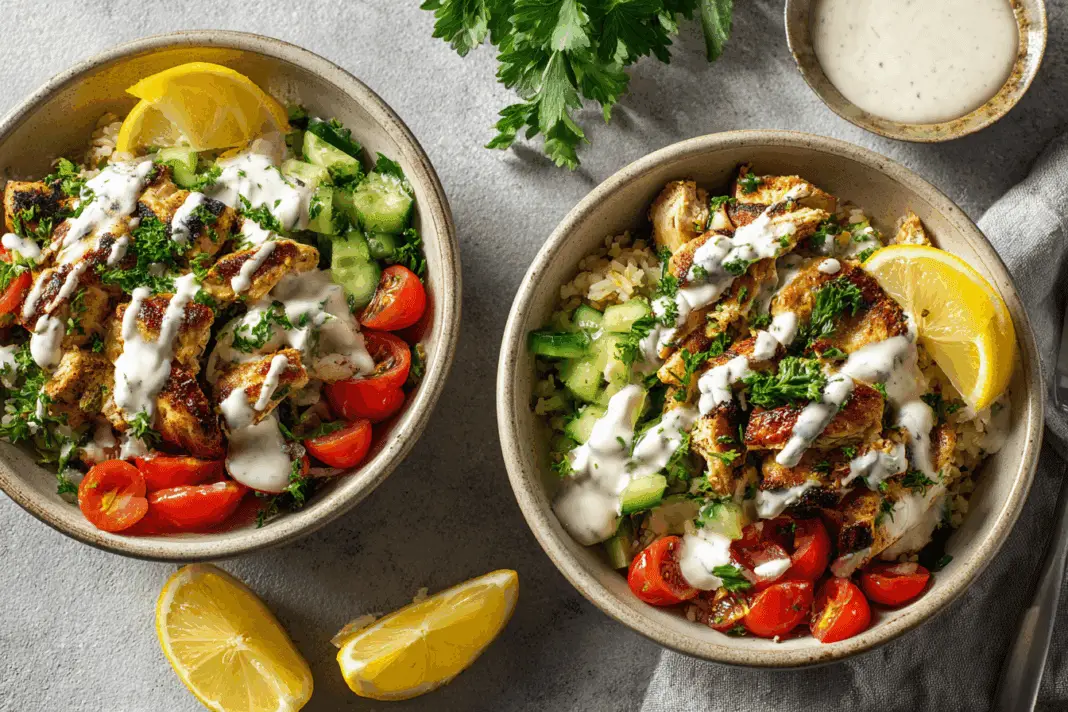
Making dinner shouldn’t feel like a chore, especially when the week gets hectic and takeout starts looking way too tempting. That’s where these Mediterranean chicken bowls come in—everything cooks on one sheet pan, the sauce takes about two minutes to whisk together, and the results taste like something from a really good restaurant. The chicken gets marinated in lemon and za’atar spices, the vegetables roast until they’re slightly charred, and the tahini sauce brings everything together with this creamy, tangy richness that makes each bite better than the last.
Why this recipe works for busy weeknights
Nobody wants to spend hours in the kitchen after a long day at work or dealing with kids’ activities. These chicken bowls solve that problem because almost everything happens on one sheet pan. The chicken thighs marinate while the oven preheats, then they roast alongside bell peppers, zucchini, red onion, and broccoli. While that’s happening, the tahini sauce comes together in less time than it takes to order pizza online. The whole meal from start to finish takes about an hour, and most of that time is hands-off roasting.
The smart move is prepping the marinade and sauce in the morning before work. Toss the chicken in its marinade, stick it in the fridge, and whisk up the tahini sauce to store in a jar. When dinner time rolls around, just chop the vegetables and everything goes in the oven. This approach turns what could be a stressful evening into something manageable. Even better, leftovers pack beautifully for lunch the next day, so making extra actually saves time tomorrow too.
Getting the chicken marinade just right
The marinade seems almost too simple—olive oil, fresh lemon juice, minced garlic, za’atar seasoning, and salt. Za’atar is a Middle Eastern spice blend that usually contains thyme, oregano, sesame seeds, and sumac. It adds this earthy, slightly tangy taste that makes chicken so much more interesting than plain salt and pepper. Most grocery stores carry za’atar now, usually in the spice aisle or international foods section. Once that bottle is in the pantry, it becomes useful for seasoning everything from roasted potatoes to scrambled eggs.
Chicken thighs work better than breasts here because they stay juicy even if the oven runs a bit hot or dinner gets delayed by fifteen minutes. The dark meat has more fat, which means more insurance against drying out. Cut the thighs into similar-sized pieces so they cook evenly—nobody wants one piece done perfectly while another is still pink in the middle. The marinade penetrates deeper if the chicken sits for at least an hour, but even thirty minutes makes a noticeable difference in the final taste.
Making tahini sauce that actually tastes good
Tahini can be tricky because some brands taste bitter or chalky straight from the jar. The key is balancing it with enough acidity and sweetness. This sauce combines tahini with olive oil, fresh lemon juice, minced garlic, and a touch of honey. The proportions matter—too much tahini and it gets pasty, too much lemon and it’s too sharp. Start with the measurements in the recipe, then adjust based on personal preference. Some people like adding a bit more honey for sweetness, others want extra lemon for brightness.
The consistency should be pourable but not watery, like a thin ranch dressing. If the sauce seems too thick after mixing, add cold water one tablespoon at a time until it reaches that perfect drizzling texture. Make sure to use well-stirred tahini—the oil separates and sits on top in the jar, so mixing it thoroughly before measuring prevents an oily sauce. This tahini sauce keeps in the fridge for three to four days, making it useful for multiple meals throughout the week on salads, roasted vegetables, or grain bowls.
Choosing vegetables that roast well together
Not all vegetables roast at the same speed, which is why bell peppers, zucchini, red onion, and broccoli work so well together. They all need about the same amount of time in a hot oven to get tender with slightly charred edges. Cut everything into roughly equal sizes—if the onion chunks are twice as big as the zucchini pieces, the onion will still be crunchy when everything else is done. Aim for bite-sized pieces that are easy to eat in a bowl without needing a knife.
Before roasting, toss the vegetables with olive oil, salt, and black pepper. Don’t skip the oil—it helps with browning and prevents sticking to the pan. Spread everything in a single layer with space between pieces. Crowding causes steaming instead of roasting, which means soft vegetables instead of caramelized ones. If the sheet pan looks too full, use two pans or roast in batches. The vegetables can go on the same pan as the chicken or on a separate one, depending on oven space and timing preferences.
Rice or cauliflower rice as the base
The grain base soaks up all those good juices from the chicken and vegetables, plus it gives the tahini sauce something to cling to. White rice is classic and comforting—jasmine or basmati both work great. Cook it according to package directions while the chicken roasts. Brown rice takes longer but adds a nutty taste and chewier texture. Quinoa is another option that brings extra protein and a slightly different texture than rice.
Cauliflower rice makes the bowls lighter and works perfectly for anyone avoiding grains. The frozen riced cauliflower from the grocery store saves chopping time—just cook it in a pan over medium-low heat until tender, about ten to fifteen minutes. Season it with a bit of salt and maybe a splash of olive oil. The cauliflower rice won’t be as filling as regular rice, so portions might need adjusting if using it as the base.
Adding fresh herbs makes everything better
Fresh parsley and mint might seem like optional garnishes, but they really do elevate these bowls from good to great. The herbs add brightness and a pop of color that makes the meal look more appealing. Parsley has a clean, slightly peppery taste that complements the rich tahini sauce. Mint brings a cool freshness that cuts through the savory chicken and vegetables. Chop both herbs roughly—no need for perfect mince—and sprinkle them generously over each bowl right before serving.
Growing herbs in a small pot on the windowsill means always having fresh ones available without buying a whole bunch that wilts in the fridge. Even apartment dwellers with limited space can manage a pot of parsley or mint. If fresh herbs aren’t available, dried ones won’t work as well here since the fresh taste is part of what makes the final dish special. In a pinch, leaving them out entirely is better than using dried, though the bowls will definitely taste more complete with them.
Optional additions that customize the bowls
Half an avocado adds creaminess and healthy fats that pair beautifully with the tangy tahini sauce. Sliced avocado also makes the bowls more filling and adds visual appeal with its bright green color. Toasted sesame seeds or pine nuts bring a crunchy element and nutty taste. Just a tablespoon or two sprinkled on top makes a difference in texture. Olives are another Mediterranean addition that some people love—Kalamata or green olives both work.
For anyone who likes heat, harissa oil takes these bowls up a notch. Mix a tablespoon of harissa paste with three tablespoons of olive oil and drizzle it over the finished bowls. The spicy, smoky paste adds complexity without overwhelming everything else. Pickled peppers like pepperoncini contribute acidity and a bit of brine that cuts through the richness. Even a simple squeeze of extra lemon juice right before eating brightens all the other tastes.
Meal prep strategy for the whole week
These bowls are perfect for making ahead because all the components store separately and stay fresh for days. On Sunday afternoon, marinate and roast the chicken, roast the vegetables, cook the rice or cauliflower rice, and make the tahini sauce. Divide everything into individual containers—chicken and vegetables in one section, grains in another, sauce in a small jar. Keep the fresh herbs and any avocado separate to add right before eating so they don’t get soggy or brown.
When lunchtime arrives, either eat the bowls cold or reheat the chicken, vegetables, and grains together for about two minutes in the microwave. Add the tahini sauce after heating—it doesn’t need warming and tastes better at room temperature anyway. The sauce might thicken in the fridge, so add a splash of water and stir before drizzling. This approach means having restaurant-quality lunches ready to go without the restaurant prices or the daily stress of figuring out what to eat.
What to do with leftover components
The beauty of these bowls is that each part works in other meals too. Leftover chicken tastes great in pita sandwiches with lettuce and tomato, or tossed with pasta and the tahini sauce for a quick dinner. The roasted vegetables can become a side dish for another protein, get mixed into scrambled eggs for breakfast, or go on top of pizza. Extra tahini sauce serves as a salad dressing, a dip for raw vegetables, or a spread for sandwiches and wraps.
Cooked rice or cauliflower rice reheats easily and can be the base for completely different bowls—try it with teriyaki chicken and stir-fried vegetables, or with black beans and salsa for a Mexican-inspired meal. The za’atar marinade works on other proteins too, like salmon, shrimp, or pork chops. Making these Mediterranean bowls once often leads to discovering new favorite combinations using the same basic techniques and ingredients.
These bowls prove that eating well doesn’t require complicated techniques or hard-to-find ingredients. Everything comes together with straightforward steps and ingredients available at regular grocery stores. The combination of marinated chicken, roasted vegetables, grains, and that tangy tahini sauce creates something satisfying that works for weeknight dinners or weekend meal prep. Once this recipe becomes familiar, it’s easy to adapt based on what’s in the fridge or what sounds good that day.
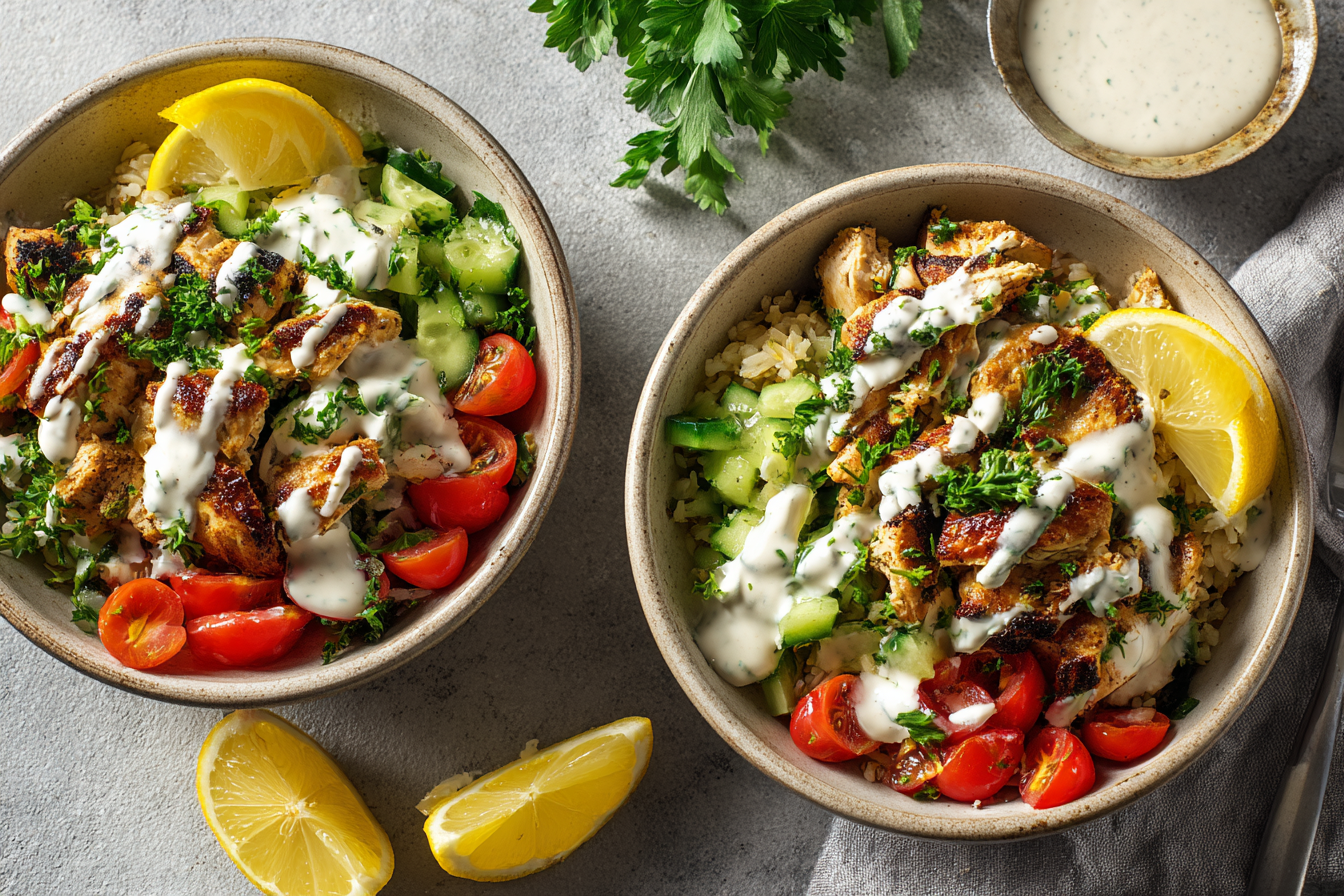
Mediterranean Chicken Bowls with Lemon Tahini Sauce
Cuisine: Mediterranean4
servings15
minutes30
minutes485
kcalPerfectly marinated chicken and roasted vegetables served over rice with an incredibly creamy lemon tahini sauce.
Ingredients
1½ pounds boneless skinless chicken thighs, cut into pieces
¼ cup extra virgin olive oil, divided
4 cloves garlic, minced
2 tablespoons fresh lemon juice
2 tablespoons za’atar seasoning
1 teaspoon kosher salt
1 red bell pepper, cut into large chunks
1 large zucchini, sliced into half moons
1 red onion, cut into large chunks
10 ounces fresh broccoli florets
Cooked rice or cauliflower rice, for serving
Fresh parsley and mint, chopped
Half an avocado, sliced (optional)
- For the Lemon Tahini Sauce:
3 tablespoons tahini
1 tablespoon olive oil
¼ cup fresh lemon juice
2 cloves garlic, minced
1 teaspoon honey
¼ teaspoon kosher salt
1-2 tablespoons cold water, as needed
Directions
- Preheat the oven to 400°F. In a large bowl, combine the chicken pieces with 2 tablespoons olive oil, minced garlic, lemon juice, za’atar seasoning, and salt. Toss everything together until the chicken is well coated. If time allows, let this marinate in the refrigerator for at least 30 minutes or up to 8 hours for deeper taste.
- Spread the marinated chicken pieces on a large sheet pan, leaving space between each piece for proper browning. On the same pan (or a second one if needed), add the bell pepper, zucchini, red onion, and broccoli. Drizzle the vegetables with the remaining 2 tablespoons olive oil and season with salt and black pepper.
- Roast in the preheated oven for 30 minutes, tossing the vegetables and flipping the chicken pieces halfway through cooking. The chicken should reach an internal temperature of 165°F and the vegetables should be tender with slightly charred edges. If the chicken is done before the vegetables, remove it to a plate and cover with foil while the vegetables finish cooking.
- While the chicken and vegetables roast, prepare the lemon tahini sauce. In a small bowl, whisk together the tahini, olive oil, lemon juice, minced garlic, honey, and salt until smooth. The mixture will thicken at first, then become creamy as the lemon juice incorporates. Add cold water one tablespoon at a time until the sauce reaches a pourable consistency similar to ranch dressing.
- Prepare the rice or cauliflower rice according to package directions. For cauliflower rice, cook it in a saucepan over medium-low heat with a drizzle of olive oil until softened, about 10-15 minutes. Season with a pinch of salt.
- To assemble the bowls, start with a base of warm rice or cauliflower rice in each serving bowl. Top with the roasted chicken pieces and roasted vegetables, dividing them evenly among the bowls. If using avocado, add the sliced pieces now.
- Drizzle the lemon tahini sauce generously over each bowl. Don’t be shy with the sauce—it really makes the dish. Sprinkle with chopped fresh parsley and mint for brightness and color. If the sauce thickened while sitting, stir in a splash more water to return it to drizzling consistency.
- Serve immediately while everything is warm. For meal prep, store the components separately in airtight containers in the refrigerator for up to 4 days. Reheat the chicken, vegetables, and grains together, then add the sauce and fresh herbs right before eating.
Notes
- Chicken breasts can substitute for thighs, but reduce cooking time by 5 minutes and check for doneness at 165°F to prevent drying out.
- If za’atar isn’t available, substitute with a mix of 1 tablespoon dried oregano, 1 teaspoon dried thyme, 1 teaspoon sesame seeds, and 1 teaspoon sumac.
- For extra heat, add harissa oil by mixing 1 tablespoon harissa paste with 3 tablespoons olive oil and drizzle over the finished bowls.
- The tahini sauce keeps in the refrigerator for 3-4 days. It will thicken when cold, so add water and stir before using.
- Use well-stirred tahini for the smoothest sauce. The oil separates in the jar, so mix thoroughly before measuring.
- Other vegetables that work well include cherry tomatoes, eggplant, or cauliflower florets.
Frequently asked questions
Q: Can I make these bowls without a grill?
A: Absolutely. The recipe works perfectly in the oven at 400°F. Everything roasts on sheet pans, and the results are just as good as grilling. If wanting that charred taste without a grill, broil the chicken and vegetables for the last 2-3 minutes of cooking, watching carefully to prevent burning.
Q: What if my tahini sauce tastes bitter?
A: Some tahini brands are more bitter than others. Balance it by adding more lemon juice and honey, a half teaspoon at a time, until the taste improves. A splash of cold water also helps mellow the bitterness. Choosing a high-quality tahini that’s runny and pourable makes a big difference.
Q: How long does the marinated chicken last in the fridge?
A: Raw chicken in the marinade stays fresh for up to 8 hours in the refrigerator, but shouldn’t sit longer than that for food safety reasons. For longer storage, freeze the chicken in the marinade for up to 3 months, then thaw in the fridge overnight before cooking.
Q: Can I use rotisserie chicken instead of cooking my own?
A: Yes, using store-bought rotisserie chicken makes these bowls even faster. Just shred or chop the chicken, warm it up, and skip the marinating and roasting steps. The tahini sauce and roasted vegetables still provide plenty of taste, though the chicken won’t have that za’atar seasoning throughout.
