

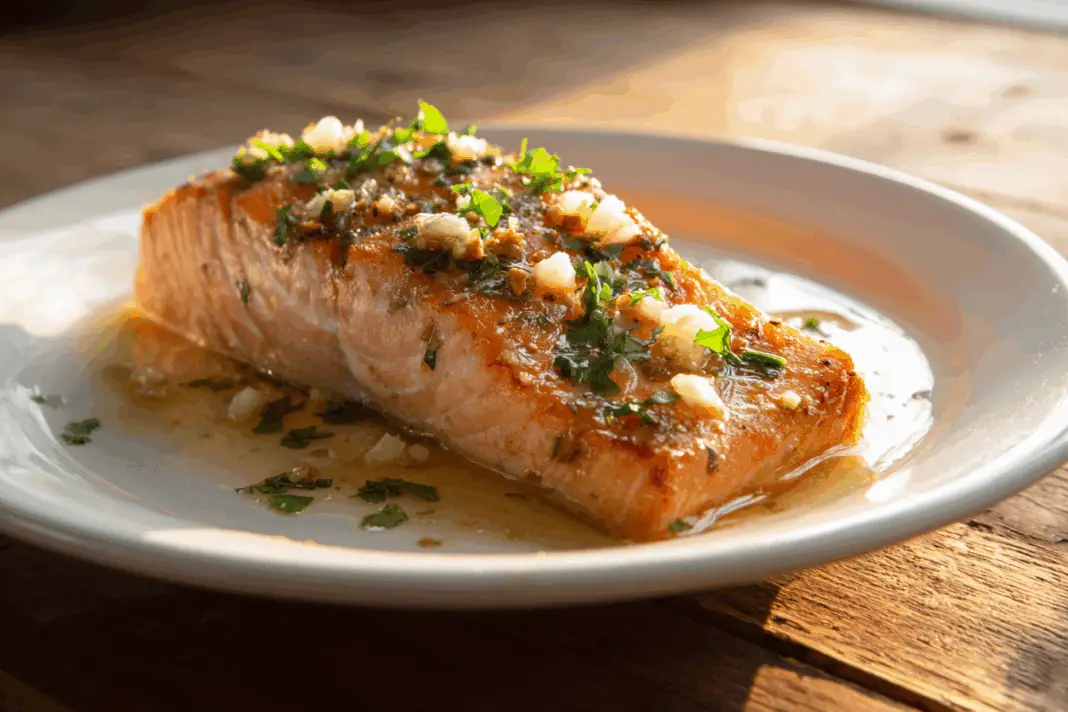
There’s something about salmon cooked in garlic butter that makes everyone at the table go quiet. Not awkward quiet, but the kind where people are too busy eating to talk. This recipe turns out restaurant-quality salmon right in your own kitchen, and the best part is how simple it actually is. The butter keeps everything moist while creating this golden crust on top, and the garlic adds just enough punch without being overwhelming. Once you try this method, boxed fish sticks will seem like a distant memory from another life.
Why butter makes all the difference for salmon
Most people think salmon needs fancy ingredients or complicated techniques, but butter does most of the heavy lifting here. When you cook salmon with butter, it acts like a protective shield against the heat, keeping the fish tender and moist instead of dried out and chalky. The fat in butter also helps carry all those garlic and herb notes right into the fish, so every bite tastes rich and satisfying. You’re basically giving your salmon a luxurious bath that makes it taste like something from a high-end restaurant.
The technique of basting salmon with foaming garlic butter while it cooks is a professional chef trick that anyone can master. As the butter bubbles in the pan, you scoop it up with a spoon and pour it back over the fish repeatedly. This constant bathing in hot butter cooks the salmon gently and evenly, preventing those dry, overcooked edges you sometimes get with plain pan-frying. The butter also develops this nutty, toasted taste as it heats up, adding another layer of richness that plain oil just can’t match.
Getting your garlic prep right matters more than you think
Here’s where a lot of people mess up without realizing it. Those handy garlic presses or pre-minced garlic from a jar might save time, but they’ll ruin this dish. When you crush garlic in a press, it releases too much liquid and makes the pieces super tiny. Those tiny bits burn almost instantly when they hit hot butter, turning bitter and ruining all that careful work you put in. Plus, crushed garlic spits and splatters everywhere because of all that extra juice, making your stovetop look like a crime scene.
Instead, grab a sharp knife and finely mince your garlic by hand. The pieces should be small but not microscopic, about the size of a match head. This size lets the garlic cook gently in the butter, turning golden and fragrant instead of burned and bitter. Fresh garlic also has this sharp, clean taste that mellows beautifully when cooked in butter, creating that classic garlic butter aroma that makes everyone wander into the kitchen asking what’s for dinner. Taking an extra two minutes to chop garlic properly is the difference between amateur and restaurant-quality results.
Skin on or skin off for your salmon fillets
Walk into any grocery store and you’ll see salmon sold both ways. Skinless fillets let the butter soak directly into the meat on all sides, which means more flavor getting into every bite. The exposed flesh also gets this beautiful golden crust all over when you cook it in butter. If you can find skinless salmon at a decent price, grab it for this recipe. It’s worth the extra dollar or two per pound for the improved texture and taste.
But if you only have skin-on salmon, don’t stress about it. You can still make incredible garlic butter salmon by starting with the flesh side down first, then flipping to finish cooking with the skin side down. The skin actually protects the delicate meat from direct heat, helping prevent overcooking. Some people love eating crispy salmon skin, while others peel it off after cooking. Either way works fine. The important thing is getting that garlic butter working its magic on the exposed parts of the fish.
Temperature targets that prevent dry salmon disasters
Everyone’s got a horror story about overcooked salmon that tastes like cardboard. The FDA says salmon should hit 145°F internally, which technically makes it safe to eat. But here’s the thing most home cooks don’t know: professional chefs pull salmon off the heat at 122°F for medium-rare. That might sound scary if you’re worried about food safety, but salmon cooked to this lower temperature is just cooked through, not raw, and stays incredibly moist and tender. After resting for three minutes, the internal temperature rises to about 127°F as the residual heat keeps cooking the fish.
If you’re nervous about the lower temperature, aim for 140°F as your pull temperature instead. This gives you properly cooked salmon that’s still juicy, landing somewhere between the FDA recommendation and the chef preference. A cheap instant-read thermometer from any grocery store makes this foolproof. Just stick it in the thickest part of the fillet and pull the pan off the heat when it hits your target number. The salmon will continue cooking during those few minutes of rest, so factor that in. Overcooked salmon is dry and chalky, while properly cooked salmon practically melts on your fork.
Why basting beats plain pan-frying every single time
Most people just throw salmon in a pan with some butter and call it done. That works fine if you’re in a huge rush, but basting takes things to another level without adding much time or effort. When you continuously spoon hot butter over the fish as it cooks, you’re essentially cooking it from both sides at once. The bottom gets heat from the pan, while the top gets basted with hot butter, creating more even cooking throughout. This means no more raw centers or overcooked edges.
The basting process also forces the garlic butter into every crack and crevice of the salmon. As the fish cooks, it naturally develops tiny gaps and fissures in the flesh. Each time you spoon butter over the top, some of it seeps into those openings, flavoring the salmon from the inside out. You end up with fish that tastes buttery and garlicky all the way through, not just on the surface. Tilt your pan slightly so the butter pools on one side, making it easier to scoop up with a large spoon. Keep spooning that bubbling butter over the salmon for about 90 seconds total, and you’ll see exactly why this technique makes such a difference.
What to do with all that leftover butter
This recipe uses about six tablespoons of butter total, which might seem like a lot. But you need that amount to get good basting coverage in your pan. Without enough butter, you’ll be scraping desperately at the pan trying to get enough to spoon over the salmon. The good news is you definitely don’t have to use all that butter when serving. Spoon a bit over each piece of salmon, but save the rest in the pan for something equally delicious.
The leftover garlic butter in your pan is basically liquid gold. Let it cool and solidify in the fridge, then use it the next day for the best garlic bread you’ve ever had. Just smear that hardened butter onto sliced bread and pan-fry until golden and crispy. The butter still has all those toasted garlic bits and salmon flavors baked right in, creating this incredible savory bread that’s perfect alongside soup or salad. You could also toss it with pasta, spread it on corn on the cob, or use it to sauté vegetables. Throwing away that precious garlic butter would be a crime against good food.
Fresh herbs and lemon bring everything together
Salmon and butter are both rich and fatty, which tastes amazing but can feel heavy after a few bites. A small squeeze of fresh lemon juice at the end cuts through all that richness, adding a bright note that balances everything out. You’re not making lemon butter sauce here, so don’t go overboard. Just a teaspoon or so gives you that barely noticeable tang that keeps the dish from feeling too heavy. Most people won’t even identify lemon as a specific taste, but they’ll notice something makes the salmon taste fresher and lighter.
Fresh parsley adds a pop of green color that makes your plate look restaurant-worthy, but it also contributes a mild, clean taste that complements the garlic. Dried herbs work in a pinch, but fresh parsley is cheap and widely available, so it’s worth grabbing a bunch. You could also use fresh dill, which has a classic pairing with salmon, or try thyme for something a bit earthier. Chop whatever herbs you’re using right before serving so they stay bright green and fresh-looking instead of turning dark and wilted on your hot salmon.
Simple sides that won’t steal the spotlight
This garlic butter salmon is rich and packed with taste, so you want sides that complement it without competing for attention. Roasted vegetables like asparagus, broccoli, or green beans work perfectly because they’re simple and slightly bitter, which balances the buttery richness of the fish. Just toss them with olive oil, salt, and pepper, then roast at high heat until they get some charred edges. The slight bitterness from the charring plays nicely against the rich salmon.
Mashed potatoes or cauliflower puree also make excellent partners for this salmon. They’re creamy and mild, letting the garlic butter salmon be the star while still making the meal feel complete and satisfying. A simple green salad with a tart vinaigrette adds freshness and crunch, helping cut through the richness between bites of salmon. Rice pilaf or plain steamed rice works great too, especially if you spoon some of that extra garlic butter over the rice. Whatever you choose, keep it simple so the salmon can shine.
Getting your timing right from start to finish
The whole cooking process takes about eight minutes from the time the salmon hits the pan until it’s done. Start by searing the presentation side (the rounded, prettier side) for three minutes to get a nice golden crust. Then flip it over and cook for one minute before adding your butter. This timing gives the first side enough time to develop good color while preventing the second side from overcooking while you baste. Once the butter melts and starts foaming, add your minced garlic and immediately start spooning butter over the fish.
Baste continuously for 90 seconds, which should bring your total cooking time for the second side to about three minutes including that initial minute before adding butter. This timing works perfectly for salmon fillets that are about an inch thick, which is pretty standard at most grocery stores. Thinner fillets need less time, while thicker pieces need a bit more. Always use that instant-read thermometer to check the internal temperature rather than just guessing based on time. Let the salmon rest for three full minutes after pulling it from the pan, during which time the internal temperature will continue rising and the juices will redistribute throughout the fish.
Making restaurant-quality salmon at home doesn’t require culinary school or fancy equipment. This garlic butter method relies on simple ingredients and straightforward technique that anyone can master after trying it once or twice. The keys are chopping your garlic by hand, using enough butter for effective basting, and pulling the salmon at the right temperature. Everything else is just following the steps and letting the butter work its magic. Next time someone asks what’s for dinner, you’ll have an answer that sounds impressive but comes together in less time than ordering takeout.
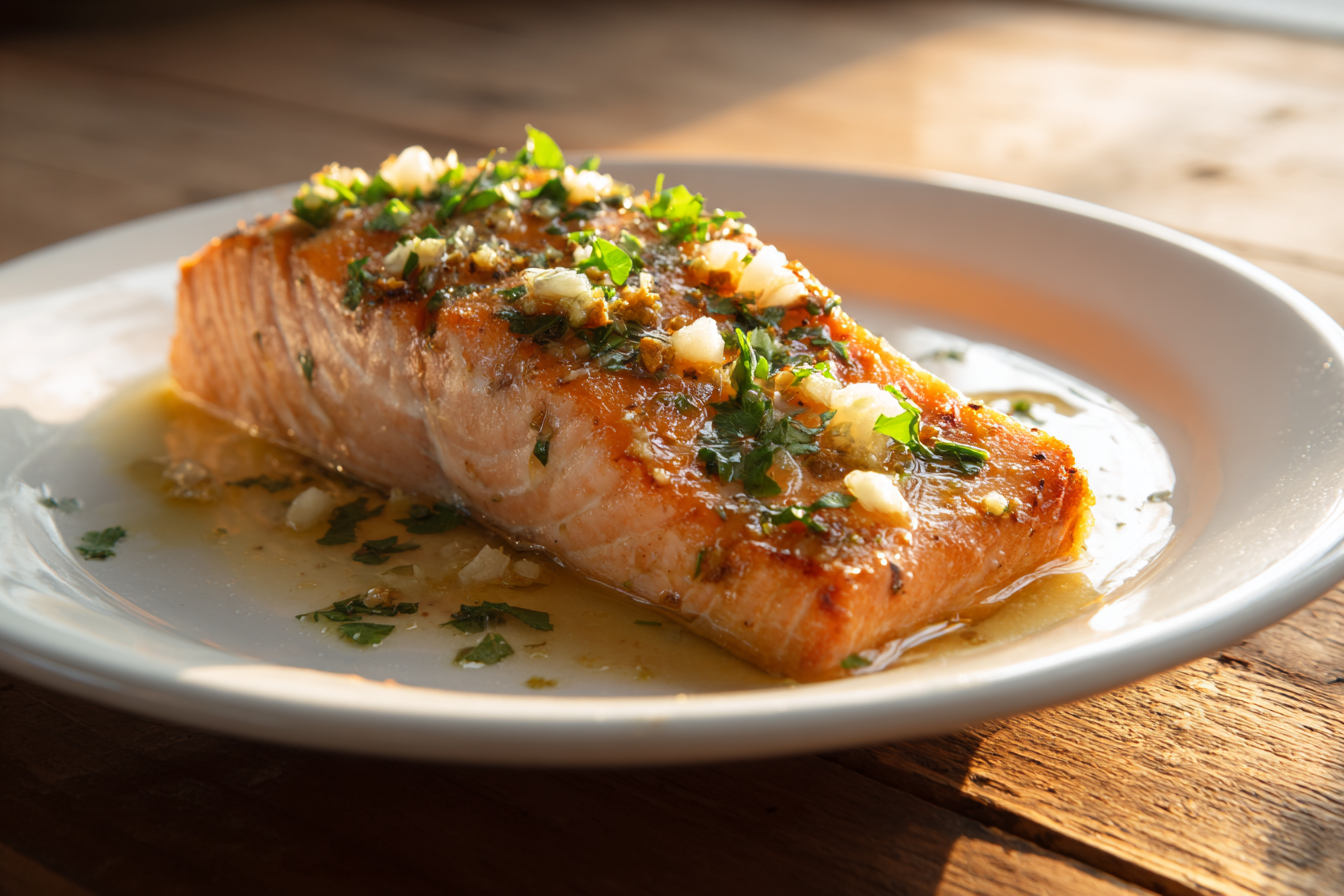
Crispy Garlic Butter Salmon
Cuisine: American4
servings5
minutes8
minutes464
kcalRestaurant-quality salmon with golden garlic butter crust that disappears from plates in minutes.
Ingredients
4 salmon fillets (6 oz each), skinless and boneless
1/2 teaspoon salt
1/4 teaspoon black pepper
1 1/2 tablespoons olive oil
90g (6 tablespoons) salted butter, cut into cubes
1 tablespoon garlic (about 2 cloves), finely minced by hand
1 teaspoon fresh lemon juice
2 teaspoons fresh parsley, finely chopped
Directions
- Remove salmon from the refrigerator 30 minutes before cooking and let it come to room temperature. Pat both sides of the fillets completely dry with paper towels, then sprinkle evenly with salt and black pepper on both sides. This seasoning step is crucial for developing a flavorful crust.
- Heat olive oil in a large nonstick skillet over medium-high heat until it shimmers but doesn’t smoke. Place salmon fillets in the pan presentation side down (the rounded, prettier side) and let them cook undisturbed for 3 minutes until they develop a golden-brown crust. Resist the urge to move them around during this time.
- Using a spatula, carefully flip the salmon fillets to the other side and cook for 1 minute. Add the cubed butter to the pan around the salmon, letting it melt completely. As soon as the butter starts foaming and bubbling, immediately add the minced garlic to the butter.
- Tilt the pan slightly toward you so the garlic butter pools on one side, making it easier to scoop. Using a large spoon, continuously scoop up the bubbling butter and pour it over the salmon fillets in a basting motion. Continue this basting process for 1 1/2 minutes, spooning butter over the fish constantly. The garlic will turn golden as you baste.
- Check the internal temperature of the thickest part of the salmon with an instant-read thermometer. For medium-rare salmon that’s optimally juicy, remove from heat at 122°F (it will rise to 127°F after resting). For medium doneness, pull at 140°F (it will rise to 145°F). Transfer salmon to a plate and let it rest for 3 minutes.
- Return the pan with the garlic butter to the unlit stovetop to keep it warm. Stir the fresh lemon juice into the butter, mixing well to combine. Taste the butter sauce and adjust seasoning if needed.
- Place each rested salmon fillet on individual serving plates. Spoon a moderate amount of the garlic butter sauce over each piece, being careful not to drench them since the butter is quite rich. Sprinkle the chopped fresh parsley over the top for color and freshness, then serve immediately while hot.
Notes
- If using skin-on salmon, start cooking with the skin side up, then flip so the skin side is down during the basting process. The skin protects the delicate flesh from overcooking.
- Don’t use a garlic press or pre-minced garlic from a jar. Hand-minced garlic creates the right size pieces that won’t burn and won’t cause excess splattering in the hot butter.
- Save any leftover garlic butter in the refrigerator and use it the next day to make incredible garlic bread by spreading it on bread and pan-frying until golden.
- Cooking times vary based on thickness: 1/2-inch thick fillets need 10-12 minutes total, 1-inch thick need 12-15 minutes, and over 1-inch thick need 15-18 minutes total.
- Leftover cooked salmon keeps for 3-4 days in the refrigerator and can be gently reheated or used cold in salads and sandwiches.
Common questions about garlic butter salmon
Q: Can I use frozen salmon for this recipe?
A: Yes, but thaw it completely in the refrigerator overnight first and pat it extremely dry before cooking. Frozen salmon that’s cooked directly from frozen won’t develop the same golden crust and releases too much water into the pan, preventing proper browning and making the garlic butter watery.
Q: What if I only have unsalted butter?
A: Unsalted butter works perfectly fine, but you’ll need to add about 1/4 teaspoon of salt directly to the melted butter along with the garlic. This ensures the butter sauce has enough seasoning to properly flavor the salmon as you baste it.
Q: Can I make this recipe in the oven instead?
A: You can bake salmon with garlic butter at 400°F for 12-15 minutes, but you’ll miss out on the basting technique that makes this recipe special. The continuous spooning of hot butter over the fish as it cooks creates more even cooking and better flavor penetration than just baking with butter on top.
Q: Why is my garlic burning before the salmon is done?
A: You’re either adding the garlic too early, using garlic that’s minced too finely, or your heat is too high. Add the garlic only after you’ve flipped the salmon and added the butter, and make sure you start basting immediately so the garlic cooks gently in the moving butter rather than sitting in one hot spot.
