

You’ve got a chicken recipe pulled up on your phone, everything’s ready to go, and then you see it: “marinate overnight.” Your dinner plans just got pushed to tomorrow. But here’s something most people don’t know: that overnight soak might be completely unnecessary. Even worse, marinating chicken the wrong way can actually ruin your meal. Before you dump that chicken into a bowl of marinade, there’s one crucial thing you need to check first: how long you’re actually planning to let it sit. The truth about marinating chicken is way different from what most recipes tell you, and understanding this can save your dinner and your time.
Marinades don’t actually penetrate deep into chicken
Most people think marinades soak all the way through chicken, kind of like how a sponge absorbs water. That’s actually not what happens at all. The marinade only affects the surface of the meat, maybe going a tiny bit deeper but nothing close to the center. Chicken is already packed with moisture and proteins, so it’s not going to absorb much liquid from the outside. This means when you leave chicken sitting in marinade for eight hours or overnight, most of that time nothing is actually happening. The first 30 minutes to two hours does the work, and everything after that is just your chicken taking up space in the fridge.
The science behind this is pretty straightforward. Meat tissue is dense, and the molecules in your marinade are too large to travel deep into the protein structure. What you’re really doing is coating the outside of the chicken, which will give you some extra taste when you cook it. That surface treatment can be great, but it doesn’t require the long wait times that recipes often suggest. Once you understand that marinades work superficially, you can skip the overnight prep and still get the same results. This changes everything about how you plan meals because you’re not stuck preparing dinner a full day ahead of time.
Checking for acid content prevents mushy chicken
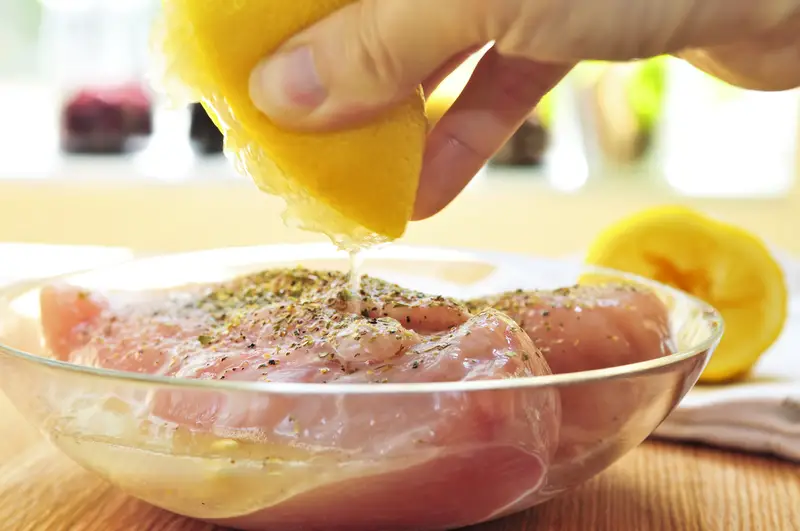
Before you marinate chicken, look at what’s in your marinade. Does it have lemon juice, vinegar, lime juice, or any other acidic ingredient? That’s what you need to check first. Acids can break down the proteins on the surface of chicken, and while that sounds like it would make the meat tender, it actually does the opposite. When chicken sits too long in an acidic marinade, the outside layer gets weird and mushy instead of juicy and tender. It’s one of the most common mistakes people make, and it completely changes the texture in a bad way.
If your marinade has acid in it, you should only leave the chicken in there for about 30 minutes maximum. That’s enough time for the surface to pick up the taste without getting broken down too much. For marinades without acid, you can go up to two hours safely. The difference between these two timing windows is huge for the final texture of your chicken. Think about all those times you’ve had chicken that seemed dry on the outside but wasn’t overcooked. That weird texture probably came from sitting too long in something acidic. Checking this one ingredient before you start can save your entire meal.
Room temperature chicken is dangerous after 20 minutes
Some recipes tell you to marinate chicken on the counter to bring it to room temperature before cooking. This is where food safety becomes really important to check. Raw chicken should never sit out at room temperature for more than about 20 minutes. Once chicken gets warmer than 40 degrees, bacteria start growing fast. Your refrigerator stays around 37 degrees, which keeps things safe. But your kitchen is probably somewhere between 68 and 72 degrees, which is perfect for bacteria to multiply. The longer chicken sits in that temperature range, the higher your risk of getting sick.
Always do your marinating in the refrigerator, not on the counter. If you want to bring chicken closer to room temperature before cooking, you can take it out for the last 15 to 20 minutes of marinating, but that’s it. Food safety experts are really clear about keeping raw chicken cold until you’re ready to cook it. This isn’t just being overly careful. Foodborne illness from chicken is not fun at all, and it’s completely preventable. Before you marinate, check where you’re planning to let that chicken sit and make sure it’s going straight into the fridge for most of the time.
Metal containers can react with acidic marinades
Here’s something that catches people off guard: the container you use for marinating actually matters. If you’re using a marinade with acid in it, putting chicken in a metal bowl or pan can cause a chemical reaction. The acid can interact with certain metals, especially aluminum, and give your chicken a weird metallic taste. It can also discolor the meat or the container itself. Most people don’t think about this until they taste something off in their finished dish and can’t figure out what went wrong.
Glass containers like Pyrex dishes work perfectly for marinating chicken. They don’t react with any ingredients, they’re easy to clean, and you can see your chicken through the sides. Food-safe plastic zipper bags also work great, though you’ll need to throw them out after using them with raw chicken. Some people prefer bags because you can flip them easily to make sure the marinade coats everything evenly. Just avoid using metal bowls or aluminum pans when acid is involved. Before you start marinating, check what kind of container you’re planning to use and switch to glass or plastic if needed. This simple check prevents off tastes that can ruin an otherwise perfectly cooked chicken dinner.
You’re probably using way more marinade than needed
Most recipes call for a huge amount of marinade, way more than you actually need. Since marinades only work on the surface of chicken, you really just need enough liquid to coat all the exposed meat. That’s it. A thin layer does the exact same job as drowning your chicken in two cups of marinade. People waste a lot of ingredients making massive batches of marinade that mostly get thrown away after use. You can’t reuse marinade that’s touched raw chicken unless you boil it first, so all that extra liquid is just going down the drain.
Try using just enough marinade to cover the chicken when you turn the pieces once or twice. For four chicken breasts, you might only need half a cup of marinade instead of two cups. Put everything in a plastic bag, squeeze out the air, and massage it around to coat everything. This uses less ingredients, creates less waste, and works just as well as using tons of liquid. Before you start mixing up a marinade, check how much you’re making compared to how much chicken you have. You’ll save money on ingredients and still get the same results. Plus, it’s easier to store a bag with just a little marinade in your fridge than a huge container taking up space.
Different chicken cuts need different marinating times
Not all chicken pieces should be treated the same way when it comes to marinating. Boneless, skinless chicken breasts are really thin and lean, so they pick up marinade fast. They also dry out super easily when you cook them, which is why people often try marinating them in the first place. These only need about 30 minutes to two hours maximum. On the other hand, chicken thighs and drumsticks have more fat and are thicker, so they can handle slightly longer marinating times without getting mushy. The bone and skin also provide some protection from the marinade.
If you cut your chicken into smaller pieces like strips or cubes, they need even less time in the marinade because there’s more surface area exposed. Maybe just 15 to 30 minutes is plenty for bite-sized pieces. Whole chicken parts with skin on take the longest because the skin acts like a barrier. Before you marinate, check what cut you’re working with and adjust your timing. This prevents over-marinating some pieces while under-marinating others. Getting the timing right for your specific cut makes a bigger difference than the actual ingredients in your marinade.
Salt content matters more than you think
When you’re checking your marinade ingredients, pay special attention to how much salt is in there. Salt is actually the one ingredient that does penetrate deeper into chicken, unlike everything else in your marinade. It changes the protein structure in a way that helps the meat hold onto moisture better when you cook it. This is why brining chicken, which is basically soaking it in salty water, actually works while regular marinades don’t do much. A good rule is about one teaspoon of salt per pound of chicken in your marinade.
Too much salt can make your chicken taste overly salty, obviously. But too little salt means you’re missing out on the one ingredient that genuinely improves the texture and juiciness of the meat. Some marinades include soy sauce, fish sauce, or other salty ingredients, so you need to account for those when adding extra salt. Before you mix everything together, taste your marinade if it doesn’t have raw chicken in it yet. It should taste pleasantly salty, maybe even slightly more salty than you’d want to eat straight. If your marinade tastes bland, your chicken will definitely taste bland. The salt check is one of the most important things you can do before marinating.
Sugar helps with browning but can burn quickly
Most good marinades include some kind of sugar, whether that’s honey, maple syrup, brown sugar, or regular white sugar. The sugar does two things: it balances out the salty and acidic parts of your marinade, and it helps the chicken brown better when you cook it. That nice caramelized color and slightly crispy outside you get on grilled or pan-seared chicken comes partly from the sugars in the marinade. However, sugar can also burn really fast if you’re not careful, especially when you’re grilling or cooking over high heat.
Before you marinate with a sweet mixture, think about how you’re planning to cook the chicken. If you’re grilling, you’ll need to watch it carefully and maybe use a cooler part of the grill to finish cooking without burning the outside. Sugar burns quickly at high temperatures, so your chicken can look done on the outside while still being raw inside. Check your marinade for sugar content and adjust your cooking method accordingly. You might need to sear the chicken quickly to get color, then finish it in the oven at a lower temperature. This gives you that great browned exterior without the burnt taste that comes from sugar hitting high heat for too long.
Proper cooking temperature beats any marinade
Here’s the thing that matters more than any marinade: cooking your chicken to the right temperature without going over. Chicken needs to reach 165 degrees internally to be safe to eat. But if you cook it much past that, it gets dry and tough no matter what you did before cooking. A meat thermometer is way more important than spending hours marinating. You can have the best marinade in the world, but if you overcook the chicken, it’s going to be dry and disappointing. Most people don’t use thermometers and just guess when chicken is done, which leads to overcooking.
Get a simple instant-read thermometer for about 15 dollars. Stick it in the thickest part of the chicken, and pull the meat off the heat as soon as it hits 165 degrees. Some cooks even take it off at 160 and let it rest for five minutes, during which the temperature comes up to 165. Before you worry about marinating techniques, check that you’re cooking to the right temperature. This one change will improve your chicken more than any marinade ever could. Perfect cooking makes even unmarinated chicken taste great, while overcooked chicken tastes bad no matter what you did to prepare it.
Marinating chicken doesn’t have to be complicated or time-consuming. Check for acid content first, keep your timing short, use the right container, and pay attention to salt and sugar levels. Most importantly, remember that proper cooking matters way more than how long you marinated. Skip the overnight soak, spend 30 minutes to two hours max, and use a thermometer when you cook. Your chicken will turn out just as good, and you’ll save yourself a ton of time and hassle.
