

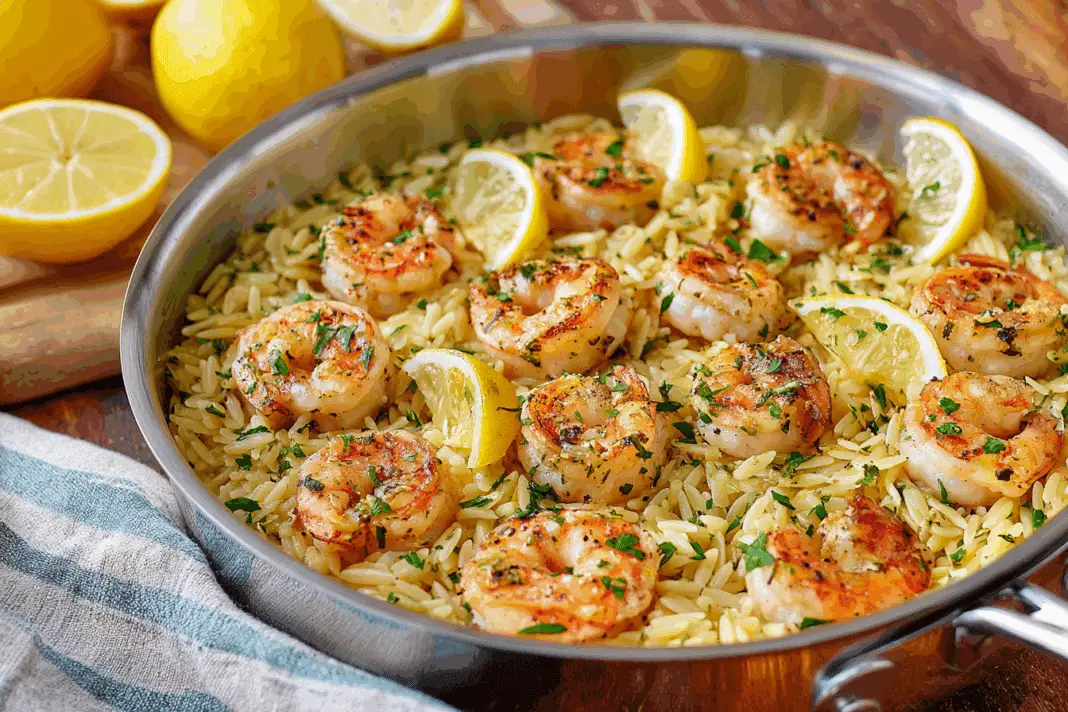
Ever stare at your fridge after work and just want something delicious without spending an hour cooking and another hour cleaning up? That’s exactly when this one-pan shrimp and orzo dish becomes your best friend. It’s got everything you want: juicy shrimp swimming in garlicky butter, tender pasta that soaks up all that lemony goodness, and the best part is you only dirty one pan. The whole thing comes together in about 30 minutes, which means you can go from hungry to happy before your favorite show even ends.
Why toasting your orzo changes everything
Most people just boil their pasta in water and call it a day, but there’s a better way. When you toast orzo in butter before adding any liquid, something almost magical happens. The tiny pasta pieces turn golden brown and develop this nutty taste that makes the whole dish better. It’s the same technique people use when making risotto, and it works just as well here.
The butter you use for toasting also starts to brown while you’re stirring the orzo around, which adds another layer of rich taste. This step only takes about three to five minutes, but it’s what separates okay pasta from really good pasta. Toasting the orzo in butter gives it a chance to develop character before it absorbs all the broth and butter sauce. Don’t rush this part, even though you’re hungry. Let those little pasta pieces get properly golden, and you’ll taste the difference in every bite.
Getting shrimp right without overthinking it
Shrimp cook incredibly fast, which is great when you’re in a hurry but also means they can go from perfect to rubbery in about 30 seconds. The good news is that shrimp basically tell you when they’re done. Raw shrimp look gray and translucent, kind of see-through. Cooked shrimp turn pink and opaque all the way through. When they curl up into a loose C shape, they’re ready to eat.
For this recipe, you’ll marinate the shrimp in olive oil, lemon juice, garlic, and red pepper flakes while the orzo cooks. Then you just lay them on top of the cooked orzo, cover the pan, and let them steam for about five to eight minutes. Cooking the shrimp this way keeps them tender because they’re not sitting in a hot pan getting blasted with direct heat. They cook gently in the steam from the orzo, picking up all those buttery, garlicky tastes from underneath. If you see them curling into tight little circles instead of a gentle C, you’ve gone a bit too far, but they’ll still taste good.
The garlic paste trick nobody talks about
Chopping garlic is fine, but turning it into a paste takes things up a notch without any extra fancy ingredients. Here’s how it works: after you mince your garlic, sprinkle some salt on it and use the flat side of your knife to smash and scrape it against the cutting board. The salt acts like sandpaper and breaks down the garlic cells, releasing more of those pungent oils and turning everything into a smooth paste.
This paste distributes way more evenly than chopped garlic chunks, so every piece of shrimp gets the same amount of garlicky goodness. No one bites into a huge piece of raw garlic and gets overwhelmed, and no one gets a bland bite either. The paste also mixes better into the butter and oil marinade for the shrimp. It takes maybe an extra minute of work, but that minute pays off when you’re eating. Making garlic paste is one of those simple techniques that makes you look like you know what you’re doing in the kitchen, even if you’re usually ordering takeout.
Why cooking orzo in broth beats water every time
When you boil pasta in plain water, you get plain pasta that needs a lot of sauce to taste like anything. But when you cook orzo in chicken or vegetable broth instead, each little piece soaks up all that savory liquid and becomes interesting on its own. The orzo basically acts like a tiny sponge, absorbing whatever you cook it in.
For this recipe, you’ll use about two and a quarter cups of chicken stock, which gets absorbed completely as the orzo cooks. There’s no draining required, which means you’re not pouring any taste down the sink. The orzo ends up tender and plump, with a creamy texture even though there’s no cream in the recipe. That texture comes from the starch the orzo releases as it cooks, which thickens the remaining broth into a light sauce. Using broth instead of water is such an easy way to pack more into your food without adding extra steps or weird ingredients you’ll never use again.
The right pan makes this recipe work
Not all pans are created equal for this dish. You need something big enough to hold all the orzo in a relatively even layer, plus all the shrimp on top without crowding. A 12-inch skillet with a lid works perfectly. If your skillet is too small, the orzo will cook unevenly, with some pieces turning mushy while others stay hard. If you don’t have a lid that fits, a baking sheet or large plate works in a pinch.
The pan also needs to be deep enough that you’re not worried about things bubbling over when the broth comes to a boil. A regular shallow frying pan might work, but you’ll be stressed the whole time. Something with sides at least two inches high gives you room to stir without making a mess. Using a large skillet with a proper lid means everything cooks at the same rate and steams properly. Cast iron works great if you have it because it holds heat really well, but any large pan with a lid will get the job done just fine.
Fresh lemon makes a bigger difference than you think
Sure, you could use bottled lemon juice from the fridge, but fresh lemon is so much better it’s almost a different ingredient. Fresh lemon juice is bright and a little sweet, with just the right amount of tang. That bottled stuff tastes flat and kind of fake in comparison. For this recipe, you’ll need about two tablespoons of juice plus a tablespoon of zest from two lemons.
The zest is where a lot of the lemon oil lives, and it adds this intense citrus punch without making things too sour. When you grate the zest, just get the yellow part and avoid the white pith underneath, which is bitter. Roll your lemons on the counter before cutting them to break up some of the juice sacs inside, which makes them easier to squeeze. The combination of juice in the shrimp marinade and zest sprinkled on top at the end gives you layers of lemon taste that keep the whole dish feeling fresh and light, even with all that butter. Fresh lemon wedges on the side let everyone add more if they want, which is always a good call.
How to tell when orzo is actually done
Orzo should be tender but still have a little bite to it, what Italians call al dente. If it’s mushy, you’ve gone too far. The recipe says to cook it covered for about 12 to 15 minutes, but every stove is different, so start checking around the 10-minute mark. Lift the lid, grab a spoon, and taste a few pieces. They should be soft enough to chew easily but not falling apart.
Most of the liquid should be absorbed by the time the orzo is done, but there might be a little bit left in the pan, which is fine. That remaining liquid will get soaked up by the orzo as it sits, or it’ll mix with the butter from the shrimp to create more sauce. If you accidentally let it go too long and the pan looks dry before the orzo is cooked through, add a splash more broth or even water. Orzo is pretty forgiving. The important thing is that every piece is cooked the same, which is why spreading it evenly in the pan and not stirring it while it cooks really matters.
Adding shallots gives you a head start on taste
Shallots are like onions and garlic had a baby with better manners. They’re milder than onions but more complex than garlic, with a slight sweetness that works really well with butter. For this recipe, you’ll cook chopped shallots in butter and oil until they’re soft, then add white wine to deglaze the pan. All that becomes the base for cooking the orzo.
The shallots basically melt into the butter and create this aromatic foundation that everything else builds on. When you add the wine, it picks up all the browned bits stuck to the pan from toasting the shallots, which adds even more depth. Some of that shallot mixture gets reserved and mixed with extra butter and oil to create the marinade for the shrimp, so you’re getting shallot goodness in multiple places. If you can’t find shallots or don’t want to buy them, a small yellow onion chopped fine will work, but shallots really do make things taste more restaurant-quality without any extra effort on your part.
The finishing touches that complete the dish
Once everything is cooked, you’re almost done, but don’t skip the final touches. Fresh parsley sprinkled on top adds a pop of color and a fresh, slightly peppery taste that cuts through all the richness. Capers, those little salty, briny things that come in a jar, add bursts of intense taste that wake up your mouth between bites of buttery shrimp and orzo.
Some recipes also call for stirring in another tablespoon or two of butter right at the end, which makes everything glossy and even more indulgent. That’s totally optional, but if you’re already this far into a butter-based recipe, why hold back now? A final sprinkle of lemon zest brings back that bright citrus note that might have mellowed during cooking. These little additions take maybe 30 seconds but they transform the dish from good weeknight dinner to something you’d be happy to serve to guests. The combination of rich, salty, bright, and fresh hits all the right notes and makes every bite interesting.
This shrimp and orzo dish proves that simple ingredients cooked the right way can beat complicated recipes every single time. You don’t need a culinary degree or a pantry full of exotic spices to make something memorable. Just good technique, fresh ingredients, and one pan that you’ll actually enjoy washing because dinner was that good. Make this once and it’ll become part of your regular rotation, that reliable recipe you turn to when you want something special without the stress.
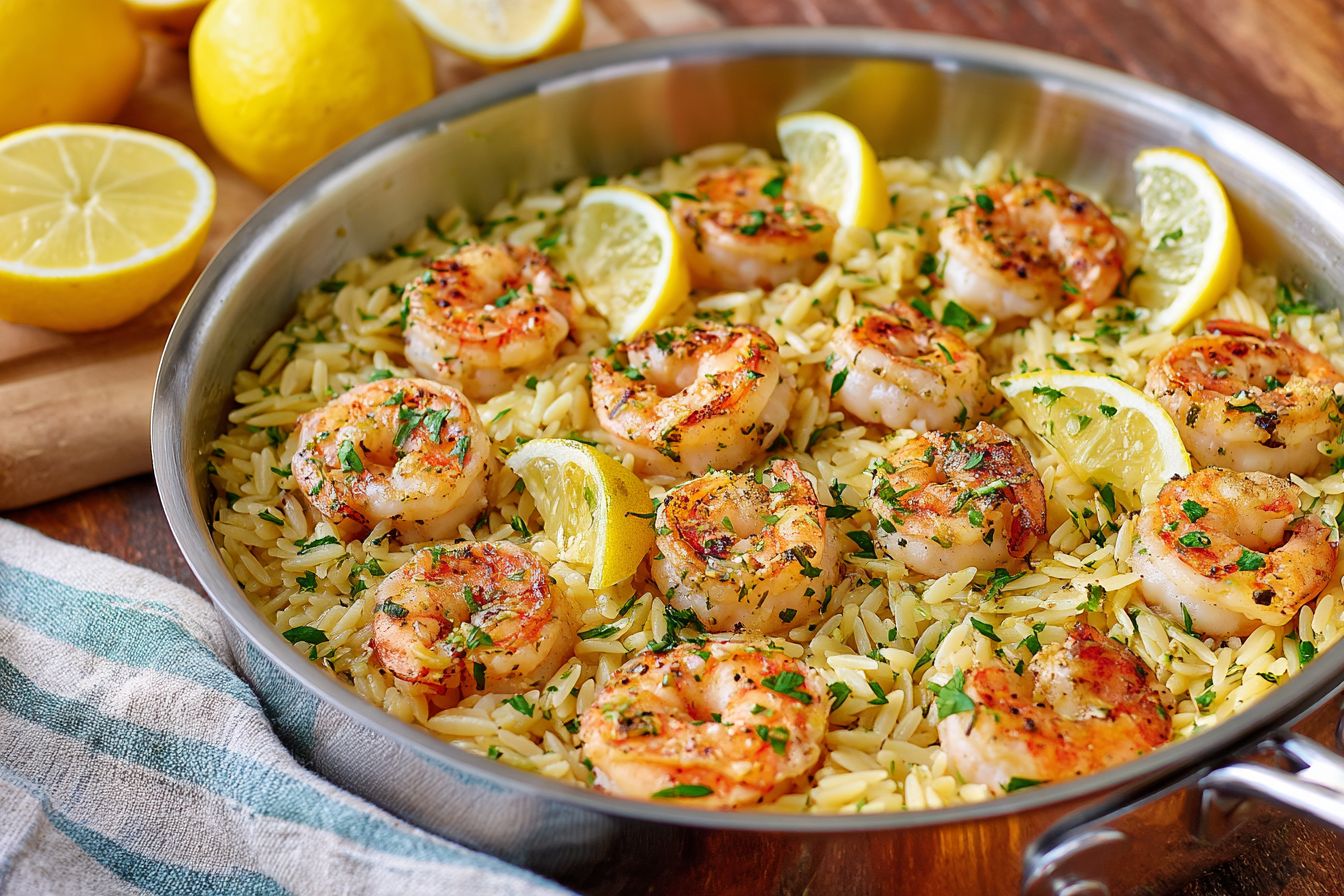
One Pan Lemon Garlic Butter Shrimp and Orzo
Cuisine: American4
servings10
minutes20
minutes425
kcalButtery shrimp and tender orzo cooked together in one pan with garlic, lemon, and white wine for an easy weeknight dinner that tastes like you spent hours in the kitchen.
Ingredients
1 pound raw shrimp, peeled and deveined
3 tablespoons olive oil, divided
1 lemon, juiced and zested (about 2 tablespoons juice and 1 tablespoon zest)
6 garlic cloves, minced and divided
½ teaspoon crushed red pepper flakes
Kosher salt and black pepper
1 cup orzo pasta
3 tablespoons unsalted butter, divided
2 medium shallots, finely chopped
½ cup white wine
2¼ cups chicken stock or vegetable broth
3 tablespoons fresh parsley, chopped
2 tablespoons capers, drained and roughly chopped
Lemon wedges for serving
Directions
- Combine the shrimp in a large bowl with 2 tablespoons of olive oil, lemon juice, half of the minced garlic, red pepper flakes, and a generous pinch of salt and pepper. Stir everything together until the shrimp are well coated, then set aside to marinate while you prepare the orzo. This gives the shrimp time to absorb all those bright, garlicky notes.
- Heat 1 tablespoon of butter and 1 tablespoon of olive oil in a large 12-inch skillet with a lid over medium heat. Once the butter has melted and the foam subsides, add the chopped shallots. Cook the shallots, stirring occasionally, until they become soft and translucent, about 3 minutes. They should smell sweet and aromatic but not take on much color.
- Pour in the white wine and let it bubble away, stirring occasionally, until it reduces by about half, which takes around 2 minutes. The wine will pick up all the tasty browned bits from the bottom of the pan. Remove the pan from heat temporarily and transfer 3 tablespoons of this shallot mixture to the bowl with the shrimp, stirring it into the marinade. Add the remaining 2 tablespoons of butter to the shrimp bowl as well and mix everything together.
- Return the skillet to medium heat and add the orzo pasta to the remaining shallot mixture. Stir the orzo frequently, letting it toast and turn golden brown, which should take about 3 to 5 minutes. You’ll notice the butter starting to brown too, which adds a wonderful nutty richness. Don’t rush this step because this is where a lot of the depth comes from.
- Finely chop the remaining garlic and sprinkle a pinch of salt over it. Using the flat side of your chef’s knife, press and scrape the garlic against the cutting board to form a smooth paste. Stir this garlic paste into the toasted orzo and cook for just 30 seconds until fragrant. Be careful not to let the garlic burn or it will turn bitter.
- Pour the chicken stock into the skillet and stir everything together. Increase the heat to bring the liquid to a boil, then immediately reduce it to a gentle simmer. Cover the skillet with a lid and let the orzo cook undisturbed for 12 to 15 minutes, until the pasta is tender and has absorbed most of the liquid. Resist the urge to lift the lid and stir during this time.
- Once the orzo is cooked, uncover the pan and arrange the marinated shrimp in a single layer on top of the pasta. Spoon all the remaining marinade from the bowl over the shrimp and orzo. Cover the skillet again and cook for 5 to 8 minutes, until the shrimp are pink, opaque, and curled into a loose C shape. Check one of the larger shrimp by cutting into it to make sure it’s cooked through.
- Remove the skillet from the heat and uncover it. Sprinkle the chopped capers, lemon zest, and fresh parsley over the top. If you want extra richness, stir in another tablespoon of butter until it melts into the orzo. Serve immediately with lemon wedges on the side so everyone can add an extra squeeze if they like. The dish is best enjoyed right away while everything is hot and the shrimp are perfectly tender.
Notes
- If you can’t find shallots, substitute with half a small yellow onion, finely chopped. The taste will be slightly more pungent but still delicious.
- Make sure your shrimp are completely thawed and patted dry before marinating them. Excess water will prevent them from absorbing the marinade properly.
- If you don’t have white wine, you can substitute with an extra half cup of chicken broth mixed with a tablespoon of lemon juice for acidity.
- Leftovers can be stored in an airtight container in the refrigerator for up to three days. Reheat gently on the stovetop with a splash of broth to loosen the orzo, as it will absorb liquid as it sits.
- For extra vegetables, stir in a handful of baby spinach or frozen peas during the last minute of cooking the shrimp.
Frequently asked questions
Q: Can I use frozen shrimp for this recipe?
A: Absolutely! Just make sure they’re completely thawed before you start. The easiest way is to put them in a colander and run cold water over them for about 10 minutes. Pat them really dry with paper towels before marinating because excess water will dilute all those good garlic and lemon notes you’re adding.
Q: What can I substitute for orzo if I can’t find it?
A: Small pasta shapes work best as substitutes. Try ditalini, small shells, or even broken-up angel hair pasta. Pearl couscous is another good option. The cooking time might vary slightly depending on what you choose, so check the package directions and adjust accordingly. The technique of toasting it first still applies no matter what pasta you use.
Q: My orzo absorbed all the liquid but still seems hard. What do I do?
A: Just add a quarter cup more broth or water, cover the pan again, and let it cook for a few more minutes. Different brands of orzo and different stoves can affect cooking time. Keep tasting until the pasta is tender with just a little bite to it. It’s better to check and add more liquid than to end up with crunchy pasta.
Q: Can I make this dish ahead of time?
A: This recipe is really best served fresh because the shrimp and orzo are at their best texture right after cooking. If you need to prep ahead, you can marinate the shrimp and chop all your ingredients in the morning, then cook everything when you’re ready to eat. Reheated shrimp tend to get rubbery, and the orzo will absorb more liquid as it sits, making it mushier.
