

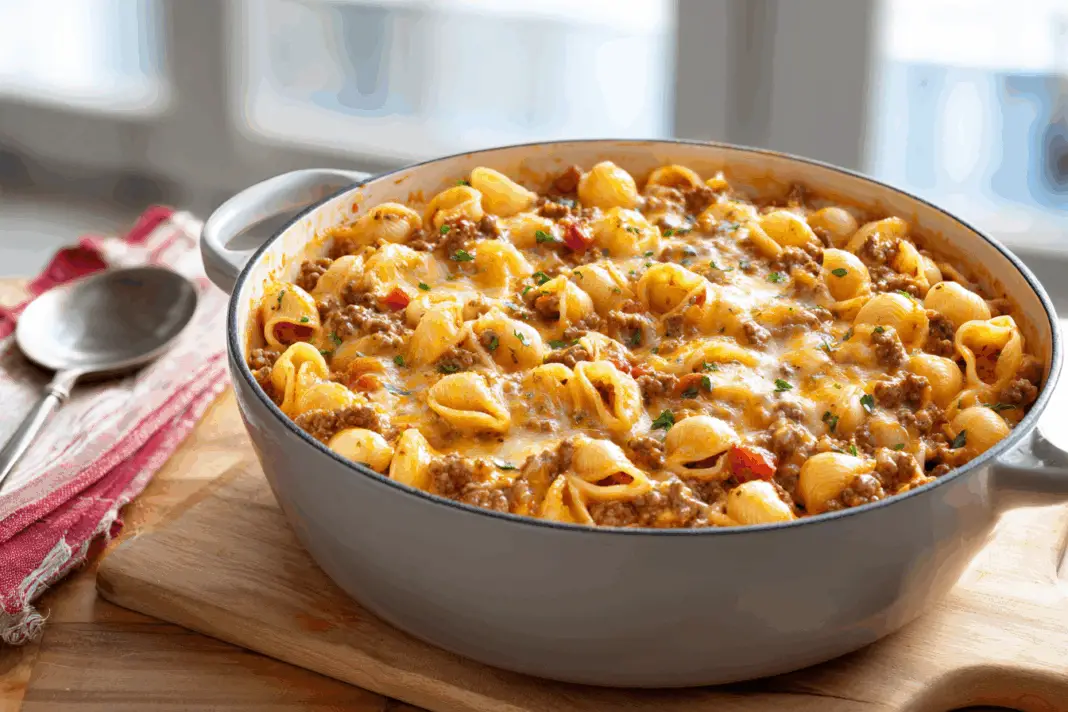
Weeknight dinners can feel overwhelming when you’re staring at a sink full of dirty pots and pans. That’s why one-pot meals became everyone’s best friend. This taco pasta brings together everything you love about taco night—seasoned ground beef, gooey melted cheese, and bold Mexican-inspired seasonings—but cooks entirely in one pot. No separate pasta water to boil, no extra pans to scrub. Just throw everything together, let it simmer, and dinner is ready in about 30 minutes. It’s the kind of recipe that makes you look like you put in way more effort than you actually did.
Why cooking pasta directly in the sauce changes everything
Most pasta recipes have you boiling noodles separately, draining them, and then mixing them with sauce. That works fine, but you’re missing out on something special. When pasta cooks directly in the liquid with all your other ingredients, it absorbs every bit of seasoning and creates a thicker, creamier sauce naturally. The starch from the pasta releases into the liquid as it cooks, making everything stick together better and taste richer.
This taco pasta method means the shells soak up all that taco seasoning, tomato goodness, and broth while they cook. You end up with pasta that tastes amazing in every single bite, not just on the outside where sauce is clinging. Plus, you save time and only have one pot to wash at the end. It’s a total win for busy weeknights when you need dinner on the table fast but still want something that actually tastes good.
Getting your cheese situation right makes or breaks this dish
Cheese is basically the star of this whole recipe, so you want to get it right. The best approach is using a combination of cheeses—cheddar for sharpness, Monterey Jack for smooth melting, and a little bit of Velveeta for extra creaminess. Pre-shredded cheese from a bag is convenient, but it has added starches to prevent clumping, which means it doesn’t melt as smoothly. If you can, buy a block and shred it yourself.
Let your cheese sit out for about 15 minutes before adding it to the pot so it’s not ice cold. Cold cheese takes longer to melt and can make your sauce clumpy. When you’re ready to add it, turn the heat to low and stir gradually until everything melts together. Some recipes suggest pepper jack if you like things spicier, which adds a nice kick. Whatever cheese you choose, make sure you have enough—about two to three cups total. This isn’t the time to be stingy with the cheese.
Picking the right pasta shape actually matters here
Medium pasta shells work perfectly for this recipe because they’re sturdy enough to hold up to the cooking time and have little pockets that catch all the sauce and meat. You could also use rotini, penne, or bow tie pasta—basically anything in that medium size range with some texture. Avoid using thin pasta like angel hair or spaghetti because they cook too quickly and can turn mushy in a one-pot recipe.
Most medium shells take about 10-12 minutes to cook to al dente, which is the timing this recipe relies on. Check your pasta box for the specific cooking time and use that as your guide. If you use a different shape, you might need to adjust the liquid slightly—denser pasta might need a splash more broth, while something lighter might need less. The key is making sure your pasta is fully submerged in the liquid when you add it to the pot.
Brown the beef properly or everything else suffers
Start by using lean ground beef—85% lean is a good choice. You want some fat for taste, but not so much that your pasta ends up swimming in grease. Break up the meat as it cooks using a wooden spoon, getting it into small crumbles. Don’t just stir it occasionally—really work at breaking it apart so you don’t end up with big chunks. Cook it over medium-high heat until it’s completely browned with no pink remaining.
After the beef is cooked, drain off the excess fat before continuing. Some people skip this step, but it makes a huge difference in how greasy your final dish turns out. Once you’ve drained it, add butter and minced garlic to the pot and cook for about a minute until fragrant. This builds another layer of taste before you add the liquids. If you prefer ground turkey or chicken, those work too—just know that turkey can be a bit bland, so you might want to add extra taco seasoning or a bit of beef bouillon for more depth.
The liquid combination creates the perfect cooking environment
This recipe uses a combination of beef broth, chicken broth, and milk to cook the pasta. Using both types of broth might seem weird, but each brings something different—beef broth adds richness while chicken broth keeps things from getting too heavy. The milk makes the sauce creamy and helps the cheese melt smoothly later. You can use all beef broth or all chicken broth if that’s what you have, but the combination really does work best.
Make sure your milk is at room temperature before adding it. Cold milk can lower the temperature of your pot too much and mess with your cooking time. You’ll also add a can of Rotel tomatoes with green chilies, which brings both liquid and a nice mild heat. Don’t drain the can—that juice is part of what cooks your pasta. The total liquid amount should be enough to fully submerge your pasta with a little extra. If it looks too dry during cooking, you can always add a splash more broth.
Taco seasoning does most of the heavy lifting here
You can absolutely use a packet of store-bought taco seasoning for this recipe—it’s quick and gets the job done. Old El Paso, McCormick, and most generic brands work fine. One packet is usually about one ounce, which is the right amount for a pound of beef. Just be aware that most packaged seasonings already contain salt, so you probably won’t need to add any extra. Taste your sauce before serving and adjust if needed.
If you want to make your own blend, combine chili powder, cumin, paprika, garlic powder, onion powder, oregano, salt, and pepper. Making your own is cheaper and you can control exactly how spicy or salty it is. Either way, add the seasoning right after you cook the beef so it gets toasted slightly in the hot pot. This brings out the spices’ oils and makes everything smell amazing. Don’t skip the tomato paste either—it adds a concentrated tomato punch that balances the richness of the cheese and beef.
Covering the pot while pasta cooks prevents a sticky disaster
Once you add your pasta and bring everything to a boil, immediately reduce the heat to low and cover the pot with a lid. This traps the steam and heat, which is what actually cooks your pasta. If you leave it uncovered, too much liquid will evaporate and your pasta will stick to the bottom and burn. Keep the heat low enough that you see gentle bubbling but not a rolling boil.
About halfway through the cooking time, take off the lid and give everything a good stir, scraping the bottom of the pot with a spatula. This prevents any pasta from settling at the bottom and sticking. Then put the lid back on and let it finish cooking. The total covered cooking time should match whatever your pasta box says for al dente—usually around 10-12 minutes. When you think it’s done, taste a piece of pasta. It should be tender but still have a slight bite to it. If it’s still hard, cover and cook for another couple minutes.
Add-ins let you customize based on what’s in your fridge
The basic recipe is delicious on its own, but you can easily throw in extras. Frozen corn, black beans, diced bell peppers, or jalapeños all work great. If you’re adding frozen corn or canned beans, stir them in during the last few minutes of cooking so they heat through but don’t get mushy. Fresh vegetables like bell peppers should go in earlier, when you’re cooking the onions, so they have time to soften.
Some people like adding a handful of spinach right at the end for color and nutrition—it wilts quickly in the hot pasta. Others throw in some sliced olives or a spoonful of sour cream mixed in with the cheese for extra creaminess. The beauty of this recipe is that it’s really forgiving. As long as you keep the basic ratios of pasta to liquid the same, you can play around with the other ingredients based on what you have available. Just don’t add anything super watery or it’ll throw off the sauce consistency.
Letting it rest for a few minutes makes serving way easier
After you stir in the cheese and everything looks perfectly melty, turn off the heat and let the pasta sit for about 5 minutes before serving. This isn’t just to let it cool down a bit—the sauce will thicken up as it sits, and the pasta will absorb any excess liquid. If you try to serve it immediately, it might look a little soupy. Give it that short rest and everything comes together into the perfect consistency.
The pasta will also continue to absorb sauce as any leftovers sit in the fridge, so don’t worry if it seems like there’s plenty of liquid right after cooking. When you reheat leftovers the next day, you might need to add a splash of milk or broth to loosen everything back up. Top each serving with whatever you like—sour cream, diced avocado, chopped cilantro, extra cheese, hot sauce, or crushed tortilla chips all work great. This is the kind of meal that feeds a crowd easily and reheats well for lunch the next day.
This taco pasta proves you don’t need a bunch of fancy ingredients or complicated techniques to make dinner special. Just one pot, some pantry staples, and about 30 minutes gets you a meal that everyone will actually be excited to eat. It’s become a regular rotation recipe for a reason—quick, cheap, satisfying, and only one pot to clean at the end.
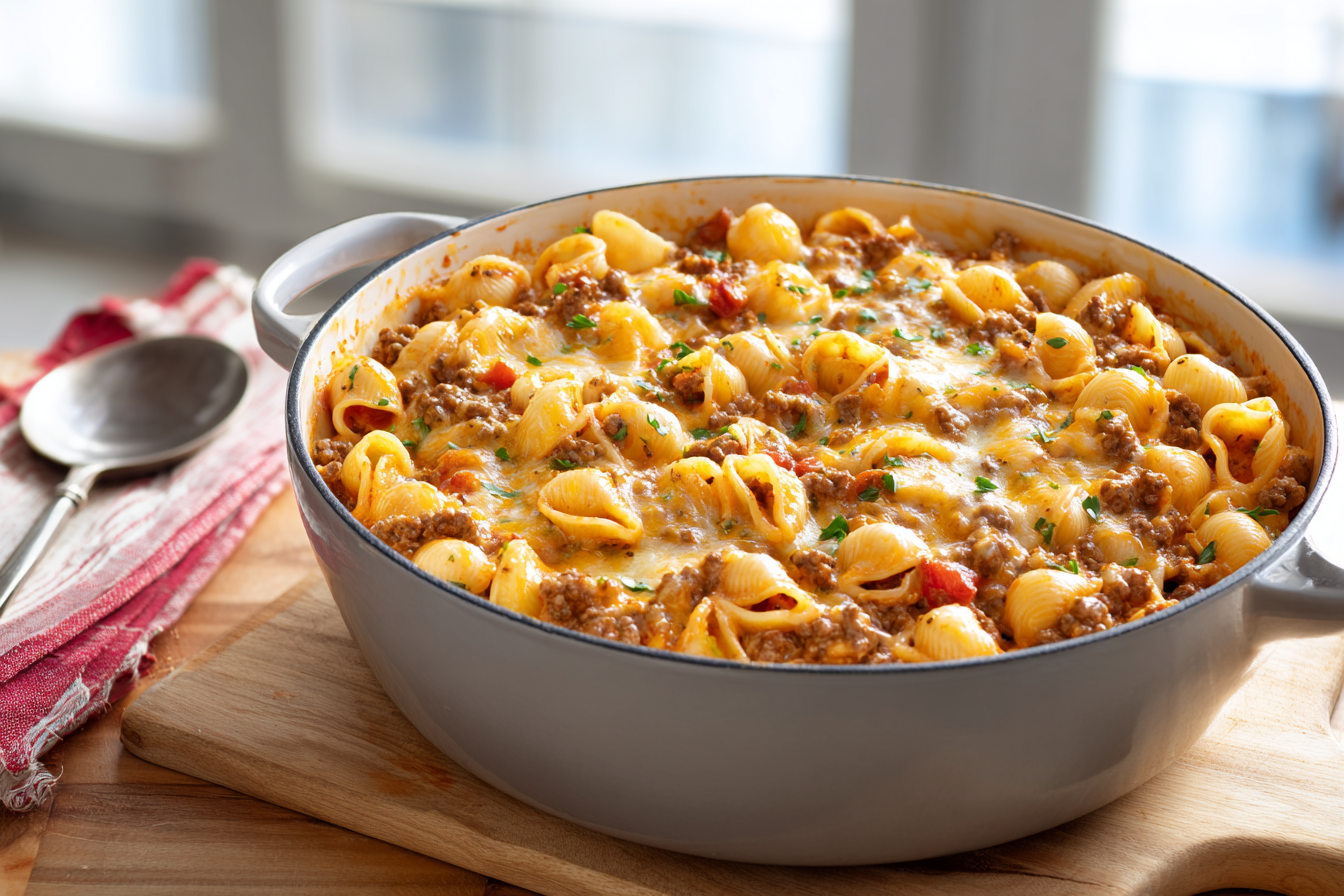
One-Pot Taco Pasta With Melty Cheese
Cuisine: Mexican6
servings5
minutes25
minutes500
kcalThis creamy taco pasta cooks in one pot with seasoned ground beef, tender shells, and loads of melted cheese for an easy 30-minute dinner the whole family will love.
Ingredients
1 lb ground beef, 85% lean
1 tablespoon butter
2 cloves garlic, minced
1 oz packet taco seasoning
2 tablespoons tomato paste
1 tablespoon Worcestershire sauce
1 cup beef broth
1 cup chicken broth
1 cup whole milk, at room temperature
1 (10 oz) can Rotel tomatoes with green chilies, undrained
1/2 lb medium pasta shells
1 cup shredded cheddar cheese
1 cup shredded Monterey Jack cheese
4 oz Velveeta cheese, cubed (or 3/4 cup additional shredded cheese)
Directions
- Cook the ground beef in a large high-walled pot or Dutch oven over medium-high heat, breaking it into small crumbles with a wooden spoon as it cooks. Continue cooking until the beef is completely browned with no pink remaining, about 5-7 minutes. Drain the excess grease from the pot and discard.
- Return the pot to the stove and melt the butter over medium heat. Add the minced garlic and cook for about 1 minute, stirring frequently, until fragrant. Be careful not to let the garlic burn.
- Add the taco seasoning, tomato paste, and Worcestershire sauce to the pot and stir to combine with the garlic and any remaining butter. Cook for about 30 seconds to toast the spices. Then pour in the beef broth, chicken broth, whole milk, and undrained Rotel tomatoes, stirring everything together until well combined.
- Increase the heat and bring the liquid to a gentle boil. Once boiling, add the cooked ground beef back to the pot along with the dry pasta shells, stirring to make sure all the pasta is submerged in the liquid. Reduce the heat to low, cover the pot with a lid, and let simmer.
- Cook the pasta according to the package instructions for al dente, usually 10-12 minutes. Halfway through the cooking time, remove the lid and use a silicone spatula to scrape along the bottom of the pot, lifting any ingredients that may have settled. Replace the lid and continue cooking until the pasta is tender.
- Once the pasta is cooked through, remove the lid and test a noodle for doneness—it should be tender but still have a slight bite. Turn the heat to low and gradually stir in the cheddar cheese, Monterey Jack cheese, and Velveeta cubes (if using) until completely melted and smooth. The sauce will look thin at first but will thicken as it sits.
- Remove the pot from heat and let the pasta rest uncovered for about 5 minutes. This allows the sauce to thicken and the pasta to absorb excess liquid. Stir once more before serving.
- Serve the taco pasta hot with your favorite toppings like sour cream, diced avocado, chopped cilantro, sliced green onions, extra shredded cheese, or hot sauce. Store leftovers in an airtight container in the refrigerator for up to 3 days.
Notes
- For best melting results, shred your cheese from a block rather than using pre-shredded cheese, which contains anti-caking agents that prevent smooth melting.
- If you don’t have both beef and chicken broth, you can use 2 cups of either one—beef broth makes it richer while chicken broth keeps it lighter.
- Other pasta shapes like rotini, penne, or bow tie pasta work well too, just follow the package cooking time and adjust liquid if needed.
- Optional add-ins include frozen corn, black beans, diced bell peppers, or sliced jalapeños—add frozen items during the last few minutes of cooking.
- If the sauce seems too thin after cooking, let it sit uncovered for 5-10 minutes to thicken. If it’s too thick, stir in a splash of milk or broth.
- For a spicier version, use pepper jack cheese instead of Monterey Jack, or add extra diced jalapeños and hot sauce.
Frequently asked questions
Q: Can I make this taco pasta ahead of time?
A: You can prep the ingredients ahead—brown the beef, shred the cheese, and measure out your spices—but it’s best to cook the pasta fresh. The pasta will continue absorbing liquid as it sits, so if you make it too far in advance, it can get mushy. If you do need to make it ahead, undercook the pasta slightly and store it with extra broth to add when reheating.
Q: Why is my pasta sticking to the bottom of the pot?
A: This usually happens if your heat is too high or you’re not stirring enough. Keep the heat on low once you add the pasta and make sure to stir halfway through cooking, scraping the bottom of the pot with a spatula. Using a heavy-bottomed pot or Dutch oven also helps distribute heat more evenly and prevents sticking.
Q: Can I use ground turkey instead of beef?
A: Absolutely. Ground turkey works great, though it’s leaner and can be blander than beef. Consider using 93% lean ground turkey and adding an extra teaspoon of taco seasoning or a teaspoon of beef bouillon to boost the taste. You might also want to add a tiny bit more butter or oil since turkey is so lean.
Q: How do I reheat leftovers without drying them out?
A: Add a splash of milk, broth, or even water to your leftovers before reheating—the pasta absorbs liquid while sitting in the fridge, so it needs extra moisture. Reheat in a covered pot on the stove over low heat, stirring occasionally, or microwave in 1-minute intervals, stirring between each one until heated through.
