


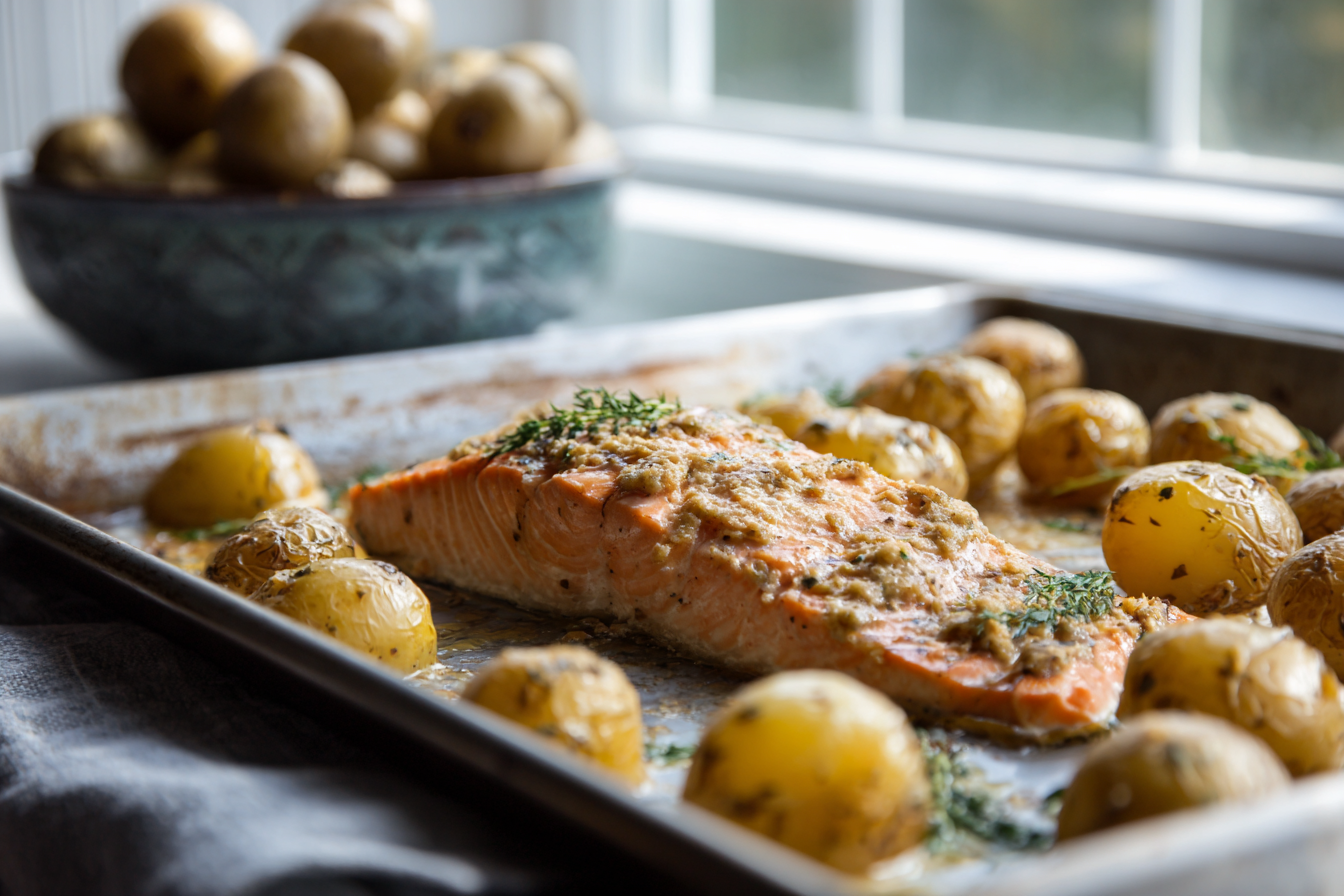
When dinner needs to happen fast but you still want something that tastes like you actually tried, this one-pan salmon and potato situation really delivers. The salmon gets this tangy mayo-mustard coating that caramelizes in the oven while baby potatoes roast alongside it, soaking up all that garlicky dill butter. Nothing fancy, just solid weeknight cooking that happens to look pretty impressive when you bring the whole pan to the table.
The potatoes cook first for good reason
Here’s the thing about cooking salmon and potatoes together: they don’t take the same amount of time. Potatoes need a solid 30 minutes to get tender and crispy, while salmon only needs about 8 minutes total or it turns into that dry, chalky stuff nobody wants to eat. The solution is pretty simple though. You just get the potatoes going first with a little water on the pan, which creates steam and helps them cook through faster. They get tossed with oil and salt, then roasted until they’re golden and crispy on the outside.
What makes these potatoes special is the water trick. Adding half a cup of water directly to the sheet pan creates this steam-roasting effect that cooks the potatoes through while the high oven heat still gets them crispy. You’ll want to stir them every 10 minutes or so to prevent sticking and make sure they brown evenly. Some sticking is normal, just use a good metal spatula to get under them. By the time the salmon goes in, they’re almost done and just need to finish crisping up.
Mayo on salmon sounds weird but works perfectly
The salmon topping is just mayo mixed with Dijon mustard, and yes, it sounds strange if you’ve never tried it. But mayo is basically oil and eggs, which means it creates this protective coating that keeps the fish moist while it bakes. The Dijon adds tang and a little sharpness that cuts through the richness. You literally just spread it over the top of the salmon filet like you’re frosting a cake, then pop it in the oven. It browns up nicely under the broiler at the end and creates this golden crust that tastes way better than it has any right to.
The whole piece of salmon goes on the pan skin-side down, right in the middle with the potatoes pushed to the sides. Season it with salt first, then spread that mayo-mustard mixture over the top. The recipe calls for about 3 tablespoons of Dijon and 2 tablespoons of mayo, which is enough to cover a pound and a half of salmon. After 6 minutes of baking, you switch to broil for 2-3 more minutes to get that nice browning on top. Just watch it closely during the broiling part because it can go from perfect to burned pretty quickly.
Garlic dill butter takes everything up several notches
While the salmon finishes cooking, you make this ridiculously good garlic dill butter that gets spooned over the hot potatoes. It’s just melted butter with grated garlic and either fresh or freeze-dried dill mixed in. The heat from the potatoes melts the butter and distributes all those herbs and garlic evenly. Fresh dill is great if you have it, but honestly the freeze-dried stuff works really well here and you don’t have to deal with a whole bunch of fresh herbs that might go bad in your fridge.
The ratio is about 3 tablespoons of melted butter, one clove of grated garlic, and a tablespoon of freeze-dried dill for about 24 ounces of potatoes. If you’re using fresh dill, you’ll need about 3 tablespoons chopped. Grating the garlic instead of mincing it makes it distribute better and you don’t get big chunks of raw garlic. Once the potatoes come out of the oven, just drizzle this butter situation all over them and toss them around on the pan. They soak it all up and become pretty much irresistible.
Baby potatoes are the right choice here
You really want those small Yukon gold baby potatoes for this recipe, the ones that are maybe an inch or two across. They’re already portion-sized so you don’t have to cut anything, and they cook in about the same time. If you can only find larger potatoes, you’ll need to cut them into smaller pieces, maybe halves or quarters depending on size. The goal is to have all your potato pieces roughly the same size so they cook evenly. Otherwise you’ll end up with some that are mushy and some that are still hard in the middle.
Yukon golds are the best variety for this because they have a naturally buttery taste and a creamy texture when cooked. They also hold their shape better than russets, which can get mealy. The recipe uses about a pound and a half of potatoes, which feeds four people as a side. They get tossed with olive oil, salt, and if you want to get fancy, some dried herbs like rosemary or oregano before the water gets added. The high oven temperature of 450 degrees is key for getting them crispy on the outside while the steam cooks them through.
Salmon doneness is more forgiving than you think
People get really nervous about cooking salmon, worried they’ll either undercook it and get sick or overcook it and waste expensive fish. The truth is salmon is pretty forgiving if you pay attention. For this recipe, you’re looking for salmon that flakes apart easily when you press on it with a fork but still looks moist and slightly translucent in the very center. The USDA says to cook it to 145 degrees, but a lot of cooks prefer it around 125-130 degrees for that buttery texture.
The timing in this recipe is about 6 minutes of baking plus 2-3 minutes of broiling for a filet that’s about an inch thick. If your salmon is thicker, add a minute or two. Thinner pieces might need less time. The best way to check is just to press on the thickest part with your finger or a fork. If it flakes apart easily, it’s done. You can also use an instant-read thermometer if that makes you feel better. Stick it in the thickest part and pull the pan when it hits your preferred temperature. Remember the fish will keep cooking a bit after you take it out of the oven.
Bringing the whole pan to the table makes sense
One of the best parts about this recipe is you can literally just set the sheet pan on a trivet in the middle of the table and let everyone serve themselves. Put out a spatula or big spoon, add some lemon wedges for squeezing, and you’re done. No need to dirty extra serving dishes or try to plate everything nicely. It actually looks really good straight from the pan, all rustic and casual. The salmon breaks apart into big chunks easily, so people can take as much or as little as they want.
If you do want to transfer everything to a platter, that works too. Just use a spatula to lift the salmon in big pieces and arrange them on one side, then pile the potatoes next to them. Sprinkle some extra fresh dill over the whole thing if you have it, add those lemon wedges, and maybe a sprinkle of red pepper flakes if people want some heat. Either way, it’s going to look like you put in way more effort than you actually did. The whole meal from start to finish is about 45 minutes, with most of that being hands-off oven time.
Adding vegetables makes this even easier
If you want to make this a complete one-pan meal without any sides, throw some vegetables on there too. Asparagus works really well because it cooks quickly. Just trim the ends and add the spears to the pan during the last 10-15 minutes of cooking the potatoes. Broccoli florets are another good option. They need about 15 minutes, so add them when the potatoes are halfway done. Green beans work too, same timing as asparagus. Just toss whatever vegetables you’re using with a little oil and salt before adding them to the pan.
The vegetables will pick up some of that garlic dill butter when you drizzle it over everything at the end, which makes them taste even better. You might need a slightly larger sheet pan if you’re adding a lot of vegetables, or use two pans. The important thing is not to overcrowd everything or nothing will brown properly. Everything will just steam instead. A standard 18×13 inch sheet pan can usually handle the salmon, potatoes, and one vegetable without too much trouble.
Leftovers reheat better than expected
Salmon usually doesn’t reheat great, but this recipe is an exception because of that mayo coating. It keeps the fish moist even when you warm it up the next day. Store the salmon and potatoes in separate containers in the fridge for up to three days. To reheat, put them on a sheet pan in a 350-degree oven for about 10 minutes, just until warmed through. The microwave works in a pinch but the potatoes won’t be as crispy. You can also eat the salmon cold on a salad, which is actually pretty good.
The potatoes definitely lose some of their crispiness after being refrigerated, but they’re still tasty. If you want to crisp them back up, spread them on a sheet pan and put them under the broiler for a few minutes, watching carefully so they don’t burn. Or just accept that they’ll be softer and enjoy them anyway. You could also turn leftover potatoes into a quick hash by chopping them up and frying them in a pan with some onions and maybe an egg on top. The salmon works great in a grain bowl with some rice or quinoa, whatever vegetables you have around, and a squeeze of lemon.
Skin-on or skinless both work fine
The recipe works with either skin-on or skinless salmon, though skin-on is slightly better because the skin protects the bottom of the fish from drying out. If you’re using skin-on, place it skin-side down on the pan and leave it there. The skin will stick to the pan a bit, which actually makes it easier to serve because you can slide a spatula between the skin and the flesh, leaving the skin behind. Some people like to eat the crispy skin, but if you don’t, this method makes it easy to leave it on the pan.
Skinless filets work just fine too. They might stick to the pan a little more, so you could put down a piece of parchment paper under the salmon if you’re worried about it. The parchment won’t affect how the fish cooks and makes cleanup even easier. Either way, make sure you’re buying salmon from a reputable place that handles it properly. Fresh is great, but frozen and thawed works perfectly fine for this recipe. In fact, most salmon sold as “fresh” at grocery stores was previously frozen anyway. Just make sure it smells like the ocean, not fishy or ammonia-like, which means it’s gone bad.
This sheet pan salmon dinner has become a regular weeknight staple for good reason. It takes less than an hour, uses one pan, and tastes way better than the effort suggests. The combination of that tangy salmon with crispy, herb-covered potatoes hits all the right notes without requiring any special skills or fancy ingredients. Next time you need dinner on the table fast, this one’s worth remembering.
One-Skillet Lemon Dill Salmon and Potatoes
Cuisine: American4
servings5
minutes40
minutes520
kcalSimple sheet pan salmon with a tangy mayo-Dijon coating and crispy baby potatoes tossed in garlic dill butter, all ready in under an hour.
Ingredients
24 ounces yukon gold baby potatoes
1½ tablespoons olive oil (for potatoes)
1½ teaspoons kosher salt (for potatoes)
½ cup water
1.5 pounds salmon filet (skin-on or skinless)
3 tablespoons Dijon mustard
2 tablespoons mayonnaise
3 tablespoons butter, melted
1 clove garlic, grated
1 tablespoon freeze-dried dill (or 3 tablespoons fresh dill)
½ teaspoon salt (for salmon)
Red pepper flakes, for serving
Lemon wedges, for serving
Directions
- Preheat your oven to 450 degrees Fahrenheit. Take out a large sheet pan and toss the baby potatoes with 1½ tablespoons olive oil and 1½ teaspoons kosher salt directly on the pan. Pour ½ cup of water directly onto the sheet pan around the potatoes. The water will create steam to help cook the potatoes through while they get crispy.
- Place the potatoes in the preheated oven and roast for 30 minutes, stirring every 10-15 minutes to prevent sticking and ensure even browning. Use a sturdy metal spatula to get under any potatoes that stick to the pan. The water will evaporate during cooking, and the potatoes should be golden and mostly tender by the end of this time.
- After the potatoes have roasted for 30 minutes, remove the pan from the oven and push the potatoes to the sides. Place the salmon filet in the center of the pan, skin-side down if using skin-on salmon. Season the top of the salmon with ½ teaspoon salt.
- In a small bowl, mix together the 3 tablespoons Dijon mustard and 2 tablespoons mayonnaise until well combined. Spread this mixture evenly over the top of the salmon filet, covering it completely like you’re spreading frosting. This coating will keep the salmon moist and create a nice browned crust.
- Return the sheet pan to the oven and bake for 6 minutes. Then switch the oven to broil and move the pan closer to the top heating element. Broil for 2-3 more minutes, watching carefully, until the salmon topping is golden brown and the fish flakes apart easily when pressed with a fork. The salmon should still look moist inside.
- While the salmon is cooking, melt the 3 tablespoons of butter in a small bowl or microwave-safe dish. Grate the garlic clove directly into the melted butter, then stir in the 1 tablespoon freeze-dried dill (or 3 tablespoons fresh chopped dill). Mix well to combine all the ingredients.
- When the salmon is done, remove the pan from the oven. Pour the garlic dill butter over the hot potatoes and toss them gently on the pan to coat them completely. The butter will melt and distribute evenly over the potatoes.
- Sprinkle the salmon with additional fresh or dried dill and red pepper flakes if desired. Squeeze fresh lemon juice over both the salmon and potatoes. Use a spatula to break the salmon into large chunks and serve directly from the pan, or transfer to a serving platter. Each person can take portions of both salmon and potatoes.
Notes
- For salmon doneness, the USDA recommends 145°F internal temperature, but many people prefer salmon around 125-130°F for a more tender, buttery texture. Cook to your preference.
- If your potatoes are larger than baby size, cut them into halves or quarters so they cook evenly in the 30-minute timeframe.
- Fresh dill can be substituted for freeze-dried at a ratio of 3:1. Three tablespoons fresh equals one tablespoon dried.
- You can add vegetables like asparagus or broccoli to the pan during the last 10-15 minutes of cooking the potatoes for a complete one-pan meal.
- Leftovers can be stored separately in airtight containers for up to 3 days and reheated in a 350°F oven for about 10 minutes.
Frequently asked questions about sheet pan salmon and potatoes
Q: Can I use frozen salmon for this recipe?
A: Yes, frozen salmon works fine as long as you thaw it completely first. Put it in the fridge overnight to thaw, or seal it in a plastic bag and submerge in cold water for about an hour. Pat it dry before seasoning and adding the mayo-mustard topping.
Q: What if I don’t have Dijon mustard?
A: Regular yellow mustard will work in a pinch, though it’s milder and sweeter. You could also use whole grain mustard for more texture, or skip the mustard entirely and just use mayo with a little lemon juice mixed in.
Q: How do I know when the salmon is done?
A: The salmon should flake apart easily when you press it with a fork, and the center should be slightly translucent and moist-looking. If you prefer it more cooked through, leave it in the oven for another minute or two until it reaches your preferred doneness.
Q: Can I make this recipe on a cast iron skillet instead?
A: A large cast iron skillet works great, though you might need to use two skillets or cook in batches depending on the size. The cooking method stays the same, just arrange everything so it’s not overcrowded or nothing will crisp up properly.
