

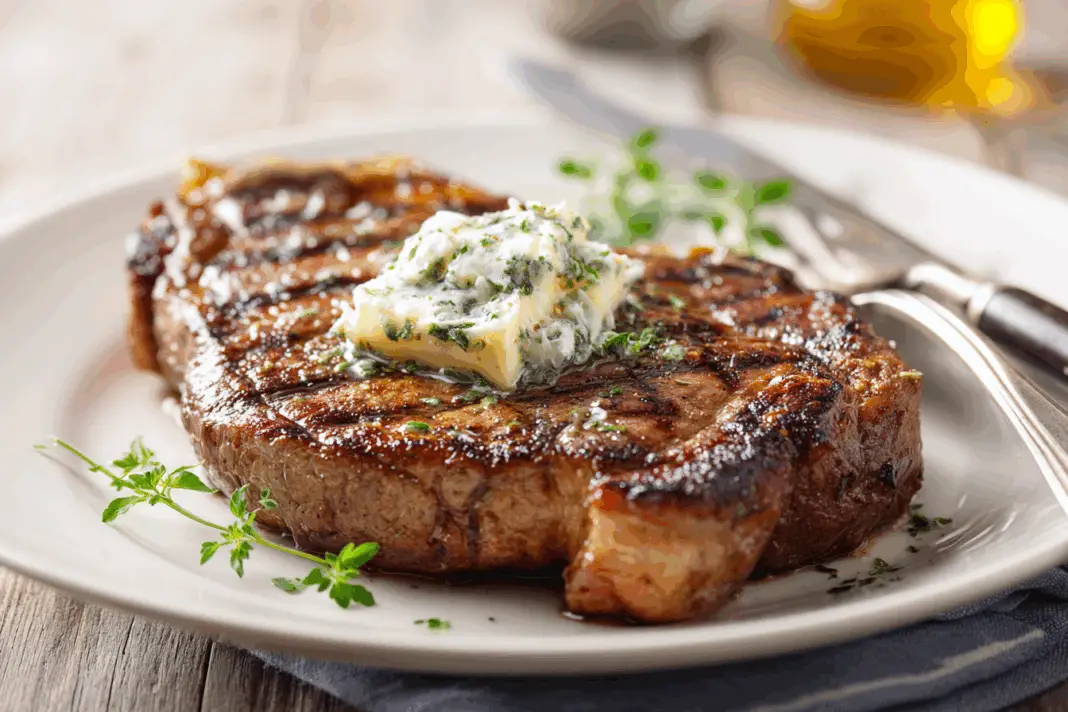
There’s something special about cooking a thick ribeye on the grill, especially when you top it with butter that’s loaded with garlic and fresh herbs. It sounds fancy, but here’s the thing: making restaurant-quality steak at home is way easier than most people think. You don’t need culinary school or complicated techniques. What you need is good meat, high heat, and about 20 minutes of actual cooking time. The garlic herb butter? That takes maybe five minutes to mix together. Once you nail this recipe, you’ll wonder why you ever paid $60 for steak at a restaurant.
Choosing the right ribeye makes all the difference
Not all ribeyes are created equal, and picking the right one sets you up for success before you even light the grill. Look for steaks that are at least one inch thick, though 1.5 inches is even better if you can find them. Thinner steaks cook too fast and you’ll end up with meat that’s gray all the way through instead of that perfect pink center. You want to see good marbling throughout the meat, those white streaks of fat running through the red. That’s where all the juiciness and rich taste comes from. Costco actually has really solid ribeyes at decent prices, or find a good local butcher shop if you have one nearby.
Fresh never frozen makes a huge difference too. When you’re spending money on a nice cut like this, it’s worth going for quality. Bone-in or boneless both work great, though some people swear the bone adds extra taste. The reality is that ribeyes are naturally juicy because of all that marbling, so either style will turn out delicious. If you see a Japanese Wagyu or prime grade ribeye and want to splurge, go for it, but honestly a good choice grade ribeye cooked right will blow your mind too.
Why you should season early and let it rest
Here’s where a lot of people mess up: they season their steak right before it hits the grill. The secret to getting that perfect crust and keeping everything juicy inside is to season your ribeye way ahead of time. Take it out of the package, pat it completely dry with paper towels, then hit it with salt on all sides. If you have 24 hours, salt it and stick it back in the fridge uncovered on a rack. The salt pulls moisture to the surface, which then gets reabsorbed along with the salt, seasoning the meat all the way through. Plus, that uncovered time in the fridge dries out the surface, which means better browning on the grill.
If you don’t have a full day, even an hour at room temperature helps. Just salt it generously and let it sit on the counter while you prep everything else. Right before grilling, add your pepper and any other seasonings. Some people go with just salt and pepper, which is classic and delicious. Others like a spice rub with smoked paprika and garlic powder for extra depth. Montreal steak seasoning is another popular choice that already has a good blend of spices. Whatever you use, don’t be shy with it because a thick steak needs enough seasoning to stand up to all that meat.
Getting your grill ready for high heat cooking
The biggest mistake people make with grilling steaks is not getting the grill hot enough. You want that grill screaming hot, around 400-450 degrees Fahrenheit. On a gas grill, crank all the burners to high and let it preheat for at least 15 minutes with the lid closed. On a charcoal grill, light your coals and wait until they’re covered with white ash, which usually takes about 20 minutes. That ash coating means they’re at peak temperature. Some people prefer charcoal because it adds a smoky taste that gas grills just can’t match, but both work fine as long as they’re hot enough.
Before your steak goes on, make sure to clean and oil those grates. Use a grill brush to scrape off any stuck-on bits from last time, then fold up a paper towel, dip it in some vegetable oil, and use tongs to rub it over the grates. This prevents sticking and helps create those beautiful grill marks. One important safety note: only oil the grates before lighting the grill or after it’s cooled down. Never apply oil to grates over an active flame because it will flare up and can burn you badly. If you want to get fancy with two-zone cooking for thicker steaks, push all your coals to one side or only light burners on one side, giving you both direct high heat and a cooler indirect zone.
Cooking times and temperatures that actually work
For a one-inch thick ribeye over high heat, you’re looking at about 3-4 minutes per side for medium-rare, which is how most steak lovers prefer it. That gives you a nice brown crust on the outside and a warm pink center. If you like your steak more done, go 4-5 minutes per side for medium. An instant-read thermometer takes all the guesswork out. For medium-rare, pull your steak when it hits 125-130 degrees internally. For medium, you’re looking at 135-140 degrees. Remember that the temperature will keep rising after you take it off the grill, usually by another 5 degrees or so.
If you’ve got a thicker steak, like 1.5 inches or more, use that two-zone method. Start it over the cooler indirect side and let it cook slowly until it’s about 10-15 degrees below your target temperature. Then move it over to the hot direct side for a quick sear on both sides to get that crust. Want those fancy diamond grill marks you see at steakhouses? Put your steak down, let it cook for 2-3 minutes, then rotate it 45 degrees without flipping. Cook another 2-3 minutes, flip it over, and repeat the same process on the other side. It doesn’t change the taste, but it does look impressive.
Making the garlic herb butter that tops everything
This is where a good steak becomes an amazing steak. The compound butter is super simple but adds so much richness and taste. Start with softened butter, about 4-6 tablespoons depending on how many steaks you’re making. Let it sit out at room temperature for 15-20 minutes so it’s easy to mix. For the garlic, you can either mince fresh cloves or roast them first. Roasting garlic right on the grill while your steaks cook gives it a sweeter, mellower taste that’s really special. Just toss a few cloves in their skins on a piece of foil, turn them a couple times, and they’ll be soft and golden in about 5 minutes.
Once your garlic is ready and cooled enough to handle, peel and mince it finely. Mix it into your softened butter along with fresh herbs. Basil is fantastic and gives a slightly sweet note. Thyme adds an earthy taste. You could also use parsley, rosemary, or cilantro depending on what you like. Add about 2 tablespoons of minced fresh herbs total, a squeeze of lemon juice, and salt and pepper to taste. Mix everything together really well, then stick it in the fridge while your steaks cook. The butter will firm up a bit but should still be spreadable. Some people like to make an herb brush by tying herb sprigs to a wooden spoon and basting the steak with melted garlic butter while it cooks, which is another great method.
The resting period you absolutely cannot skip
This is probably the hardest part of the whole recipe because your steak smells amazing and you just want to cut into it immediately. But if you slice it right off the grill, all those delicious juices will run out onto your cutting board instead of staying in the meat where they belong. When meat cooks, the heat pushes all the moisture toward the center. Resting lets everything redistribute back through the steak. It also allows that internal temperature to rise those final few degrees through carryover cooking, so your steak finishes cooking perfectly without overdoing it on the grill.
Take your steaks off the grill and put them on a clean plate or cutting board. Tent them loosely with aluminum foil to keep them warm, but don’t wrap them tightly or you’ll steam the crust you worked so hard to create. Let them rest for at least 5 minutes, though 10 minutes is even better for really thick steaks. This is the perfect time to finish up any side dishes or set the table. When the resting time is up, slice against the grain if you’re cutting the steak up, or serve it whole. Either way, top it with a generous scoop of that garlic herb butter and watch it melt into all the nooks and crannies of the meat.
What to serve alongside your ribeye
A great steak deserves some good sides, but nothing too complicated that takes attention away from the main event. Classic grilled corn on the cob works perfectly because it cooks right on the grill alongside your steaks. Just leave the husks on, soak them in water for 10 minutes, and throw them on the grill for about 15 minutes, turning occasionally. Baked potatoes are another grill-friendly option. Wrap them in foil with a little oil and salt, and let them cook over indirect heat for about an hour before you start your steaks. By the time the meat is done resting, everything is ready at once.
If you want something a bit different, smoked mac and cheese or a creamy pasta salad both pair well with steak. For something lighter, a simple green salad with a tangy vinaigrette cuts through the richness of the beef and butter. Sautéed mushrooms are another classic steakhouse side that you can easily make in a cast iron skillet right on the grill. Some people also like cauliflower mash as a lighter alternative to mashed potatoes. Really though, this steak is so good that it doesn’t need much. Even just some crusty bread to soak up the garlic butter would make plenty of people happy.
Storing leftovers and using them creatively
If you somehow end up with leftover steak, which honestly doesn’t happen often, it keeps in the fridge for about 3 days in an airtight container. Don’t try to reheat it on high heat or you’ll overcook it and end up with tough, gray meat. The best way to reheat steak is low and slow in a 250-degree oven until it’s just warmed through, or slice it thin and eat it cold. Cold leftover ribeye sliced thin on a salad with some blue cheese and cherry tomatoes is actually incredible. The meat stays tender and you get all that rich beefy taste without having to turn on the grill again.
You can also chop up leftover steak and use it in quesadillas, steak and eggs for breakfast, or tossed with pasta and some of that leftover garlic butter. Some people make steak sandwiches with the leftovers, piling the sliced meat on crusty bread with caramelized onions and melted cheese. Steak fried rice is another great option if you have leftover rice hanging around. The point is, even though reheated steak is never quite as good as fresh off the grill, there are plenty of ways to use it up that are still really tasty. Just don’t microwave it, because that’s pretty much guaranteed to turn it rubbery.
Once you get this recipe down, grilling perfect ribeyes becomes something you can do without even thinking about it. The combination of a well-seasoned, properly cooked steak with that rich garlic herb butter is hard to beat. It’s impressive enough for special occasions but simple enough for a regular weekend dinner when you feel like treating yourself. The best part is knowing you can make restaurant-quality steak right in your own backyard for a fraction of the price, and honestly, it usually turns out better than most restaurants anyway because you’re using great meat and cooking it exactly how you like it.
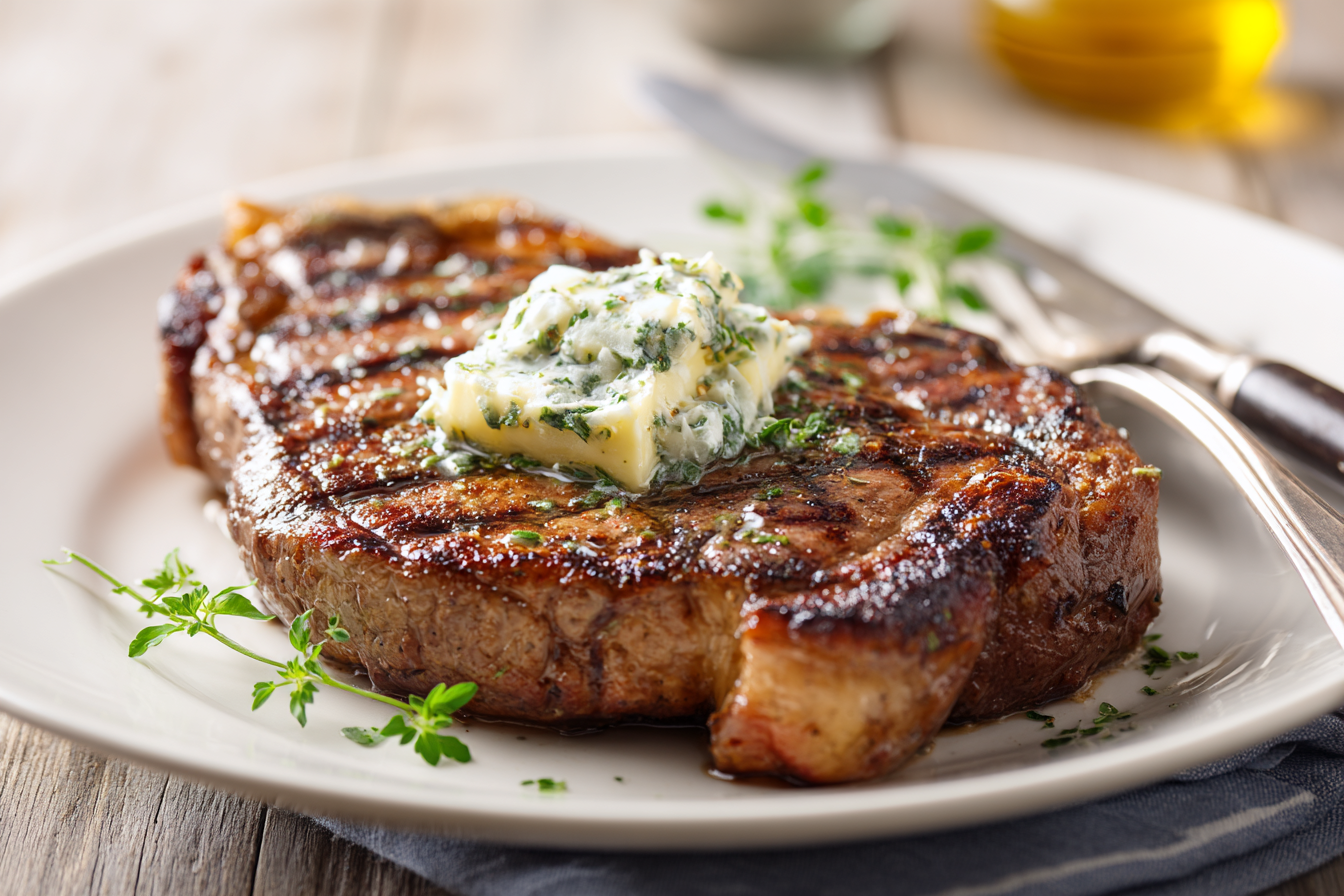
Perfectly Grilled Ribeye Steak with Garlic Herb Butter
Cuisine: American4
servings20
minutes8
minutes358
kcalThis mouthwatering ribeye is seasoned with a simple spice rub, grilled to juicy perfection, and topped with rich garlic herb butter that melts right into the meat.
Ingredients
4 bone-in ribeye steaks, approximately 10-12 ounces each, 1 inch thick
1.5 tablespoons smoked paprika
1 tablespoon garlic powder
1 tablespoon crushed black pepper
2 teaspoons salt
2 teaspoons onion powder
1 teaspoon dill seed
1 teaspoon red chili flakes
4 tablespoons salted butter, softened
1 clove garlic, minced (or 4 cloves roasted on the grill)
2 tablespoons fresh basil, minced
Directions
- Remove the ribeye steaks from the refrigerator and let them sit at room temperature for about 20 minutes before grilling. This helps them cook more evenly. Meanwhile, preheat your grill to high heat, aiming for 400-450 degrees Fahrenheit. Clean the grill grates thoroughly with a grill brush and oil them with a paper towel dipped in vegetable oil using tongs.
- In a small bowl, combine the smoked paprika, garlic powder, crushed black pepper, salt, onion powder, dill seed, and red chili flakes to create the spice rub. Mix everything together well. Pat the steaks completely dry with paper towels, then generously apply the spice rub to all sides of each steak, pressing it in gently so it sticks to the meat.
- If roasting garlic, place the unpeeled cloves on a piece of foil on the grill and cook for about 5 minutes, turning occasionally, until soft and golden. Remove and let cool. While the steaks are grilling, prepare the compound butter by combining the softened butter with minced garlic (or the roasted garlic once cooled and peeled), fresh basil, and a pinch of salt and pepper in a small bowl. Mix thoroughly and place in the refrigerator until ready to serve.
- Place the seasoned steaks directly over the hottest part of the grill. Cook for approximately 3 minutes without moving them to develop a nice crust. Flip the steaks and cook for another 3 minutes on the other side for medium-rare. If you want medium doneness, cook for 4-5 minutes per side instead. Use an instant-read thermometer to check the internal temperature, aiming for 125-130 degrees Fahrenheit for medium-rare.
- Once the steaks reach your desired temperature, remove them from the grill and place them on a clean plate or cutting board. Tent them loosely with aluminum foil but don’t wrap tightly, as this will steam the crust. Let the steaks rest for 5-10 minutes to allow the juices to redistribute throughout the meat. The internal temperature will continue to rise by about 4-5 degrees during this resting period.
- After resting, slice the steaks against the grain if desired, or serve them whole. Top each steak with a generous tablespoon of the garlic herb butter, letting it melt into the hot meat. Serve immediately while the steaks are still warm and the butter is melting.
Notes
- For thicker steaks (1.5 inches or more), use a two-zone grilling method with direct and indirect heat to prevent overcooking the outside before the inside is done.
- You can make the compound butter ahead of time and store it in the refrigerator for up to a week, or freeze it for up to 3 months.
- If you prefer less heat, reduce or omit the red chili flakes from the spice rub.
- For perfect grill marks, place the steak down and let it cook for 2-3 minutes, then rotate 45 degrees without flipping and cook another 2-3 minutes before flipping to repeat on the other side.
- Store leftover cooked steak in an airtight container in the refrigerator for up to 3 days.
Common questions about grilling ribeye steaks
Q: Should I marinade my ribeye steak before grilling?
A: Ribeyes are naturally juicy and well-marbled, so they don’t really need a marinade. A simple dry rub with salt, pepper, and spices is all you need. Save marinades for leaner cuts like sirloin that benefit from the extra moisture and tenderizing.
Q: Can I use boneless ribeye instead of bone-in?
A: Absolutely. Both boneless and bone-in ribeyes work great with this recipe. The cooking time and method stay the same. Some people prefer bone-in for presentation, while others find boneless easier to eat.
Q: What if I only have a gas grill instead of charcoal?
A: Gas grills work perfectly fine for this recipe. Just make sure to preheat it to high heat (400-450 degrees) for at least 15 minutes before adding your steaks. While charcoal adds a smokier taste, gas grills are more convenient and still produce excellent results.
Q: How do I know when my steak is done without cutting into it?
A: An instant-read thermometer is your best friend here. Insert it into the thickest part of the steak away from any bone. For medium-rare, pull it at 125-130 degrees. For medium, look for 135-140 degrees. The temperature will rise another 5 degrees while resting.
