

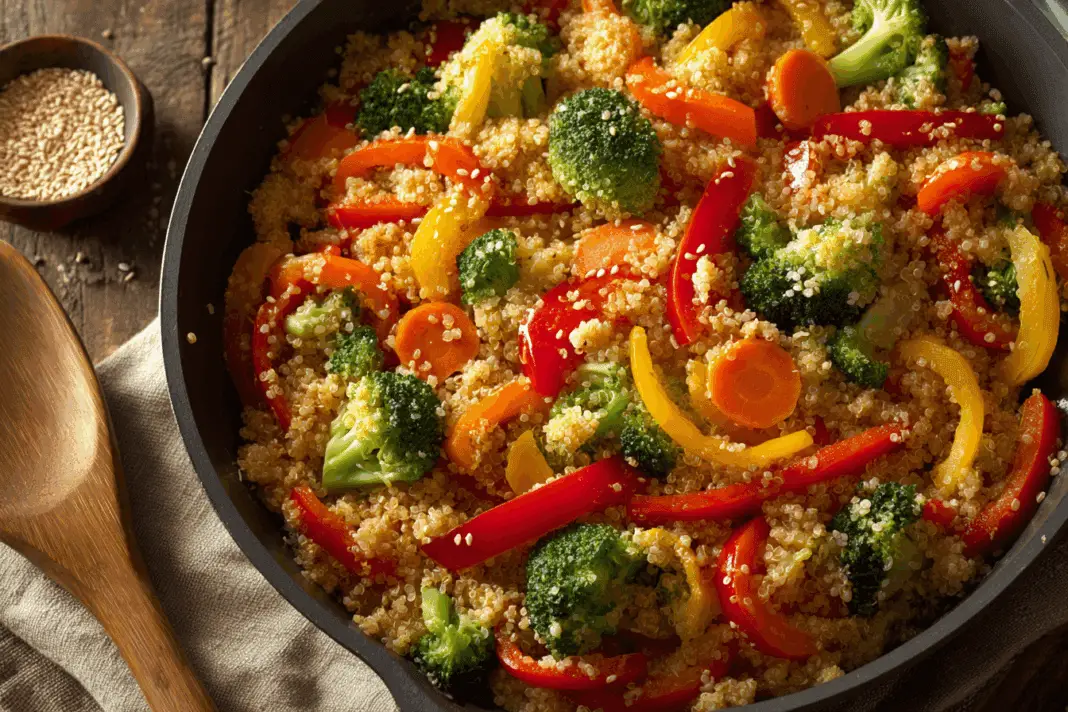
That moment when you open the fridge after work and find random vegetables staring back at you happens more often than anyone wants to admit. A bell pepper that’s seen better days, some broccoli florets, maybe half an onion wrapped in plastic. Instead of ordering takeout again, those odds and ends can turn into something way better than what you’d get from a delivery app. This quinoa veggie stir-fry takes whatever vegetables are hanging out in your crisper drawer and transforms them into a meal that actually tastes like you tried, even when you’re running on empty.
Why quinoa works better than rice here
Rice seems like the obvious choice for stir-fry, but quinoa brings something different to the table. It cooks in about 15 minutes, which is half the time brown rice needs, and it doesn’t turn into a mushy mess when you toss it with hot vegetables. The little grains stay separate and fluffy, soaking up whatever sauce you throw at them without getting soggy. Plus, if you cook a big batch on Sunday, it keeps in the fridge for days and reheats without turning into a clumpy disaster.
Some grocery stores now sell frozen cooked quinoa in the freezer section, which makes this even easier. You can also use regular white quinoa or the tri-color kind. The red and black varieties take a few minutes longer to cook, but they add some visual interest if you’re packing these for lunch and don’t want to stare at beige food all week. Just rinse whatever quinoa you buy before cooking it or the natural coating makes it taste bitter and soapy.
Picking vegetables that actually cook at the same speed
The biggest mistake people make with stir-fry is throwing all the vegetables in at once and ending up with crunchy carrots and mushy zucchini. Carrots and broccoli need more time to soften than bell peppers or snow peas. The trick is adding the hard stuff first and giving it a few minutes before tossing in the tender vegetables. Onions fall somewhere in the middle, but they can handle a bit of extra cooking without falling apart.
If you’re using shiitake mushrooms, they need a hot pan and a little space to brown properly instead of steaming. Crowding them makes them release water and turn rubbery. Zucchini goes from perfect to soggy in about 30 seconds, so keep an eye on it. Frozen vegetables work fine too, just thaw them first and pat them dry with paper towels so they don’t water down the whole pan. Nobody wants a soup when they were expecting a stir-fry.
Making the ginger sesame sauce that holds everything together
The sauce makes or breaks a stir-fry. This one combines fresh grated ginger, soy sauce, hoisin sauce, and a few drops of sesame oil. Hoisin sauce shows up in the Asian section of most grocery stores, usually near the soy sauce, and it adds a sweet and savory depth that plain soy sauce can’t match. A little bottle lasts forever because you only need a spoonful at a time. Sesame oil is one of those ingredients that goes a long way, too much and it tastes like you’re eating a bottle of perfume.
Fresh ginger makes a huge difference compared to the powdered stuff in the spice aisle. It has a bright, almost spicy kick that wakes up the whole dish. You can find fresh ginger in the produce section, usually near the garlic. Peel it with a spoon, which sounds weird but actually works better than a peeler, then grate it on a microplane or the small holes of a box grater. If you end up with extra ginger, throw it in the freezer and grate it straight from frozen next time you need it.
Getting your pan hot enough without setting off the smoke alarm
Stir-fry needs high heat, but not so high that everything burns before it cooks. Medium-high heat is the sweet spot for most home stoves. Let the pan heat up for a minute or two before adding any oil, then pour in your oil and swirl it around. The oil should shimmer and move easily across the pan, but if it starts smoking right away, turn the heat down a notch. Sesame oil has a lower smoke point than vegetable or avocado oil, so save it for the end instead of cooking with it.
A large nonstick skillet or a wok both work fine for this. Cast iron pans hold heat really well but they’re heavy and take longer to heat up. If you’re using a regular skillet, just don’t overcrowd it. Cook the vegetables in two batches if you have to, otherwise they’ll steam instead of getting those nice browned edges. Keep everything moving with a spatula or wooden spoon. The garlic and ginger cook in about 30 seconds, so don’t walk away or they’ll burn and taste bitter.
Adding protein without making this complicated
This stir-fry works as a side dish, but adding some protein turns it into a complete meal. Eggs are the easiest option. Just push all the vegetables and quinoa to the sides of the pan, crack a couple eggs into the middle, scramble them up, and then mix everything together. Takes about two minutes and doesn’t dirty another pan. Tofu is another good choice if you press it first to get rid of excess water, then cut it into cubes and pan-fry it separately until it’s golden brown.
Leftover chicken from a rotisserie bird works great too. Just shred it and toss it in at the end to warm it up. Shrimp cooks fast, but you need to do it in a separate pan first so it doesn’t overcook while you’re dealing with the vegetables. Canned white beans or chickpeas add protein without any cooking at all, just drain and rinse them, then stir them in with the quinoa. Even a handful of cashews or peanuts adds some heft if you’re keeping it vegetarian.
Making it gluten-free when someone at dinner has restrictions
Regular soy sauce contains wheat, which catches people off guard when they’re trying to avoid gluten. Tamari is basically the same thing but made without wheat, and most grocery stores stock it right next to the regular soy sauce. It tastes almost identical, maybe slightly less salty, so you won’t notice much difference. Some brands of hoisin sauce contain wheat too, so check the label if gluten is a real concern. You can find gluten-free versions, or just skip the hoisin and add a little extra soy sauce with a spoonful of honey or maple syrup for sweetness.
Quinoa is naturally gluten-free, which makes this an easy swap for anyone who can’t eat regular pasta or rice dishes that use soy sauce. Just double-check that your quinoa didn’t get processed in a facility that also handles wheat if cross-contamination is a serious issue. Most brands are fine, but the label will tell you if there’s any risk. Sesame oil and fresh vegetables are safe bets, so once you swap the soy sauce for tamari, the whole dish becomes gluten-free without changing how it tastes.
Meal prepping this for lunch without it getting soggy
Stir-fry reheats better than most meals, but there are a few tricks to keeping it from turning into mush by Wednesday. Let everything cool down completely before packing it into containers, otherwise the steam makes the vegetables soggy. Glass containers with snap-on lids work better than plastic because they don’t absorb smells or stain from the soy sauce. Pack the sauce separately if you’re really worried about things getting watery, then drizzle it on right before eating.
This keeps in the fridge for about four days, maybe five if you’re pushing it. Reheat it in the microwave for a couple minutes, stirring halfway through so it heats evenly. You can also eat it cold, which sounds weird but actually tastes fine, kind of like a grain salad. If you’re making a big batch for the week, consider cooking the vegetables a little less than you normally would. They’ll finish cooking when you reheat them, so they won’t turn to mush. Spinach wilts down to nothing, so add that fresh each day instead of mixing it in with everything else.
Sesame seeds and why toasting them matters
Sprinkling raw sesame seeds on top looks nice but doesn’t add much. Toasting them for a few minutes transforms them into something completely different, nutty and crunchy instead of bland and forgettable. You can toast them in a dry skillet over medium heat, shaking the pan every 30 seconds or so until they turn golden brown and smell amazing. It takes about three or four minutes. You can also spread them on a baking sheet and toast them under the broiler, but watch them like a hawk because they go from perfect to burnt in seconds.
Black sesame seeds show up in some Asian grocery stores and they taste the same as white ones, but they look more interesting scattered on top. You can buy pre-toasted sesame seeds if you want to skip a step, they’re usually labeled as roasted sesame seeds. Store them in the fridge after opening because they can go rancid sitting in the pantry. Same goes for sesame oil, which should live in the fridge after you open it. Spoiled sesame products taste like old crayons smell, so you’ll know right away if they’ve gone bad.
What to do when you want more heat
This stir-fry is pretty mild as written, which works for most people but leaves spice fans wanting more. Red pepper flakes are the easiest way to add heat without changing much else. Start with a pinch and add more if you want, they’re easier to add than to take away. Sriracha or sambal oelek work too, just stir a spoonful into the sauce before you add it to the pan. Fresh chili peppers bring more complexity than dried flakes, jalapeños or serranos give you that fresh pepper taste along with the heat.
If you really want to crank up the heat, add some chili garlic sauce or a drizzle of chili oil at the end. Chinese grocery stores sell bottles of chili oil with crunchy bits at the bottom that add texture along with serious spice. A little goes a long way, and it keeps forever in the fridge. You can also slice up some fresh jalapeños and toss them in with the other vegetables at the start. Just remember that most of the heat lives in the seeds and white membranes, so scrape those out if you want the pepper taste without melting your face off.
Making stir-fry at home stops feeling intimidating once you realize it’s just hot pan, vegetables, and sauce. The quinoa turns it into something more substantial than takeout without requiring a second mortgage to afford. Next time those random vegetables are giving you the guilt trip from the crisper drawer, remember this takes about 25 minutes from start to finish and tastes better than scrolling through delivery apps for half an hour.
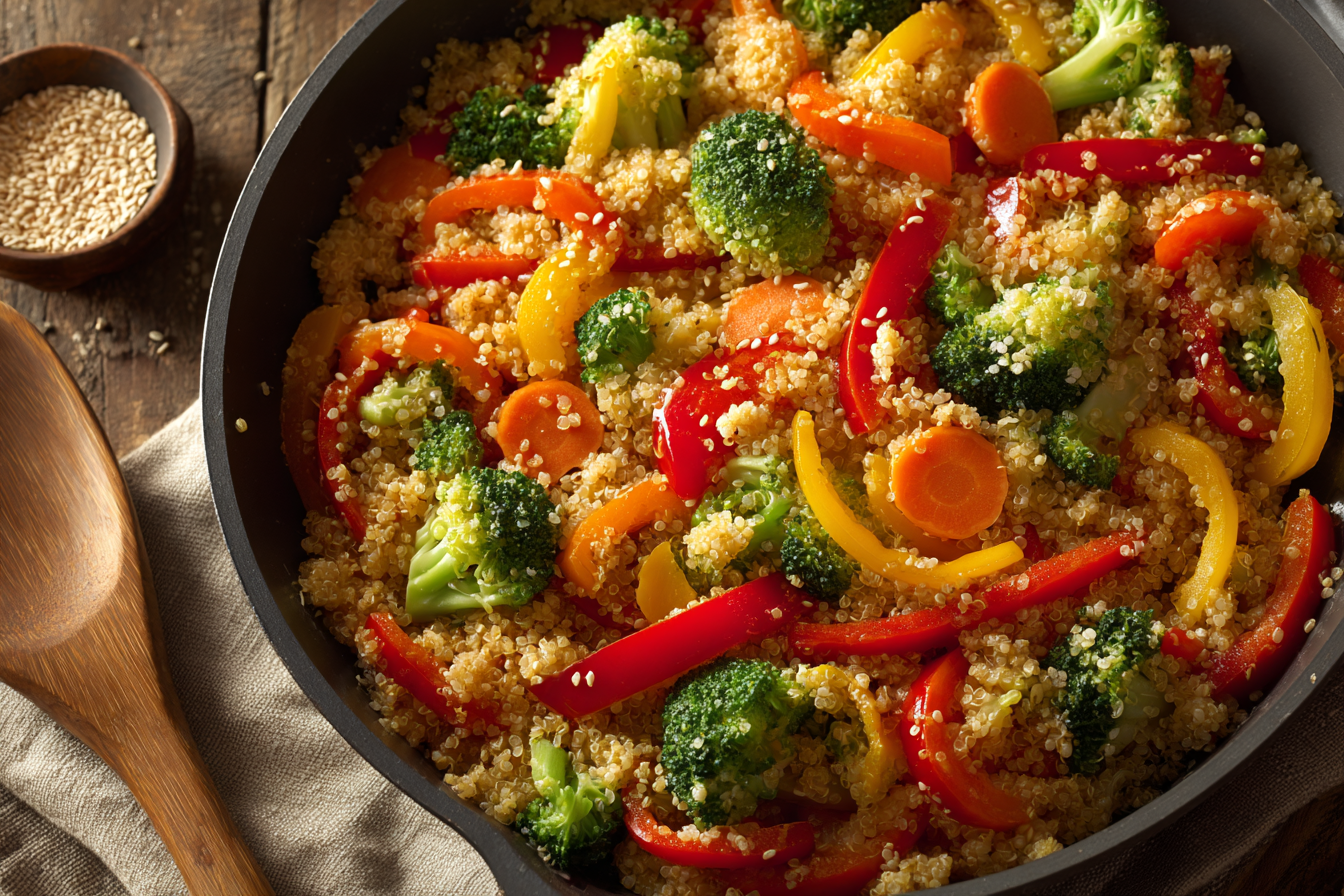
Quinoa Veggie Stir-Fry With Ginger Sesame Sauce
Cuisine: Asian4
servings10
minutes15
minutes280
kcalTransform leftover vegetables into a restaurant-quality meal with fluffy quinoa, crisp vegetables, and a savory ginger sesame sauce that comes together in minutes.
Ingredients
1 cup quinoa, rinsed well
2 cups water
1 tablespoon toasted sesame oil, divided
1 garlic clove, minced
1-inch knob fresh ginger, peeled and grated
2-3 julienned carrots
2 cups small broccoli florets
1 small bell pepper, sliced
1 small red onion, sliced
4 ounces snow peas
2 eggs, beaten
1 tablespoon low-sodium soy sauce or tamari
1 teaspoon additional sesame oil for finishing
Pinch of red pepper flakes
2 tablespoons toasted sesame seeds for garnish
1 cup fresh spinach leaves
Directions
- Rinse the quinoa thoroughly under cold water in a fine-mesh strainer, rubbing the grains between your fingers to remove the natural coating. Bring the 2 cups of water to a boil in a medium saucepan, add the rinsed quinoa, and return to a boil. Reduce heat to low, cover, and simmer for 15-20 minutes until the water is absorbed and the quinoa is fluffy.
- While the quinoa cooks, heat a large nonstick skillet or wok over medium-high heat for about 1-2 minutes. Add the toasted sesame oil and swirl to coat the pan, waiting until the oil shimmers and moves easily across the surface.
- Add the minced garlic and grated ginger to the hot oil and cook for 30 seconds, stirring constantly to prevent burning. Immediately add the carrots and broccoli florets, tossing to coat with the aromatics, and cook for 3-4 minutes, stirring occasionally.
- Add the sliced red onion and bell pepper to the pan and continue cooking for another 2-3 minutes until the vegetables begin to soften. If vegetables start sticking to the pan, add 1/4 cup water and continue cooking until the moisture evaporates. Toss in the snow peas and cook for just 1-2 minutes until they’re bright green and crisp-tender.
- Push all the cooked vegetables to the sides of the pan, creating an open space in the center. Pour the beaten eggs into this cavity and let them sit for about 10 seconds before scrambling them with a spatula. Once the eggs are just set but still slightly glossy, toss everything together with the vegetables.
- Add the cooked quinoa to the pan along with the fresh spinach leaves, tossing everything together until well combined and the spinach begins to wilt, about 1 minute. Drizzle with the soy sauce, the additional teaspoon of sesame oil, and sprinkle with red pepper flakes.
- Toss everything together thoroughly for another 30 seconds to ensure the sauce coats all the ingredients evenly and the quinoa is heated through. Taste and adjust seasoning with additional soy sauce or red pepper flakes if desired.
- Divide the stir-fry into four bowls and sprinkle each serving with toasted sesame seeds. Serve immediately while hot, or let cool completely before transferring to airtight containers for meal prep.
Notes
- You can substitute brown rice or cauliflower rice for the quinoa. Brown rice will take about 40-45 minutes to cook, so start it first. Cauliflower rice cooks in just 5 minutes.
- Frozen cooked quinoa saves time and can be stirred in straight from the freezer. Just add an extra minute of cooking time to heat it through.
- For a spicier version, add 1-2 teaspoons of sriracha or sambal oelek to the sauce, or toss in sliced fresh jalapeños with the other vegetables.
- This stir-fry keeps in the refrigerator for 4-5 days in airtight containers. Reheat in the microwave for 2-3 minutes, stirring halfway through.
- Substitute tamari for soy sauce to make this dish gluten-free. Check that your hoisin sauce is also gluten-free if using.
- Toast sesame seeds in a dry skillet over medium heat for 3-4 minutes, shaking frequently, until golden and fragrant. Watch them carefully as they burn quickly.
Frequently asked questions
Q: Can I use other vegetables in this stir-fry?
A: Absolutely. Bell peppers, mushrooms, bok choy, cabbage, bean sprouts, celery, and kale all work great. Just remember to add firmer vegetables like carrots and broccoli first, then add quicker-cooking vegetables like spinach and bean sprouts at the end so everything finishes at the same time.
Q: What if I don’t have hoisin sauce?
A: You can skip the hoisin and use extra soy sauce plus a tablespoon of honey, maple syrup, or brown sugar to add that sweet-savory balance. It won’t taste exactly the same but it’ll still be good. Oyster sauce is another substitute if you have it.
Q: Can I make this without eggs?
A: Yes, the eggs are optional. You can add cubed tofu, chickpeas, or edamame for protein instead, or just keep it as a veggie and quinoa bowl. If you’re vegan, make sure your hoisin sauce doesn’t contain any animal products since some brands do.
Q: How do I keep the vegetables from getting mushy?
A: Don’t overcrowd the pan and keep the heat at medium-high so the vegetables can brown instead of steam. Cut vegetables into similar-sized pieces so they cook evenly, and don’t walk away from the stove. Stir-fry happens fast, and vegetables go from perfect to overcooked in less than a minute.
