

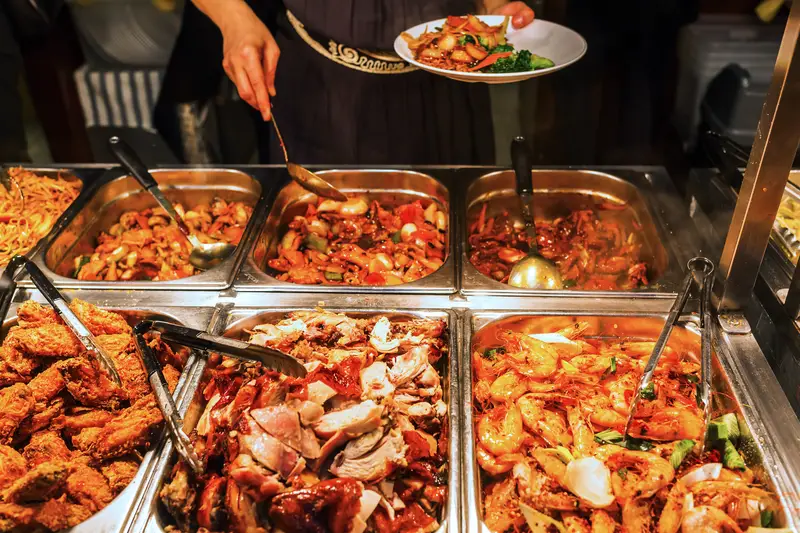
Buffets can be amazing places to eat. Pay one price and load up on all kinds of different foods. But not all buffets are created equal, and some have warning signs that should make anyone think twice before sitting down. Some people have taken the “all you can eat” concept to wild extremes, leading restaurants to actually kick them out. From folks camping out for hours to questionable food handling practices, there are several things that should make anyone reconsider their buffet choice. These situations aren’t just about bad manners or weird policies. They can actually tell us a lot about how a buffet operates and whether it’s worth the money.
Someone has been sitting there for four hours straight
Walking into a buffet and seeing the same person still eating after several hours might seem funny at first. But it’s actually a red flag about how the restaurant manages its business. When buffets allow customers to camp out indefinitely, it creates problems for everyone else. Tables stay full, fresh food gets depleted faster, and the whole dining experience suffers. Most reasonable buffets have informal time limits to keep things moving smoothly. If management lets someone park themselves for half a day, it shows they’re not really paying attention to what’s happening.
There have been actual cases of people being escorted out after refusing to leave more than four hours into their meal. One incident involved a man who wouldn’t budge even after staff asked repeatedly. When a buffet allows this kind of thing to happen regularly, it means they’re probably cutting corners elsewhere too. Good restaurants maintain standards about timing and turnover. They know that letting someone monopolize a table all afternoon isn’t fair to other customers who want to eat. If the place seems fine with marathon eating sessions, what else are they ignoring?
Management starts arguing with customers about eating too much
The whole point of an all-you-can-eat buffet is right there in the name. People pay upfront expecting to eat as much as they want within reason. When restaurant staff starts complaining that someone is eating too much or staying too long, it reveals a fundamental problem with their business model. Either they priced things wrong or they’re trying to take advantage of customers who don’t eat much to subsidize the cost. A properly run buffet factors in the big eaters when setting prices. They shouldn’t be surprised or upset when someone actually takes advantage of the deal.
Stories pop up regularly about buffet patrons being asked to leave after eating what the restaurant considers “too much.” One person was politely shown the door after three hours, nine plates, and two dessert rounds. If a restaurant advertises unlimited food but then gets mad when someone eats a lot, that’s false advertising. The confrontation itself is embarrassing for everyone involved. Other diners witness the argument, which ruins the atmosphere. A buffet where management fights with customers over food consumption is one where nobody wins.
The same dishes sit out for way too long
Fresh food rotation is everything at a buffet. Dishes should be replaced regularly throughout service, not left sitting under heat lamps for hours. When the same pan of food sits there from lunch through dinner, bacteria starts growing and quality drops fast. Good buffets constantly monitor their stations and swap out old food for fresh batches. They know that sitting food loses moisture, develops weird textures, and can become unsafe. If everything looks dried out or crusty around the edges, the restaurant isn’t maintaining proper food safety standards.
Temperature control matters just as much as freshness. Hot foods need to stay hot, and cold foods need to stay cold. The danger zone for bacterial growth is between 40 and 140 degrees Fahrenheit. Food sitting in that range for more than two hours becomes risky. Watch how often staff comes around to check and refresh items. If servers seem more interested in clearing empty plates than maintaining the buffet line itself, that’s a problem. A buffet that doesn’t prioritize food rotation and temperature is cutting corners that could make people sick. The money saved on labor and food waste isn’t worth the health risk to customers.
They call the police over buffet disputes
Things have gotten so out of hand at some buffets that law enforcement gets involved. Imagine eating dinner and watching cops show up to settle an argument about how much someone ate. This extreme scenario has actually happened multiple times. When a business model depends on calling the police to remove customers who are technically following the advertised rules, something is seriously wrong. The situation becomes hostile and uncomfortable for everyone in the restaurant. Nobody wants to eat while watching someone get escorted out by officers.
Reports describe staff calling cops after customers refused to leave hours into their meal, still working through dessert while claiming they hadn’t finished yet. The escalation to involving law enforcement shows terrible judgment by management. There are ways to handle these situations that don’t involve police. Clear policies posted upfront, reasonable time limits, and better pricing strategies would prevent most conflicts. A buffet that regularly has police showing up is one with serious operational problems that go beyond just dealing with hungry customers.
Customers treat it like a competitive eating contest
Some people approach buffets with an athlete’s mindset, determined to “get their money’s worth” by consuming ridiculous amounts of food. They skip breakfast, show up hungry, and treat the experience like training for a competition. While this might seem harmless or even amusing, it creates an uncomfortable atmosphere. Other diners feel rushed or judged. The focus shifts from enjoying a meal to watching someone pile food on their plate like they’re building a tower. Buffets attract this behavior because of the pricing structure, but it shouldn’t be the norm.
When the majority of customers at a buffet seem to be in some kind of unspoken eating competition, the restaurant has attracted the wrong crowd. This usually happens at places that advertise aggressively on price rather than quality. They bring in people who care only about quantity, which drives away families and regular diners looking for a pleasant meal. The comments and stories about buffet behavior have become comedy material for a reason. The whole situation gets absurd when people stop enjoying food and start treating it like a sport. A good buffet should feel relaxed and welcoming, not like the warm-up room for an eating championship.
Nobody else seems to be eating there
An empty restaurant during peak meal times tells you everything you need to know. People vote with their feet, and if locals aren’t eating somewhere, there’s usually a good reason. Maybe the food made people sick. Maybe the quality dropped. Maybe word got around about the confrontations and poor management. Whatever the cause, an abandoned buffet during lunch or dinner hours is a giant warning sign. Restaurants survive on repeat customers and word-of-mouth recommendations. When neither exists, the place is probably on its last legs.
Empty buffets also mean the food sits out even longer between refills. With fewer people eating, staff has less incentive to bring out fresh batches. The selection shrinks, quality declines, and the whole operation enters a death spiral. Some desperate buffets lower prices further to attract anyone, which only brings in the extreme eaters and bargain hunters who cause more problems. A thriving buffet should have a steady stream of customers throughout service. Tables should turn over at a reasonable pace. If the parking lot is empty and the dining room echoes, just keep driving to somewhere else.
Staff members look exhausted and frustrated
The people working at a buffet deal with a lot of challenges. They clean up spills, restock food, clear dishes, and handle customer complaints. When they look completely worn out or actively unhappy, it reflects management problems. Good restaurants treat their employees well, provide adequate staffing, and maintain reasonable expectations. Overworked staff makes mistakes. They might not catch food safety issues, miss refilling popular items, or provide poor customer service. The exhaustion shows in every aspect of the operation.
Watch how servers interact with customers and each other. Do they seem stressed beyond normal busy-restaurant levels? Are they short-tempered or obviously frustrated? High turnover and poor working conditions mean the restaurant struggles to keep good employees. This affects food quality, cleanliness, and overall experience. Discussions on various forums reveal how buffet staff deal with difficult situations and problem customers regularly. When management doesn’t support workers or provide adequate resources, everyone suffers. A buffet with demoralized staff is one where quality and standards have likely fallen apart.
They have weird rules posted everywhere
Most buffets have basic policies about not wasting food or taking leftovers home. That’s normal and reasonable. But when signs cover the walls explaining elaborate rules, penalties, and restrictions, something has gone wrong. These places have been burned so many times by problem customers that they’ve created a legal document disguised as a menu board. Rules about time limits, plate counts, sharing food, and extra charges for uneaten items suggest ongoing warfare between management and diners. The restaurant is so defensive that they’ve turned the experience into navigating a contract.
Excessive signage also ruins the atmosphere. Nobody wants to read paragraphs of warnings while trying to enjoy a meal. It creates a hostile, unwelcoming environment where customers feel watched and judged. Some buffets even post staff members to monitor how much people take or how long they stay. This surveillance approach makes everyone uncomfortable. A confident restaurant with good food and fair policies doesn’t need to cover the walls with threats and restrictions. When rules dominate the decor, it means the business model is broken and management is desperately trying to control an uncontrollable situation.
The price seems way too good to be true
Everyone loves a bargain, but buffet pricing that seems impossibly low usually means corners are being cut somewhere. Food costs money. Labor costs money. Keeping a restaurant running costs money. When a buffet charges significantly less than competitors, they’re making up the difference somehow. Maybe they’re using lower quality ingredients. Maybe portions are smaller than they appear. Maybe they’re hoping most people eat very little. Rock-bottom pricing attracts the wrong crowd and creates unsustainable expectations. The restaurant then struggles to deliver on promises while staying profitable.
Cheap buffets often have the most conflicts with customers because the economics don’t work. They can’t afford people who actually eat a lot, so they try to rush them out or make them uncomfortable. The food quality suffers because they’re buying the cheapest possible ingredients. Staff gets paid poorly, leading to high turnover and poor service. The whole operation becomes a race to the bottom where nobody wins. A reasonably priced buffet can afford to provide good food, treat employees well, and handle customers who eat heartily without panicking. When the price seems unbelievably low, believe that something is wrong and look elsewhere for a meal.
Buffets should be fun places where people can try different foods and eat until they’re satisfied. But plenty of warning signs indicate when a buffet has gone wrong. From marathon eating sessions to police interventions, these red flags reveal deeper problems with how the restaurant operates. Trust the instincts that tell you something is off. Whether it’s stale food, hostile staff, or customers being thrown out, these situations mean it’s time to find somewhere else to eat. A good buffet exists where everyone can enjoy themselves without drama, disputes, or health risks.
