


Most people think wraps are boring work lunch food, but that changes when you roast your vegetables first and add a tangy feta spread. The difference between tossing raw veggies in a tortilla and using properly roasted ones is night and day. When you roast vegetables at 425 degrees, they get these caramelized edges that make even basic zucchini taste amazing. Mix that with crumbled feta and fresh greens, and suddenly you’ve got something worth making on purpose instead of just when you’re desperate.
Why roasting vegetables makes wraps actually taste good
Raw vegetables in wraps tend to be watery and bland, which is why most people end up drowning them in dressing. Roasting changes the whole game because high heat brings out natural sugars and creates browned edges that add real depth. Bell peppers get sweet and slightly charred, while mushrooms develop this meaty texture that makes the wrap feel more substantial. Even onions transform from sharp and crunchy to soft and caramelized when you roast them properly.
The best part about roasting is you can make a big batch on Sunday and have ready-to-go wraps all week. Toss your sliced vegetables with olive oil, salt, and pepper, spread them on a sheet pan, and let the oven do its thing. The vegetables stay good in the fridge for three to four days, so you’re not stuck eating the same sad desk lunch every day. Just grab your tortilla, spread some feta mixture, pile on the roasted veggies, and you’re set in five minutes.
The feta spread that holds everything together
Plain feta cheese is great, but turning it into a spread makes it easier to work with and adds moisture without making your wrap soggy. Mix crumbled feta with yogurt, a little mayo, and some lemon juice until it’s smooth and spreadable. The tanginess cuts through the richness of the roasted vegetables and keeps each bite interesting. Some people add fresh dill or garlic powder to amp up the taste even more.
If you’re not a fan of feta, this concept works with other cheeses too. Goat cheese makes a creamier spread, while ricotta gives you something milder. You could even use hummus instead if you want to skip dairy altogether. The key is having something creamy that acts like glue for all your ingredients. Without it, roasted vegetables tend to fall out of wraps when you bite into them, which makes eating at your desk a messy situation.
Which vegetables actually work in wraps
Not all vegetables roast at the same speed, which matters when you’re trying to get everything done at once. Zucchini, bell peppers, mushrooms, and onions all roast in about 25 minutes at 425 degrees, making them perfect wrap candidates. Cut everything into similar-sized pieces so they finish cooking at the same time. Portobello mushrooms work especially well because they have a meaty texture that makes vegetarian wraps feel more filling.
Harder vegetables like carrots, sweet potatoes, or broccoli need more time in the oven, so either roast them separately or cut them smaller. Eggplant is another good option if you salt it first to draw out excess moisture. The mistake most people make is overcrowding the pan, which steams the vegetables instead of roasting them. Give everything space to breathe, and if you need to use two pans, use two pans. The difference in texture is worth the extra cleanup.
Picking the right wrap or tortilla
Regular flour tortillas work fine, but those spinach or tomato wraps you see at the store add some color without changing the taste much. Whole wheat tortillas hold up better if you’re making wraps ahead of time since they’re less likely to get soggy. Pita pockets are another option, though they tend to crack when you stuff them too full. Some stores sell high-protein wraps that have more staying power if you’re trying to make lunch last until dinner.
If your tortillas are stiff or keep cracking when you try to roll them, wrap one in a damp paper towel and microwave it for 10 to 15 seconds. This softens them up and makes rolling easier without adding moisture that’ll make everything fall apart later. Another trick is warming them in a dry skillet for a few seconds on each side. Once you’ve rolled your wrap, you can put it back in that skillet seam-side down to seal it shut, which helps when you’re packing lunch for later.
How to roll a wrap that doesn’t fall apart
The biggest mistake is overstuffing, which guarantees everything will spill out when you take your first bite. Spread your feta mixture in the center of the tortilla, leaving about an inch around the edges. Pile your roasted vegetables in a line down the middle, add your greens on top, then fold in the sides before rolling from the bottom up. Think burrito style, not trying to fold it like a letter.
If you’re still having trouble keeping everything together, stick a toothpick through the wrap to hold it shut. This works great for wraps you’re taking to work or packing for lunch. Some people like to wrap the whole thing in parchment paper or foil, which keeps it from unrolling in your bag and makes it easier to eat without a plate. Just remember to leave one end open so you can actually bite into it without unwrapping the whole thing first.
Making wraps ahead without them getting soggy
Soggy wraps are the worst, but you can avoid them by keeping wet and dry ingredients separate until you’re ready to eat. Store your roasted vegetables, feta spread, and greens in separate containers, then assemble your wrap when it’s time for lunch. If that’s too much work, you can build the wraps ahead but skip adding tomatoes or dressing the greens until right before eating since those add extra moisture.
Another option is using heartier greens like romaine or kale instead of delicate spring mix, which turns to mush faster. Wrap your assembled wraps tightly in plastic wrap or parchment paper and store them in the fridge for up to two days. The feta spread acts as a barrier between the tortilla and wet vegetables, which helps, but nothing stays crispy forever. If you want to keep things fresh longer, roast your vegetables on Sunday and build wraps fresh each morning, which only takes a few minutes once you’ve got the routine down.
Adding protein without meat
Roasted vegetable wraps are filling on their own, but adding chickpeas makes them stick with you longer. Toss a can of drained chickpeas with your vegetables before roasting, and they’ll get crispy on the outside while staying soft inside. The feta spread already adds protein, but chickpeas bump it up even more. You can also add a fried egg if you’re eating the wrap at home, which turns it into more of a breakfast situation.
For people who eat meat occasionally, leftover rotisserie chicken or sliced turkey work great in these wraps. Just add it cold after the vegetables have cooled down so nothing gets weird and lukewarm. Some folks like adding white beans or black beans for extra protein and fiber. The nice thing about these wraps is they work as a base for whatever you’ve got in the fridge, so you’re not locked into one specific recipe every time.
Using pesto mayo instead of plain feta spread
If you’re looking for something different from the yogurt-feta combo, mixing pesto with mayonnaise gives you a completely different taste. Use about equal parts pesto and mayo, which creates a creamy spread with tons of basil and garlic punch. Store-bought pesto works fine, but making your own only takes 15 minutes if you have a food processor. The pesto mayo stays good in the fridge for about a week, so you can use it on multiple batches of wraps.
This version pairs especially well with roasted zucchini and red peppers since the Italian tastes go together naturally. You can still add feta on top of the pesto mayo if you want extra creaminess and salt. Some people mix in a little tahini for a nuttier taste, which works surprisingly well with roasted vegetables. The point is having some kind of spread that brings moisture and binds everything together, whether that’s feta-yogurt, pesto-mayo, hummus, or even just good olive oil with lemon juice.
What to serve alongside these wraps
These wraps are pretty filling on their own, but adding soup makes them feel like a complete meal instead of just lunch. Tomato soup is the obvious pairing, though any broth-based vegetable soup works too. If you want something crunchy on the side, baked chips or air fryer fries hit the spot without requiring much effort. A simple side salad dressed with vinaigrette adds freshness if the wrap feels too heavy.
For people making these wraps for a group, set up a build-your-own wrap station with different roasted vegetables, spreads, and greens. This way everyone can customize their wrap without you having to make multiple versions. Put out some pickles, olives, or sliced avocado as extra toppings. The wraps work well for casual dinners, work lunches, or even picnics since they travel better than most sandwiches and don’t need to be kept super cold.
Roasted vegetable wraps prove you don’t need complicated recipes to make something worth eating. Get your vegetables in the oven, whip up a quick spread, and you’ve got lunch sorted for the week. The best part is how much you can change based on what’s in your fridge or what sounds good that day.
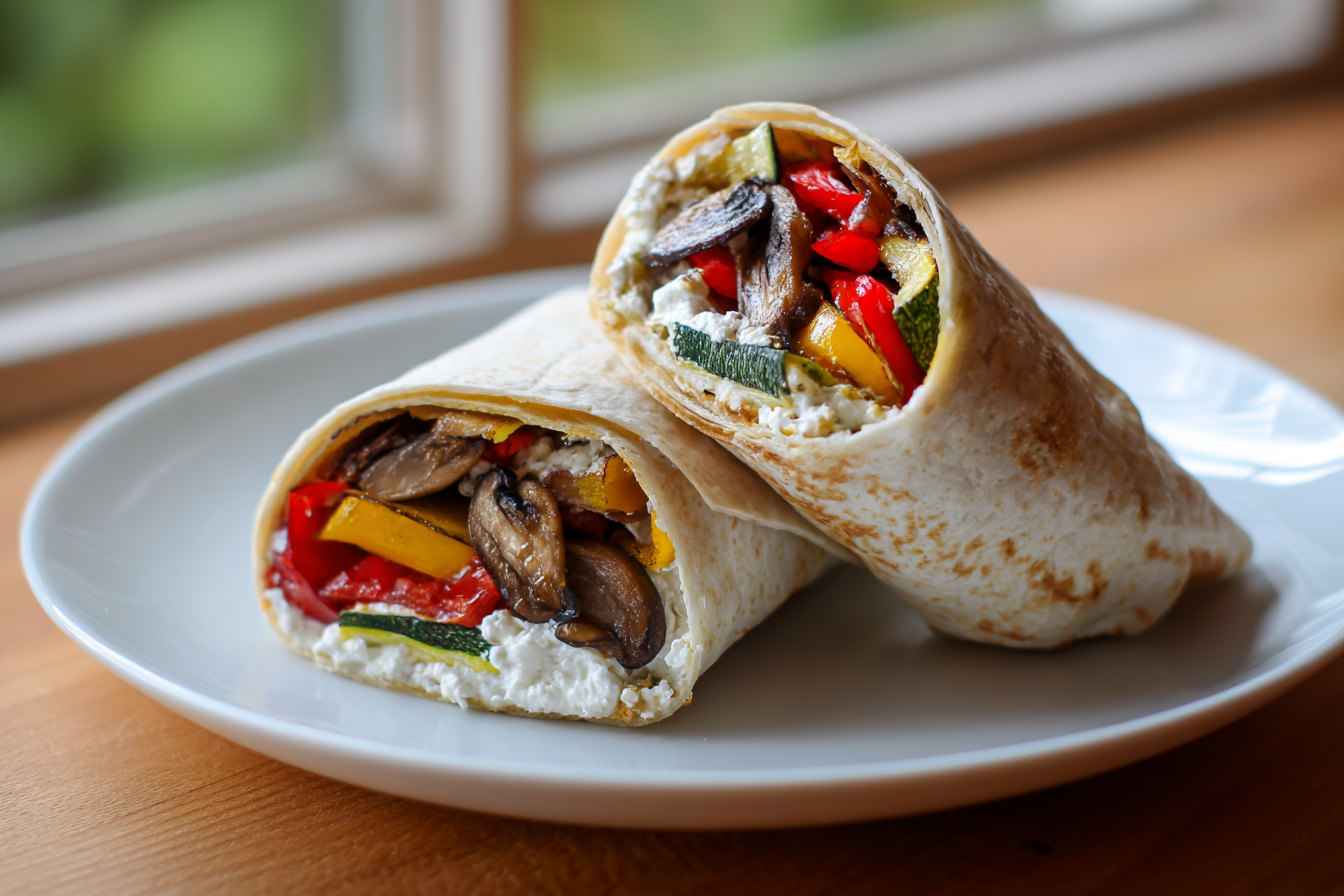
Roasted Veggie Wraps With Creamy Feta Spread
Cuisine: American4
servings10
minutes25
minutes280
kcalTransform ordinary vegetables into something worth craving with this simple roasted wrap that comes together in 30 minutes.
Ingredients
2 portobello mushrooms, gills removed and sliced
1 red bell pepper, thinly sliced
1/2 red onion, thinly sliced
1 small zucchini, cut into spears
1 tablespoon olive oil
1/4 teaspoon salt and pepper each
4 large flour tortillas or wraps
1/2 cup crumbled feta cheese
1/2 cup plain yogurt
1/4 cup mayonnaise
2 tablespoons lemon juice
Fresh baby spinach or mixed greens
Directions
- Preheat your oven to 425 degrees F. While the oven heats up, prepare all your vegetables by slicing them into similar-sized pieces so they roast evenly. Remove the dark gills from the portobello mushrooms with a spoon before slicing them.
- Place all the sliced vegetables on a large baking sheet and drizzle with olive oil. Sprinkle with salt and pepper, then toss everything together with your hands until all pieces are lightly coated. Spread the vegetables in a single layer, making sure they’re not crowded or they’ll steam instead of roast.
- Roast the vegetables for 15 minutes, then remove the pan and stir everything around. Return to the oven and continue roasting for another 10 to 15 minutes until the vegetables are tender and have browned edges. Let them cool for about 10 minutes before assembling your wraps.
- While the vegetables are roasting, make your feta spread by combining the crumbled feta, yogurt, mayonnaise, and lemon juice in a small bowl. Mix everything together until smooth and creamy, adding a splash more lemon juice if you want it tangier. Set aside in the fridge until ready to use.
- If your tortillas are stiff, warm them briefly in the microwave wrapped in a damp paper towel for 10 to 15 seconds, or heat them in a dry skillet for a few seconds on each side. This makes them more flexible and easier to roll without cracking.
- Lay each tortilla flat on a clean surface and spread about 2 tablespoons of the feta mixture down the center, leaving about an inch of space around the edges. Don’t spread it all the way to the sides or it’ll squeeze out when you roll the wrap.
- Divide the cooled roasted vegetables evenly among the four tortillas, piling them in a line down the middle on top of the feta spread. Add a generous handful of fresh spinach or mixed greens on top of the vegetables. Don’t overstuff or the wrap will fall apart.
- Fold in the left and right sides of the tortilla over the filling, then fold up the bottom edge and roll tightly toward the top to create a sealed wrap. If you’re making these ahead, you can secure each wrap with a toothpick and wrap tightly in parchment paper or plastic wrap. Store in the fridge for up to two days.
Notes
- Roasted vegetables can be prepared 3 to 4 days in advance and stored in an airtight container in the refrigerator. This makes weekday lunch prep much faster.
- If your wraps keep breaking when you roll them, the tortillas are too dry. Warm them slightly to make them more pliable before assembling.
- You can substitute the feta spread with hummus, pesto mayo, or any creamy spread you prefer. The spread helps hold everything together and prevents the wrap from getting soggy.
- Add a can of drained chickpeas to the vegetables before roasting for extra protein and a crispy texture.
- For longer storage, keep the components separate and assemble wraps fresh each day to prevent sogginess.
Frequently asked questions
Q: Can I use frozen vegetables instead of fresh ones?
A: Frozen vegetables work, but they release more water when roasting, which can make your wrap soggy. If using frozen, thaw them completely and pat them very dry with paper towels before tossing with oil. You may need to roast them a bit longer to get rid of excess moisture and achieve proper browning.
Q: How do I keep my wrap from falling apart when I eat it?
A: The trick is not overfilling and making sure your spread goes all the way to the edges as a moisture barrier. Roll tightly, folding in the sides first before rolling from the bottom up. If it still feels loose, wrap the whole thing in parchment paper or foil, leaving one end open to eat from.
Q: What if I don’t like feta cheese?
A: Goat cheese, ricotta, or even cream cheese work as substitutes for feta in the spread. You can also skip cheese entirely and use hummus or a tahini-lemon dressing instead. The important part is having something creamy that holds the vegetables and adds moisture without making the tortilla soggy.
Q: Can I make these wraps vegan?
A: Absolutely. Replace the feta-yogurt spread with hummus or a cashew-based spread, and skip the mayonnaise or use vegan mayo. The roasted vegetables are already vegan, so you’re mostly just swapping out the dairy components. Add avocado for extra creaminess if you want.
