

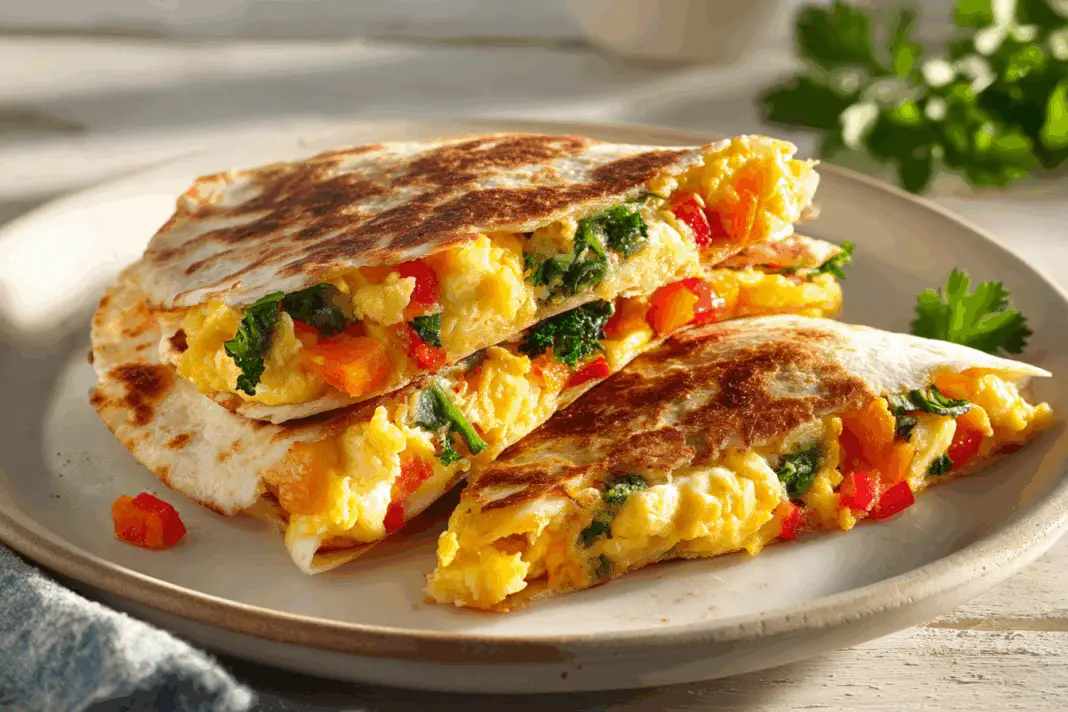
Ever notice how breakfast can feel like the same old routine every single morning? Toast, cereal, maybe some eggs if you’re feeling ambitious. But what if there was something that combined the best parts of breakfast into one crispy, cheesy package that you could eat with your hands? Breakfast quesadillas pack scrambled eggs, melted cheese, and fresh vegetables between two sides of a tortilla, creating something that’s way more interesting than another bowl of cereal. They’re quick enough for busy mornings, but satisfying enough that you won’t be raiding the snack drawer by 10 AM. Plus, you can make a bunch ahead of time and just grab one from the freezer when you’re running late.
Why scrambled eggs work better than fried eggs
The first time someone tries to make breakfast quesadillas, they usually think about throwing a fried egg in there. That sounds good in theory, but the moment you fold that tortilla and try to flip it, you end up with yolk everywhere and a mess on your stovetop. Scrambled eggs are the secret to making these actually work because they stay put and distribute evenly across the tortilla. When you scramble the eggs, they mix with the vegetables and create a filling that holds together when you’re cooking and eating your quesadilla.
The technique matters too. You want to slightly undercook your scrambled eggs because they’ll continue cooking when you grill the assembled quesadilla. If you cook them all the way through initially, they can get rubbery and dry by the time everything’s done. Whisking the eggs with a bit of milk before cooking makes them fluffier and more tender. This vegetarian breakfast quesadilla recipe uses 9 eggs for 6 quesadillas, which gives you the right balance of protein without making them too egg-heavy. The eggs should be one component of the filling, not the entire thing.
Picking vegetables that won’t make your quesadilla soggy
Nobody wants a soggy quesadilla. The problem is that some vegetables release a ton of water when they cook, and that moisture can turn your crispy tortilla into a sad, limp wrapper. Onions, bell peppers, and mushrooms are the classic choices because they can handle being cooked without turning into mush. The trick is to cook them before adding the eggs so most of their moisture evaporates in the pan. Cooking the onions until they’re soft and translucent takes about 5 minutes, then adding peppers and mushrooms for another 4-5 minutes gets them to that perfect tender stage.
Spinach works great too, but you need to let it wilt down completely and cook off any excess water. Zucchini can go in there if you chop it small and give it enough time in the pan. What doesn’t work well? Tomatoes tend to be too watery unless you use them sparingly. If you want tomatoes, add them fresh on top after cooking rather than inside the quesadilla. Some people like adding jalapeños for heat, and those hold up perfectly because they don’t release much moisture. This breakfast quesadilla keeps things simple with scallions and spinach, which is perfect if you want something that comes together fast.
The cheese situation and why it matters
Cheese is basically the glue that holds everything together in a quesadilla. Without enough cheese, the tortilla falls apart and your filling spills out everywhere. With the right amount, it melts and creates a seal that keeps everything contained. Sharp cheddar is the standard choice because it has actual taste and melts well. Some recipes call for 1½ cups of shredded cheese for 6 quesadillas, which comes out to ¼ cup per quesadilla. That’s enough to do the job without overwhelming everything else.
You can switch things up with Monterey Jack if you want something milder, or pepper jack if you like some heat. Mozzarella works in a pinch because it’s super melty, though it doesn’t add much taste. The technique for adding cheese matters too. Put half the cheese directly on the tortilla first, then layer your egg and vegetable mixture, then top with the remaining cheese before folding. This creates cheese layers on both sides that melt and seal everything together. Pre-shredded cheese from the store works fine, though it contains anti-caking agents that can make it slightly less melty than cheese you shred yourself.
Folding and cooking without making a mess
The assembly is where things can go wrong if you’re not careful. Lay your tortilla flat and imagine a line down the middle. Put all your filling on one half only, leaving the other half completely empty. Don’t overfill or you’ll never get it closed properly. Once everything’s on there, fold the empty half over the filled half to create a half-moon shape. Press down gently so the cheese starts making contact with both sides of the tortilla interior.
For cooking, heat your skillet to medium-low and don’t add any oil or butter. The tortilla has enough fat in it already, and adding more just makes things greasy. Place your folded quesadilla in the dry pan and cook for 2-3 minutes on the first side. You’ll know it’s ready to flip when the bottom is golden brown and the cheese is starting to melt. Flip carefully with a large spatula, supporting the whole thing so the filling doesn’t fall out. Cook another 2-3 minutes on the second side. If your tortilla is browning too fast but the cheese isn’t melted, turn down the heat. This healthy breakfast quesadilla method works perfectly for getting that crispy outside without burning anything.
Making a big batch for the freezer
Here’s where breakfast quesadillas really shine. You can make a dozen of these on Sunday and have breakfast ready for the next two weeks. After cooking the quesadillas, let them cool completely on a wire rack. This is important because if you wrap them while they’re still warm, condensation builds up inside the foil and makes them soggy. Once they’re cool, wrap each one individually in aluminum foil. Really wrap them well so no air gets in.
Put all the wrapped quesadillas in a freezer bag, squeeze out as much air as possible, and toss them in the freezer. They’ll keep for up to 3 months, though honestly they’re usually gone within a month because they’re so convenient. When you want one, you have two options. You can microwave it for about a minute to thaw it, then transfer it to a skillet or toaster oven to crisp up. Or you can go straight from freezer to oven at 325°F for about 30 minutes. The oven method takes longer but gives you a better crispy texture. Skip the microwave-only approach because that makes them rubbery and weird.
Getting the tortilla size right
Tortilla size makes a bigger difference than you’d think. Those massive burrito-size tortillas are too big and end up with too much empty tortilla space that just gets chewy. The tiny 6-inch ones are too small to hold a decent amount of filling. The sweet spot is 8-inch or 10-inch flour tortillas. They give you enough room to add a good amount of eggs and vegetables without things getting out of control when you fold them.
Flour tortillas work better than corn for this application because they’re more flexible when you fold them and they get crispier when you cook them. Corn tortillas tend to crack when you try to fold them in half with a bunch of filling inside. If you want to use corn tortillas anyway, the workaround is to use two corn tortillas and make it like a regular quesadilla with filling in between, rather than folding. Whole wheat tortillas are fine if that’s what you have, though they don’t get quite as crispy. Some stores now sell almond flour or other alternative tortillas, and those work too as long as they’re pliable enough to fold without cracking.
What to serve alongside your quesadilla
A breakfast quesadilla is pretty complete on its own, but sometimes you want something extra on the side. Salsa is the obvious choice because the acidity cuts through the richness of the eggs and cheese. You can use store-bought salsa or pico de gallo, whichever you prefer. Hot sauce works if you want more heat. Some people like sour cream, which adds a cooling element that balances everything out.
Guacamole or just plain avocado slices are another solid option. The creamy texture contrasts nicely with the crispy tortilla. A squeeze of lime juice over the top brightens everything up and adds a fresh element. If you want to make it more of a complete meal, some black beans on the side add extra protein and fiber. Fresh cilantro sprinkled on top gives it that authentic Mexican food feel. None of these additions are necessary, but they’re nice to have around if you want to change things up from day to day.
Adding meat without overwhelming the vegetables
The vegetarian version is great, but sometimes you want some meat in there. Bacon is the most popular addition because a couple of strips crumbled up adds that smoky, salty element without taking over completely. Cook the bacon first, crumble it, and add it with the eggs. Breakfast sausage works the same way. Brown it in the pan, break it into small pieces, and mix it in with your vegetables and eggs.
Chorizo is another option if you want something with more spice and character. The key with any meat addition is to not go overboard. You still want this to be about the eggs and vegetables, with the meat playing a supporting role. If you add too much meat, it becomes a different thing entirely and loses that fresh vegetable element that makes these quesadillas work so well for breakfast. Ham is fine too, though it’s less interesting than the other options. Dice it small and treat it like any other ingredient rather than making it the star of the show.
Why these beat fast food breakfast options
Those breakfast quesadillas from fast food places cost around $4-5 each and they’re usually pretty disappointing. The tortilla is either soggy or weirdly tough, the eggs taste like they came from a carton that was frozen and thawed multiple times, and there’s barely any vegetables to speak of. When you make them at home, you control everything. You can load up on vegetables, use real eggs that actually taste like eggs, and add as much cheese as you want.
Cost-wise, making six quesadillas at home probably runs you about $8-10 in ingredients, depending on what’s on sale. That’s less than $2 per quesadilla compared to $4-5 at a fast food place. Plus yours will be bigger and more filling. The convenience factor is comparable too, especially if you make them ahead and freeze them. Grabbing one from your freezer and heating it up takes about the same time as going through a drive-through, and you don’t have to put on pants or leave your house. The homemade version is warmer, fresher, and actually tastes like real food instead of something that’s been sitting under a heat lamp.
Breakfast quesadillas solve that morning problem of wanting something satisfying without spending 30 minutes cooking. They’re substantial enough to keep you full until lunch, easy enough to make in quantity for the week ahead, and way more interesting than the usual breakfast options. Once you get the basic technique down, you can change up the vegetables and cheese based on what you have in your kitchen, making them different each time.
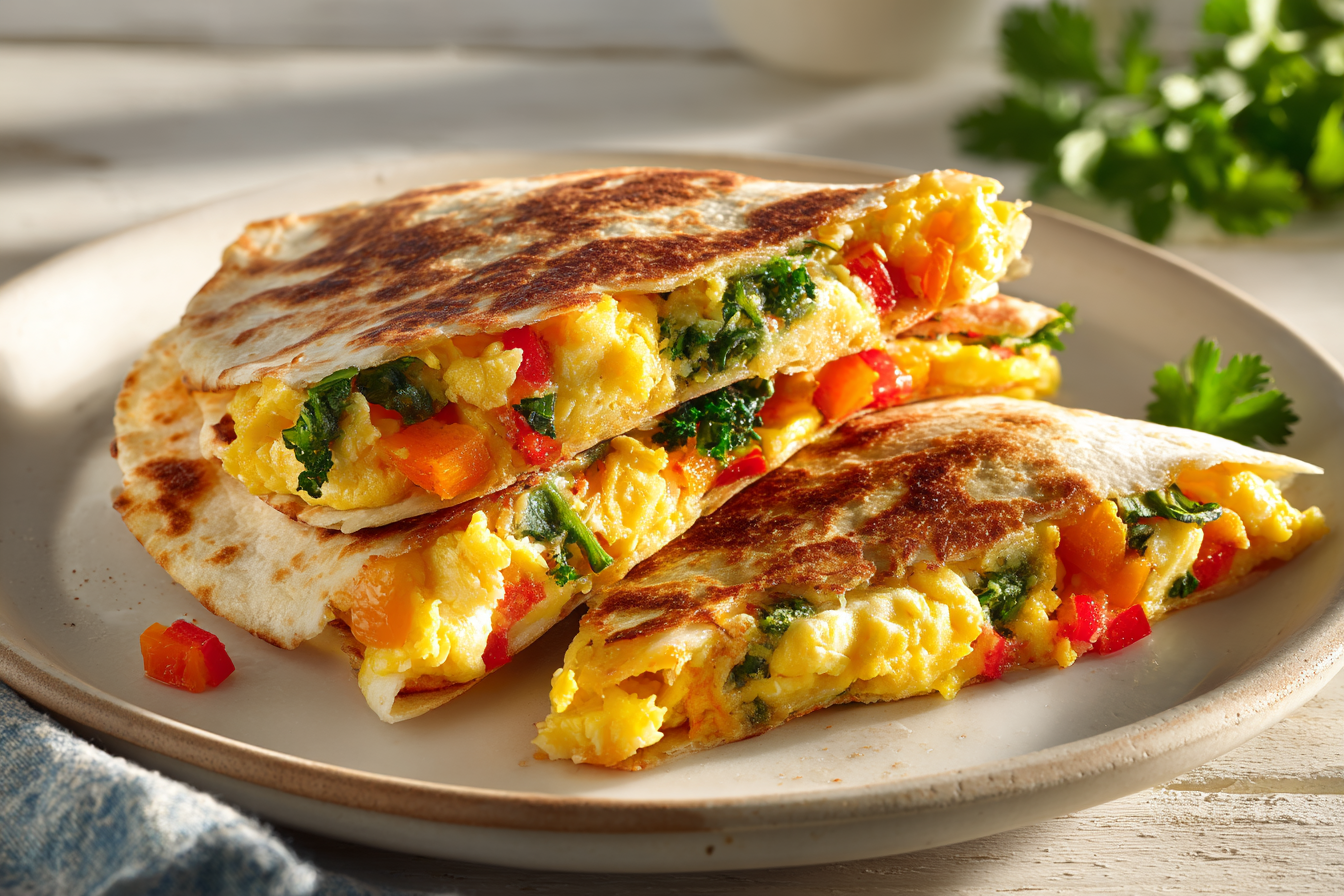
Vegetarian Breakfast Quesadillas
Cuisine: Mexican6
quesadillas10
minutes20
minutes320
kcalCrispy tortillas stuffed with fluffy scrambled eggs, sautéed vegetables, and melted cheese make these freezer-friendly breakfast quesadillas perfect for busy mornings.
Ingredients
1 tablespoon butter, unsalted (or vegetable oil)
1 small onion, diced
1 medium green pepper, diced
4-5 white or brown mushrooms, diced
9 large eggs
2 tablespoons milk
½ teaspoon salt
¼ teaspoon ground black pepper
6 (10-inch) flour tortillas
1½ cups white cheddar cheese, shredded
Non-stick cooking spray
Directions
- Melt the butter in a large skillet over medium heat. Once melted and bubbling, add the diced onions and cook, stirring occasionally, until they become soft and translucent, which should take about 5 minutes. The onions should not brown, just soften and release their moisture.
- Add the diced green peppers and mushrooms to the skillet with the onions. Continue cooking for another 4-5 minutes, stirring occasionally, until the vegetables are slightly tender but still have some texture. You want them cooked enough that they’ve released most of their moisture but not so much that they’re mushy.
- While the vegetables are cooking, crack the eggs into a large mixing bowl. Add the milk, salt, and pepper to the bowl. Whisk everything together vigorously until the mixture is completely combined and slightly frothy on top, which helps create fluffy scrambled eggs.
- Pour the egg mixture into the skillet with the cooked vegetables. Stir gently and continuously as the eggs cook, scraping the bottom of the pan to create soft curds. Cook for approximately 2-3 minutes until the eggs are just set but still slightly soft, as they will continue cooking later. Remove the skillet from heat immediately and set aside.
- Lay all 6 tortillas flat on a clean work surface. Divide the egg and vegetable mixture evenly among the tortillas, placing the filling on only one half of each tortilla in an even layer. Sprinkle the shredded cheese evenly over the egg mixture on each tortilla, then fold the empty half over the filled half to create a half-moon shape.
- Heat a large griddle or skillet over medium-high heat. Once hot, spray the surface lightly with non-stick cooking spray. Place 1-2 quesadillas in the pan, depending on how many will fit comfortably without crowding.
- Cook the quesadillas for 2-3 minutes on the first side, until the bottom is golden brown and crispy. Carefully flip each quesadilla using a large spatula, supporting the entire quesadilla so the filling doesn’t spill out. Cook for another 2-3 minutes on the second side until that side is also golden brown and the cheese inside is fully melted.
- Remove the cooked quesadillas from the pan and repeat the cooking process with the remaining quesadillas. To serve immediately, slice each quesadilla into wedges and serve warm with your choice of toppings like salsa, sour cream, or guacamole. To store for later, let the quesadillas cool completely, then wrap each one tightly in aluminum foil and store in the refrigerator for up to 3 days or freeze for up to 3 months.
Notes
- You can substitute the vegetables with whatever you have on hand. Red peppers, spinach, zucchini, or jalapeños all work well. Just make sure to cook them enough to release excess moisture.
- For reheating from the refrigerator, preheat your oven or toaster oven to 325°F, remove the foil, and heat for approximately 20 minutes. You can also reheat in a skillet over medium heat for 2-4 minutes per side.
- For reheating from frozen, preheat your oven to 325°F, remove the foil, and heat for approximately 30 minutes until warmed through and the cheese is melted.
- If you want to add meat, cook and crumble bacon or breakfast sausage first, then add it to the egg mixture before assembling the quesadillas.
- Use 8-inch tortillas if you prefer smaller quesadillas, but 10-inch tortillas give you more room for filling without overstuffing.
Frequently asked questions
Q: Can I use corn tortillas instead of flour tortillas?
A: Corn tortillas work but they’re trickier because they tend to crack when you fold them with filling inside. If you want to use corn tortillas, try using two tortillas and making it like a traditional quesadilla with filling sandwiched between them instead of folding one tortilla in half. The texture will be different but it still works.
Q: How long can I keep these in the refrigerator?
A: Cooked breakfast quesadillas will keep in the refrigerator for up to 3 days when wrapped tightly in aluminum foil. Make sure they’re completely cooled before wrapping them to prevent condensation from making them soggy. Reheat them in the oven or on the stovetop rather than the microwave for the best texture.
Q: Do I need to spray the pan with oil when cooking the quesadillas?
A: Just a light spray of non-stick cooking spray is all you need. The tortillas have enough fat in them already, and adding too much oil makes them greasy rather than crispy. Some people cook them in a completely dry pan and that works fine too, especially if you have a good non-stick skillet.
Q: What’s the best way to reheat frozen quesadillas?
A: The oven method works best. Preheat to 325°F, remove the foil wrapping, and heat for about 30 minutes from frozen. You can also microwave them for a minute to thaw, then finish them in a skillet or toaster oven to crisp up the outside. Avoid reheating in just the microwave because that makes them rubbery.
