

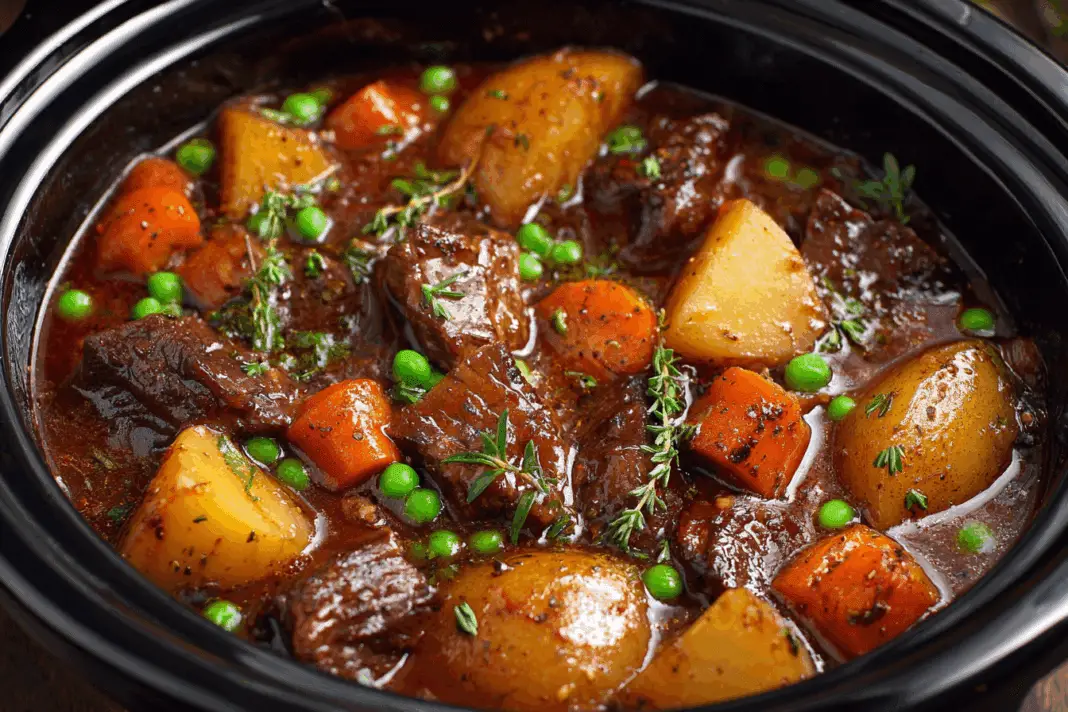
Winter evenings call for something warm and filling, and nothing beats a good beef stew that’s been simmering all day. The smell alone when you walk through the door makes the whole effort worthwhile. This slow cooker version takes the guesswork out of making a restaurant-quality stew at home, with tender beef chunks, hearty vegetables, and a gravy so rich you’ll want to sop up every last drop with crusty bread. The best part is how little hands-on time it actually takes to pull together something this satisfying.
Browning the meat makes a real difference
Taking those extra ten minutes to brown your beef cubes before tossing them in the slow cooker might seem like unnecessary work, but it’s actually what separates an okay stew from an incredible one. When you sear the meat in a hot pan, you’re creating what chefs call the Maillard reaction, which is just a fancy way of saying you’re developing deep, complex tastes that can’t happen any other way. The browned bits that stick to your pan become the foundation for your gravy, and skipping this step means missing out on layers of richness.
That said, life gets busy and sometimes you just need to throw everything in and go. If you’re really pressed for time, the stew will still turn out decent without browning, though it’ll be noticeably less robust in taste. Heat your oil until it’s shimmering but not smoking, work in batches so the meat has room to actually brown instead of steam, and resist the urge to move the pieces around too much. About 45 seconds per side gives you that golden crust while keeping the inside from overcooking.
Picking the right cut of beef matters
Standing at the meat counter wondering which package to grab can feel overwhelming when you’re staring at a dozen different options. For slow cooker stew, you want cuts labeled as chuck roast, braising steak, or stewing beef, which all come from the shoulder area of the cow. These tougher cuts have lots of connective tissue that breaks down during the long cooking time, turning into gelatin that makes your meat incredibly tender and adds body to the gravy. Leaner cuts like sirloin or round might seem like better choices, but they’ll actually end up dry and stringy.
Look for pieces with some marbling running through them, which is that white fat you see streaking the red meat. This fat melts as it cooks, keeping everything moist and adding richness. You should trim off any large chunks of solid fat from the outside, but don’t worry about the stuff inside the meat itself. Most grocery stores sell pre-cut stew meat in convenient packages, which saves time but often costs more per pound than buying a whole chuck roast and cutting it yourself. The cubes should be roughly one-inch pieces so they cook evenly and give you a satisfying bite in every spoonful.
Beer adds depth you can’t get elsewhere
Using beer in beef stew isn’t just something fancy restaurants do to charge more money. The alcohol cooks off completely during those hours in the slow cooker, leaving behind a subtle maltiness and complexity that makes people ask what your secret ingredient is. Any brown ale or amber beer works great here, and you don’t need to spring for expensive craft brews since you’re cooking with it. Whatever’s on sale at the supermarket will do the job just fine, as long as it’s not a light lager which won’t contribute much taste.
If you prefer not to cook with alcohol or don’t have any beer on hand, beef broth makes a perfectly acceptable substitute. Adding a couple tablespoons of red wine vinegar to the broth helps replicate that slight acidity beer provides, which helps tenderize the meat and balances out the richness. Some recipes call for red wine instead, which also works beautifully and gives you a slightly different character. The wine reduces down while cooking, concentrating its taste and adding a sophisticated touch that makes this feel like special occasion food even though it’s simple weeknight cooking.
Choosing the best potatoes for stew
Not all potatoes behave the same way when you cook them for hours in liquid, and picking the wrong type is how you end up with mushy, broken-down pieces that disappear into your gravy. Yukon gold and red potatoes are your best friends here because they’re considered waxy potatoes with less starch content. They hold their shape beautifully through long cooking times while still becoming tender enough to cut with your spoon. Their creamy texture and slightly buttery taste also complement the beef better than other varieties.
Russet or Idaho potatoes might be great for baking and mashing, but they’re too starchy for stew and will literally fall apart on you. Cut your potatoes into chunks that are roughly the same size as your beef cubes so everything finishes cooking at the same time. You can leave the skins on red potatoes if you want, which adds nice color and saves you peeling time, plus there’s good nutrition in those skins anyway. Baby potatoes work wonderfully too, just halve or quarter them depending on their size so they’re bite-sized pieces rather than whole spuds.
Getting that gravy nice and thick
Nobody wants watery beef stew that runs all over your plate like soup. The coating of flour you toss the beef in before browning helps thicken the liquid as it cooks, but sometimes you need a bit more help at the end to get that clingy, spoon-coating consistency. The easiest method is mixing cornstarch with cold water in a separate bowl until it’s completely smooth with no lumps, then stirring this slurry into your finished stew during the last 15 minutes of cooking. The mixture will look cloudy at first but quickly thickens up as it heats through.
Never dump flour or cornstarch directly into your hot stew or you’ll end up with gummy clumps that refuse to dissolve. Always make your slurry in a separate container first, mixing until it’s as smooth as milk. Another trick professional cooks use is swirling in a couple tablespoons of cold butter right at the very end, which gives your gravy a silky, restaurant-quality finish and adds a subtle richness. This technique called monter au beurre sounds fancy but just means mounting with butter, and it makes a noticeable difference in how luxurious everything tastes on your tongue.
Vegetables that hold up to long cooking
Carrots, onions, and celery form what French cooks call a mirepoix, which is just the classic base for most Western stews and soups. These vegetables can handle hours of cooking without turning to mush, and they release their natural sugars slowly which sweetens and deepens the overall taste of your gravy. Carrots should be cut into chunks about the same size as your potatoes, and peeling them first removes any dirt and bitter outer layer. Baby carrots work in a pinch but regular carrots cut into pieces taste better and cost less.
Swede, which Americans call rutabaga, is another traditional addition that adds an earthy sweetness and holds up beautifully to extended cooking. It looks like a large, yellowish turnip and needs to be peeled before cutting into cubes. Frozen peas should go in during the last 15 minutes only, since they’ll turn gray and mushy if they cook the whole time. Some people like adding green beans, parsnips, or even chunks of sweet potato for variety, which all work fine as long as you cut them to similar sizes. Whatever vegetables you choose, the key is cutting everything uniformly so it all finishes at the same time.
Low and slow beats high and fast
Your slow cooker has both high and low settings, and while high will technically get dinner done faster, low produces better results every single time. Cooking on low for 8 hours allows the connective tissue in the beef to break down gradually and completely, resulting in meat so tender it practically falls apart when you look at it. The longer cooking time also lets all those different ingredients meld together into one harmonious taste where you can’t really pick out individual components anymore, just deliciousness.
High setting works if you’re truly in a rush and can get decent results in 4 to 5 hours, but the beef won’t be quite as melt-in-your-mouth tender and the gravy won’t have that same depth. The beauty of the low setting is that it’s pretty forgiving about exact timing, so if you need to leave it an extra hour because you got stuck at work, your stew will be fine. It’s actually pretty hard to overcook beef stew in a slow cooker as long as you’re using the right cut of meat. Just resist the temptation to lift the lid and check on things, since every peek lets out heat and adds about 15 minutes to your cooking time.
Storing and reheating your leftovers
Beef stew is one of those magical dishes that actually tastes better the next day after all the ingredients have had even more time to get friendly with each other in the fridge. Let your stew cool down to room temperature before transferring it to storage containers, which usually takes about an hour sitting on the counter. Putting hot food directly in the fridge raises the temperature inside, which can affect everything else you’re storing and potentially cause food safety issues.
Store it in airtight containers in the refrigerator for up to three days, or freeze portions in freezer-safe containers for up to three months. Freezing in individual serving sizes means you can thaw just what you need for lunch without defrosting the whole batch. Reheat refrigerated stew in the microwave or on the stovetop until it’s bubbling hot all the way through, adding a splash of beef broth if it seems too thick. Frozen stew should thaw overnight in the fridge before reheating for food safety reasons, though you can carefully reheat it from frozen on the stovetop if you’re willing to stir frequently and be patient.
What to serve alongside your stew
While beef stew is definitely a complete meal on its own with protein, vegetables, and potatoes all in one bowl, there’s something special about having some crusty bread or biscuits on the side for sopping up that incredible gravy. Cornbread is a classic pairing that adds a slightly sweet contrast to the savory stew, and you can make it from a box mix if you don’t feel like baking from scratch. Warm, buttery biscuits are another traditional choice that people love tearing apart and dunking into their bowls.
A simple green salad with a tangy vinaigrette provides a fresh, crisp contrast to the rich, heavy stew and helps balance out the meal. Some folks like serving their stew over mashed potatoes for an extra carb-loading experience, though this seems like overkill since there are already potatoes in the stew itself. French bread sliced thick and toasted with a bit of garlic butter never goes wrong, and it’s basically free if you grab a day-old loaf from the bakery section. Whatever you serve, keep it simple since the stew itself is the star of the show and doesn’t need competition on the plate.
Making a proper beef stew in your slow cooker turns out to be way less complicated than most people think, and the results are impressive enough that nobody needs to know how easy it actually was. The combination of tender meat, hearty vegetables, and that rich gravy creates the kind of comfort food that makes cold weather almost enjoyable. Set it up in the morning before work, and you’ll come home to a house that smells amazing and dinner that’s already done.
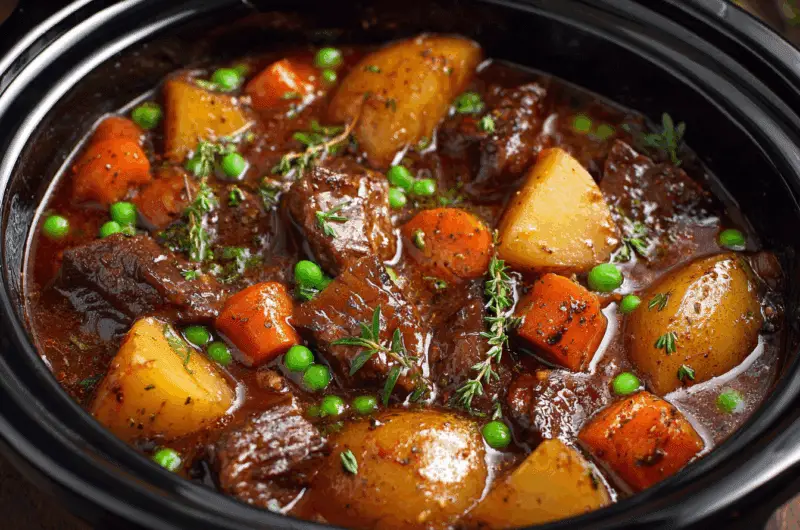
Slow Cooker Beef Stew With Rich Herb Gravy
Cuisine: American Recipes6
servings20
minutes8
minutes386
kcalThis hearty slow cooker beef stew features tender chunks of beef, golden potatoes, carrots, and a deeply satisfying herb-infused gravy that develops rich taste over hours of gentle simmering.
Ingredients
1 kg (2.2 pounds) beef chuck or braising steak, cut into 1-inch cubes
3 tablespoons plain flour (all-purpose flour)
2 tablespoons sunflower oil or vegetable oil
1 large onion, diced (about 150g)
3 garlic cloves, minced
600 ml (2.5 cups) beer (ale or bitter) or beef stock
3 large carrots, peeled and cut into 1-inch chunks
1/2 swede (rutabaga), peeled and cubed
2 beef stock cubes
3 tablespoons tomato puree
3 tablespoons Worcestershire sauce
1 teaspoon dried thyme
2 bay leaves
Salt and freshly ground black pepper to taste
1 cup frozen peas
1/4 cup cold water mixed with 3 tablespoons cornstarch (optional, for thickening)
Directions
- Trim any large pieces of fat from the beef cubes, leaving the marbled fat inside the meat. Place the beef in a large bowl and coat thoroughly with the plain flour, tossing until all pieces are evenly covered. Season generously with salt and freshly ground black pepper.
- Heat the sunflower oil in a large skillet or frying pan over medium-high heat until shimmering. Working in batches to avoid overcrowding, add the beef cubes and brown on all sides for about 45 seconds per side, creating a golden crust. Transfer the browned beef to your slow cooker as each batch finishes. Don’t worry about cooking the meat through at this stage.
- In the same pan with the heat reduced to medium, add the diced onion and cook for about 3 minutes until softened, stirring occasionally. Add the minced garlic and cook for another minute until fragrant. Use a wooden spoon to scrape up any browned bits stuck to the bottom of the pan, as these add incredible depth to your gravy.
- Transfer the onion and garlic mixture to the slow cooker with the beef. Add the beer (or beef stock if substituting), carrots, swede chunks, crumbled beef stock cubes, tomato puree, Worcestershire sauce, dried thyme, and bay leaves. Stir everything together well to combine, making sure the tomato puree is fully incorporated into the liquid.
- Cover the slow cooker with its lid and cook on LOW for 8 hours, or on HIGH for 5 to 6 hours if you’re short on time. The stew is ready when the beef is fork-tender and the vegetables are soft. Resist lifting the lid during cooking as this releases heat and extends the cooking time by about 15 minutes each time.
- During the last 15 minutes of cooking, stir in the frozen peas. If you’d like a thicker gravy, mix the cold water with cornstarch in a separate small bowl until completely smooth with no lumps remaining. Slowly pour this mixture into the stew while stirring gently, then leave uncovered for the final 15 minutes to allow it to thicken.
- Remove and discard the bay leaves before serving. For an extra luxurious finish, stir in 2 tablespoons of cold butter right at the end, which will give your gravy a silky, restaurant-quality texture. Taste and adjust seasoning with additional salt and pepper if needed.
- Ladle the hot stew into bowls and serve immediately with crusty bread, cornbread, or warm biscuits for soaking up the rich gravy. Leftovers can be stored in airtight containers in the refrigerator for up to 3 days or frozen for up to 3 months.
Notes
- If you don’t have time to brown the meat, you can skip this step and add the raw floured beef directly to the slow cooker. The stew will still be good but won’t have quite as much depth of taste.
- Beer can be replaced with an equal amount of beef stock plus 2 tablespoons of red wine vinegar for acidity. Red wine also works beautifully in place of beer.
- Use Yukon gold or red potatoes if adding potatoes, as russets will fall apart. Cut all vegetables to roughly the same size for even cooking.
- For oven cooking instead of slow cooker, use a covered dutch oven at 160°C (320°F) for 2-3 hours, adding extra liquid as needed.
- Frozen pre-chopped onions and jarred minced garlic are great time-saving shortcuts that work perfectly in this recipe.
Frequently asked questions
Q: Can I make this beef stew in a regular pot on the stove instead?
A: Absolutely. Follow the same browning steps, then add everything to a large pot or dutch oven and simmer covered over low heat for 5 to 6 hours, stirring occasionally. You’ll probably need to add an extra cup of beef stock since stovetop cooking evaporates more liquid than a covered slow cooker does.
Q: Why is my beef stew meat tough even after cooking all day?
A: This usually happens if you used a lean cut like sirloin instead of a tougher cut with connective tissue like chuck roast. It can also occur if you cooked on high heat which can make the meat seize up rather than becoming tender. Using the right cut and cooking low and slow are the keys to tender beef.
Q: Can I add potatoes right from the start with everything else?
A: Yes, potatoes can go in at the beginning as long as you’re using waxy varieties like Yukon gold or red potatoes cut into one-inch chunks. They’ll hold their shape through the long cooking time. Avoid russet potatoes which will completely break down and disappear into the gravy.
Q: How do I prevent my stew from being too watery?
A: Make sure you’re coating the beef in flour before browning, which helps thicken the liquid as it cooks. At the end, you can always add a cornstarch slurry as described in the recipe. Also avoid lifting the lid during cooking, which can cause condensation to drip back into the stew and thin it out.
