

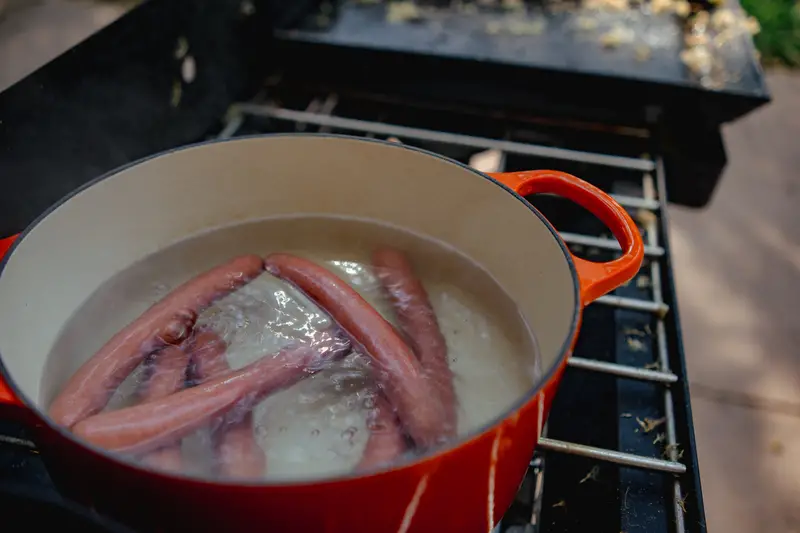
Most people either boil or grill their hot dogs, thinking those are the only two decent options. But boiling hot dogs might actually be one of the worst ways to cook them, leaving you with bland, spongy franks that smell up your whole house with that unmistakable hot dog water scent. The good news? There’s a method that gets you close to that grilled taste without firing up the grill or dealing with a pot of smelly water. It’s been hiding in plain sight in your kitchen all along, and once you try it, you’ll wonder why you ever bothered boiling hot dogs in the first place.
Boiling makes hot dogs taste like water
When you drop hot dogs into boiling water, they absorb moisture and lose whatever natural snap and texture they had. The result is a soft, almost mushy hot dog that doesn’t have much going for it besides being warm. Sure, it’s cooked through, but that’s about the only positive thing you can say about a boiled hot dog. The water leaches out some of the seasoning and natural juices, leaving you with a watered-down version of what a hot dog should be. Kids might not complain too much since they’re usually more interested in the ketchup and buns anyway, but adults tend to notice the difference pretty quickly.
Beyond the texture problem, boiling hot dogs just looks unappetizing. They come out of the pot looking pale and bloated, without any of that nice browning you get from other cooking methods. And let’s talk about that smell – hot dog water has a distinct odor that lingers in your kitchen for hours after you’ve finished eating. It’s not exactly the most pleasant cooking aroma to greet your family or guests. When you’ve got better options available that take about the same amount of time, why settle for a lackluster result that nobody really gets excited about eating?
Grilling isn’t always practical for weeknight dinners
Everyone loves a grilled hot dog with that smoky char and satisfying snap when you bite into it. The problem is that grilling requires you to actually go outside, fire up the grill, wait for it to heat up, cook the dogs, and then clean everything up afterward. That’s a lot of effort for a quick weeknight dinner when you’ve got hungry kids asking when food will be ready. During winter months, grilling becomes even less appealing when it’s cold, dark, or raining outside. You’re not going to trudge through snow just to grill a few hot dogs for dinner, no matter how good they taste.
The time factor matters too. From start to finish, grilling hot dogs can take 20 to 30 minutes when you factor in preheating and cleanup. That might not sound like much, but on a busy Tuesday evening when everyone needs to eat quickly and get on with homework or evening activities, it’s too long. Plus, not everyone has easy access to a grill, especially people living in apartments or condos with rules against outdoor grilling. For those situations, you need an indoor cooking method that delivers something better than those sad boiled hot dogs but doesn’t require specialized equipment or a ton of extra time.
Broiling hot dogs gives you almost-grilled results indoors
The secret method that changes everything is broiling. Your oven’s broiler uses intense heat from above to cook food quickly, similar to how a grill works but upside down. When you broil hot dogs, they get that nice browning and slight char on the outside while staying juicy inside. The high heat creates a bit of crispness on the exterior without drying them out, and you get a much more appealing look than what boiling produces. The whole process takes about four minutes once your broiler is preheated, which is actually faster than waiting for water to boil.
What makes broiling so effective is the direct, intense heat that mimics grilling. The hot dogs cook evenly all around when you turn them occasionally, and you can control exactly how much char you want by watching them through the oven window. They come out plump and juicy with a slightly crispy exterior that has actual texture instead of that spongy boiled consistency. While they might not have that exact smoky grill taste, the difference is small enough that most people won’t miss it, especially once the hot dogs are loaded up with toppings and tucked into buns.
Setting up your oven correctly makes all the difference
The key to successful broiling is getting your oven rack positioned right. You want the top rack moved to the highest position so the hot dogs sit close to the broiler element. This proximity to the heat source is what creates that nice browning and slight char. If your rack is too far away, the hot dogs will just slowly cook without getting that exterior crispness you’re after. Set your broiler to high and let it preheat for a few minutes while you prepare the hot dogs. Most broilers heat up pretty quickly, so this doesn’t add much time to your cooking process.
Line a baking sheet with aluminum foil before you start. This simple step makes cleanup incredibly easy since any drippings or char marks end up on the foil instead of your pan. You can just crumple up the foil and toss it when you’re done, leaving your baking sheet practically clean. The foil also reflects heat back up toward the hot dogs, helping them cook more evenly. Don’t skip this step unless you really enjoy scrubbing baked-on food off pans later. Taking 30 seconds to line your pan will save you several minutes of annoying cleanup work after dinner.
Making small cuts prevents hot dogs from bursting
Before you put hot dogs under the broiler, take a sharp knife and make a few shallow cuts along each one. These little slits give the hot dogs room to expand as they heat up without bursting open. When hot dogs burst, they lose juices and end up drier than they should be. The cuts don’t need to be deep at all – just barely break the surface of the casing. Three or four small diagonal cuts along the length of each hot dog works perfectly. This takes maybe 15 seconds per hot dog and makes a noticeable difference in the final result.
Those shallow cuts serve another purpose too. They create little pockets where the edges can get extra crispy and slightly charred, adding more texture and visual appeal to your finished hot dogs. Think of them as flavor zones where the heat can really work its magic. Some people worry that cutting hot dogs will dry them out, but as long as you keep the cuts shallow and don’t overcook them, they’ll stay plenty juicy inside. The key is monitoring them closely during those four minutes of cooking time so you catch them right when they’re perfectly done.
Turning them regularly ensures even browning all around
Once your hot dogs are under the broiler, you can’t just walk away and forget about them. Broilers cook fast and hot, which means food can go from perfectly done to burnt in less than a minute. You need to turn the hot dogs every minute or so to make sure all sides get evenly browned. Use tongs to roll them a quarter turn, checking the color as you go. You’re looking for a nice golden brown with some darker char marks here and there. The whole cooking time is only about four minutes total, so you’re really just making three or four quick turns while keeping an eye on things.
The turning process also lets you customize how each hot dog turns out. If someone in your family likes theirs less charred, you can pull those off a bit earlier. If another person wants extra crispy spots, leave theirs under the broiler for an additional 30 seconds or so. This level of control is harder to achieve with boiling, where all the hot dogs come out basically the same. With broiling, you’re actively involved in the cooking process, which means you can adjust things on the fly based on what you’re seeing. Just don’t get distracted by your phone or other tasks because broilers work fast.
Your kitchen stays relatively smell-free compared to boiling
One of the most underrated benefits of broiling hot dogs is how much better your kitchen smells afterward. Instead of that lingering hot dog water odor that seems to stick around for hours, broiling produces a smell more like you’ve been cooking on a grill. There’s a pleasant, slightly smoky aroma that actually makes people hungry rather than making them wrinkle their noses. The smell dissipates pretty quickly too, especially if you run your kitchen exhaust fan while cooking. Compare that to boiling, where you might find yourself opening windows and lighting candles to cover up the odor.
The cleanup also contributes to keeping your kitchen fresher. With boiling, you’ve got a pot of hot dog water to deal with, and pouring it down the drain releases another wave of that unpleasant smell. You also need to wash the pot, which means handling water that smells like hot dogs. With broiling, you just wait for the baking sheet to cool, toss the foil, and give the pan a quick rinse if needed. The whole process is cleaner and more pleasant from start to finish. Your kitchen returns to normal much faster, which matters when you’re cooking dinner on a weeknight and have other things to do.
The texture difference is immediately noticeable when eating
When you bite into a broiled hot dog, the first thing you notice is the exterior has some actual structure to it. There’s a slight resistance before your teeth break through to the juicy interior, similar to what you get with grilled hot dogs. That textural contrast between the outside and inside makes eating them more interesting and satisfying. Boiled hot dogs are soft all the way through with no variation in texture, which gets boring pretty quickly. The exterior on a broiled hot dog also holds up better to toppings and condiments without getting soggy immediately.
The inside stays plump and juicy because the high heat of the broiler cooks the hot dogs quickly, sealing in moisture rather than allowing it to leach out into boiling water. You get the full flavor of whatever hot dog brand you bought instead of a watered-down version. Kids often prefer broiled hot dogs once they try them because of the improved texture, even if they can’t quite articulate why they taste better. Adults definitely notice and appreciate the difference, especially anyone who remembers eating disappointing boiled hot dogs as their only non-grilled option for years before discovering this method.
You can cook other foods at the same time
Another advantage of using your broiler is that you can toast buns at the same time you’re finishing up the hot dogs. During the last minute of cooking, arrange your buns on another part of the baking sheet or on a separate rack below. They’ll get nicely toasted while the hot dogs finish cooking, and everything comes out hot and ready to assemble at the same time. This coordination is impossible with boiling, where your buns require a completely separate cooking method and timing. The ability to do multiple things at once saves time and means you’re serving everything at its best temperature.
Some people even broil vegetables or other sides alongside their hot dogs, maximizing the use of that hot broiler. Bell peppers and onions work especially well, giving you ready-made toppings that are cooked to perfection. Just cut them into strips, toss with a little oil, and spread them on the same foil-lined pan with the hot dogs. They’ll get slightly charred and caramelized, adding another dimension to your hot dog dinner. This kind of efficient cooking is part of what makes broiling so practical for busy weeknights when you need to get a complete meal on the table quickly without using multiple pots and pans.
Switching from boiling to broiling hot dogs might seem like a small change, but it makes a real difference in how much you enjoy eating them. The method is just as quick and easy as boiling, requires no special equipment beyond what you already have, and produces hot dogs that actually look and taste good. Once you try it, boiling hot dogs will feel like settling for second best when you could have something much better with the same amount of effort.
