

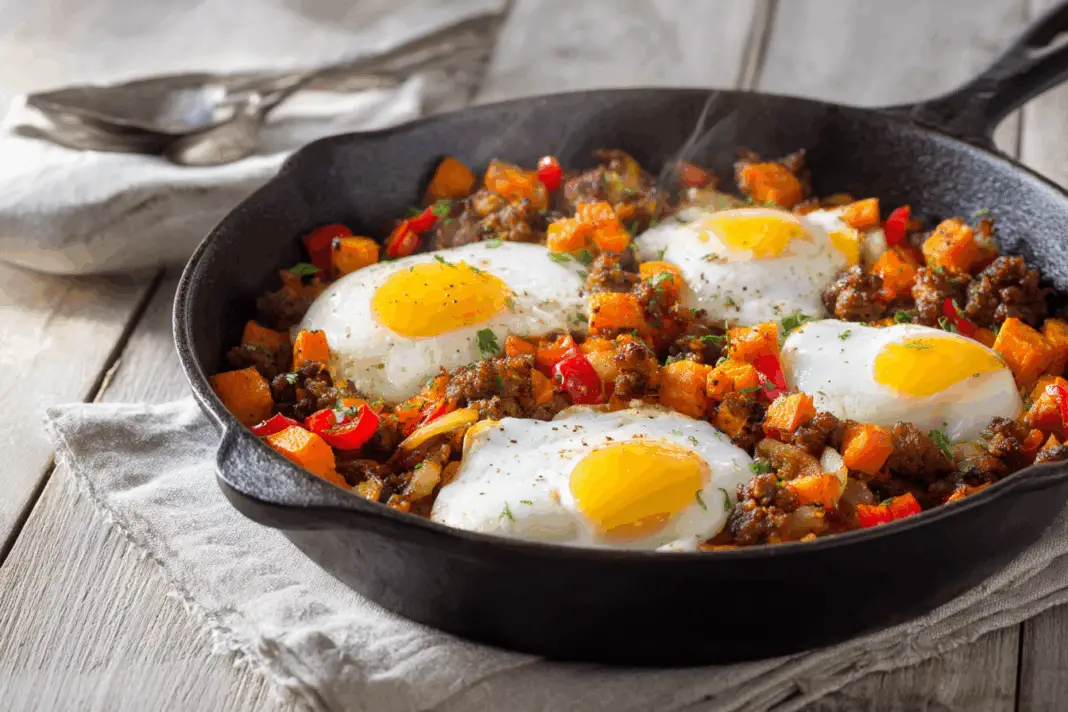
Most mornings feel like a race against the clock, and breakfast often ends up being a granola bar eaten in the car. But what if you could make something that tastes amazing, fills you up for hours, and comes together in one pan? This sweet potato breakfast skillet with sausage hits all those marks. It’s become a weekend favorite in my house because it’s easy enough to throw together on a lazy Sunday morning, but hearty enough that nobody’s asking what’s for lunch an hour later. The best part is that everything cooks in a single cast iron skillet, so cleanup takes about two minutes.
Why sweet potatoes work better than regular potatoes
Regular hash browns are fine, but sweet potatoes bring something different to the table. They get these crispy, caramelized edges when you cook them in a hot skillet with a little coconut oil or butter. The inside stays soft and almost creamy, which makes a perfect contrast to the crispy sausage. Sweet potatoes also don’t turn mushy as easily as regular potatoes do, so even if you’re making this ahead for meal prep, they hold up really well in the fridge.
Another thing I’ve noticed is that sweet potatoes cook faster than you’d think. If you chop them into small, half-inch pieces, they’re tender in about ten minutes with the lid on. That’s way less time than waiting for regular potatoes to cook through. Plus, they add a slightly sweet note that balances out the savory sausage and onions perfectly. I used to think sweet potatoes were only for Thanksgiving casseroles, but now they’re my go-to for breakfast.
Picking the right sausage makes all the difference
Not all sausage is created equal, especially when you’re trying to avoid added sugar or weird preservatives. I usually grab bulk pork breakfast sausage from the butcher counter, or sometimes I’ll use Italian sausage if I want more herbs in the mix. Ground pork sausage from places like US Wellness Meats is a solid option if you’re doing Whole30 or just want cleaner ingredients. Turkey sausage works too, though it doesn’t get quite as crispy.
The key is to brown the sausage first, then set it aside while you cook everything else. This way, the sausage renders out some fat that you can use to cook the vegetables, which adds tons of richness. If your sausage is really lean, you might need to add an extra tablespoon of oil to the pan. I’ve also tried using ground beef in a pinch, and it worked fine, though it doesn’t have the same seasoning punch that sausage brings.
How to get the vegetables just right
The vegetables in this skillet add color and texture, but they also need to be cooked properly so they’re not either raw or mushy. I start with onions because they take a bit longer to soften and turn translucent. Once they’re going, I add bell peppers, which cook quickly and add a nice crunch if you don’t overdo it. Brussels sprouts are another great addition if you have them on hand. Just quarter them and toss them in with the sweet potatoes.
One mistake I made early on was crowding the pan. If you pile everything in at once, the vegetables steam instead of getting those nice browned edges. Cook the sweet potatoes separately if you need to, then combine everything at the end. I also like to add a pinch of rosemary or smoked paprika to the sweet potatoes while they’re cooking. It makes the whole kitchen smell amazing and adds another layer of taste without extra effort.
Adding eggs turns this into a complete meal
Once everything is cooked and combined in the skillet, you can crack a few eggs right on top. Make little wells in the hash so the eggs have a spot to sit, then either finish them in a 425-degree oven for about ten minutes or cover the pan and cook them on the stovetop over medium-low heat. The oven method is easier because you don’t have to babysit it, and you’re less likely to burn the bottom of the hash while waiting for the eggs to set.
If you’re meal prepping, you can skip the eggs when you make the hash, then fry one up fresh each morning and put it on top. I’ve also served this with scrambled eggs on the side, which works great if you’re feeding a crowd and don’t want to worry about everyone’s egg preferences. Either way, having protein from both the sausage and eggs means you’re not going to be hungry again in an hour. It’s a meal that actually sticks with you.
Using a cast iron skillet really matters
I’ve made this recipe in a regular nonstick pan, and it’s fine, but it doesn’t compare to using cast iron. Cast iron gets hotter and holds heat better, which means you get those crispy, caramelized bits on the sweet potatoes and sausage. Plus, you can move it straight from the stovetop to the oven without worrying about melting any handles. If you don’t have a cast iron skillet yet, it’s worth picking one up. They last forever and get better the more you use them.
Another benefit is that cast iron skillets are naturally nonstick once they’re seasoned, so you don’t need to use a ton of oil. A tablespoon or two of coconut oil or ghee is usually enough to keep everything from sticking. And cleanup is surprisingly easy—just wipe it out with a paper towel while it’s still warm, and you’re done. I’ve been using the same Lodge skillet for years, and it’s still my favorite pan in the kitchen.
Meal prep tips for busy mornings
This sweet potato hash is perfect for making ahead. I usually cook a big batch on Sunday, then portion it out into containers for the week. It reheats really well in the microwave or in a skillet on the stovetop. The vegetables hold their texture better than you’d expect, and the sausage tastes just as good the second time around. If you’re planning to freeze it, just skip the eggs and add them fresh when you reheat.
One thing I’ve learned is to slightly undercook the sweet potatoes if you’re doing meal prep. They’ll soften a bit more when you reheat them, so leaving them just a touch firm helps them stay intact. I also like to store the hash in single-serving containers so I can grab one and go in the morning. Add a fried egg on top, maybe some hot sauce or green onions, and you’ve got a breakfast that feels like you actually tried, even on a Wednesday morning when you’re running late.
Swapping ingredients based on what you have
One of the best things about this recipe is how flexible it is. Don’t have bell peppers? Use zucchini or mushrooms instead. Out of sweet potatoes? Regular russet potatoes work fine, though they’ll take a bit longer to cook. I’ve even made this with leftover roasted vegetables from dinner the night before. Just toss them in with the sausage and warm everything up together. It’s a great way to use up odds and ends from the fridge.
You can also play around with the seasonings. Sometimes I’ll add a pinch of cumin and chili powder for a Southwestern vibe, or garlic powder and Italian herbs if I’m using Italian sausage. A little red pepper flakes adds a nice kick if you like things spicy. The base recipe is simple enough that it can go in whatever direction you want, depending on what you’re in the mood for or what you already have in the pantry.
Serving this for brunch or dinner
While this is obviously a breakfast dish, it’s also great for brunch when you have people over. You can make it in a big skillet and serve it family-style, letting everyone scoop out their own portions. Set out toppings like shredded cheese, hot sauce, avocado slices, and chopped green onions so people can customize their plates. It’s casual but still feels like you put in effort, which is the sweet spot for hosting.
I’ve also served this for dinner more times than I can count. Breakfast for dinner is a thing in our house, especially when I don’t feel like making something complicated. Pair it with a simple side salad or some fresh fruit, and you’ve got a complete meal. It’s hearty enough that nobody complains they’re still hungry, and it’s different enough from regular dinner food that it feels like a treat. Plus, it takes about thirty minutes from start to finish, which beats ordering takeout any day.
Why this recipe keeps showing up in my rotation
There are recipes you make once and never think about again, and then there are recipes that become part of your regular lineup. This sweet potato breakfast skillet falls into the second category. It’s easy enough that I don’t need to look at the recipe anymore, but it never feels boring. The combination of sweet and savory, crispy and tender, just works. And the fact that it all comes together in one pan means I’m not stuck doing dishes for twenty minutes afterward.
Another reason I keep coming back to this is that it’s one of those meals that feels like you’re eating something special, even though it’s really simple. The house smells amazing while it’s cooking, and when you set that skillet on the table with the eggs baked right in, it looks impressive. Whether you’re making it for yourself on a Sunday morning or serving it to a group, it’s the kind of recipe that just makes people happy. And honestly, that’s all you really need from a breakfast.
If you’re tired of the same old breakfast routine, this sweet potato skillet is worth trying. It’s hearty, satisfying, and comes together without a lot of fuss. You can customize it however you want, make it ahead for the week, or serve it fresh for a crowd. Either way, it’s the kind of meal that makes mornings feel a little less rushed and a lot more enjoyable.
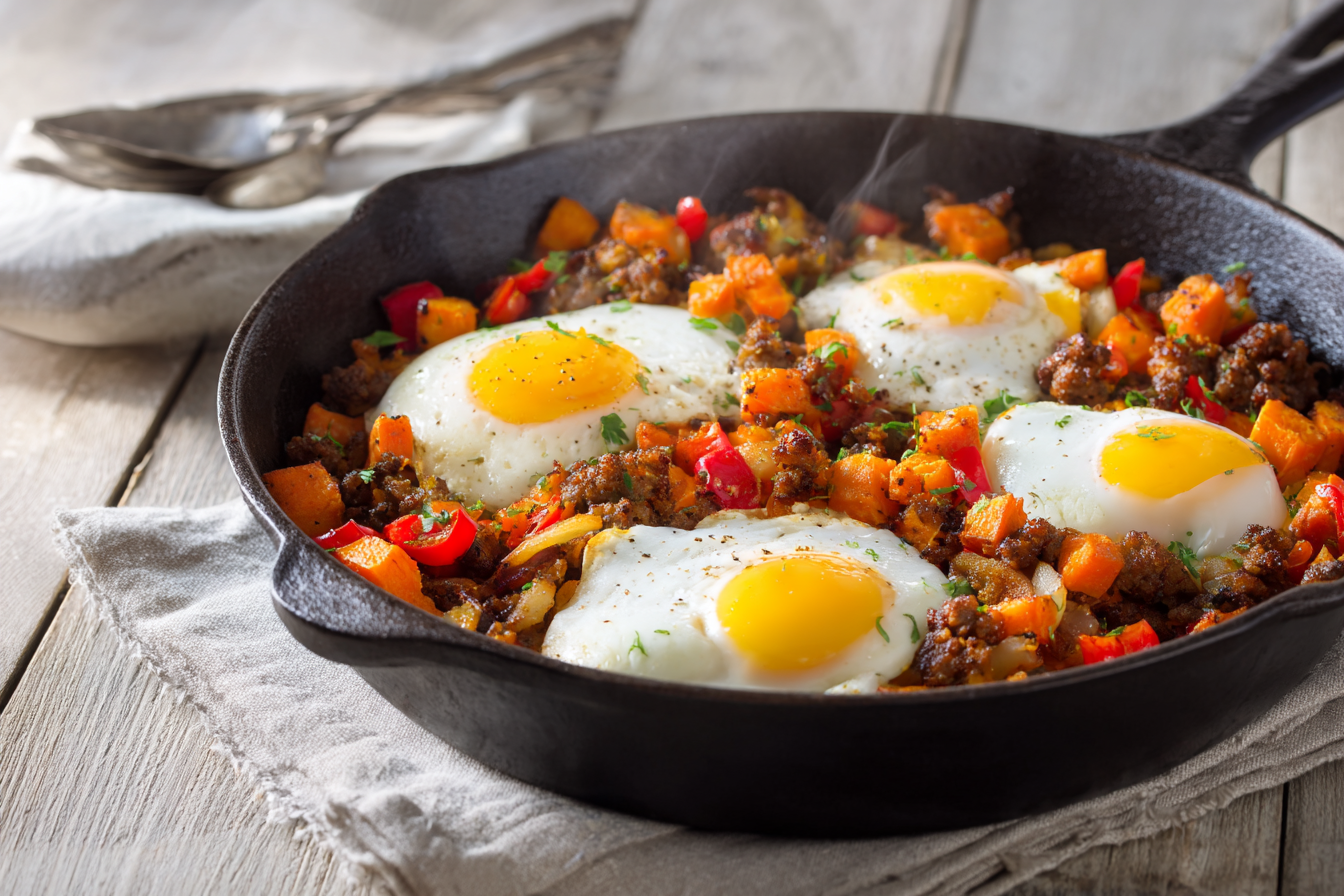
Sweet Potato Breakfast Skillet with Sausage and Greens
Cuisine: American4
servings10
minutes25
minutes474
kcalA hearty one-pan breakfast loaded with crispy sweet potatoes, savory sausage, sautéed vegetables, and baked eggs that’s perfect any time of day.
Ingredients
1 lb bulk pork breakfast sausage or Italian sausage
2 medium sweet potatoes, peeled and chopped into 1/2-inch pieces
1 medium onion, chopped
1 medium bell pepper, any color, diced
2-3 tablespoons coconut oil or ghee, divided
1/2 teaspoon dried rosemary or smoked paprika
Salt and black pepper to taste
4 large eggs
Chopped green onions or fresh herbs for garnish (optional)
Directions
- Preheat your oven to 425 degrees F. Heat a large cast iron skillet over medium-high heat and add the bulk sausage, breaking it up with a wooden spoon as it cooks. Brown the sausage completely, stirring occasionally, until no pink remains and it’s nicely browned, about 8-10 minutes. Transfer the cooked sausage to a plate lined with paper towels and set aside.
- Do not wipe out the skillet. Reduce heat to medium and add 1 tablespoon of coconut oil to the remaining sausage fat. Add the chopped onions and sauté until they become translucent and fragrant, about 4-5 minutes. Transfer the onions to the plate with the sausage.
- Add another tablespoon of coconut oil to the skillet and increase heat to medium-high. Add the chopped sweet potatoes and toss to coat them in the oil. Sprinkle with rosemary or smoked paprika, salt, and pepper. Cover the skillet with a lid and cook for about 5 minutes, then uncover and continue cooking, stirring occasionally, until the sweet potatoes are tender and starting to brown on the edges, about 10 minutes total. Add more oil if needed to prevent sticking.
- Once the sweet potatoes are tender, add the diced bell pepper to the skillet and cook for another 2-3 minutes until slightly softened. Return the cooked sausage and onions to the skillet and stir everything together until well combined and heated through.
- Use a spoon to create four small wells or indentations in the hash mixture, spacing them evenly around the skillet. Carefully crack one egg into each well, trying to keep the yolks intact. Season the eggs with a pinch of salt and pepper.
- Transfer the entire skillet to the preheated 425-degree oven. Bake for 10-15 minutes, depending on how runny you like your yolks. The egg whites should be set and the yolks cooked to your preference. Alternatively, you can cover the skillet and cook on the stovetop over medium-low heat until eggs are done, watching carefully to avoid burning the bottom.
- Remove the skillet from the oven using oven mitts (the handle will be extremely hot). Garnish with chopped green onions or fresh herbs if desired. Serve immediately, scooping portions directly from the skillet onto plates.
- Store any leftovers in an airtight container in the refrigerator for up to 3 days. Reheat in the microwave or in a skillet on the stovetop, adding a freshly fried egg if desired.
Notes
- For a Whole30-compliant version, make sure your sausage contains no added sugar. Check labels carefully or make your own using ground pork and seasonings.
- If your sausage is very lean, you may need an extra tablespoon of cooking fat to prevent the vegetables from sticking.
- For meal prep, cook the hash without the eggs and store in portions. Add a fresh fried egg when reheating for best results.
- Brussels sprouts, zucchini, or mushrooms make great vegetable additions or substitutions depending on what you have available.
- Slightly undercook the sweet potatoes if making ahead, as they’ll soften more when reheated.
Frequently asked questions
Q: Can I make this without eggs?
A: Absolutely. The hash is delicious on its own and makes a great side dish. You can always add eggs later when you reheat individual portions, or skip them entirely if eggs aren’t your thing.
Q: What’s the best way to cut sweet potatoes for this recipe?
A: Aim for uniform half-inch pieces so they cook evenly. Peel them first, then cut into planks, then into strips, then into cubes. Keeping them roughly the same size means they’ll all be done at the same time.
Q: Can I use turkey sausage instead of pork?
A: Yes, turkey sausage works fine, though it won’t render as much fat, so you’ll need to add a bit more oil to the pan. It also doesn’t get quite as crispy, but the taste is still good.
Q: How do I prevent the bottom from burning when cooking the eggs on the stovetop?
A: Lower the heat to medium-low and make sure to cover the pan with a lid. This traps heat and helps the eggs cook through without scorching the hash underneath. Check every few minutes to be safe.
