

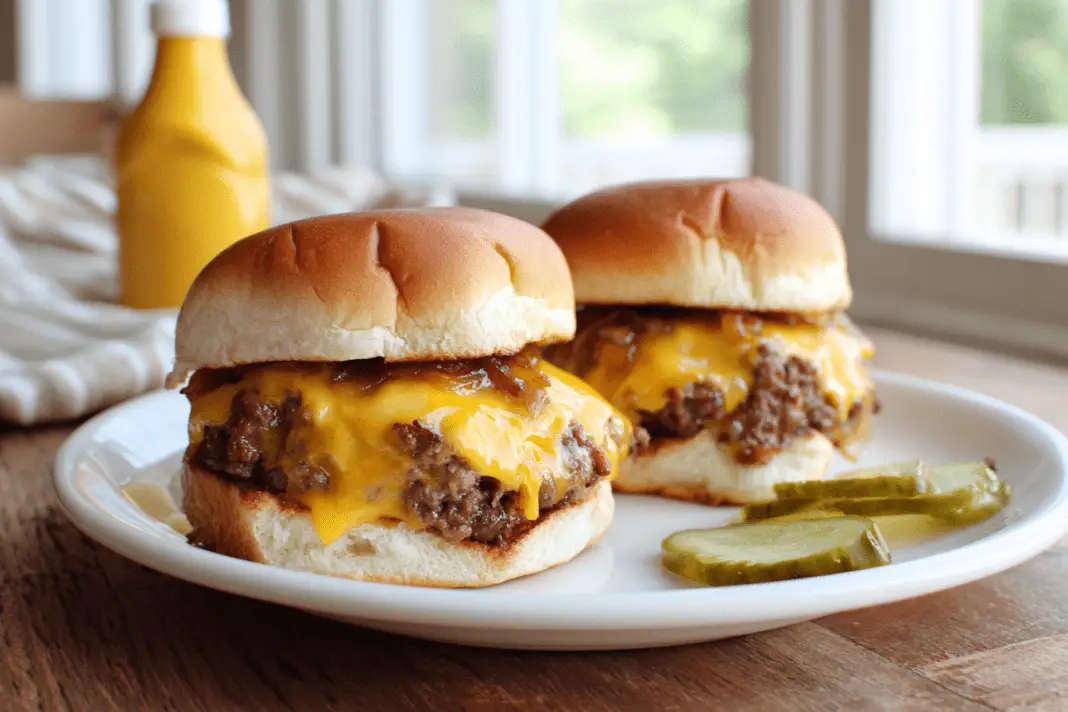
Somewhere between the 1950s and now, we completely lost the plot on hamburgers. We piled on the mix-ins, tripled the portion size, and turned a simple, satisfying meal into something that requires two hands and a stack of napkins. The original American burger — the one served at drive-ins and diners and cooked on cast iron skillets in kitchens across the country — was a thin, crispy-edged patty made from four ingredients. That’s not minimalism for the sake of being trendy. That’s just how people cooked.
I’ve been making these 1950s-style smashburgers at home for the past year, and I’m not going back. They’re faster, cheaper, and — I’ll say it — better than the overstuffed half-pounders most of us grew up eating. Here’s how to make them and why they work so well.
What a 1950s Burger Actually Looked Like
According to CDC data, the average hamburger in the 1950s weighed just 3.9 ounces. That’s roughly a third the size of what you’d get at most restaurants today, where burgers average around 12 ounces. To put that in perspective, a 1950s burger was barely bigger than a White Castle slider, which clocks in at 2.2 ounces.
The patties were thin. Really thin. A cook would take a small ball of ground beef — two to three ounces — and press it flat on a screaming-hot griddle or skillet. The edges got crispy, almost lacy, while the center stayed beefy and juicy. That technique is what everyone now calls a “smashburger,” but there’s nothing new about it. Diners and home cooks were doing this over 70 years ago.
The buns were soft and plain — simple white rolls, nothing seeded or brioche. The whole thing was three or four inches across. You could eat it in a few bites. If you were still hungry, you ordered a second one. That was the system, and it worked.
Four Ingredients and Nothing Else
Here’s what kills me about modern burger recipes: the ingredient lists. Eggs, breadcrumbs, Worcestershire sauce, garlic powder, onion powder, sometimes even soy sauce or mustard mixed into the meat. I’ve seen recipes with ten add-ins before you even shape a patty. And for what? You end up with a meatloaf sandwich.
A typical 1950s homemade burger called for ground chuck, butter, onions, and maybe a pinch of salt and pepper. That’s it. No binders. No fillers. No fancy seasoning blends. The beef was the whole point, and people trusted it to carry the flavor on its own. Cookbooks from that era kept things stripped down and straightforward.
The standard technique was to heat butter or margarine in a frying pan, then add the patties. Onions — sliced thin — went right on top of the meat as it cooked so they’d caramelize in the beef fat. That’s your seasoning. That’s your topping. You didn’t need twelve condiments when the burger itself tasted like something.
Why Ground Chuck Matters
Don’t use lean ground beef for this. I know the 90/10 stuff is sitting right there at the grocery store looking responsible and sensible, but it will let you down. Ground chuck — the 80/20 blend — is what you want. That’s what home cooks in the 1950s used, and the fat content is what gives you those crispy edges and that rich, beefy flavor.
When you smash a ball of 80/20 chuck on a hot surface, the fat renders out quickly and fries the exterior of the patty. That’s the Maillard reaction doing its thing — the same browning process that makes a good steak taste so good. With lean beef, you just get a dry, gray disc. Nobody wants that.
You can find ground chuck at any grocery store. Walmart, Kroger, Publix, Safeway — it’s all the same. Just look for 80/20 on the label. If you want to get fancy, ask the butcher counter to grind some fresh, but it’s not required. The pre-packaged stuff works perfectly fine here.
The Smash Technique That Makes It Work
The key to this whole recipe is heat. Your skillet needs to be ripping hot — I’m talking medium-high to high heat, preheated for at least five minutes. Cast iron is ideal, but a heavy stainless steel pan will work too. Nonstick is not what you want here because you need that direct contact with the hot metal to build a crust.
Roll your ground chuck into loose balls — about 2.5 ounces each — and set them on the hot, buttered skillet. Then press them flat with a sturdy spatula or a burger press. You want them thin, maybe a quarter inch thick. Press once and leave them alone. Don’t fidget with them. Don’t lift them to check. Just let them cook for about two minutes until the edges are brown and crispy.
Flip once. Add your cheese if you’re using it. Cook for another minute or two. Done. The whole process takes under five minutes per batch.
Getting the Onions Right
In the 1950s, caramelized onions weren’t a gourmet topping — they were standard procedure. You can do them two ways, and both are correct.
The classic method is to lay thin onion slices directly on top of each patty right after you smash it. As the burger cooks, the onions steam and soften in the rising heat and beef fat. When you flip, the onions hit the hot pan and get some color. They end up jammy and sweet and practically melted into the meat.
The other way is to cook sliced onions separately in butter in the same pan before you start the burgers. Let them go low and slow for about 15 minutes until they’re golden and soft. Set them aside and cook your patties in the onion-flavored butter that’s left behind. Both methods are good. The first one is faster and more authentic to what diner cooks were actually doing.
Common Mistakes to Avoid
The biggest mistake people make with smashburgers is using too much meat. If you’re rolling four- or five-ounce balls, your patties will be too thick after smashing and you won’t get that crispy edge-to-meat ratio that makes these so good. Keep it to 2.5 ounces. I know it looks small. Trust the process.
The second mistake is not getting the pan hot enough. If you put the meat down and don’t hear an aggressive sizzle, pull it off and wait. A lukewarm pan will steam the beef instead of searing it, and you’ll end up with a sad, soggy patty.
Third: stop mixing stuff into the meat. No eggs. No breadcrumbs. No garlic powder. Season the outside of the patty with salt and pepper right before it hits the pan. That’s all it needs. The moment you start adding binders, you’re making meatloaf, not a burger.
Fourth: don’t press down on the patty after the initial smash. That first press is the whole point — maximum surface contact with the hot skillet. But if you keep pressing while it cooks, you’re just squeezing out all the juice. Smash once, then leave it.
Serving It the Right Way
Plain soft white buns. That’s what they used, and that’s what works best. Martin’s potato rolls are my go-to — they’re soft, slightly sweet, and just the right size for a thin patty. You can also use any store-brand hamburger bun, just avoid anything too thick or crusty. The bun should be a vehicle, not the main event.
Toast the buns in the same skillet you cooked the burgers in. Let them soak up some of that butter and beef fat for about 30 seconds. It makes a huge difference.
For toppings, keep it simple: ketchup, mustard, pickles, and those onions. All condiments like these were part of the standard burger during its golden age in the 1940s and 1950s. American cheese is the right call here — it melts fast and gets gooey on a hot patty in seconds. A thick slice of cheddar won’t melt in time.
If you’re still hungry after one, make another. That was the whole idea. Two thin patties will cost you about five ounces of beef total, which is still less than half of what most restaurants put in a single burger today. You’ll probably feel more satisfied, too, because you’re getting twice the crispy crust and twice the toppings.
Why This Style Deserves a Comeback
There’s something genuinely appealing about cooking this way. It’s fast — dinner is ready in under 20 minutes. It’s cheap — a pound of ground chuck gives you six patties. And it just tastes better than a thick, oversized burger that’s charred on the outside and gray in the middle.
The 1950s had a lot of things wrong, but the hamburger wasn’t one of them. Those cooks understood that a burger doesn’t need to be complicated. Beef, heat, butter, onions. A soft bun. A few pickles. That’s the whole formula, and after 70 years, it still holds up.
Frequently Asked Questions
Q: Can I use ground beef that isn’t 80/20?
A: You can, but the results won’t be as good. Leaner blends like 90/10 don’t have enough fat to create those crispy, lacy edges that define a smashburger. The fat is what fries the exterior of the patty. If all you have is lean beef, add a little extra butter to the pan to compensate, but 80/20 ground chuck is really what you should aim for.
Q: Do I need a special burger press to make these?
A: No. A sturdy flat spatula works just fine — press the ball of meat down firmly and hold for a few seconds. Some people use a second heavy pan or a sheet of parchment paper under the spatula so the meat doesn’t stick. In the 1950s there was a gadget called the Bun-Burger Patty Maker that people used, but it’s not necessary.
Q: Why are smashburgers better than thick burgers?
A: It comes down to surface area. A thin patty has more of its surface in contact with the hot skillet, which means more browning, more crust, and more flavor. Thick patties can have a nice sear on the outside but often end up dry or unevenly cooked in the center. Thin patties cook evenly in under four minutes.
Q: How many patties can I cook at once?
A: That depends on the size of your skillet. In a standard 12-inch cast iron pan, you can comfortably fit three to four smashburger patties at a time without crowding. If you pack too many in, the temperature drops and you’ll steam the meat instead of searing it. Work in batches and keep the heat high between rounds.
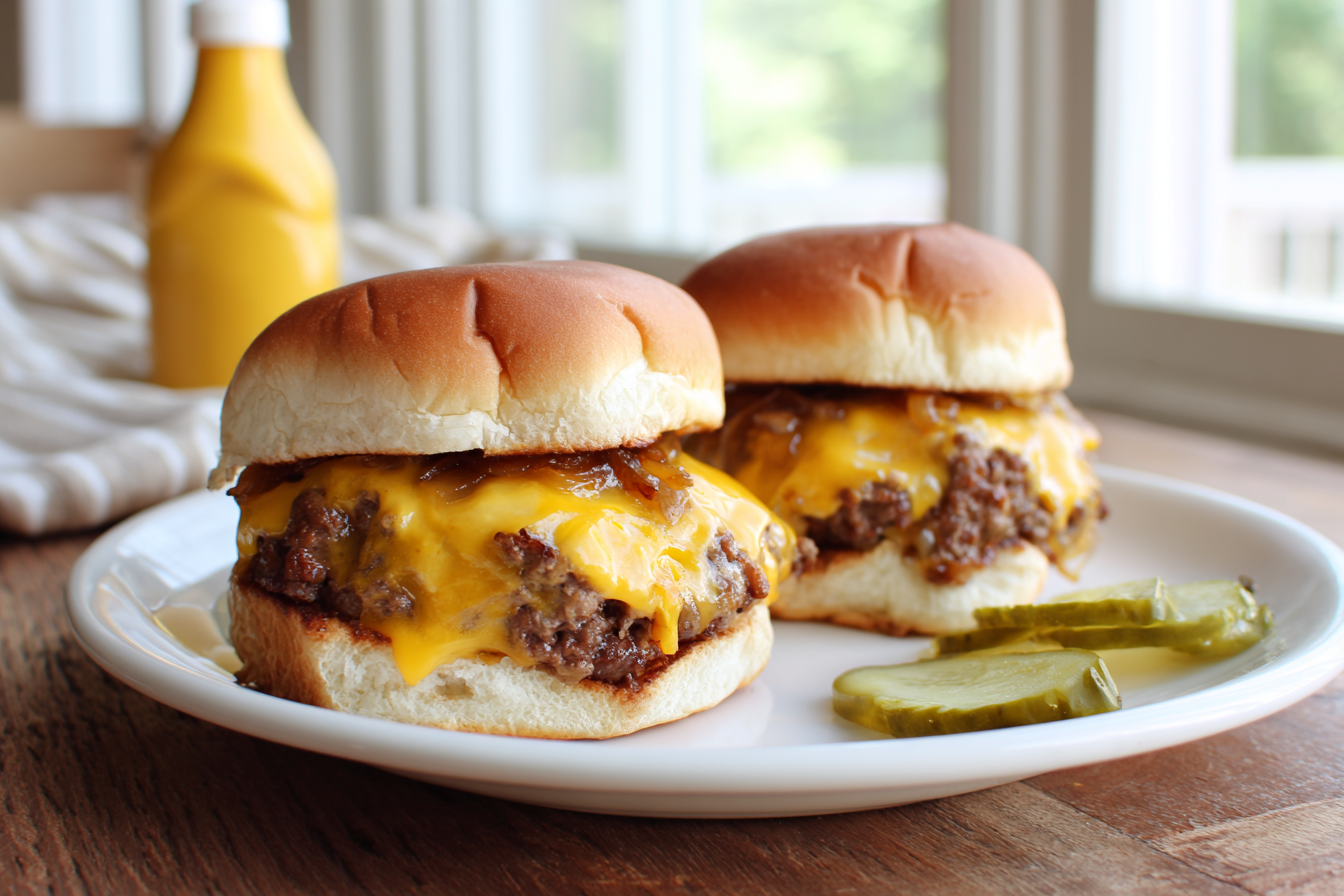
1950s-Style Smashburgers
Cuisine: American4
servings10
minutes10
minutes350
kcalThin, crispy-edged burgers made the way they did it in the 1950s — just four ingredients and five minutes on a hot skillet.
Ingredients
1 pound ground chuck (80/20)
2 tablespoons unsalted butter
1 medium yellow onion, thinly sliced
Kosher salt to taste
Black pepper to taste
4 slices American cheese
4 soft white hamburger buns (Martin’s potato rolls recommended)
Ketchup for serving
Yellow mustard and dill pickles for serving
Directions
- Divide the ground chuck into four equal portions, about 2.5 ounces each. Gently roll each portion into a loose ball — don’t pack them tight or overwork the meat. Set them on a plate and let them come to room temperature for about five minutes.
- Place a cast iron skillet over medium-high to high heat and let it preheat for at least five minutes. You want the pan ripping hot before any food touches it. Add one tablespoon of butter and let it melt and start to foam.
- Place two beef balls on the skillet, leaving a few inches between them. Using a sturdy flat spatula, press each ball down firmly until it’s about a quarter inch thick. Hold the press for about five seconds to ensure maximum contact with the hot surface.
- Immediately place a few thin slices of onion on top of each smashed patty. Season the top with a pinch of kosher salt and black pepper. Let the patties cook undisturbed for about two minutes until the edges are browned and crispy.
- Flip each patty with the onions now underneath against the hot skillet. Place a slice of American cheese on top of each patty immediately after flipping. Cook for another one to two minutes until the cheese is melted and the bottom has a good sear.
- Transfer the finished patties to a plate and repeat the process with the remaining two beef balls, adding the second tablespoon of butter to the skillet before starting the next batch. Keep the heat high between batches.
- While the skillet is still hot, place the hamburger bun halves cut-side down in the pan for about 30 seconds. Let them toast in the residual butter and beef fat until they’re golden and slightly crispy on the inside.
- Assemble the burgers by placing each patty on a toasted bun. Add ketchup, yellow mustard, and pickles. Serve immediately while the cheese is still gooey and the bun is warm.
Notes
- For a double smashburger, make eight smaller balls at about 2 ounces each and stack two patties per bun. This gives you even more crispy crust per bite and is still less meat than a typical modern restaurant burger.
- Do not use nonstick pans for this recipe. You need the direct contact with cast iron or stainless steel to get a proper sear and crispy edges. Nonstick coatings prevent the kind of browning that makes these burgers work.
- If your patties stick when you try to flip them, they’re not ready yet. Give them another 30 seconds and they’ll release on their own once the crust has fully formed.
