

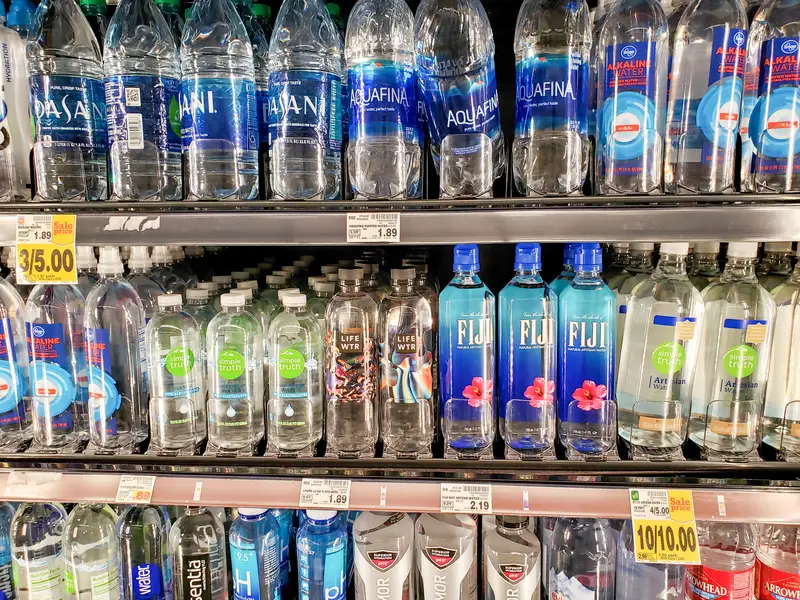
Most people assume that bottled water is cleaner and safer than what comes out of the tap. You pay extra for the convenience and the peace of mind, right? Well, recent recalls and testing results show that some popular bottled water brands have tested positive for various types of bacteria. While not all bacteria are dangerous, finding any contamination in something you’re paying good money for is definitely concerning. Some of these recalls involve thousands of cases, and you might have one sitting in your fridge right now without even knowing it.
Berkeley Springs water tested positive for coliforms
Berkeley Club Beverages found itself in hot water after testing showed coliforms in their products. The company initially recalled over 151,000 bottles, but later said this was a huge mistake by the FDA. The actual number was only 1,034 bottles, which they mostly recovered and destroyed. These bacteria show up in soil, plants, and the digestive tracts of animals and humans. They don’t usually make you sick on their own, but they can signal that other nasty stuff might be lurking in the water. The FDA gave this recall a Class III rating, which is the least serious level.
The affected bottles came in one-gallon and five-gallon sizes labeled as “Berkeley Springs Water Purified” or “Berkeley Springs Water Distilled.” If you bought water from this brand in Maryland, Virginia, or West Virginia, you should check the product codes on your bottles. The codes to look for are 090326, 090426, 090526, and 090626. Even though no illnesses were reported from drinking this water, the company suggests boiling it for at least one minute before drinking or just tossing it out altogether. Most of the contaminated bottles never made it to store shelves anyway.
Fiji Water had manganese and bacterial issues
Even fancy water from tropical islands isn’t immune to contamination problems. Fiji Natural Artesian Water recalled more than 78,500 cases of their 500 mL bottles back in March after company testing found elevated manganese levels and three types of bacteria. The good news is that the bacteria they found were harmless varieties that don’t cause disease. The specific bottles affected had a case code of 6 32565 00004 3 and a bottle code of 6 32565 00001 2. These bottles were sold throughout Washington state and across the entire country through online sales, so they could have ended up anywhere.
Fiji Water worked quickly to resolve the problem and got their product back on shelves pretty fast. The FDA classified this as a Class III recall in late May, meaning it wasn’t likely to cause health problems. Even though the bacteria found were nonpathogenic and nonharmful according to company spokespeople, finding anything unexpected in bottled water is still unsettling. The recall has been resolved and Fiji Water is available for purchase again, though the FDA website hasn’t been updated to reflect this yet. If you’re a fan of this brand, you can buy it without worry now.
Waiakea Hawaiian water had floating particles
Nothing ruins your trust in bottled water quite like seeing things floating around inside. Waiakea Hawaiian Volcanic Water faced this exact problem when customers started complaining about mystery particles floating in their bottles. The company recalled more than 3,800 cases of their 1-liter bottles with codes WB123275 and WB123276 back in November 2023. These bottles were distributed across Pennsylvania, Maryland, New Jersey, Michigan, Texas, Florida, North Carolina, Georgia, and Colorado. The FDA never identified what those floating particles actually were, which is pretty concerning when you think about it.
This recall got a Class II classification from the FDA in April, which is more serious than Class III. A Class II means there could be temporary or medically reversible health problems from exposure to the product. The fact that visible particles were floating around in what’s supposed to be pure water from a deep well source is definitely troubling. The company markets its water as naturally alkaline with electrolytes, sourced from a volcanic well in Hawaii. When people pay premium prices for supposedly pristine water, finding mysterious floaters isn’t exactly what they signed up for. Check your bottles if you bought this brand last year.
Real Water caused actual liver failure
This is where things get seriously scary. Real Alkalized Water received the most severe classification possible from the FDA after people who drank it developed acute liver failure. The FDA issued a Class I recall in May 2021, which means there’s a reasonable chance the product could cause serious health problems or death. Cases of nonviral hepatitis started showing up in Las Vegas in November 2020, and investigators eventually traced it back to this water brand. A lawsuit claimed the water contained hydrazine, a toxic chemical that damaged people’s livers. A court ordered the company to pay $3 billion in damages.
The truly shocking part is that this recalled water kept getting sold even after the recall was issued. As recently as last September, you could still find it at a wine store in Beverly Hills and order it online from certain retailers. Real Water voluntarily recalled all products in their entire brand back in 2021 and shut down operations until they could meet FDA standards. They still haven’t reopened. The company website that was listed in the recall notice now goes to a foreign gambling site. Multiple investigations by the FDA and Department of Justice followed, and some lawsuits are still ongoing years later. This is by far the most dangerous bottled water situation in recent history.
Niagara Bottling recalled 14 different brands
Sometimes one contamination problem can affect multiple brands because many different store brands come from the same bottling company. Niagara Bottling LLC had to recall 14 different spring water brands after one of their water sources tested positive for E. coli bacteria. The recall affected spring water from their Pennsylvania facilities in Allentown and Hamburg. The contaminated source was in Auburn, Pennsylvania, and the company stopped using it immediately. Products made between June 10th at 3 a.m. and June 18th at 8 p.m. were included in the recall.
The affected brands included Acadia, Big Y, Best Yet, Western Beef Blue, Superchill, 7-Eleven, Niagara, Pricerite, Wegmans, Morning Fresh, Shaws, and Nature’s Place. Several stores including Acme, 7-Eleven, Wegmans, and ShopRite also recalled water bottles they sold. You can identify affected products by looking at the codes on the bottles. Codes starting with the letter A came from Allentown, while codes starting with F came from Hamburg. The positive test result showed the water source was contaminated with human or animal waste. Niagara offered refunds to anyone who bought the recalled products and advised people to boil the water before drinking it.
What E. coli contamination actually means
E. coli gets into water when waste from infected people or animals contaminates the source. This usually happens when water treatment fails to do its job properly. The bacteria was first discovered way back in 1885 and has been causing problems ever since. It spreads fast through contaminated food and water, and it can survive in many different environments. Lakes, pools, and water supplies can all become contaminated if waste gets into them. The bacteria is hard to detect early because it can live in so many different places, which makes it extra dangerous.
Not all types of E. coli make you sick, but some strains can cause serious problems. Symptoms include diarrhea, vomiting, stomach cramps, headaches, nausea, and fever. Young kids and elderly people with weaker immune systems face the greatest risk of severe illness. The bacteria can also spread from person to person when infected individuals don’t wash their hands properly. Over the years, some strains have evolved to become more dangerous. Outbreaks can turn deadly if they’re not controlled quickly. If you drink contaminated water and get sick, you should contact your local health department to report it according to the CDC.
How to check if your water is recalled
Keeping track of all these recalls can feel overwhelming, especially since new ones pop up regularly. The easiest way to check is to look at the product codes printed on your water bottles. Every bottle has codes that tell you when and where it was made. For the Berkeley Springs recall, you need to match the specific four codes listed. For Fiji Water, both the case code and bottle code need to match. Waiakea has two specific batch codes to watch for. The Niagara recall requires checking whether codes start with A or F and fall within certain date ranges.
You can also check the FDA website for updated recall lists, though as mentioned earlier, it doesn’t always update as quickly as it should. Store websites sometimes post recall notices too. When you buy bottled water, save your receipts in case a recall happens later. Most companies offer refunds for recalled products even without receipts, but having proof of purchase makes things easier. If you’re not sure whether your water is affected, it’s better to be safe and either boil it or throw it out. Checking codes only takes a minute and could save you from getting sick.
Different recall classes mean different things
The FDA uses three classes to rate how serious a recall is. Class III is the least serious and means the product probably won’t cause health problems. Most of the bacteria-related water recalls fall into this category because the bacteria found either weren’t harmful or were present in very small amounts. Class II is more serious and indicates the product might cause temporary health issues that can be reversed with treatment. The Waiakea recall with floating particles got this classification even though nobody knew what the particles were.
Class I is the most severe rating and means the product poses a serious risk of injury or death. Only the Real Water recall got this classification because people actually developed liver failure from drinking it. Understanding these classifications helps you know how worried you should be if your water gets recalled. A Class III recall doesn’t mean you should panic, but you still shouldn’t drink the water. A Class I recall means you should definitely stop using the product immediately and see a doctor if you’ve already consumed it. The classification system helps consumers understand the urgency without causing unnecessary panic.
Why bottled water gets contaminated
Water contamination happens at different points in the bottling process. Sometimes the original water source is already contaminated, like with the Niagara recall where the spring itself tested positive for bacteria. Other times, contamination occurs during the bottling process itself if equipment isn’t cleaned properly or if there are problems with the facility. Some companies get their water from municipal sources and just filter and bottle tap water, while others use springs or wells. Natural sources can become contaminated when animal or human waste gets into the ground water.
Even with testing and quality control measures, problems still slip through sometimes. Companies are supposed to regularly test their water sources and their finished products, but testing can’t catch every single bottle. That’s why recalls often involve thousands or even tens of thousands of cases at once. Once contamination is discovered in one batch, the company has to recall everything made during that time period. The bottling facilities themselves need to maintain strict cleanliness standards. When those standards slip, bacteria can grow in pipes, tanks, or bottling equipment and end up in the final product that reaches store shelves.
Finding out that bottled water brands have tested positive for bacteria definitely makes you think twice about what you’re drinking. While most recalls involve bacteria that won’t make you seriously sick, the fact that contamination happens at all is concerning. You’re paying extra money for bottled water specifically because you think it’s cleaner and safer than other options. Keep an eye on those product codes and check recall lists occasionally, especially if you buy water in bulk or stick to the same brand. Remember that boiling water for one minute kills most bacteria if you’re unsure about whether your bottles are safe.
