

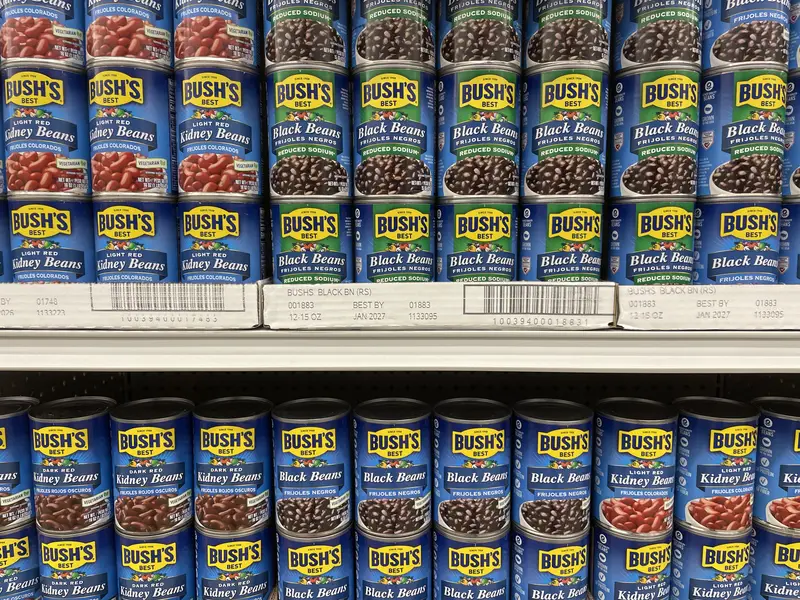
You’re standing in the grocery store aisle staring at rows of canned baked beans, and they all look pretty much the same. Some cost a dollar, others push five bucks, and you’re wondering if it really matters which one ends up in your cart. Turns out, it does matter! Multiple taste tests have revealed that some brands are significantly better than others, and one particular brand consistently lands at the bottom of rankings. After comparing twelve different options, testers found that while most baked beans are decent, there’s one you should probably leave on the shelf.
365 by Whole Foods Market falls short
The Whole Foods store brand came in dead last when put head-to-head with eleven other competitors. These organic, vegetarian beans cost around $1.50 per can, which isn’t terrible considering Whole Foods’ reputation for high prices. But the problem isn’t what you pay—it’s what you get. The sauce was notably thin and runny, almost watery compared to other brands. Even worse, there were fewer beans packed into the can than most competitors offered, which means you’re getting less bang for your buck.
The beans themselves had real issues with texture. They came out grainy with skins that were noticeably tougher than any other brand tested. When you bite into a spoonful of baked beans, you want them smooth and creamy, not chewy and grainy. The sauce had a pronounced vinegar kick with some brown sugar, but the simple seasoning couldn’t make up for the poor bean quality. While they hit the basic notes of what baked beans should taste like, including some faint tomato in the background, everything about this product felt subpar.
Bioitalia beans lack any real taste
Italian food is usually amazing, but baked beans apparently aren’t Italy’s strong suit. One taste tester described these as having absolutely no taste at all. At $4.49 per can, these were also expensive compared to most American brands. The sauce was watery and bland, missing all the sweet, tangy, smoky notes that make baked beans enjoyable. When someone says they’d rather eat anything else, that’s not a good sign for a product that’s supposed to be comfort food.
The complete absence of taste is actually worse than having bad taste. At least with bad-tasting beans, you can add hot sauce or mix them with other ingredients. But when beans have no taste at all, there’s nothing to work with. The texture wasn’t mentioned as a major problem, but when the primary issue is that your food tastes like nothing, texture becomes irrelevant. For nearly five dollars, you’d expect something special, but instead you get beans that might as well be served in a hospital cafeteria.
Bush’s Zero Sugar Added misses the mark
Bush’s is the biggest name in American baked beans, producing about 80% of what people eat in the United States. So when their zero-sugar version landed near the bottom of rankings, it was surprising. The beans cost $2.99, which is reasonable, and they had some decent depth with vinegary hints. But here’s the weird part—even without added sugar, testers found them too sweet. That’s because they use sucralose, an artificial sweetener, to replace the sugar.
The artificial sweetener left an unpleasant aftertaste that regular baked beans don’t have. When you’re eating baked beans, you expect a certain amount of sweetness because that’s part of the classic recipe. But the sweetness should come from brown sugar or molasses, not chemicals. The artificial aftertaste ruins what might otherwise be a decent option for people watching their sugar intake. If you’re trying to cut back on sugar, you’re probably better off just eating smaller portions of regular beans instead of dealing with that chemical taste.
Store brands can be hit or miss
Selection, which is Metro’s house brand in Canada, left testers puzzled. At $1.69, it’s cheap, but the taste was just strange. Not necessarily bad, but odd in a way that baked beans shouldn’t be odd. Generic store brands are always a gamble—sometimes you save money and get something just as good as the name brand, but other times you end up with something that makes you wonder what you’re actually eating. These beans fell into the confusing category where you can’t quite put your finger on what’s wrong, but something definitely is.
No Name, another Canadian generic brand, didn’t fare much better at $1.50 per can. While the beans themselves were a decent size and there were plenty of them, the sauce was the problem. It came out too thick and slightly congealed, which sounds pretty gross. The sauce also didn’t pack enough punch in the taste department. When you’re paying rock-bottom prices for generic beans, you’re taking a chance. Sometimes that chance pays off, but with these two brands, you’d probably be better off spending an extra dollar for something that actually tastes good.
Van Camp’s texture ruins the experience
Van Camp’s pork and beans have a different style than traditional Boston baked beans. Instead of brown sugar or molasses, these lean heavily on tomato sauce that tastes more like ketchup or tomato soup. The sauce is quite savory with a good amount of salt that helps bring out the bean taste. In fact, testers noted that you could actually taste the beans themselves, which sometimes gets lost when the sauce is too overpowering. That’s actually a good thing because beans should taste like beans.
Unfortunately, the texture problems dragged these down. The sauce was thin and watery instead of thick and clingy. Worse yet, the beans came out both mushy and gritty at the same time, which seems like it shouldn’t even be possible. When you’re eating baked beans, texture matters just as much as taste. Mushy beans feel like baby food, and gritty beans feel undercooked. Getting both at once is the worst of both worlds. The taste was actually pretty enjoyable, but nobody wants to eat beans with an unpleasant mouthfeel.
Serious Bean Co Dr Pepper variety is too sweet
Making baked beans with soda sounds weird, but Dr Pepper can actually work well with savory foods. Some people make Dr Pepper-glazed ribs that turn out fantastic. So Dr Pepper-flavored beans seemed like they might be interesting. The good news is that these beans definitely deliver on the Dr Pepper promise—you can absolutely taste those 23 mysterious spices the soda is famous for. Whether that’s good news depends entirely on how much you like Dr Pepper in the first place.
If you’re a Dr Pepper fanatic, these might be worth trying as a novelty. But for most people, they’re just too sweet without enough acid or spice to balance out all that sugar. The beans themselves were middle-of-the-road—a bit soft and gritty but not terrible. This is the kind of product you buy once out of curiosity, try at a barbecue for the conversation starter, and then never purchase again. Baked beans already have plenty of sugar in them naturally, so adding soda on top of that pushes them into dessert territory.
What makes baked beans actually good
Good baked beans need to balance several elements. The beans should be firm enough to hold their shape but creamy and smooth on the inside, never grainy or mushy. The sauce needs to be thick enough to coat the beans without being gluey, and thin enough to mix easily without being watery. Getting that consistency right makes a huge difference in how the beans taste and feel when you eat them. You also want plenty of beans in the can, not just a bunch of sauce with a few beans floating around.
The sauce should hit multiple notes—sweet from brown sugar or molasses, tangy from tomato or vinegar, smoky from bacon or liquid smoke, and salty enough to make everything pop. Some beans add mustard or garlic powder for extra depth. The best brands manage to balance all these elements without any one overpowering the others. When everything comes together right, you get beans that taste like someone spent hours making them from scratch, even though they came from a can you opened two minutes ago.
Price doesn’t always mean quality
The most expensive beans in multiple taste tests weren’t always the best. Walnut Acres organic beans cost over four dollars per can, making them the priciest option tested. While the beans themselves were perfectly cooked—firm, smooth, and earthy-tasting—the can had noticeably fewer beans than cheaper competitors. The sauce was also the runniest of all the brands tested. So you’re paying more than double what some other brands cost, getting fewer beans, and ending up with watery sauce.
On the flip side, some budget options performed surprisingly well. Amy’s organic vegetarian beans cost more than average but packed the can with beans—way more than any other brand. When you opened the can, you saw beans tightly packed together with just thin layers of sauce between them, not beans swimming in liquid. The value proposition matters because you’re buying beans, not sauce. If you’re going to spend extra money, it should be for better taste or more product, not just a fancier label.
The best beans are classic Bush’s varieties
Despite one Bush’s variety landing near the bottom, several other Bush’s products topped the rankings. Bush’s Southern Pit BBQ Grilling Beans scored highest in one major taste test, with testers praising their savory, smoky character that tasted like beans cooked on a real charcoal grill. Bush’s Brown Sugar Hickory came in second, offering the quintessential baked bean experience—sweet, tangy, tomatoey, with nice smokiness. Bush’s Homestyle beans also ranked high for tasting exactly like the baked beans people remember from childhood.
The consistency across Bush’s regular products shows why they dominate the market. Their beans are reliably creamy and buttery inside, the sauce is properly thick, and the seasoning hits all the right notes. Bush’s Maple and Cured Bacon beans contained actual visible bacon chunks, unlike some brands that promise bacon but barely deliver. When multiple independent taste tests consistently rank the same brand at the top, that’s a pretty good sign you’re getting something reliable. For regular baked beans that taste good every time, Bush’s classic varieties are your best bet.
Next time you’re grabbing canned baked beans, skip the Whole Foods 365 brand and head straight for Bush’s instead. Those extra fifty cents will get you beans with better texture, more actual beans in the can, and sauce that doesn’t taste like watered-down vinegar. Not every expensive or organic option is worth the money, and sometimes the big mainstream brands got big for good reason.
