

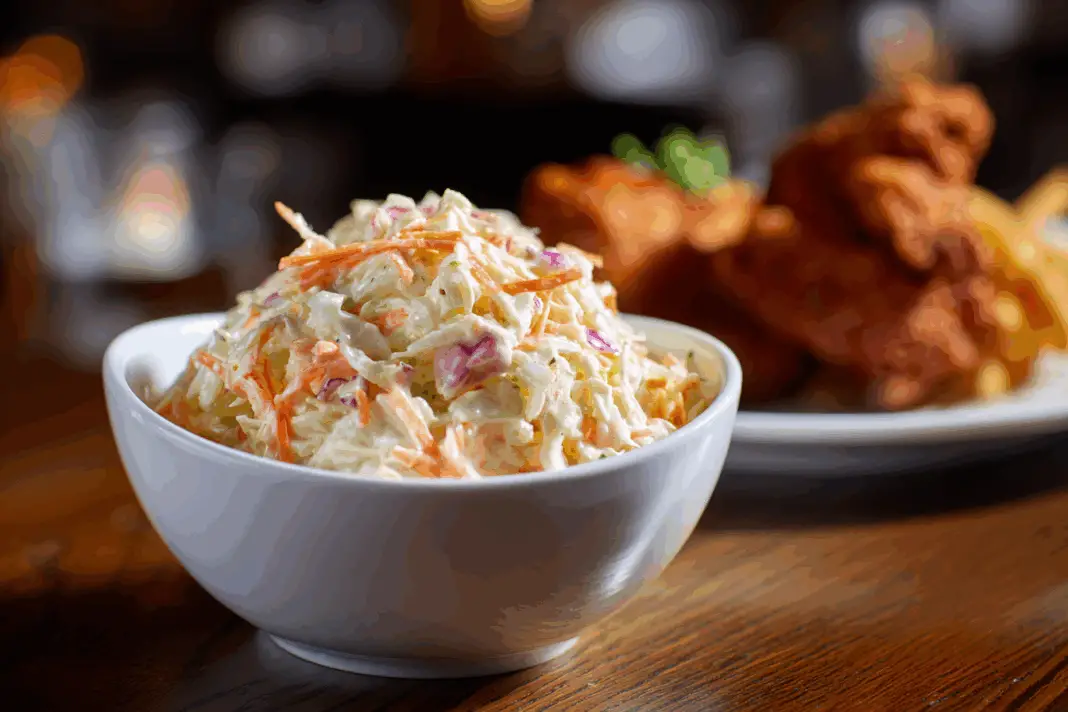
Coleslaw seems like the safest choice on any restaurant menu. It’s just shredded cabbage with some dressing, right? Well, not exactly. One popular chain restaurant has a history with coleslaw that might make you think twice before adding it to your order. We’re talking about serious food safety issues that landed people in the hospital. This isn’t about whether the slaw tastes good or has enough crunch—this is about contamination problems that happened more than once and affected real customers who just wanted a side dish with their meal.
KFC had two E. coli outbreaks from coleslaw
Back in 1999, KFC coleslaw caused a dangerous E. coli outbreak in Cincinnati, Ohio that sent 11 people to the hospital. The outbreak happened right after July 4th, when customers who ate the coleslaw started getting violently ill with stomach pain, bloody diarrhea, and other severe symptoms. Health officials traced every case back to the coleslaw served at local KFC restaurants. The bacteria involved was E. coli O157:H7, which is particularly nasty and can cause kidney failure in serious cases.
Here’s what makes this even more concerning—this wasn’t the first time it happened. Just one year earlier in 1998, Indianapolis had its own E. coli outbreak that was also linked to KFC coleslaw. When the same problem happens twice at the same chain, it suggests deeper issues with how the food is being prepared, stored, or handled. After the Cincinnati outbreak, KFC claimed they would switch to pre-chopped, pre-washed cabbage to reduce contamination risks. But the fact remains that their coleslaw had already made dozens of people sick across two separate incidents in two different cities.
One woman’s heart stopped three times after eating it
Geraldine Johnson was 64 years old when she ate contaminated coleslaw from KFC in 1999. What should have been a normal fast food meal turned into a month-long hospital stay, mostly spent in intensive care. The E. coli infection was so severe that her heart stopped three times while doctors fought to keep her alive. Her kidneys completely shut down, requiring dialysis to filter her blood artificially. All of this happened because of a side dish that probably cost less than three dollars.
Johnson eventually filed a lawsuit against KFC, represented by lawyers who specialize in foodborne illness cases. The company said they were surprised by the lawsuit because they had been covering her medical bills and discussing a settlement. But no amount of money could really make up for what she went through. When you order coleslaw at a restaurant, you’re not expecting to end up fighting for your life in an ICU. Johnson’s case was the most severe among the 11 confirmed victims, but her story shows just how dangerous contaminated food can be, especially for older adults or anyone with a weakened immune system.
Raw vegetables are easier to contaminate than cooked foods
Coleslaw is riskier than many other restaurant sides because it’s served cold and raw. Hot foods like mashed potatoes or green beans get cooked at high temperatures that kill harmful bacteria. But coleslaw? The cabbage and carrots never get heated, so any bacteria that got onto them during growing, harvesting, or preparation can survive all the way to your plate. Cabbage grows close to the ground where it can pick up contamination from soil, water, or animal waste. Then it gets chopped up, which creates even more surface area for bacteria to cling to.
Temperature control is another major problem with coleslaw at restaurants. It needs to stay below 40 degrees Fahrenheit to prevent bacteria from multiplying, but that doesn’t always happen in busy kitchens. In January 2025, health inspectors at one restaurant had to throw out 13 pounds of coleslaw during an inspection because it wasn’t being kept cold enough. Cross-contamination is also a concern—if a worker handles raw chicken and then touches the cabbage without washing their hands properly, bacteria can transfer. Unlike a burger that gets grilled or fries that get fried, coleslaw doesn’t go through any kill step to eliminate germs before it reaches customers.
Fast food chains have repeated safety failures
KFC isn’t the only major chain that’s had serious food safety problems. In 1993, Jack in the Box served undercooked hamburgers that caused an E. coli outbreak affecting 732 people and killing four children. Chipotle made headlines in 2015 with multiple outbreaks of E. coli, salmonella, and norovirus at different locations across the country. More recently in 2024, McDonald’s had an E. coli outbreak linked to onions in their Quarter Pounders that affected at least 75 people in 13 states, with 22 hospitalizations and one death.
What’s frustrating is that these problems keep happening despite everything we know about food safety today. After the 2024 onion scare, Yum Brands (which owns KFC, Taco Bell, and Pizza Hut) had to pull onions from some restaurants as a precaution. These incidents show that even huge restaurant chains with plenty of resources still struggle to maintain consistent safety standards. When you’re serving thousands of customers every day across hundreds of locations, mistakes happen. But some mistakes—like the ones that land people in hospitals—shouldn’t be acceptable no matter how big or busy the operation is.
You can’t tell if coleslaw is contaminated by looking at it
Here’s the scary part—contaminated coleslaw looks, smells, and tastes completely normal. Dangerous bacteria like E. coli, Salmonella, and Listeria don’t change food in ways your senses can detect. The coleslaw that sent Geraldine Johnson to the hospital probably looked perfectly fine when the server handed it over. You won’t see any warning signs until hours or days later when symptoms start hitting. For E. coli specifically, symptoms typically show up three to four days after eating contaminated food.
The symptoms can be severe—intense stomach cramps, diarrhea that’s often bloody, vomiting, and sometimes fever. For kids, elderly people, or anyone with a compromised immune system, these symptoms can quickly become life-threatening. E. coli infections can lead to something called hemolytic uremic syndrome, which damages red blood cells and causes kidney failure. If you develop severe or bloody diarrhea, a fever over 101.5 degrees, vomiting that won’t stop, signs of dehydration, or diarrhea lasting more than three days after eating restaurant food, you need to see a doctor immediately. Tell them everything you ate in the previous week, including any fast food meals.
Restaurant kitchens have multiple contamination points
Coleslaw can pick up bacteria at many stages before it reaches your tray. Problems can start at the farm if cabbage is grown with contaminated water or fertilizer. During harvesting and processing, vegetables might touch dirty equipment or be handled by workers who aren’t following proper hygiene. But restaurant kitchens are where many preventable problems occur. Cross-contamination happens when someone touches raw meat and then handles vegetables without washing their hands thoroughly. Since E. coli commonly lives in raw meat, this was likely how the Cincinnati KFC coleslaw got contaminated.
Cutting boards, knives, and other prep tools can also transfer bacteria if they’re not sanitized between different tasks. After coleslaw is prepared, it needs to be cooled quickly and kept at safe temperatures. But in busy restaurants, it might sit out too long during prep, get stored in refrigerators that aren’t cold enough, or sit in serving containers that don’t maintain proper temperatures. KFC switched to pre-chopped, pre-washed cabbage after the outbreaks to reduce handling, but even packaged produce isn’t foolproof. In 2019, Dole had to recall coleslaw products because of Salmonella contamination. From farm to restaurant table, there are dozens of opportunities for something to go wrong.
Hot sides are generally safer than cold ones
If you’re reconsidering coleslaw after learning about these outbreaks, there are safer alternatives at most restaurants. Hot side dishes are generally much safer because cooking kills harmful bacteria. At KFC, options like mashed potatoes with gravy, mac and cheese, corn, or biscuits all get heated to temperatures that destroy pathogens. Even the green beans are cooked, making them a safer bet than raw vegetables. The heat basically acts as insurance against most foodborne illnesses.
If you really want something fresh and crunchy, consider ordering a side salad and asking for dressing on the side. This way you can inspect the lettuce yourself before eating it—check that it looks fresh, isn’t wilted, and doesn’t have any brown or slimy spots. You can also pay attention to how the restaurant handles and stores food. Are cold items actually being kept cold in proper refrigeration? Do staff members change gloves between different tasks? Is the restaurant generally clean? These visual cues can help you make safer choices about what to order and whether to trust a particular location with your business.
BJ’s Restaurant serves the mushiest coleslaw around
While KFC has the most serious safety history with coleslaw, they’re not the only chain that struggles with this side dish. According to a recent ranking of chain restaurant coleslaws, BJ’s Restaurant came in dead last. Their coleslaw looked promising at first—finely chopped cabbage and carrots in mayo with celery seeds. But the execution was terrible. Instead of the crisp, refreshing crunch you expect from coleslaw, BJ’s version had what reviewers described as a “squelchy” texture. Basically, it was mushy vegetables swimming in weak dressing.
The dressing was so watered down that it tasted like “cabbage-flavored water” according to the taste test. At least this is just a quality problem rather than a safety issue, but it’s still disappointing when a restaurant can’t get something as basic as coleslaw right. Other chains like Cracker Barrel and Bonefish Grill managed to serve coleslaw that was both crisp and well-dressed. Cracker Barrel won the ranking with a classic version that had finely shredded white and red cabbage that stayed crunchy even in creamy dressing. Bonefish Grill took a different approach with an Asian-inspired slaw that skipped the heavy mayo for a lighter, umami-rich dressing. Both proved that good coleslaw isn’t complicated—you just need the right ratio of dressing to vegetables and consistent cutting.
Check restaurant inspection records before dining out
Many local health departments now put restaurant inspection reports online, which means you can check a restaurant’s food safety record before deciding to eat there. These reports list any violations found during inspections, like improper food temperatures, cross-contamination issues, or cleanliness problems. Some violations are minor, but others—like keeping cold foods at unsafe temperatures or finding evidence of pests—are red flags that suggest the restaurant isn’t taking safety seriously. A single violation doesn’t necessarily mean you’ll get sick, but a pattern of repeated problems should make you think twice.
You can usually find these inspection reports by searching for your city or county health department website and looking for their restaurant inspection database. Some areas even require restaurants to post their inspection grades in the window, similar to how it works in places like Los Angeles or New York City. While no restaurant is perfect and inspectors can catch places on bad days, consistently good inspection records suggest that management takes food safety seriously. On the other hand, repeated violations for the same issues show that problems aren’t being fixed. When it comes to ordering something like coleslaw that’s high-risk to begin with, choosing restaurants with clean inspection records gives you better odds of staying safe.
The next time you’re ordering fried chicken or barbecue and eyeing that coleslaw on the menu, remember that this simple side dish has a more complicated history than you might expect. KFC’s two E. coli outbreaks in the late 1990s weren’t just minor incidents—they sent people to the hospital and nearly killed at least one customer. While the chain made changes after those outbreaks, the fact remains that coleslaw is inherently riskier than hot foods because it never gets cooked. If you’re choosing between coleslaw and a hot side like mashed potatoes or mac and cheese, the hot option is generally safer. And if you really want coleslaw, making it at home gives you complete control over freshness and handling—even if it does mean finding cabbage shreds in your kitchen for the next two weeks.
