

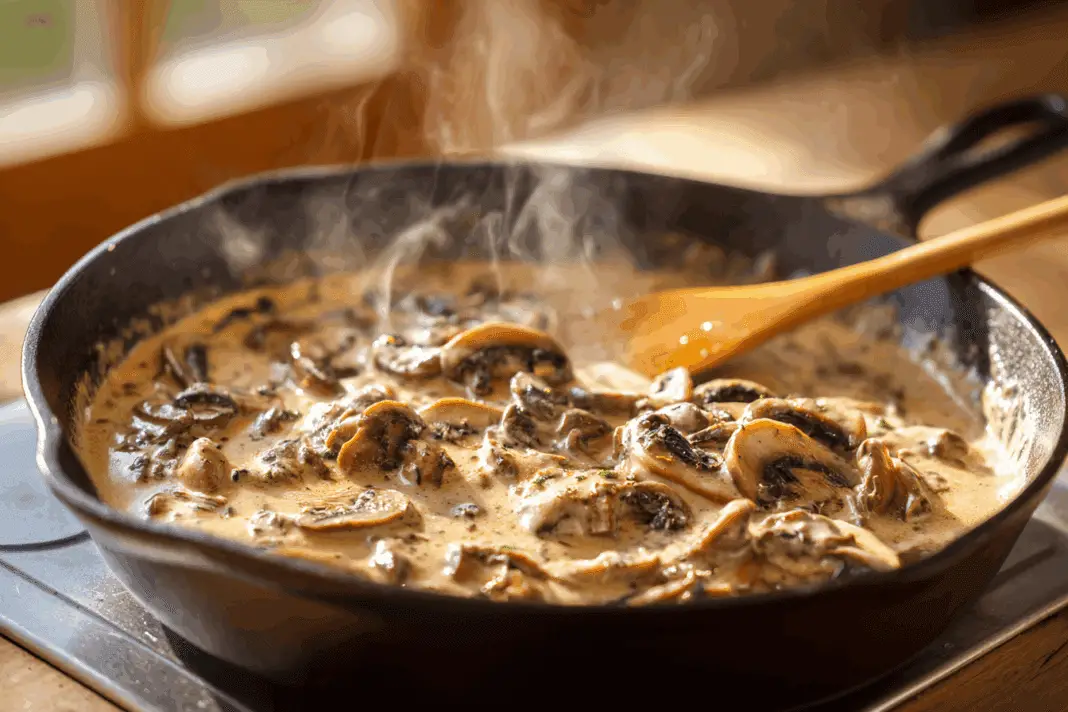
Ever wonder why restaurant steaks always seem to taste better than the ones you make at home? It’s not just the quality of the meat. The real secret is the sauce. A simple creamy mushroom sauce can transform an ordinary weeknight steak into something that tastes like a fancy dinner out. This sauce has been tested against countless others and comes out on top every single time. The best part is that it takes less than 30 minutes to make and uses ingredients you probably already have sitting in your fridge right now.
Why this mushroom sauce beats all the others
Most mushroom sauces end up either too watery or too thick and gloopy. They taste bland or the mushrooms get overcooked and turn rubbery. This recipe fixes all those problems by focusing on just five main ingredients and giving them enough time to develop real depth. The mushroom sauce cooks down to the perfect consistency without needing any flour or cornstarch to thicken it. The cream reduces naturally while the mushrooms release their earthy goodness into every spoonful.
The real game changer is watching the sauce simmer and bubble away on the stove. As it reduces, the color deepens to a gorgeous golden brown and the smell of mushrooms fills your kitchen. You’ll know it’s ready when the sauce coats the back of a spoon and doesn’t immediately run off. This simple test means your sauce will cling to your steak instead of pooling on the plate like water. No more sad, runny mushroom disasters that make your beautiful steak swim in a puddle.
The mushrooms that work best for this sauce
Baby bella mushrooms (also called cremini) are the top choice for this sauce because they have more taste than regular white button mushrooms. They’re the younger version of portobello mushrooms and bring that earthy, almost meaty quality that makes this sauce so satisfying. White button mushrooms work fine if that’s what you have, but they’ll give you a milder result. Swiss brown mushrooms are another excellent option if you can find them at your grocery store.
Some recipes call for slicing the mushrooms super thin, but that’s a mistake. Cut them about a quarter inch thick so they keep their shape and texture as they cook. Mushrooms that are too thin turn mushy and disappear into the sauce. When you’re cooking them in the butter, resist the urge to stir them constantly. Let them sit and develop those golden brown spots that add incredible depth to the final sauce. That browning is where all the good stuff happens.
Getting the cream consistency just right
Heavy cream is the way to go here because it won’t break or separate when you simmer it. Half and half can work in a pinch, but it takes longer to thicken and doesn’t have quite the same rich mouthfeel. The cream sauce needs to simmer for about 15 to 25 minutes depending on how thick you like it. During this time, the water in the cream evaporates and the sauce naturally thickens without any need for thickening agents.
Watch the heat carefully while the cream is reducing. You want a gentle simmer with small bubbles breaking the surface, not a rolling boil. If it boils too hard, the cream can split and look grainy instead of smooth and silky. Stir it every few minutes to keep it from sticking to the bottom of the pan. The sauce is done when it’s thick enough to coat the back of a wooden spoon and stays there for a second before dripping off slowly.
Adding garlic without overpowering everything
Fresh garlic makes this sauce sing, but timing is everything. Add it too early and it burns in the hot pan, turning bitter and unpleasant. Add it too late and you get raw garlic chunks that taste harsh. The sweet spot is right at the end of cooking, about a minute before you pull the pan off the heat. This gives the garlic just enough time to soften and release its pungent goodness without burning or staying raw.
One large clove is usually enough for most people, but garlic lovers can bump it up to two. Crush or mince it finely so it distributes evenly throughout the sauce. Some cooks like to smash a whole clove and let it infuse the sauce, then fish it out before serving. This gives you garlic essence without actual chunks of garlic in every bite. Either way works perfectly fine, so go with whatever matches your garlic preference.
The optional ingredients that take it up a notch
A splash of Marsala wine or white wine adds another layer of complexity that makes people wonder what your secret is. The alcohol cooks off during simmering, leaving behind a subtle sweetness and depth. About a third of a cup is plenty. If you don’t have wine or don’t want to use it, beef broth works fine and keeps the sauce rich and satisfying. Some people even add a tiny splash of brandy or whisky for an interesting twist.
Fresh thyme and whole black peppercorns are another optional addition that brings the sauce to life. A couple sprigs of thyme and a tablespoon of peppercorns simmering in the cream create an amazing aroma. The peppercorns add little bursts of heat throughout the sauce without making it spicy. A tiny bit of lemon zest brightens everything up and cuts through the richness. These small touches make a basic sauce taste like something you’d order at an expensive steakhouse.
The secret ingredient that makes it extra creamy
Right before serving, stir in a quarter cup of sour cream after you take the pan off the heat. This might sound weird, but it adds an incredible velvety texture and a slight tang that balances all the richness. The sour cream also helps stabilize the sauce so it stays smooth even if you need to reheat it later. Regular or dairy-free sour cream both work perfectly well for this purpose.
Make sure to remove the pan from the heat before adding the sour cream or it might curdle from the high temperature. Just stir it in gently until it’s fully combined and the sauce looks smooth and glossy. This final step takes the sauce from really good to absolutely restaurant quality. People will genuinely ask what you did to make it taste so amazing. The answer is this one simple addition at the very end.
What to serve this sauce with besides steak
Sure, this sauce is perfect for steaks, but it’s way too good to limit to just beef. Pork chops absolutely shine with this sauce spooned over the top. Chicken breasts go from boring to fancy with just a few tablespoons. Even a simple roasted chicken becomes special occasion worthy when you serve this alongside. The sauce works with pretty much any protein that could use a little extra richness and earthiness.
Toss it with cooked pasta for an easy weeknight dinner that feels indulgent. Add some cooked chicken or sausage and you’ve got a complete meal. Spoon it over mashed potatoes for the ultimate comfort food. Pour it over meatloaf to make it extra moist and delicious. Some people even use it as a topping for baked potatoes or rice bowls. Once you make this sauce, you’ll start finding excuses to put it on everything.
Making the sauce ahead for busy weeknights
This sauce keeps beautifully in the fridge for up to four days in an airtight container. Make a double batch on Sunday and you’ve got an instant upgrade for several weeknight meals. The sauce actually tastes even better the next day after all those rich ingredients have had time to mingle. When you’re ready to use it, just warm it gently over low heat, stirring frequently to keep it from breaking.
If the sauce seems too thick after refrigerating, thin it out with a splash of cream or a little beef broth. Stir it in gradually until you reach the consistency you want. Never reheat cream sauces over high heat or they’ll separate and look curdled. Low and slow is the way to go. You can also make the sauce partway through, stopping before it fully reduces, then finish it right before serving. This works great when you’re entertaining and need to time everything perfectly.
Common mistakes that ruin mushroom sauce
The biggest mistake is not letting the mushrooms brown properly before adding the liquid. If you add the cream too soon, the mushrooms steam instead of developing those crispy brown edges that give the sauce so much depth. Another common error is using too much heat once the cream goes in. High heat makes cream sauces break and separate, leaving you with a greasy mess instead of something smooth and luscious.
Overcrowding the pan with mushrooms is another recipe for disaster. When mushrooms are packed too tightly, they release moisture and steam each other instead of browning. Cook them in batches if needed to give them space. Not seasoning as you go means bland sauce that tastes flat. Add salt when you cook the mushrooms, taste and adjust at the end. These small fixes make the difference between an okay sauce and one that actually tastes incredible.
Now that you know all the secrets, there’s no reason not to make this sauce tonight. It really does turn regular steaks into something worth getting excited about. The process is simple enough for a Tuesday night but impressive enough for when you have company over. Once you master this basic recipe, you can start playing around with different additions like fresh rosemary, parsley, or even a handful of baby spinach stirred in at the end. This sauce has earned its place as a keeper for special nights.
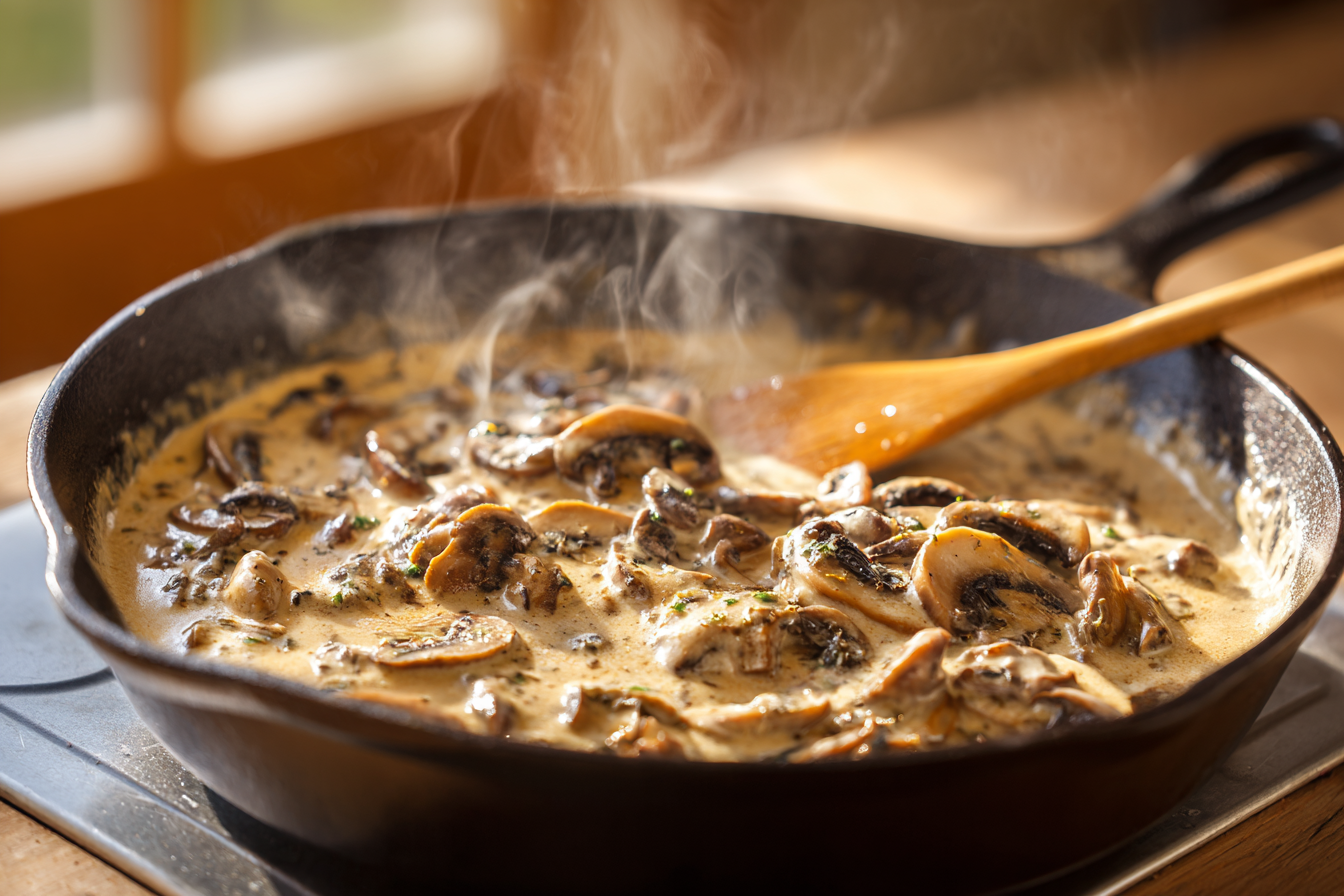
Creamy Mushroom Steak Sauce
Cuisine: American10
servings10
minutes25
minutes121
kcalThis rich and velvety mushroom sauce transforms any steak into a restaurant-quality meal with just five simple ingredients and 35 minutes of your time.
Ingredients
8 tablespoons butter, divided
16 ounces baby bella mushrooms, sliced 1/4 inch thick
6 tablespoons shallots, minced
2 garlic cloves, smashed or minced
1 1/2 cups beef broth
1 1/2 cups heavy cream
1/3 cup Marsala wine
1 tablespoon black peppercorns
2-3 sprigs fresh thyme
1/2 teaspoon lemon zest, grated
1/4 cup sour cream
Kosher salt and ground black pepper, to taste
Directions
- Heat a large cast iron skillet over medium-high heat and add 4-5 tablespoons of butter. Let it melt completely and start to foam slightly. Add the sliced mushrooms in a single layer if possible, season with a generous pinch of kosher salt, and let them cook without stirring for about 2 minutes. This allows them to develop those beautiful golden brown spots that add so much depth to the sauce.
- Stir the mushrooms and continue cooking until they’re fully softened and golden brown all over, about 5-7 minutes total. Once the mushrooms are perfectly browned, add the remaining 3-4 tablespoons of butter along with the minced shallots and garlic. Stir everything together and let the shallots and garlic soften for about one minute, being careful not to let the garlic burn.
- Pour in the beef broth, heavy cream, and Marsala wine, stirring to combine everything in the pan. Add the black peppercorns, fresh thyme sprigs, and lemon zest to the mixture. Bring the sauce to a gentle simmer, then reduce the heat to medium-low to maintain small bubbles breaking the surface without a rolling boil.
- Let the sauce simmer for 15-25 minutes, stirring occasionally, until it has reduced and thickened enough to coat the back of a wooden spoon. The sauce should cling to the spoon for a second before dripping off slowly. Watch the heat carefully to prevent the cream from boiling too hard, which can cause it to break and separate.
- Remove the pan from the heat and stir in the sour cream until completely combined and smooth. This adds extra creaminess and a subtle tang that balances the richness perfectly. Taste the sauce and add more salt and freshly ground black pepper as needed, keeping in mind that it will be served over seasoned meat.
- If you’re not serving immediately, cover the pan and keep it warm on the back of the stove over the lowest heat setting. Give it a quick stir before serving to make sure the consistency is still perfect. Spoon the sauce generously over grilled steaks, pork chops, chicken breasts, or toss it with freshly cooked pasta for an indulgent meal.
Notes
- For a dairy-free version, use plant-based butter and substitute the heavy cream with a high-quality dairy-free cream alternative like Silk’s Dairy-Free Heavy Whipping Cream. Dairy-free sour cream works perfectly for the final addition.
- If you don’t want to use wine, simply replace it with an equal amount of beef broth. The sauce will still be rich and delicious, just without the subtle complexity that wine adds.
- Store leftovers in an airtight container in the refrigerator for up to 4 days. Reheat gently over low heat, adding a splash of cream or broth if it’s too thick. Never reheat over high heat or the sauce may break.
- For extra depth, add a teaspoon of porcini mushroom powder or a splash of liquid smoke when you add the liquid ingredients.
Frequently asked questions about mushroom steak sauce
Q: Can I use a different type of mushroom for this sauce?
A: Absolutely. While baby bella (cremini) mushrooms give the best earthy taste, you can use white button mushrooms, shiitake, or even a mix of different varieties. Just make sure to slice them evenly so they cook at the same rate. Portobello mushrooms work too but should be chopped smaller since they’re so large.
Q: Why did my cream sauce separate and look grainy?
A: This happens when the sauce gets too hot too fast. Cream needs gentle heat to reduce properly. If your sauce does break, try whisking in a tablespoon of cold cream off the heat to bring it back together. Next time, keep the heat at a gentle simmer with small bubbles rather than a rolling boil.
Q: Can I freeze this mushroom sauce for later?
A: Cream-based sauces don’t freeze particularly well because they tend to separate when thawed. If you must freeze it, do so before adding the sour cream, and whisk it vigorously when reheating. It’s better to make fresh or store it in the fridge for up to four days instead of freezing.
Q: How do I make this sauce thicker without it tasting like flour?
A: Just let it simmer longer until more liquid evaporates and it naturally thickens. This keeps the pure cream and mushroom taste without any starchy aftertaste. If you’re in a rush, you can dissolve a teaspoon of cornstarch in a tablespoon of cold water and stir it in, but the traditional reduction method tastes best.
