

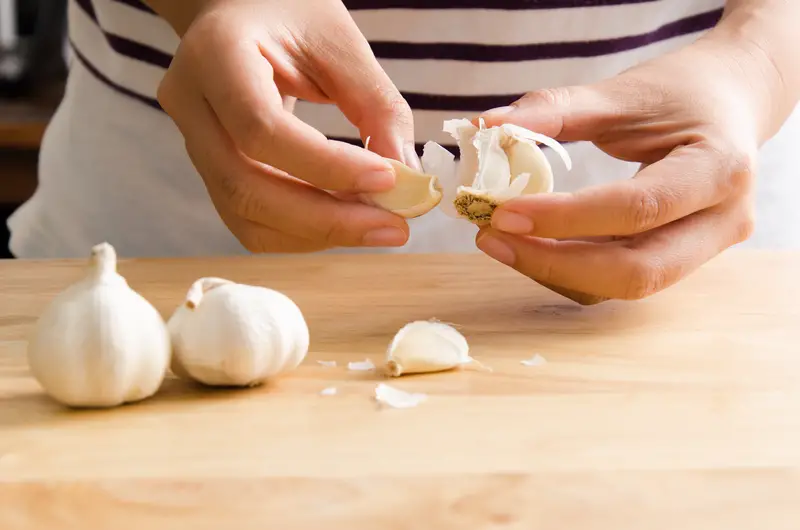
Garlic is one of those ingredients that shows up in basically everything. But peeling it? That’s a different story. You’ve probably stood at your counter, papery skins sticking to your fingers, wondering if there’s a better way to do this. And honestly, there is. After trying out several methods that people swear by online, I found the ones that actually work—and the ones that don’t live up to the hype.
The classic knife smash method
This is probably the method you’ve seen most often. You place a clove on your cutting board, put the flat side of a knife over it, and give it a good whack with your palm. The skin’s supposed to come right off after that. And it does work, at least most of the time. I mean, it’s quick and you don’t need any special tools. But here’s the thing—sometimes you hit it too hard and your garlic gets completely smooshed. That’s fine if you’re mincing garlic anyway, but not so great when you need whole cloves for roasting or slicing thin.
The smaller cloves are especially tricky with this method. They require multiple whacks sometimes, which kind of defeats the purpose of it being fast. Still, it’s pretty reliable for everyday cooking.
Shaking garlic in a container
This one’s all over social media. You separate your cloves, toss them in a jar or container with a lid, and shake like crazy until the skins fall off. Sounds simple enough, right? I tried this with a mason jar, and honestly, it worked better than I expected. At least for the bigger cloves. After about 20 seconds of shaking, most of the skins had loosened up significantly. But the smaller pieces? They basically stayed the same no matter how long I shook that jar.
The method definitely works better when you’re peeling a bunch of cloves at once. More cloves means more friction inside the container, which helps the skins come off. If you’re just doing one or two cloves, it’s probably not worth it. And be prepared for a bit of a mess when you pour everything out—you’ll need to separate the garlic from all those papery skins. My container smelled like garlic for days afterward, which wasn’t exactly ideal.
Using your microwave to loosen skins
People claim you can microwave garlic cloves for about 20 seconds and the skins will slide right off. The heat’s supposed to steam the garlic just enough to loosen everything up. I was pretty skeptical about this one, but I gave it a shot anyway. And it did loosen the skins a bit. But not enough to make it worthwhile, in my opinion.
The bigger issue is that the garlic started cooking. Even at just 20 seconds, some of my cloves got soft and warm, which made them harder to slice cleanly. If you only microwave them for 10 seconds, this isn’t as much of a problem. But then the skins don’t really loosen that much either, so what’s the point? Plus, your microwave’s going to smell like garlic. Not the worst thing ever, but kind of annoying.
The viral TikTok knife trick
This method went viral recently, and it looks super impressive. You’re supposed to stick a knife into a clove that’s still attached to the bulb, twist, and pull out a perfectly clean clove. No peeling required. Does anyone actually get this to work consistently? I tried it multiple times with both a paring knife and a butter knife. The paring knife worked better because the sharp point could actually pierce the clove without breaking it. But even then, it only worked about half the time.
Sometimes the clove would break and only half would come out. Other times I’d miss the center of the clove entirely and just tear through the papery layers. I had better luck after peeling the outer layer off the bulb first, so each clove was more defined. But that’s an extra step that kind of defeats the purpose. It’s a cool party trick when it works, though.
Soaking cloves in hot water
I’d never heard of this method until I started researching for this article. Basically, you put your separated cloves in a bowl, pour hot water over them, let them soak for about a minute, and then peel. And honestly? This was surprisingly effective. The skins slipped off so easily after soaking. Way easier than I expected. It’s probably the best method I tried for peeling a lot of garlic at once.
The downside is you need to dry the cloves afterward if you’re going to store them or use them in certain recipes. Wet garlic doesn’t mince as cleanly and can make your oil splatter if you’re sautéing. But for meal prep situations where you’re peeling a whole head or more, this method’s pretty hard to beat. Just make sure the water’s hot enough—lukewarm water doesn’t do much.
Using a garlic press with the skin on
Some people say you can just throw unpeeled cloves into a garlic press and squeeze. The garlic comes out and the skin stays in the press. Simple, right? Not really. This worked sometimes, but it was super inconsistent. With fresh, plump cloves, the garlic would come through fine and the skin formed a little pocket inside the press that was easy to remove. But with older or smaller cloves, the skin would clog up the holes and create a mess.
I ended up spending more time cleaning out the press than I would’ve spent just peeling the garlic normally. And my fingers smelled so strongly of garlic afterward from trying to dig all the skin bits out. It’s not a method I’d recommend unless you’re in a real hurry and don’t mind the gamble.
What actually works best for a few cloves
If you’re only peeling one or two cloves, just stick with the knife method. Cut off the root end first—that makes a big difference. Then either smash it if you’re mincing anyway, or just peel it by hand if you need it whole. It takes maybe 30 seconds total. Why overcomplicate things? The fancy methods are fun to try, but they’re not really faster when you’re working with small amounts.
I’ve noticed that fresher garlic peels easier no matter what method you use. If your garlic’s been sitting around for months, those skins get papery and clingy. There’s not much any hack can do about that. But for regular grocery store garlic that’s reasonably fresh, the basic knife method works just fine.
Best approach when you need a lot of garlic
The hot water method wins here. If you’re prepping for a recipe that calls for a whole head of garlic—or you’re doing meal prep for the week—soaking the cloves makes everything so much easier. You can peel them super quickly once they’ve soaked for a minute. The container shaking method works too, but it requires more physical effort and doesn’t work as consistently. Plus, the hot water doesn’t risk breaking your cloves, which can happen with aggressive shaking.
After trying these different techniques, I realized there’s no one perfect method for every situation. It depends on how much garlic you’re dealing with and what you’re using it for. For everyday cooking with just a few cloves, the knife smash is still the most practical. For bigger batches, hot water’s the way to go. And if you want to impress someone, try that TikTok knife trick—just don’t be surprised if it takes a few attempts to get right.
What nobody mentions about peeling garlic
Here’s something that doesn’t get talked about enough: the quality of your garlic matters way more than the method you use. Old, dried-out garlic with sprouting green shoots? That’s going to be a pain no matter what. Fresh garlic with firm, plump cloves practically peels itself sometimes. I mean, if you’re buying garlic that feels light and has loose, papery skins before you even start, you’re already fighting a losing battle. Look for heads that feel heavy for their size and have tight, firm cloves. It makes everything easier.
The reality is that peeling garlic is never going to be the most exciting part of cooking. But it doesn’t have to be frustrating either. Pick the method that makes sense for what you’re making, use decent garlic, and you’ll be fine. Pretty much any of these methods work if you’re not expecting miracles.
