

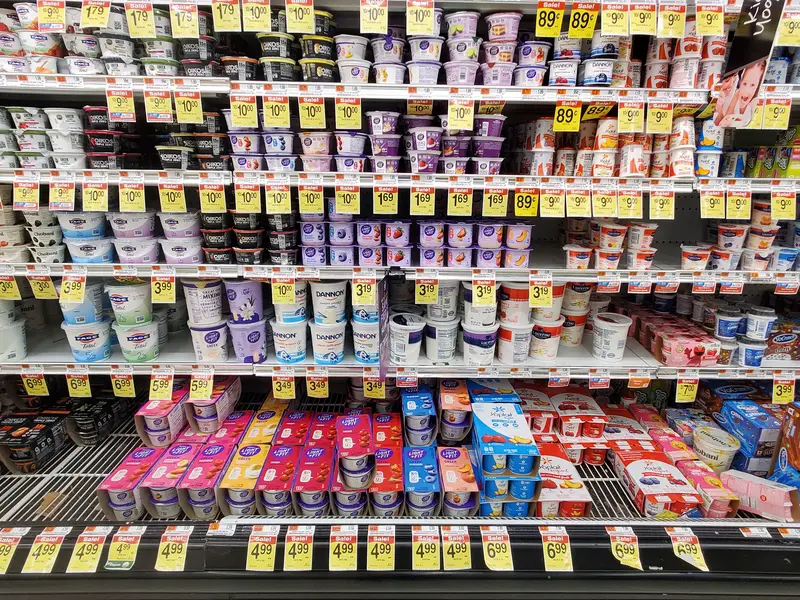
Walk down the yogurt aisle at any grocery store and you’ll find yourself staring at dozens of options. Some containers promise extra protein, others boast authentic Greek traditions, and a few claim to be perfect for your morning routine. But here’s something most people don’t realize: not all yogurt brands deliver what their packaging suggests. Some of the most recognizable names actually rank among the worst options you can buy, whether it’s because of watery consistency, artificial sweetness, or surprisingly low protein content that doesn’t match what you’d expect from Greek yogurt.
Dannon Light & Fit delivers overwhelming artificial sweetness
Most people associate Dannon with quality yogurt, but their Light & Fit Greek line misses the mark completely. When you open a container, the first thing you’ll notice is how thick and sludgy it looks compared to other brands. The consistency feels more like paste than the smooth, creamy yogurt you’re expecting for breakfast. What’s worse is that this thickness doesn’t translate into a satisfying eating experience at all. The texture sits heavy on your spoon and doesn’t have that light, refreshing quality that makes yogurt appealing in the morning.
The real problem comes when you take your first bite. The vanilla version tastes so intensely sweet that it overpowers everything else, leaving your mouth feeling coated with an artificial flavor that resembles white chocolate more than anything natural. This makes it a terrible choice if you’re planning to add berries, granola, or honey since you’ll end up with a breakfast that’s way too sweet to enjoy. The fat-free formula seems to strip away the natural creaminess that balances Greek yogurt, forcing the brand to compensate with synthetic flavoring that just doesn’t work.
Oikos Pro tastes exactly like protein powder
The black and silver packaging of Oikos Pro looks impressive on the shelf, and the promise of 23 grams of protein per serving sounds great for anyone trying to add more protein to their morning routine. But marketing and actual eating experience are two completely different things. The moment you stir this yogurt, you’ll notice something odd about its consistency. Instead of looking like typical Greek yogurt, it has a strange separation that makes it appear almost watery at first, then turns into something that resembles body lotion after mixing.
Taking a spoonful confirms your worst suspicions. This yogurt tastes exactly like drinking a protein shake that someone tried to thicken into yogurt form. The artificial sweetness dominates every bite, and there’s a distinct chalky aftertaste that lingers long after you’ve finished eating. The texture feels unnaturally smooth and slippery rather than thick and satisfying. While the high protein content might seem appealing, it’s hard to justify forcing yourself to eat something that tastes this unpleasant every morning just for the nutritional boost.
The Greek Gods barely contains any protein
Despite its name suggesting authentic Greek traditions and quality ingredients, The Greek Gods brand has a fatal flaw that disqualifies it from being considered a real Greek yogurt option. The honey vanilla version sits on shelves next to legitimate Greek yogurts, and the container design makes it look like a premium product worth the higher price tag. When you open it, you’ll immediately notice that something looks different. The surface has a shiny, gelatinous appearance that’s more typical of regular yogurt rather than the thick, matte surface of properly strained Greek varieties.
The real disappointment comes when you check the nutrition label. This yogurt contains only 7 grams of protein per serving, which is about the same as old-school regular yogurt. That’s nowhere near the 15-20 grams you should expect from actual Greek yogurt. The texture backs this up, feeling thin and wobbly like regular yogurt instead of thick and substantial. While the honey flavor itself tastes fine, you’re essentially paying Greek yogurt prices for regular yogurt with 23 grams of sugar per serving and none of the protein benefits that make Greek yogurt worth buying.
Bettergoods fools shoppers with low protein content
Walmart’s Bettergoods line recently launched with attractive packaging and reasonable prices that make it tempting to toss in your cart. The honey vanilla Greek yogurt variety looks especially appealing at just $3.97 for a large container, making it the cheapest option in the Greek yogurt section. The actual taste is surprisingly good, with a smooth sweetness that builds nicely as you eat it. The combination of sugar, brown sugar, and honey creates a complex sweet profile that actually tastes natural compared to some artificially flavored competitors.
Unfortunately, this yogurt has the same critical problem as The Greek Gods. When you flip over the container and read the nutrition facts, you’ll discover it only provides 7 grams of protein per serving. That’s a dealbreaker for anyone buying Greek yogurt specifically for its higher protein content. The texture also leans more toward regular yogurt territory, with a medium-light consistency that’s pleasant but not what you’d expect from a Greek variety. If you’re just looking for something sweet and inexpensive, this works fine, but don’t buy it thinking you’re getting the nutritional benefits of real Greek yogurt.
Too Good skimps on both sweetness and tang
Too Good markets itself as a low-sugar option with cute packaging that catches your eye in the dairy section. The vanilla version comes with visible flecks of real vanilla bean scattered throughout, which initially seems promising since it suggests the brand uses quality ingredients. When you scoop it into a bowl, the yogurt flops out in a chunky mass that jiggles like dessert gelatin, which feels weird for something you’re planning to eat for breakfast with fruit and granola.
The eating experience feels incomplete and unsatisfying. While other yogurts coat your mouth with a rich, creamy feeling that lingers pleasantly, Too Good just sits briefly on your tongue before disappearing when you swallow. There’s no lasting milkiness or depth of taste. The brand clearly prioritizes keeping sugar content low, but this comes at the expense of both sweetness and the tangy acidity that makes Greek yogurt interesting. Even with real vanilla beans mixed in, the overall taste feels muted and forgettable. You’ll probably find yourself adding honey or fruit just to make it palatable enough to finish.
Chobani costs too much for unremarkable taste
Chobani dominates grocery store shelves with its extensive product line that includes everything from single-serve cups to large tubs and mix-in options. The brand’s marketing presence makes it feel like the obvious choice when you’re reaching for Greek yogurt. However, when you actually sit down and compare it to other options, the vanilla variety doesn’t stand out in any meaningful way. The consistency runs thinner than you’d expect, almost watery compared to competitors that use the same amount of milk fat.
The taste profile is bland and forgettable. You won’t find much vanilla presence, and the sweetness level stays so neutral that nothing really registers on your palate except a slight tangy note in the back of your throat. There’s no unpleasant aftertaste, but there’s also nothing particularly good about it either. The real problem is the price. Chobani costs significantly more than store brands that actually taste better and have a thicker, more satisfying consistency. Unless you’re specifically craving one of their specialty flavors, you’re better off saving money and buying a different brand that delivers more for less.
Stop & Shop fails to justify its premium pricing
Store brands usually win points for offering similar quality at lower prices, but Stop & Shop’s Greek yogurt doesn’t follow this pattern. Opening a container reveals yogurt that looks perfectly normal, with a typical thick consistency that you’d expect from any Greek variety. The problems become apparent when you start eating it. The milky base flavor comes through clearly enough, but that’s literally all you get. There’s almost no sweetness to balance things out, and surprisingly little vanilla presence despite being labeled as vanilla yogurt.
What’s really disappointing is the complete lack of tang that should give Greek yogurt its characteristic depth and complexity. The whole experience feels flat and one-dimensional, like eating slightly thick milk rather than properly fermented yogurt. The pricing makes this especially frustrating because Stop & Shop charges almost as much as premium brands without delivering comparable quality. The slightly thicker texture compared to Chobani is the only thing that saves it from ranking even lower. If you’re stuck shopping at Stop & Shop, you’d be better off buying their plain variety and adding your own sweetener and vanilla extract.
Siggi’s Icelandic skyr leaves a chalky aftertaste
Technically, skyr isn’t yogurt at all, but it’s sold in the yogurt section and marketed as a high-protein alternative. Siggi’s comes in adorable packaging with a pull-tab that tells you about the product’s Icelandic origins, which makes it feel special compared to regular yogurt containers. When you peel back the lid, the skyr looks impressively thick with visible vanilla bean specks scattered throughout. The packaging mentions Madagascar bourbon vanilla, setting expectations for a rich, authentic vanilla experience that should justify the premium price.
Reality doesn’t match expectations. Despite the visible vanilla beans and fancy vanilla sourcing, the actual vanilla taste barely registers when you eat it. What does come through clearly is an unpleasant sourness that’s different from the pleasant tang of good Greek yogurt. After swallowing, you’re left with a chalky coating in your mouth that won’t go away. The texture also disappoints, feeling more like medium-thick Greek yogurt rather than the ultra-thick consistency that skyr is supposed to have. At $1.79 per small cup when not on sale, this makes it the most expensive option that requires heavy doctoring with granola or fruit just to make it edible.
365 Organic delivers bland and grainy disappointment
Whole Foods’ 365 store brand usually offers decent quality at reasonable prices, but their organic yogurt breaks this pattern in the worst way. The texture immediately feels wrong when you scoop it out of the container. Instead of smooth and creamy, it has a gelatinous quality that’s both thick and sticky at the same time. Even worse, there’s a grainy texture throughout that makes each bite feel gritty and unpleasant in your mouth, like the yogurt wasn’t properly strained or processed.
The taste somehow manages to be even more disappointing than the texture. There’s absolutely nothing there. You won’t taste the richness that comes from good milk fat, and you won’t get any of the tangy, fermented notes that make yogurt interesting. It’s just bland, neutral mush that sits in your mouth without providing any satisfaction whatsoever. Even when you add fruit, granola, and honey, the lackluster base drags down your entire breakfast. For a store that prides itself on quality organic products, this yogurt represents a significant quality control failure that’s hard to understand.
Your morning yogurt should taste good and deliver the protein you’re counting on, not disappoint you before your day even starts. Skip the brands that rely on fancy marketing and premium pricing while delivering subpar products. Stick with options that have proven track records for thick consistency, balanced sweetness, and actual Greek yogurt protein levels instead of wasting money on containers that end up in the trash after one unsatisfying bite.
