

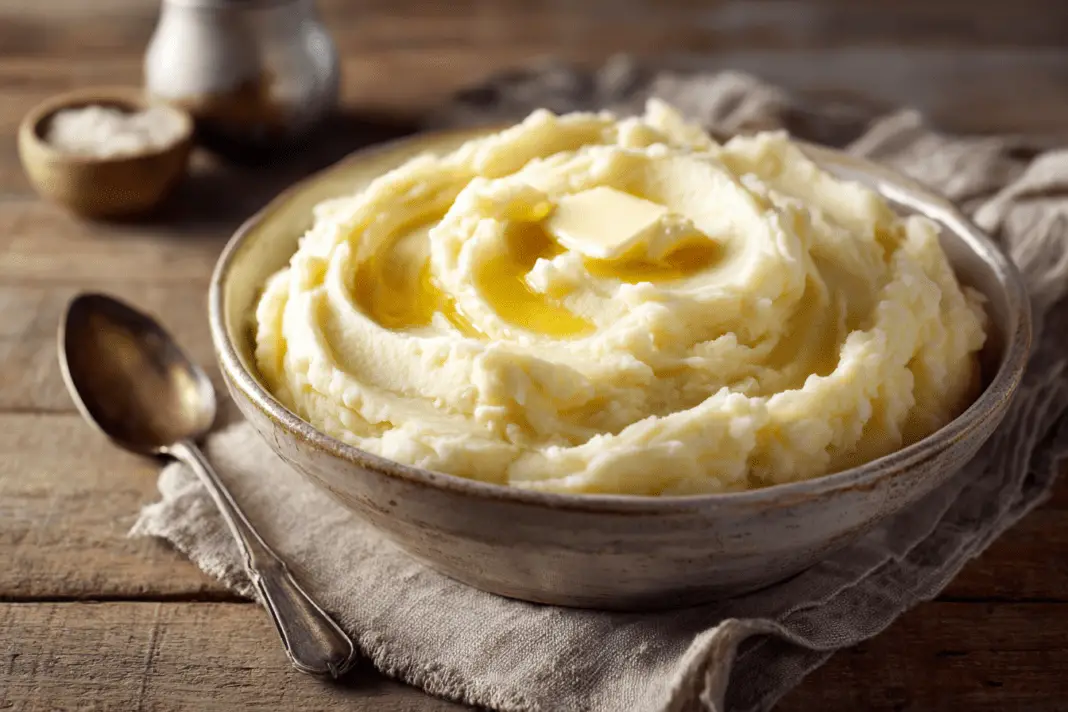
I spent years making mashed potatoes that were fine. Not bad. Not great. Just fine. The kind where everyone takes a polite scoop and then reaches for the gravy to cover up what’s missing. Meanwhile, every time I ordered a steak somewhere decent, the mashed potatoes that came alongside it were in a completely different universe — smooth, rich, almost impossibly creamy. What were they doing that I wasn’t?
Turns out, the answer isn’t one thing. It’s about six or seven things, all stacked on top of each other. And once you understand them, you can absolutely make restaurant-quality mashed potatoes at home. The recipe I’m sharing today is inspired by the techniques that professional chefs actually use, including a few borrowed from the late Joël Robuchon, the French chef whose mashed potatoes are considered the most famous in the world. His recipe uses a two-to-one ratio of potatoes to butter — a half pound of butter for every pound of potatoes. We’re going to dial that back slightly so you don’t faint, but the spirit is the same: stop being afraid of butter.
It Starts With the Right Potato (And Most People Grab the Wrong One)
Not all potatoes are meant to be mashed. This is the single biggest mistake I see home cooks make — they just grab whatever’s on sale. But there are real differences between potato varieties, and they matter a lot here. Potatoes fall into three camps: starchy, waxy, and somewhere in between. Starchy potatoes like Russets cook up fluffy and light, and they absorb butter and cream like a sponge. Waxy potatoes — red-skinned, fingerlings, new potatoes — hold their shape well, which is great for potato salad but terrible for mashing. They tend to turn gluey and paste-like when you try to mash them.
My pick is Yukon Gold. They sit right in the middle — starchy enough to get creamy, but with a naturally buttery flavor that Russets don’t have. Recipe developer Maxine Sharf, author of the upcoming cookbook Maxi’s Kitchen, agrees. She says Yukon Golds have a naturally buttery flavor and a creamy texture that makes them perfect for this job. Russets will also work and give you an even fluffier result if that’s what you prefer. Just stay away from anything waxy.
Boil Them Whole, in Aggressively Salty Water
Here’s something restaurants do that almost nobody does at home: they boil potatoes with the skins on. This isn’t laziness — it’s strategy. Keeping the skins on prevents the potatoes from absorbing too much water during cooking. Waterlogged potatoes mean diluted flavor and a watery final product, and no amount of butter can fix that. The skins act as a barrier, keeping the flavor concentrated inside.
The water itself needs to be salty. Not a little salty — aggressively salty. It should taste obviously salty when you taste it. About one tablespoon of kosher salt per gallon of water is a good guideline. This is your one and only shot to season the inside of the potato. You can add salt later, but it’ll only season the surface. Big difference.
Start the potatoes in cold water, not boiling. This lets them cook evenly from the outside in. Bring it up to a gentle boil and cook until they’re fork-tender — a toothpick should slide through with no resistance. But don’t let them get mushy. There’s a window, and you want to catch it.
Dry Them Out Before You Add Anything
This is the step almost nobody talks about, and it makes a huge difference. Even when you boil potatoes with skins on, they’re still going to carry excess moisture. After you drain them and peel them (the skins slip right off while they’re warm — use a towel to hold them), put the potatoes back in the pot over medium-low heat. Stir them with a wooden spoon for a minute or two. You’ll see steam rising off them. That’s the extra water leaving.
Why does this matter? Because every bit of moisture you cook off is space that butter and cream can fill instead. Think of it like wringing out a sponge before you dip it in something better. A chef in one interview put it well — you can even use paper towels to pat the drained potatoes and let them sit for a few minutes to dry further. The drier the potato, the richer the final product.
Use a Ricer, Not a Masher
If you only buy one new kitchen tool this year, make it a potato ricer. It looks like a giant garlic press, and it works the same way — you load in the cooked potato and squeeze, and it comes out the other side in fine, fluffy strands. The OXO Good Grips 3-in-1 Adjustable Potato Ricer is a solid budget option that you can find at most stores or on Amazon for around $15.
Why does ricing beat mashing? Because a regular masher or, worse, an electric mixer requires you to work the potatoes repeatedly. Every time you press and fold and stir, you’re releasing more starch. Too much starch and your potatoes go from creamy to gluey — like wallpaper paste. A ricer breaks the potatoes down in one pass without overworking them. Chef Dylan Gaydos of Townley House Hotel puts it bluntly: never put them in a blender. That’s a one-way ticket to gummy potatoes.
If you want to go even further — and this is what some Michelin-starred kitchens do — pass the riced potatoes through a fine mesh sieve or tamis. It’s an extra step, but the texture becomes almost unbelievably silky.
The Butter and Cream Situation
This is where home cooks get shy, and it’s the number one reason your mashed potatoes don’t taste like a restaurant’s. Chefs are not using a tablespoon of butter and a splash of skim milk. They’re using a whole stick of butter — sometimes more — and heavy cream instead of milk. There’s no room for 2% in this recipe.
Joël Robuchon’s famous recipe uses a half pound of butter (two full sticks) for every pound of potatoes. That’s extreme, and I’m not asking you to go there unless you want to. But for two pounds of potatoes, one stick of butter (8 tablespoons) and about three-quarters of a cup of heavy cream is the minimum for something that actually tastes like it came out of a steakhouse kitchen. A lot of places also add cream cheese — maybe two ounces — which brings a subtle tang and makes everything even smoother.
Here’s the critical part that almost everyone misses: warm your butter and cream before adding them. Don’t dump cold butter into hot potatoes. Melt the butter and heat the cream together in a small saucepan until everything is warm and combined. Cold dairy hitting hot potatoes creates clumps and uneven texture. Warm dairy absorbs into the mash smoothly and evenly. This one detail alone will make a noticeable difference.
Season at Every Stage
Salt isn’t something you add once at the end. You salt the boiling water. You taste after ricing. You taste again after adding butter and cream. And you adjust one more time before serving. Bland mashed potatoes would never fly at a steakhouse — the side dish has to hold its own next to a heavily seasoned cut of beef. White pepper is traditional in restaurant kitchens because it blends invisibly into the potatoes, but regular black pepper works fine too.
Serve Them Right Away (Or Reheat Them Smart)
Mashed potatoes are best fresh, but restaurants obviously make them ahead of time. Here’s how they handle it: they make the base — potatoes riced with butter — ahead of service, but they hold off on the cream and milk. When it’s time to serve, they heat the cream separately, add a portion of mashed potatoes to the hot cream, and fold everything together. This keeps the texture from getting dense or pasty from sitting around. If you’re making these for Thanksgiving or a dinner party, this is how you do it. Make the base up to a couple hours ahead, keep it covered, and add the warm cream right before you bring them to the table.
A Few Variations Worth Trying
Once you’ve nailed the base recipe, there are a few directions you can go. Sour cream swapped in for part of the heavy cream adds a nice tang. Roasted garlic — a whole head roasted until soft and squeezed into the potatoes — is incredible. Some steakhouses fold in chives and crispy bacon. At St. Anselm in Brooklyn, they actually pan-fry their mashed potatoes in lard, giving them a crispy exterior with a fluffy interior. That’s a project, but it’s a fun one.
The point is, once you have a solid foundation — the right potato, proper drying, a ricer, warm dairy, generous fat, and careful seasoning — you can go anywhere with it. But don’t skip the basics thinking a fancy add-in will save mediocre technique. It won’t.
Frequently Asked Questions
Q: Can I use a hand mixer instead of a potato ricer?
A: You can, but you have to be very careful. Chef Michael Werneke says his stepmother makes mashed potatoes that beat restaurant versions using only an electric hand mixer. The key is to mix on low speed and stop the second they come together. Overmixing with any electric tool releases too much starch and makes the potatoes gluey. A ricer is more foolproof because it does the job in one pass.
Q: Can I peel the potatoes before boiling them?
A: You can, but you’ll lose some flavor and the potatoes will absorb more water during cooking. Boiling with skins on keeps the flavor concentrated and prevents waterlogging. The skins peel off easily after cooking — just let them cool for a minute and use a kitchen towel to grip them.
Q: Why do my mashed potatoes always turn out gummy?
A: Two likely causes. First, you might be using waxy potatoes like red-skinned or fingerling varieties — switch to Yukon Gold or Russet. Second, you’re probably overworking them. Every extra stir, mash, or beat releases more starch. Use a ricer, fold in the dairy gently, and stop as soon as everything is combined.
Q: Can I make these ahead for Thanksgiving?
A: Yes. Make the base by ricing the potatoes and adding the butter, but don’t add the cream yet. Keep the base covered at room temperature for up to two hours or refrigerate overnight. When you’re ready to serve, heat the heavy cream in a saucepan, add the potato base to it, and stir gently until everything is hot, smooth, and combined. This is how professional kitchens do it.
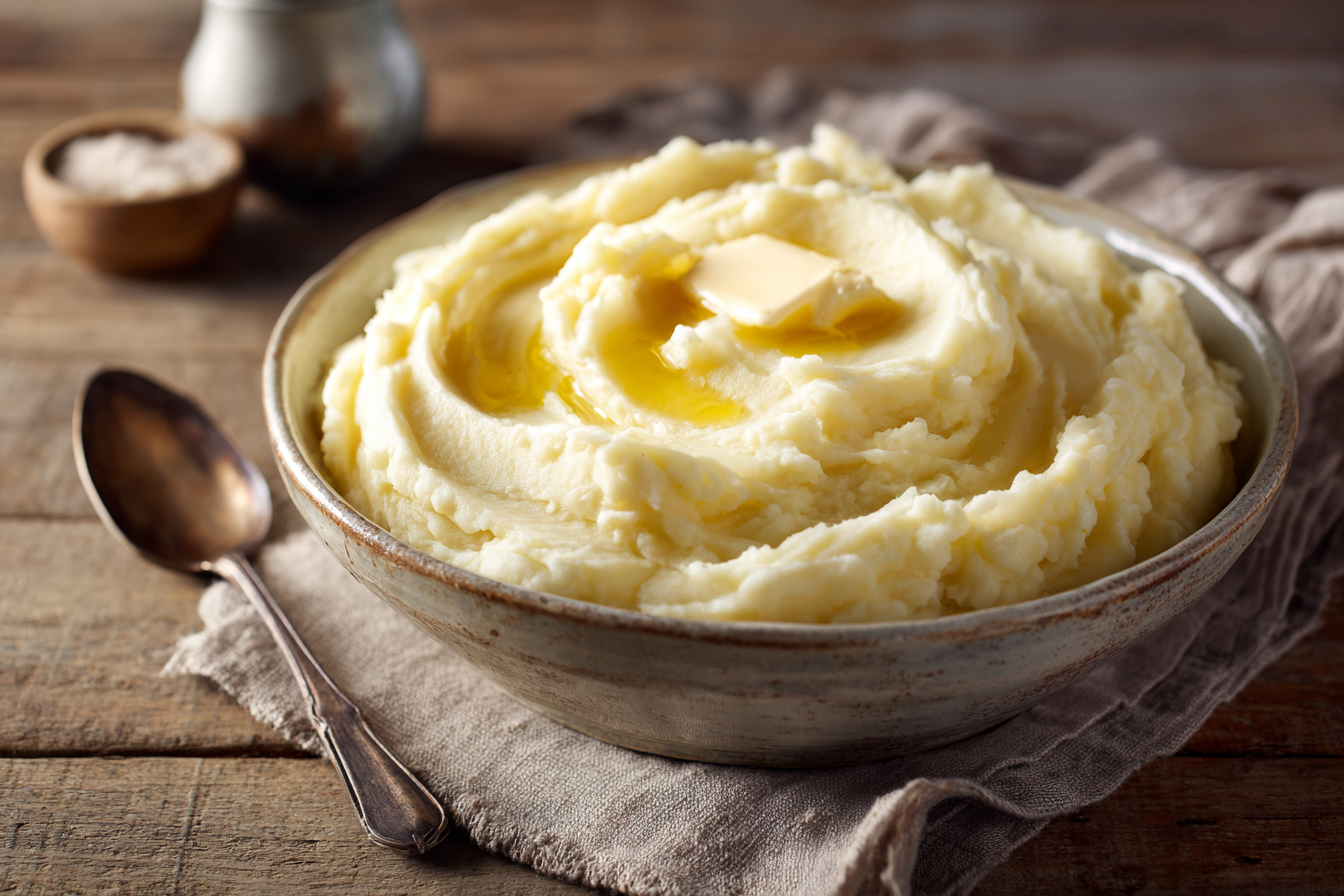
Restaurant-Style Buttery Mashed Potatoes
Cuisine: American6
servings10
minutes30
minutes380
kcalRich, creamy mashed potatoes made with the same techniques professional chefs use — generous butter, warm heavy cream, and a potato ricer for the silkiest texture you’ve ever made at home.
Ingredients
2 pounds Yukon Gold potatoes (about 5-6 medium)
1 tablespoon kosher salt (for the boiling water)
1 stick (8 tablespoons) unsalted butter, cut into pieces
¾ cup heavy cream
2 ounces cream cheese, softened
¾ teaspoon fine sea salt (plus more to taste)
¼ teaspoon white pepper
1 tablespoon unsalted butter (for serving, optional)
Fresh chives for garnish (optional)
Directions
- Place the whole, unpeeled Yukon Gold potatoes in a large pot and cover with cold water by about 2 inches. Add 1 tablespoon of kosher salt to the water — it should taste noticeably salty. Starting in cold water ensures the potatoes cook evenly from the outside in.
- Bring the water to a boil over high heat, then reduce to a steady simmer. Cook for 25-30 minutes, or until a toothpick slides through the center of the largest potato with no resistance. Don’t let them get mushy — you want them just tender.
- While the potatoes cook, combine the butter, heavy cream, and cream cheese in a small saucepan over medium-low heat. Stir occasionally until everything is melted and smooth. Keep this warm on the stove — you’ll add it to the potatoes shortly.
- Drain the potatoes thoroughly and let them cool just enough to handle, about 2 minutes. Using a kitchen towel to hold each potato, peel off the skins — they should slip right off. Discard the skins.
- Return the peeled potatoes to the empty pot and set it over medium-low heat. Stir gently with a wooden spoon for 1-2 minutes to cook off excess moisture. You’ll see steam rising — that’s the water evaporating and making room for the butter and cream.
- Pass the dried potatoes through a potato ricer back into the pot (or into a large bowl). Work in batches, pressing each portion through completely. Do not use a blender, food processor, or over-mix with an electric mixer — one pass through the ricer is all you need.
- Pour the warm butter and cream mixture over the riced potatoes in three additions, gently folding with a rubber spatula or wooden spoon after each addition until just combined. Add the fine sea salt and white pepper and fold again. Don’t stir aggressively — gentle is the name of the game.
- Taste and adjust salt as needed. Transfer to a warm serving bowl, top with an extra pat of butter and a sprinkle of chives if you like. Serve immediately for the best texture.
Notes
- For an even silkier texture, pass the riced potatoes through a fine mesh sieve or tamis before adding the butter and cream. This is what Michelin-starred kitchens do for that impossibly smooth finish.
- To make ahead, complete through step 6 (ricing) and stir in the butter only. Cover and hold at room temperature for up to 2 hours. When ready to serve, heat the cream separately, add the potato base, and fold together until hot and smooth.
- Russet potatoes can be substituted for Yukon Golds and will produce a slightly fluffier (less buttery-flavored) result. Avoid red-skinned, fingerling, or other waxy potatoes — they will turn gummy.
