

Fresh herbs are one of those things that can totally transform a meal, but they’re also pretty much notorious for wilting within days of bringing them home. I mean, you buy a beautiful bunch of cilantro or parsley, use a few sprigs, and then find a slimy mess in your crisper drawer a week later. It’s honestly one of the most frustrating parts of cooking with fresh ingredients. But here’s the thing—you don’t have to accept soggy, brown herbs as inevitable.
Why most people get herb storage wrong
The biggest mistake? Leaving herbs in that plastic bag from the store. That bag traps moisture like crazy, which basically turns your herbs into mush within days. And the lack of airflow doesn’t help either. After trying different methods over the years, I’ve noticed that the store bag is pretty much the worst option, even though it’s what most of us default to. The herbs sit there, getting wetter and slimier until you eventually toss them out. What a waste.
You need to wash them first
A lot of people think washing herbs adds too much moisture and makes them spoil faster. But that’s not really true. Most grocery stores already mist their herbs on the shelves, so they’re already wet when you buy them anyway. Washing them in cold water actually removes surface bacteria and debris that can cause faster decay. I use a salad spinner to wash mine—just fill it with cold water, swirl the herbs around gently, drain, and spin them dry. Then I pat them with paper towels to get rid of any extra moisture. Honestly, the washed herbs last way longer than unwashed ones. At least in my experience.
Hardy herbs vs tender herbs matter
Not all herbs are the same when it comes to storage. Hardy herbs like rosemary, thyme, and sage have tougher leaves and woody stems. They can handle being wrapped up differently than tender herbs. Tender herbs—think parsley, cilantro, dill, and mint—have delicate leaves that bruise easily and need more careful handling. And then there’s basil, which is sort of in its own category because it hates the cold. Does anyone actually know why basil is so finicky? It’ll turn black in the fridge faster than almost any other herb.
The storage method that works for one type doesn’t always work for another. That’s where people mess up. They try to store everything the same way.
The damp paper towel method for hardy herbs
For hardy herbs like rosemary, thyme, sage, and even chives, the best method I’ve found is wrapping them in a slightly damp paper towel. Not soaking wet—just damp. Run the paper towel under water and wring it out until it’s barely moist. Then lay your herbs in a single layer on the towel, roll it up like a jelly roll, and stick the whole thing in a plastic zipper-lock bag. Keep it in the fridge. The damp towel keeps just enough moisture around the herbs without making them slimy, and the bag prevents them from drying out completely. I’ve had thyme last for weeks this way. Weeks!
Treat tender herbs like flowers
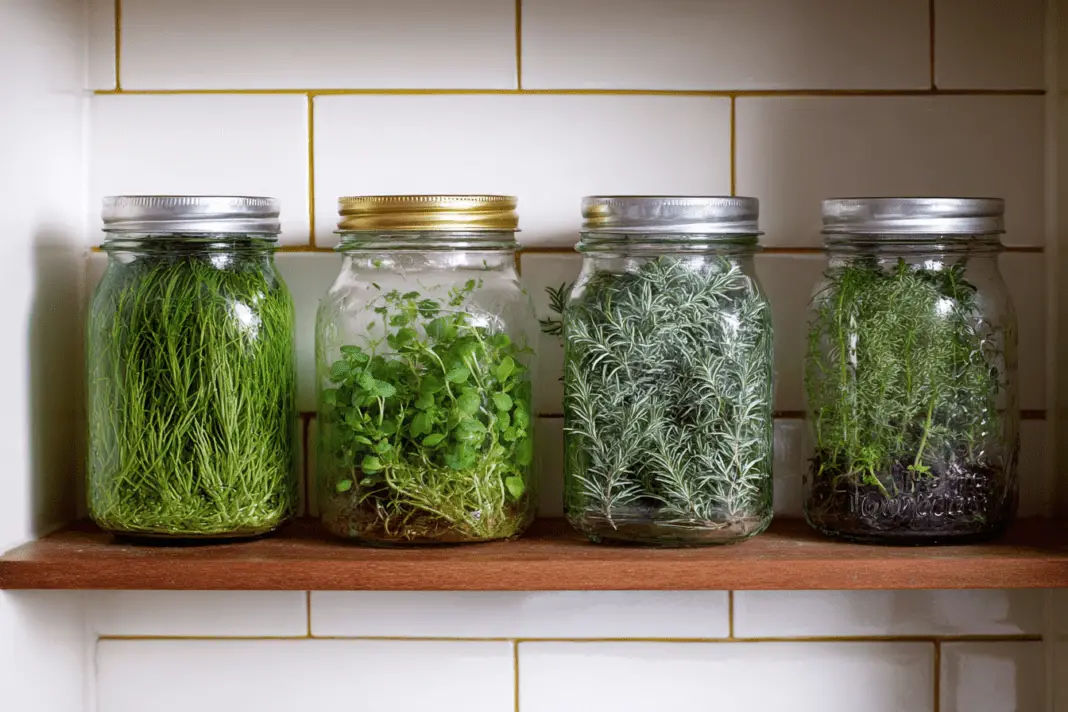
Tender herbs like parsley and cilantro do way better when you treat them like a bouquet of flowers. After washing and drying them, trim off the bottom of the stems and place them upright in a jar with about an inch of water at the bottom. Then—and this part is super important—cover the whole thing with a plastic bag or the jar’s lid if it fits. The bag traps humidity around the leaves while the stems drink up the water. This keeps everything fresh and crisp for way longer than just leaving them loose in the fridge. The Serious Eats testing showed herbs lasting over seven weeks with this method, which is kind of insane.
One downside? The jar takes up vertical space and can get knocked over easily. I’ve spilled herb water more times than I’d like to admit. But using a shorter, wider jar with a lid solves that problem pretty well.
Basil is the exception to everything
Basil doesn’t belong in the fridge at all. The cold temperature makes it turn black and wilted super fast. Instead, treat basil like a bouquet too, but keep it at room temperature on your counter. Trim the stems, put them in a jar with water, and place the jar somewhere with indirect light—not in direct sunlight, which can make the leaves wilt. Change the water every couple days to keep it fresh. Basil stored this way can last up to two weeks. And it looks pretty sitting on your counter, which is a bonus. It’s basically a win-win situation.
What about freezing or drying herbs
Sometimes you end up with way more herbs than you can use fresh, even with proper storage. Freezing and drying are both solid options for long-term preservation. For freezing, you can chop the herbs, pack them into ice cube trays, cover with olive oil or water, and freeze. These cubes are perfect for tossing into soups, sauces, or pasta dishes. Dried herbs work great for spice rubs and slow-cooked recipes where the texture of fresh herbs doesn’t matter as much. You can dry herbs by hanging them upside down in a cool, dark, dry place—no fancy equipment needed. Just tie them in small bundles and let them hang for a few weeks until they’re totally crispy. The Gardenary guide walks through the whole hanging process step by step.
Why the damp vs dry paper towel debate exists
You’ll find conflicting advice online about whether to use damp or dry paper towels when storing herbs. Some people swear by dry towels because they think the towels absorb excess moisture and prevent decay. Others insist damp towels keep herbs from drying out too much. After testing both methods myself, I can say that damp towels work way better—at least for hardy herbs. The dry towel method left my herbs kind of limp and sad after a week, even though they didn’t mold. But the damp towel kept everything crisp and green. The Kitchn found the same thing in their side-by-side testing. Damp beats dry. Not even close.
Don’t forget to label everything
This sounds obvious, but it’s so easy to forget. When you’re storing multiple types of herbs, especially if you’re freezing or drying them, label each container with the herb name and the date you stored it. Trust me on this—it’s impossible to tell the difference between dried oregano and dried thyme just by looking at them in a jar. And frozen herb cubes all look identical. A simple piece of tape with a date written on it saves so much confusion later. Plus, you’ll know how old everything is so you can use up the oldest stuff first. Basically just good kitchen organization.
Keeping fresh herbs around doesn’t have to mean throwing half of them away. With the right storage method for each type, you can actually use up what you buy and maybe even save some money in the process. It’s worth the extra few minutes to wash, trim, and store them properly when you get home from the store.
