

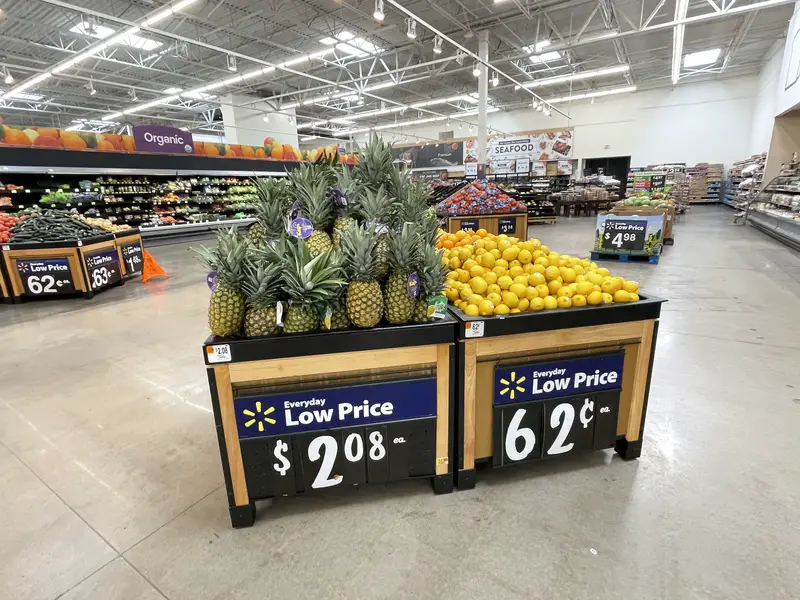
Walking into Walmart for groceries seems like the most normal thing in the world. The prices look good, the aisles are stocked, and millions of people do their weekly shopping there without thinking twice. But behind those everyday low prices and familiar Great Value labels, there’s a whole lot going on that most shoppers have no idea about. From questionable pricing practices to problems with how products are labeled, the biggest grocery seller in America has some serious issues that deserve a closer look.
The store uses its size to control prices in ways you wouldn’t expect
When you see those low prices at Walmart, it’s easy to think they’re just being nice to customers. The reality is way more complicated than that. Walmart has gotten so big that it can basically force the companies that supply food to give them huge discounts. That might sound great for Walmart shoppers, but here’s the catch: those same suppliers then have to charge smaller stores way more money to make up for it. This means that the little grocery store down the street can’t compete, even if they wanted to.
As of 2023, about one out of every four dollars spent on groceries in America goes to Walmart. That’s a massive chunk of the market, and it’s created some serious problems. Small grocery stores have been forced to close down, leaving entire communities with fewer options. People who don’t have cars or access to buses end up in a real bind when their local store shuts down. The FTC has been looking into this, especially in areas where poor families are left with nowhere else to shop for fresh food. Meanwhile, the farmers growing the food are making less money too.
In some towns Walmart is literally the only grocery option
Imagine living in a place where one company controls almost all the grocery shopping. That’s not some made-up scenario; it’s actually happening in dozens of American cities right now. Back in 2019, researchers found that Walmart controlled more than half the grocery market in 43 major areas across the country. In Bismark, North Dakota, they had 83% of the market. In Atchison, Kansas, it was an incredible 95%. When one store has that much control, customers lose any real choice about where to shop or what prices to pay.
Here’s something interesting: U.S. antitrust laws say things get suspicious when a company controls more than 50% of any market. Walmart has blown past that limit in all those areas, but nothing has really changed. The company says it’s willing to open stores in places that don’t have good access to fresh food, but critics point out that this just gives them even more control. When there’s no competition, Walmart decides what products to carry and how much to charge. Farmers were getting just 15 cents for every dollar people spent on groceries in 2019, partly because of Walmart’s control over pricing.
Great Value products aren’t always the bargain they appear to be
Most people grab Great Value products thinking they’re getting the best deal possible. After all, that’s what the name suggests, right? The truth is that these store-brand items aren’t always cheaper than other options. When people actually sit down and compare prices, they often find that Aldi’s house brands cost less than Great Value products. Even Costco’s Kirkland Signature brand beats Walmart on price for a lot of items. So that generic mac and cheese or those canned vegetables might not be saving you as much money as you think.
Things have gotten worse since the pandemic ended too. People on social media have been posting about how some Great Value prices have basically doubled. Walmart’s CEO blamed inflation for the higher prices, but plenty of experts aren’t buying that excuse. A professor from UC Berkeley and Senator Elizabeth Warren have both called out Walmart and other big stores for using inflation as a cover to jack up prices and make bigger profits. In fact, Walmart’s net income jumped 93% to reach $10.5 billion toward the end of 2023. That doesn’t exactly sound like a company struggling with rising costs.
The egg situation keeps getting messier and messier
Trying to buy eggs at Walmart has turned into a confusing mess. Back in 2016, the company promised it would switch to selling only cage-free eggs by 2025. That seemed like good news for people who care about how chickens are treated. But when 2022 rolled around, Walmart announced they weren’t going to meet that goal after all. By 2024, only about 27% of their eggs were actually certified cage-free. This is a pretty big deal when you consider that Walmart sells more than 11 billion eggs every year.
The problems don’t stop there either. A customer sued Walmart in 2018 claiming that eggs labeled as organic weren’t really organic at all. The chickens laying those eggs never got to go outside, which the ASPCA called “faux-ganic.” Then PETA got involved after investigating one of Walmart’s major egg suppliers, a place called Trillium with 2.4 million chickens. Their undercover footage showed some really awful stuff: workers killing hens, throwing live birds in the trash, and keeping chickens crammed in metal cages without proper care. An avian flu outbreak at that same facility ended up killing about 2.6 million birds in 2022.
A massive lawsuit claimed customers were overcharged on weighted items
You know those items at the store that get weighed and priced based on how much they weigh? Things like meat, produce, and deli items? Well, Walmart got sued over how they were handling those products. A class action lawsuit filed in 2022 accused the company of mislabeling weights and charging people too much money. They were also accused of overcharging on clearance items that were sold by weight. These aren’t small potatoes; we’re talking about a lawsuit that affected anyone who bought those kinds of products over more than five years.
Walmart settled the lawsuit for $45 million in 2024, even though they said they didn’t agree with the accusations. The company told NPR that settling was just in everyone’s best interest. People who bought weighted grocery items between October 2018 and January 2024 could file claims to get some of that money back, with individual customers eligible for up to $500. A special website was set up for people to make their claims or protest the settlement. It makes you wonder how much extra money people paid over those years without even realizing it.
The amount of food Walmart throws away is pretty shocking
Food waste is a huge problem everywhere, but Walmart’s track record on this has been particularly bad. Back in 2016, the CBC did an investigation and found stores throwing out food that was still cold and hadn’t even reached its expiration date yet. A former manager in the produce and bakery department said he threw away about a shopping cart full of food every single day. The manager explained that fruits and vegetables with small imperfections would get tossed even though they were perfectly fine to eat. When he asked why they couldn’t donate the food, his boss basically said people wouldn’t buy food if they could get it for free.
Fast forward to 2022, and reports showed that Walmart was responsible for around 383 kilotons of food waste per year. That’s an almost impossible amount to wrap your head around. Even though Walmart has claimed it donates food to food banks, employees keep saying they see massive amounts getting thrown in the dumpster instead. Videos continue to pop up on social media showing all the food that ends up in the trash. When you think about how many people struggle to afford groceries, seeing that much perfectly good food getting tossed feels pretty wrong.
Walmart invented a fake craft brewery to sell beer
Craft beer became really popular over the past decade, and lots of people like supporting small breweries. So when Walmart started selling a craft beer brand called Trouble Brewing that was supposedly from Rochester, New York, some customers were excited to try it. There was just one problem: Trouble Brewing didn’t actually exist. The Washington Post looked into the brewery and pretty quickly figured out it was completely made up. There was no brewery at the address listed, no history of the company, nothing. It was basically a fake brand created to look like a small craft brewery.
After some digging, reporters traced the beer back to Genesee Brewing, which makes Genny and Genny Cream Ale. These aren’t exactly what most people think of when they think craft beer. When asked about it, Walmart’s senior buyer said they weren’t trying to trick anyone and that lots of products don’t identify who makes them. The packaging was intentionally designed to look and feel like craft beer though. This whole situation showed that you can’t always trust what you see on the label, even when shopping at a major retailer. If they’ll make up a fake brewery, what else might be misleading?
Prices keep going up while profits keep breaking records
Everyone has noticed how much more expensive groceries have gotten in the past few years. Walmart has been right there with everyone else, raising prices on all kinds of products. The company keeps pointing to inflation and supply chain problems as the reason prices have to go up. And sure, those things are real issues that affect costs. But here’s what makes people suspicious: while regular shoppers are struggling to afford groceries, Walmart’s profits have been going through the roof. That 93% jump in net income we mentioned earlier? That happened while people were complaining about not being able to afford basic food items.
Critics have pointed out that big companies like Walmart seem to be using inflation as an excuse to raise prices way more than necessary. When costs go up a little bit, they raise prices a lot, and then keep those higher prices even when their costs go back down. This isn’t just about Walmart either; lots of big corporations have been accused of the same thing. But because Walmart controls such a huge piece of the grocery market, their decisions about pricing affect way more people than almost any other store. When you have limited options for where to shop, you end up paying whatever they decide to charge.
The company’s growth has put countless small stores out of business
Walmart didn’t become the biggest grocery seller in America by playing nice with competition. The company’s strategy has always been about getting big enough to undercut everyone else on price, even if it means losing money at first. Once smaller stores can’t compete and close down, Walmart becomes the only option in town. This has happened in communities all across the country, especially in rural areas and poor urban neighborhoods. The corner store that families shopped at for generations closes, and suddenly everyone has to drive to Walmart or go without.
The people running those small stores aren’t the only ones who lose out either. When a local grocery store closes, jobs disappear from the community. The people who worked there often can’t find similar work, especially in small towns. Some small grocers have tried forming co-ops to compete with Walmart’s buying power, but it hasn’t been enough to save most of them. The Institute for Local Self-Reliance has been tracking this problem for years, pointing out that no other corporation in history has ever had this much control over how Americans buy food. That level of dominance over something as basic as groceries should probably worry people more than it does.
Shopping for groceries seems simple enough, but there’s a lot more going on behind the scenes than most people realize. Walmart’s size and power have created a situation where customers might not be getting quite the deal they think they are, and entire communities are losing out when small stores can’t compete. From misleading labels to questionable pricing practices, the biggest name in groceries has earned some serious side-eye. Next time you’re pushing that cart down the aisle, it might be worth thinking about what you’re really paying for.
