

You probably have a box of Ziploc bags in your kitchen right now. Maybe two boxes — one for sandwiches, one for freezer stuff. They’re one of those household staples that feel completely harmless, like aluminum foil or paper towels. You rip one off, toss your leftovers in, zip it shut, and move on with your day. But there are several things people routinely do with these bags that range from mildly dumb to genuinely risky. Some of these mistakes waste your money. Others might be messing with your health in ways you haven’t considered. Here’s what to stop doing.
Stop Microwaving Food in Them
This is the big one, and it’s the mistake most people don’t think twice about. You pull last night’s soup out of the fridge, still sitting in its Ziploc bag, and pop it straight into the microwave. Ziploc’s own website says their bags can be used in the microwave — but only to defrost or reheat, and with the zipper left open at least one inch. What they don’t advertise as loudly is what happens at the microscopic level when you heat plastic.
A study found that polypropylene containers labeled “microwave safe” released 4.2 million and 1.2 billion micro- and nanoplastic particles per square centimeter after being heated. That’s not a typo — billions of particles shedding off into your food from a single heating session. These microplastics carry chemical additives that act as endocrine disruptors, meaning they interfere with the hormones that regulate basically everything in your body — appetite, metabolism, cell growth, and reproductive function.
Even more unsettling: chemical migration from plastic into food doesn’t just happen with heat. It happens at room temperature, too. Heat just accelerates the process dramatically. A recent class-action lawsuit was filed against S.C. Johnson, Ziploc’s parent company, by a California resident alleging that marketing Ziploc products as microwave-safe is misleading since the polyethylene and polypropylene they’re made from have been shown to release microplastics when exposed to extreme temperatures. S.C. Johnson maintains their products are safe when used as directed.
Don’t Store Fatty or Acidic Foods in Them Long-Term
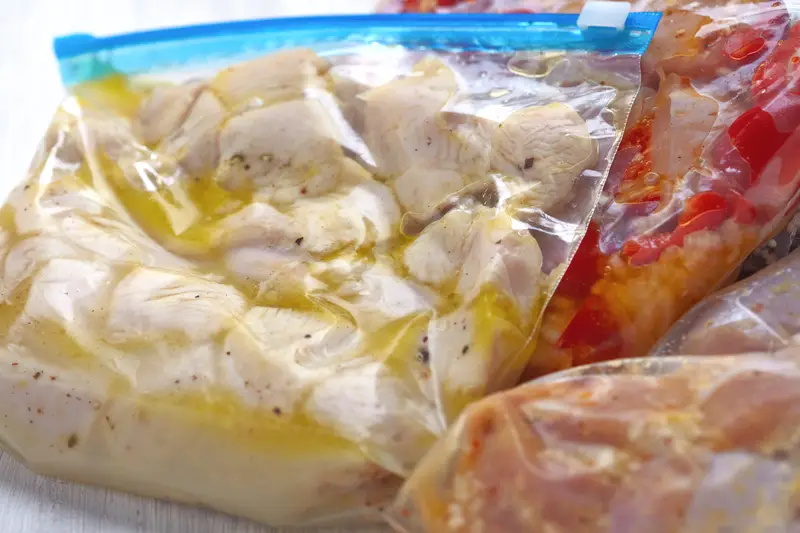
Here’s something that rarely comes up in conversation: the type of food you store in a Ziploc bag matters. Fatty foods, acidic foods, and hot foods are the most vulnerable to absorbing chemical contaminants from plastic packaging. That means your marinating chicken thighs, your tomato-based pasta sauce, your oily salad dressing — these are the worst candidates for long-term Ziploc storage.
The chemicals in question include endocrine-disrupting compounds that have been linked to infertility, obesity, diabetes, and certain cancers. Children, pregnant women, and the elderly face the highest risk from this kind of exposure. The fix is simple enough: use glass containers or stainless steel for anything fatty or acidic that’s going to sit in your fridge for more than a few hours. Save the Ziploc bags for dry goods and short-term storage.
Don’t Cut Them in Half With a Hot Knife
This one went viral on social media, and it’s exactly the kind of hack that sounds clever until you think about it for more than five seconds. The idea is to heat a butter knife with a lighter and use it to slice a gallon-size Ziploc in half, creating two smaller bags. The hot blade melts the plastic as it cuts, supposedly sealing the new edge.
The problems are immediate and obvious. Melting plastic releases toxic fumes that you really don’t want to breathe in. The DIY sealed edges end up with tiny holes along the side, so these Frankenstein bags won’t hold liquids or anything that might leak. Air gets through those gaps too, making them useless for any kind of real food storage. They might work for dry snacks you’re eating that same day, but you’re saving maybe three cents per bag while risking burns and inhaling plastic fumes. Just buy the right size bag.
Don’t Reuse Bags That Held Raw Meat
Reusing Ziploc bags is fine in general — S.C. Johnson even says so. Their official guidance is that you can handwash, rinse, and reuse their food storage bags. A box of 28 gallon-size freezer bags can last months instead of weeks if you wash them between uses. The method is straightforward: add warm water and a small squirt of soap, zip the bag shut, slosh it around, and let it air dry.
But there’s a hard line. If a bag held raw meat, fish, eggs, or any allergy-triggering food, throw it away. No amount of soap and warm water is going to make you confident enough to put your kid’s sandwich in a bag that previously held raw chicken juice. Also, don’t turn the bags inside out to wash them — you risk ripping the seams, which defeats the purpose. And stick with freezer-grade bags if you’re going to reuse them. The thinner sandwich and storage bags break down faster with repeated handling and washing.
Don’t Use Them for Sous Vide (Unless They’re the Right Kind)
Sous vide cooking has gotten popular in the last few years, and plenty of home cooks skip the vacuum sealer and just use Ziploc bags. This is a mistake with standard bags. Regular Ziploc bags are made from polyethylene, which has a softening point of around 230 degrees Fahrenheit. Water boils at 212 degrees. That’s uncomfortably close, and many sous vide recipes push temps into that range or above.
The only Ziploc product designed for sous vide is the Ziploc Endurables line, which is made from platinum silicone and can handle temperatures up to 425 degrees Fahrenheit. Standard bags will soften, warp, and potentially leach chemicals into your food at sustained high temperatures. If you’ve been using regular Ziplocs in your sous vide setup, switch to the Endurables or invest in a proper vacuum sealer.
Don’t Ignore What’s in Other Brands
Here’s an interesting twist: Ziploc actually came out looking pretty good in one major study. A Mamavation study examined 11 brands of plastic sandwich bags for PFAS — those “forever chemicals” that stay in your body essentially forever because the carbon-to-fluorine bonds are nearly indestructible. The results showed that 81 percent of the brands tested contained detectable levels of organic fluorine, which is a marker for PFAS contamination. Ziploc was the only brand that came up completely clean.
An estimated 97 percent of Americans already have PFAS in their bodies. These are synthetic chemicals that provide oil-repellent, water-repellent, and non-stick properties but refuse to break down in the environment or inside living organisms. So while Ziploc has its own issues with microplastics and chemical leaching when heated, at least the bags themselves aren’t pre-loaded with forever chemicals like most of the competition.
Don’t Throw Away 500 Bags a Year Without Thinking About It
The average American household burns through 400 to 500 plastic storage bags annually. That’s a lot of polyethylene heading to landfills — or worse, the ocean. At the current rate of plastic accumulation, projections suggest that by 2050, the mass of plastic in the world’s oceans will exceed the mass of all the fish living in them. That’s a stat that’s hard to process, but it’s worth sitting with for a second.
If you’re looking for alternatives that don’t involve rearranging your entire kitchen, there are a couple of solid options. ZipTop makes reusable storage bags from 100 percent platinum silicone — no BPA, lead, PVC, latex, or phthalates. They’re dishwasher-safe, freezer-safe, and microwave-safe. Stasher bags are similar — platinum-grade silicone, dishwasher-safe, microwave-friendly, and oven-safe up to 425 degrees. They cost more upfront but last for years.
One Smart Thing You Can Do With Them
Not everything about Ziploc bags is doom and gloom. Here’s a genuinely useful trick: use them to dispose of cooking grease. After cooking bacon or anything else that leaves a pan full of hot grease, let it cool slightly, pour it into a Ziploc bag, seal it, and let it sit until the grease hardens completely. Once it’s solid, toss the whole thing in the trash. No pouring grease down the drain, which is how you end up with clogged pipes and a plumber’s bill that’ll ruin your weekend. Some people keep a designated Ziploc in the freezer door just for collecting grease over the course of a week. That’s actually smart.
The overall takeaway isn’t that you need to purge every Ziploc bag from your house tomorrow. It’s that most of us use them carelessly — microwaving without thinking, storing the wrong foods, reusing bags that should be tossed. Small changes make a real difference. Use glass when you’re heating food. Use silicone when you need something flexible and reusable. And save the Ziplocs for what they’re actually good at: dry storage, organization, and soaking up bacon grease like a champ.
