

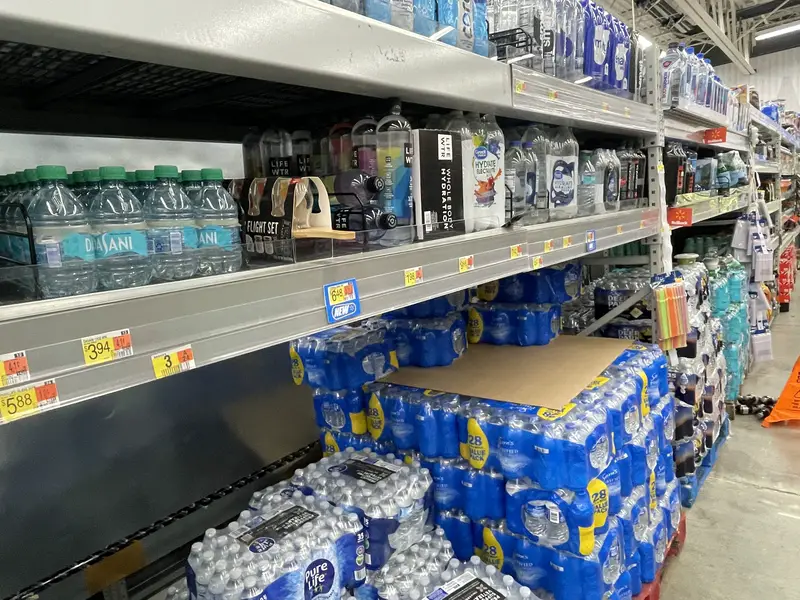
Next time you’re standing in the store aisle, reaching for that expensive bottle of water because you think it’s somehow better than what comes out of your faucet, you might want to think twice. Turns out that nearly 64% of bottled water sold in America comes from the same municipal water systems that supply your kitchen sink. That’s right—you’re probably paying a dollar or more for something you could get at home for less than a penny. The Environmental Working Group tested popular brands and found some shocking results that’ll make you reconsider ever buying bottled water again.
Most major brands use plain old tap water
Walk into any grocery store and you’ll see dozens of water brands with pretty labels and promises of purity. But here’s what they don’t advertise on those bottles: most of them are filled with municipal tap water. Dasani gets its water from cities in California, Minnesota, Arizona, Colorado, and Michigan—basically the same stuff flowing through pipes in those areas. Lifewtr does the same thing. Even Nestle Pure Life, which sounds like it comes from some pristine mountain stream, actually pulls from both wells and regular city water supplies. Aquafina, another hugely popular brand, also uses public water sources.
The list doesn’t stop there. Niagara Bottling LLC, which makes the Kirkland water you’ll find at Costco, sources from municipal systems alongside wells and springs. Propel and Essentia also start with tap water, though they add electrolytes afterward to change the taste and make their products seem more special. What makes this really annoying is that these companies are taking water that costs them almost nothing, putting it in plastic bottles, and selling it back to us for a huge markup. They’re basically repackaging what you already pay for through your water bill.
Bottled water isn’t cleaner than tap water
You might assume that bottled water goes through more testing and stricter rules than tap water, but that’s actually backward. The Environmental Protection Agency regulates tap water under the Safe Drinking Water Act, which means municipal water systems have to test their water constantly and meet tough standards. Meanwhile, bottled water is regulated by the Food and Drug Administration, which has way looser requirements. Companies don’t have to prove their water is any safer than what comes from your faucet, and they don’t have to tell you where it comes from or what’s in it.
When the Environmental Working Group tested ten popular bottled water brands, they found an average of eight different contaminants in each one. We’re talking about things like caffeine, acetaminophen (yes, the pain reliever), fertilizers, solvents, chemicals from plastic, and strontium. Two brands stood out for all the wrong reasons: Walmart’s Sam’s Choice and Giant Food’s Acadia had particularly high contamination levels. Sam’s Choice even exceeded California’s bottled water quality standards in some cases. So much for that premium purity you thought you were paying for.
Companies don’t have to tell you what’s in the bottle
Pick up most bottled water brands and try to find out where the water actually comes from. Good luck with that. Unlike tap water systems that have to publish annual water quality reports, bottled water companies can keep all that information secret. The Environmental Working Group looked at this problem specifically, checking whether brands would disclose three basic things: where the water comes from, how it was treated, and what contaminants were found in testing. Most brands failed on all counts.
In 2011, only three brands earned top marks for being honest with customers: Gerber Pure Purified Water, Nestle Pure Life Purified Water, and Penta Ultra-Purified Water. Everyone else basically told consumers nothing useful. This lack of transparency should make you wonder what they’re hiding. If the water was really as pure and special as the marketing suggests, wouldn’t companies want to brag about test results and show exactly where it comes from? The fact that they don’t tells you something important about what you’re really getting for your money.
Plastic bottles add their own contamination
Even if the water going into those bottles started out clean, the plastic container itself can cause problems. Research from Orb Media found that 93% of bottled water samples from around the world contained microplastic particles. These tiny pieces of plastic come from the bottle itself, breaking down and getting into the water you’re drinking. So not only are you paying for tap water, you’re also getting a side of plastic that wouldn’t be there if you just drank from the faucet using a reusable container.
The chemicals used to make plastic bottles can also leach into the water, especially if bottles get warm or sit around for a long time before you buy them. This means that water from a bottle might actually be less pure than what comes straight from your tap. Some companies use BPA-free bottles now, which is better, but that doesn’t solve the microplastic problem. The simple act of storing water in plastic for weeks or months creates contamination that wouldn’t exist if you just filled a glass at home.
Taste tests show surprising results
When someone actually sat down to taste 22 different bottled water brands, the results weren’t what you’d expect based on price or marketing. Path Water came out on top for having a pure, crisp taste, but what really stood out was its aluminum refillable bottle that you can use again. Second place went to Saratoga Springs Water, which has a nice mineral taste despite getting popular mainly through social media. Third was the 365 brand from Whole Foods, which costs less than most competitors but still tastes good and comes in recyclable aluminum.
Meanwhile, some expensive and heavily advertised brands didn’t do well at all. Fiji water, which costs way more than most options, had a chemical-like aftertaste. Dasani tasted metallic. Voss charged premium prices but tasted the same as much cheaper brands. Core Hydration had a medicinal profile that nobody enjoyed. The lesson here is that price and fancy marketing don’t mean better-tasting water. In many cases, you’re just paying for the brand name and a prettier bottle while getting the same municipal water as cheaper options.
Some brands do filter and treat the water
To be fair, not all companies just bottle tap water without doing anything to it. Many use filtration systems to remove impurities and improve taste. Some add minerals back in to make the water taste better or give it that slight mineral quality people associate with spring water. Brands like Propel and Essentia add electrolytes, which changes the flavor and supposedly helps with hydration. These extra steps do cost money and require equipment, which is part of why bottled water costs more than tap.
The thing is, you can do all this yourself at home for way less money. A decent water filter for your faucet or a pitcher filter removes the same impurities these companies filter out, and it costs maybe $30 to $50 upfront plus occasional filter replacements. That’s still cheaper than buying bottled water every week. If you want minerals or electrolytes, you can add those too with powder mixes or drops that cost a fraction of what pre-bottled options charge. The processing that bottled water companies do isn’t magic—it’s just filtration and additives that you can replicate at home.
Your tap water probably tastes fine with a simple filter
If you don’t like the taste of your tap water straight from the faucet, a basic filter fixes that problem without needing to buy bottles. Most tap water tastes off because of chlorine that cities add to kill bacteria, but filters remove that chemical taste easily. You can get a pitcher that sits in your fridge, a filter that attaches to your faucet, or even a whole-house system if you really want to go all out. Any of these options will make your water taste as good as or better than most bottled brands.
The other advantage of filtering at home is that you know exactly what’s happening to your water. You’re not trusting some company that won’t tell you where the water came from or what’s in it. You’re taking water from a regulated municipal system that has to publish test results, then running it through a filter that removes specific contaminants listed right on the package. Plus you’re drinking it from a clean glass or reusable bottle instead of plastic that might be adding microplastics. It’s cheaper, you have more control, and you’re not creating plastic waste every time you get thirsty.
The cost difference is pretty shocking
Let’s talk about what you’re actually spending. A typical bottle of water at a convenience store costs $1 to $2, and that’s for maybe 16 to 20 ounces. If you buy a case at the grocery store, you might pay $4 to $6 for 24 bottles, which works out to around 20 cents per bottle. Meanwhile, tap water costs roughly $0.004 per gallon in most American cities. That means a gallon of tap water—eight times more than a typical bottle—costs less than half a penny. Even after you factor in a filter system, you’re still saving huge amounts of money.
Think about it this way: if you buy one bottle of water every day at $1 each, that’s $365 per year. A family of four doing the same thing spends $1,460 annually on bottled water. You could buy a really nice water filter system and several high-quality reusable bottles for maybe $100 to $200 total, and that would last for years with just occasional filter replacements at $20 to $40 every few months. The math is pretty clear. Bottled water companies are making a fortune by convincing people that tap water isn’t good enough, then selling that same tap water back to them at a massive markup.
What you should actually buy instead
If you want to stop wasting money on bottled water, start with a good reusable water bottle. Stainless steel ones keep water cold for hours and don’t add any taste or chemicals. They cost anywhere from $15 to $40 depending on the brand and size. Get one for home, one for your car, and maybe one for work. Next, invest in a water filter. A basic pitcher filter from Brita or PUR costs about $30 and makes your tap water taste clean and fresh. If you want something more permanent, a faucet-mounted filter or under-sink system works great and isn’t hard to install.
For times when you absolutely need to buy water because you’re traveling or forgot your bottle, look for brands that at least use aluminum or recycled plastic bottles and actually tell you where the water comes from. Path Water and the 365 brand got good marks in taste tests and use better packaging. But honestly, those situations should be rare. With a little planning—like filling your reusable bottle before you leave the house—you can almost completely eliminate the need to buy bottled water. Your wallet and common sense will thank you for making the switch.
The bottled water industry has done an amazing job convincing people that tap water isn’t good enough, when the truth is that most bottled water is just tap water anyway. You’re paying huge markups for something you already have at home, and in many cases, the bottled version is actually less regulated and potentially less clean than what comes from your faucet. A simple filter and a reusable bottle solve all the taste and convenience issues without the waste or expense. Maybe it’s time to stop falling for the marketing and start trusting your tap.
