

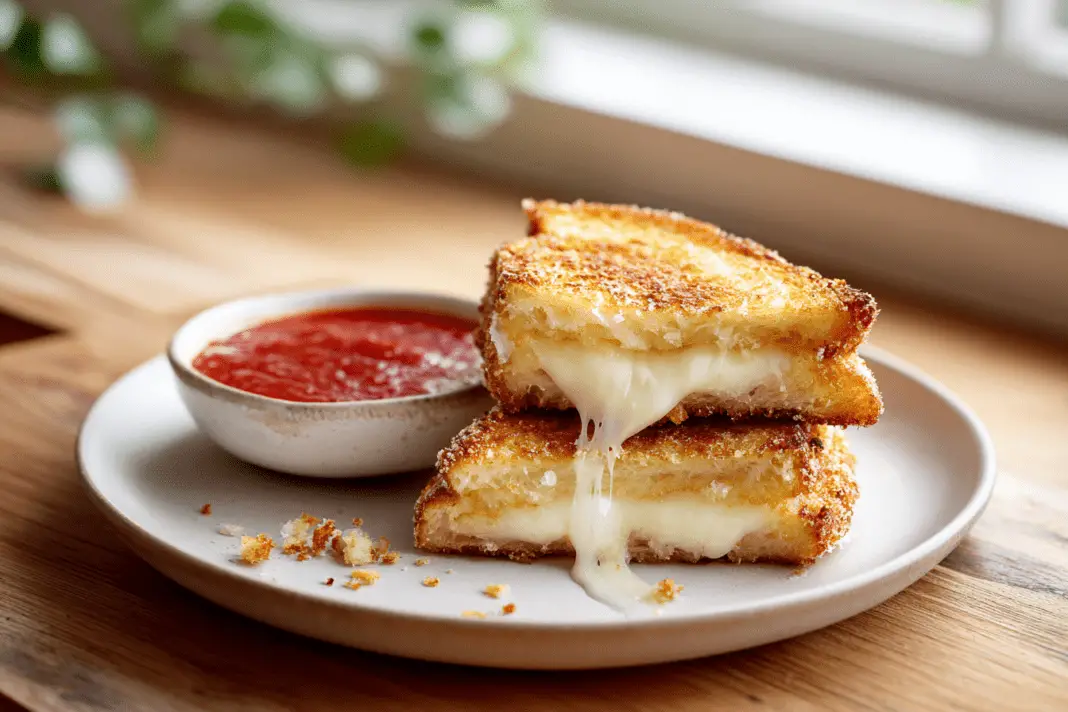
I need to tell you about the moment I gave up on regular grilled cheese. I was standing at my stove, holding a sandwich that had been battered, egg-dipped, and fried in olive oil until the outside was shattering-crispy and the inside was nothing but hot, stretchy mozzarella. It was called mozzarella in carrozza, and the American grilled cheese I’d been making my entire life suddenly felt like it had been phoning it in.
The name translates to “mozzarella in a carriage” — the bread is the carriage, the cheese is the passenger. It comes from the Campania region of southern Italy, specifically Naples, where it started as peasant food. People had stale bread lying around, leftover mozzarella drying out in the kitchen, and they figured out that if you sandwich the cheese between bread, seal it shut, dip the whole thing in egg and flour, and fry it, you get something that has absolutely no business being that good for how cheap it is.
It’s still served as street food in Naples today. You’ll find it in bars, restaurants, and from vendors on the sidewalk. And once you make it at home — which takes about 20 minutes and uses maybe five ingredients — you’ll understand why it’s survived for generations.
Why This Is Better Than American Grilled Cheese
Let me be clear about what we’re dealing with here. A regular grilled cheese is bread, butter, and cheese cooked in a skillet. It’s fine. It’s comfort food. But mozzarella in carrozza is a fried sandwich — the entire thing gets coated and hits hot oil. The result is a golden, crunchy shell that cracks when you bite into it, giving way to cheese so melty and stringy it pulls apart like something out of a pizza commercial. It’s the difference between a grilled cheese and a grilled cheese that went to finishing school in Naples and came back with an attitude.
The breading is what does it. Once you coat the sandwich in flour, dip it in beaten egg, and optionally roll it in breadcrumbs, that exterior fries up into something completely different from buttered toast. It’s closer to a mozzarella stick in sandwich form — except better, because the bread inside stays soft and pillowy while the outside gets all the crunch.
The Ingredients Are Embarrassingly Simple
You need white bread, fresh mozzarella, eggs, flour, and oil. That’s it. You can add breadcrumbs for extra crunch, but plenty of traditional recipes skip them entirely. This is a recipe that was invented by people who had almost nothing in the pantry and needed dinner. It’s not fussy.
For the bread, go with a standard white sandwich bread — something like Pepperidge Farm or Sara Lee. You actually want it a little stale, so if your loaf has been sitting on the counter for a day or two, even better. Stale bread holds up to the egg dip without falling apart. Most traditional recipes call for removing the crusts, which helps you press the edges together to seal the cheese inside. I know throwing away crusts feels wrong, but trust the process — the seal is what keeps the mozzarella from oozing out during frying.
For cheese, grab a ball of fresh mozzarella from the deli section. BelGioioso and Galbani are easy to find at most grocery stores. Slice it about 1/2 inch thick.
The One Step You Cannot Skip
Fresh mozzarella is wet. Really wet. And if you don’t dry it before building your sandwiches, you’re going to have a bad time. The excess moisture will make the bread soggy, the coating won’t stick properly, and the cheese can actually start to dissolve at high frying temperatures instead of getting melty and stringy the way you want.
Here’s what to do: slice your mozzarella, lay the slices on a plate lined with paper towels, put more paper towels on top, and press gently. Let it sit for at least 10 minutes. If you can plan ahead, wrap the whole ball in paper towels and stick it in the fridge overnight. The difference is dramatic. Dry mozzarella melts into those gorgeous, stretchy strings. Wet mozzarella turns into a watery mess inside your sandwich.
How to Build and Coat the Sandwiches
Cut the crusts off your bread slices. Lay mozzarella slices on one piece of bread, making sure the cheese doesn’t hang over the edges — you want about a half-inch border of bare bread all the way around. Place the second slice on top and press the edges firmly with your fingers or a fork to seal them together. You’re making a little pouch, and if that pouch has gaps, cheese is going to escape into the oil.
Now set up your dipping station. You need a shallow bowl of flour (about a cup, with a pinch of salt mixed in) and another shallow bowl with 2-3 beaten eggs. Use about one egg per sandwich. If you want breadcrumbs, set up a third bowl with plain Italian breadcrumbs — the Progresso canister works great.
Dredge each sealed sandwich in flour on all sides, shaking off the excess. Then dip it into the beaten egg, making sure every surface is coated — top, bottom, and all four edges. This is critical. The egg coating is what seals the whole thing and keeps the cheese locked inside. If you’re using breadcrumbs, press the egg-coated sandwich into them on all sides.
Once they’re all coated, put them on a plate lined with parchment paper and refrigerate for 20-30 minutes. This sets the coating and makes the sandwiches easier to handle when they hit the oil.
Frying Without Fear
Pour enough oil into a large skillet to come about halfway up the side of a sandwich — you’re shallow frying, not deep frying. About 3/4 inch of oil is right. Olive oil is the traditional choice and it adds a flavor that just tastes correct with this sandwich. Keep your oil temperature around 350°F, which is safely below olive oil’s smoke point of 375-405°F. If you don’t have a thermometer, drop a small piece of bread into the oil — if it sizzles immediately and starts turning golden, you’re in the zone.
If you’d rather use vegetable or canola oil, go for it. You’ll lose a little of that olive oil flavor, but the frying will be more forgiving since those oils have higher smoke points.
Carefully lower the sandwiches into the oil — don’t crowd the pan, two at a time is usually the max. Fry for about 2 minutes per side, until they’re deep golden brown. If the outside is getting too dark before the cheese melts inside, your oil is too hot. If that happens, you can rescue them by popping the sandwiches into a 325°F oven for a few minutes to finish melting the cheese.
Transfer to a wire rack or a plate lined with paper towels. Let them rest for just a minute — the inside is lava — then cut on the diagonal and watch the cheese pull.
Variations That Are Actually Traditional
Before you start thinking this is some rigid Italian recipe with rules you can’t bend, know that Italians themselves make this a dozen different ways. In Rome, they tuck anchovies or sardines inside with the mozzarella. Down in Naples, anchovies are common too. Prosciutto is another classic addition, and sun-dried tomatoes work if you want to keep it vegetarian.
You can also skip the breadcrumbs entirely for a lighter coating — many traditional versions just use the flour and egg. And if you have a loaf of crusty Italian or French bread instead of sandwich bread, slice it thick and dip the slices briefly in milk to soften them before building your sandwiches. That’s actually the oldest way to do it, since the original recipe used leftover crusty bread that had gone hard.
Don’t feel like frying? You can bake these at 350°F on a parchment-lined sheet pan, drizzled with a little oil, for about 20 minutes — flipping halfway through. They won’t be quite as crispy, but they’re still really good.
What to Serve Alongside
A warm marinara sauce for dipping is the obvious move, and it’s the right one. The acidity of tomato sauce cuts through all that rich, fried cheese perfectly. A jar of Rao’s or your favorite store-bought marinara, heated up in a small saucepan, is all you need. Pizza sauce works in a pinch.
A simple green salad with arugula and a squeeze of lemon is the best side dish I’ve found — the bitterness and brightness balance out the heaviness of the sandwich. Tomato soup is another great option, especially if you’re serving this for lunch on a cold day. Pickles work surprisingly well too, if you want something crunchy and acidic on the plate.
This is a perfect appetizer, snack, or light dinner. I make a batch when friends come over, cut them into triangles, and set them out with a bowl of warm marinara. They disappear in minutes, and someone always asks for the recipe. It takes longer to explain the name than it does to make them.
Frequently Asked Questions
Q: Can I use regular shredded mozzarella instead of fresh?
A: You can, but the result won’t be the same. Bagged shredded mozzarella has anti-caking agents that prevent it from melting into those stretchy, gooey strings. Fresh mozzarella gives you the real experience. If fresh isn’t available, sliced low-moisture mozzarella from the deli counter is a better backup than the shredded stuff.
Q: What if I don’t have eggs for the coating?
A: You can make an eggless batter with 5 ounces of flour, 2 glasses of water, and a pinch of salt. Whisk it smooth and use it to coat the sandwiches before frying. The texture will be slightly different — more like a thin tempura coating — but it still works and keeps the cheese sealed inside.
Q: How do I keep them warm if I’m making a big batch?
A: Set your oven to 250°F and place a wire rack on a sheet pan. As you finish frying each batch, transfer the sandwiches to the rack in the oven. They’ll stay crispy for up to 15-20 minutes. Don’t stack them or put them directly on the sheet pan without the rack, or the bottoms will get soggy from trapped steam.
Q: Can I make these ahead of time and fry later?
A: Yes. Build and coat the sandwiches, then refrigerate them on a parchment-lined plate for up to 4 hours before frying. The resting time in the fridge actually helps the coating adhere better, so making them ahead is a smart move if you’re prepping for a party.
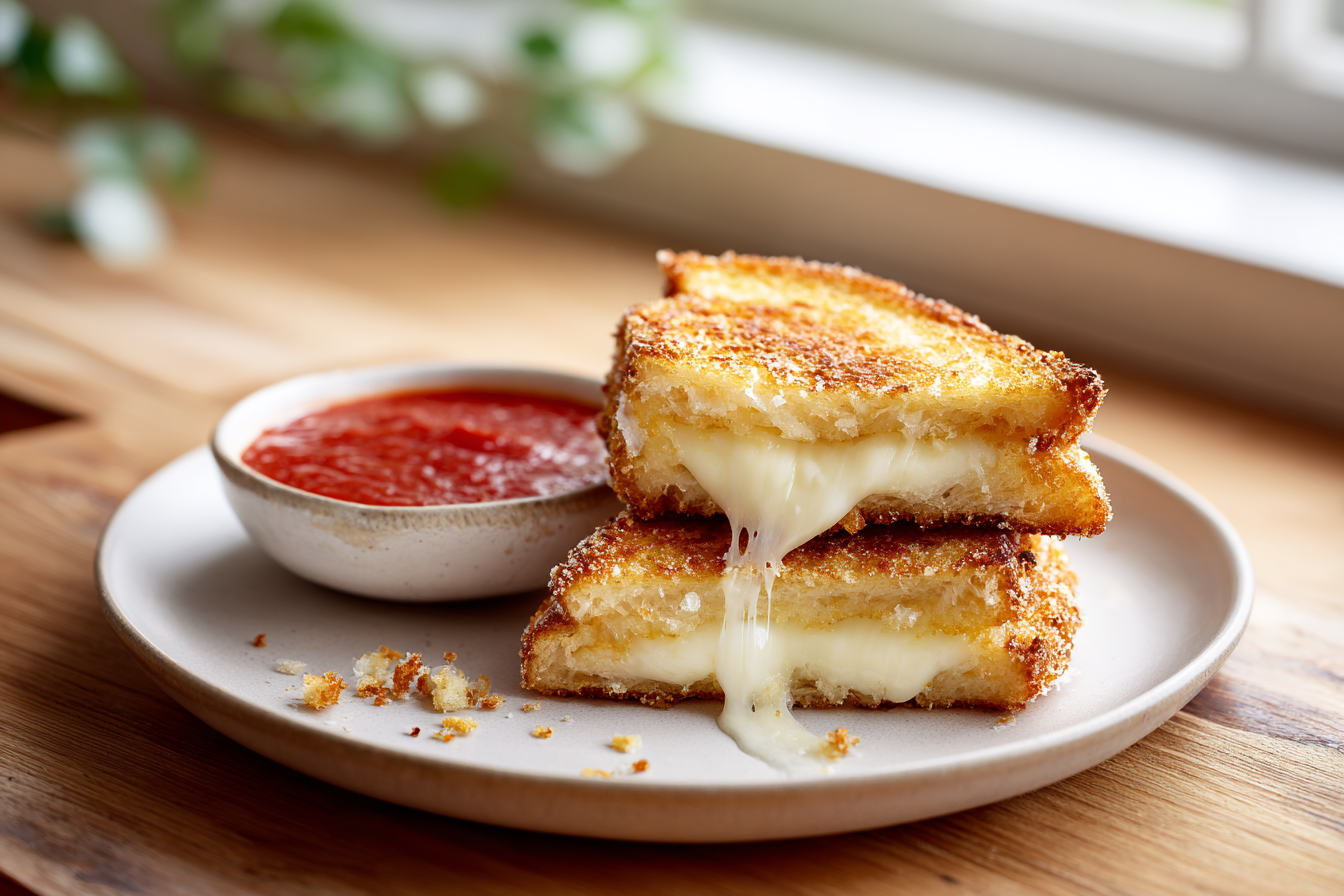
Mozzarella in Carrozza (Italian Fried Grilled Cheese)
Cuisine: Italian4
sandwiches15
minutes10
minutes380
kcalA crispy, golden-fried Italian sandwich stuffed with stretchy, melty mozzarella — the grilled cheese upgrade you didn’t know you needed.
Ingredients
8 slices white sandwich bread, crusts removed
8 oz fresh mozzarella, sliced 1/2 inch thick and patted very dry
1 cup all-purpose flour
4 large eggs, beaten
1 cup plain Italian breadcrumbs (optional)
1/2 teaspoon salt
Olive oil for frying (about 1 1/2 cups)
Marinara sauce for dipping
Optional: 4 anchovy fillets or 4 thin slices prosciutto
Directions
- Slice the fresh mozzarella into 1/2-inch thick pieces and lay them on a plate lined with paper towels. Cover with another layer of paper towels and press gently to absorb moisture. Let them sit for at least 10 minutes, or ideally wrap the mozzarella ball in paper towels and refrigerate overnight.
- Remove crusts from all 8 slices of bread. Place dried mozzarella slices in the center of 4 bread slices, leaving about a half-inch border on all sides. If adding anchovies or prosciutto, layer them on top of the mozzarella now.
- Top each sandwich with the remaining bread slices. Press the edges firmly together with your fingers or the tines of a fork to seal completely. Make sure there are no gaps where cheese could leak out during frying.
- Set up a breading station with three shallow bowls: flour mixed with salt in the first, beaten eggs in the second, and breadcrumbs in the third (if using). Dredge each sealed sandwich in flour on all sides, shaking off the excess.
- Dip the floured sandwich into the beaten egg, making sure to coat every surface — top, bottom, and all four edges. This complete coating is essential to seal in the cheese. If using breadcrumbs, press the egg-coated sandwich into them on all sides.
- Place the coated sandwiches on a parchment-lined plate and refrigerate for 20-30 minutes. This resting time helps the coating set and adhere properly, which prevents it from falling off during frying.
- Pour olive oil into a large skillet to a depth of about 3/4 inch. Heat over medium heat until the oil reaches 350°F. If you don’t have a thermometer, drop a small piece of bread into the oil — it should sizzle immediately and begin to turn golden.
- Carefully lower the sandwiches into the hot oil, frying no more than two at a time. Cook for about 2 minutes per side, until deep golden brown all over. Transfer to a wire rack or paper towel-lined plate and let rest for 1 minute before cutting on the diagonal. Serve immediately with warm marinara sauce for dipping.
Notes
- If the outside gets too dark before the cheese melts, your oil is too hot. You can rescue them by placing the sandwiches in a 325°F oven for a few minutes to finish melting the inside.
- Vegetable or canola oil can be substituted for olive oil. The sandwiches will still be delicious but will have a more neutral flavor.
- Don’t slice the mozzarella too thick or it won’t fully melt by the time the exterior is golden. A half-inch is the sweet spot.
