

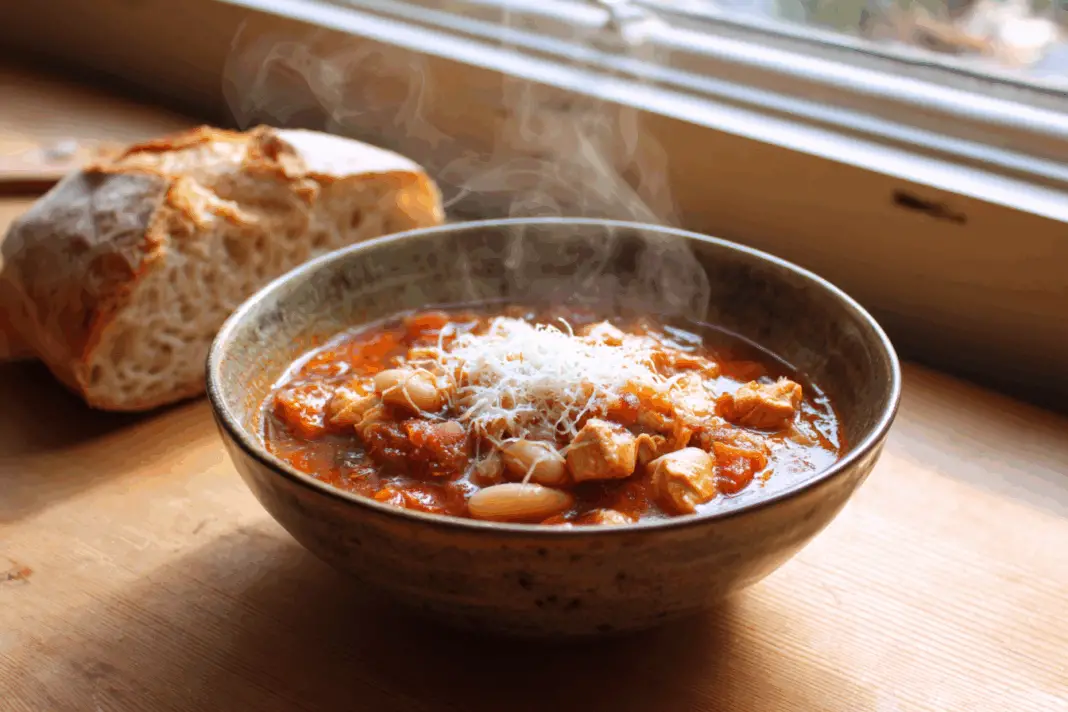
Cold evenings call for something warm and filling, and that’s where a good stew comes in handy. This tomato basil chicken stew brings together tender shredded chicken, white beans, and soft vegetables in a tomato-based broth that tastes like comfort in a bowl. It’s quick enough for a weeknight dinner but also makes great leftovers for the next day. The combination of fresh basil and canned tomatoes creates a bright, satisfying base that doesn’t require hours of simmering to develop good taste.
Why this stew works better than complicated recipes
Most stew recipes demand patience and time, but this one takes a different approach. Instead of simmering for hours, the vegetables get sautéed first until they soften and develop some color, which builds depth quickly. The trick lies in using pre-cooked chicken, whether from a rotisserie bird or leftovers from another meal. This cuts the cooking time dramatically while still delivering tender meat that soaks up the tomato broth.
The whole thing comes together in about 30 minutes on the stovetop, or you can toss everything into a slow cooker in the morning and come home to dinner ready. Either way, the active work stays minimal. According to this recipe, crushing the whole tomatoes by hand as they cook creates a chunky texture that makes the stew feel heartier without adding extra ingredients. The cannellini beans thicken the broth naturally while adding protein and substance to each spoonful.
Getting the vegetables just right
The vegetable trio of carrots, celery, and onions forms the foundation of this stew, creating a base of flavor that supports everything else. These three get diced up and cooked in olive oil until they start to soften and the onions turn translucent. This takes about seven minutes of stirring occasionally, and it’s worth not rushing. The carrots need enough time to lose their raw crunch but should still have some structure when the stew finishes cooking.
Adding garlic near the end of the sautéing process prevents it from burning while still releasing its aroma. Then comes the baby spinach, which wilts down dramatically in just a couple of minutes. Fresh spinach adds color and a bit of earthiness that balances the acidity from the tomatoes. Some people worry about spinach getting slimy in stews, but adding it toward the end of cooking keeps it tender without overdoing it. Many versions of this recipe keep the vegetable list simple to avoid overwhelming the tomato and basil combination that defines the dish.
Choosing between chicken thighs and breasts
The protein source matters more than you might think in this stew. Rotisserie chicken from the grocery store works perfectly because it’s already seasoned and cooked, requiring nothing more than shredding. If cooking chicken from scratch, thighs beat breasts in this application. Thighs contain more fat and stay tender even with longer cooking times, while breasts can turn dry and stringy if overcooked in liquid.
For those who prefer white meat, breasts can work if monitored carefully and removed from heat as soon as they reach 165 degrees internally. Browning the chicken first in the pot before adding other ingredients creates fond on the bottom of the pan, which adds another layer of richness when the liquid deglazes those browned bits. Pat the chicken dry before seasoning and browning to get better color development. About four minutes per side over medium-high heat creates a golden crust without fully cooking the meat through, which finishes during the simmering phase.
The secret ingredient that makes everything better
Fresh basil transforms this stew from ordinary to memorable. Dried herbs have their place, but basil loses too much character when dried. A quarter cup of roughly chopped fresh basil leaves gets stirred in right before serving, preserving its bright, slightly peppery notes. Some grocery stores sell living basil plants in the produce section, which stay fresh on a windowsill for weeks and cost about the same as a single package of cut herbs.
The combination of basil with tomatoes creates a classic pairing that needs little explanation. Together they form a backbone that doesn’t require complicated spice blends or exotic ingredients. Red pepper flakes add a subtle warmth without making the stew spicy, just a quarter teaspoon provides gentle heat that most people won’t even identify as pepper. Salt and black pepper round out the seasoning, though it’s smart to wait until the end to adjust these since the Parmesan cheese added at serving contains plenty of salt on its own.
Why canned tomatoes beat fresh ones here
Using canned whole tomatoes instead of fresh might seem like taking a shortcut, but it actually produces better results. Canned tomatoes get picked and processed at peak ripeness, while fresh supermarket tomatoes often get harvested early and never develop full sweetness. Two 28-ounce cans provide plenty of volume and create a thick, rich base for the stew. Whole tomatoes work better than diced or crushed varieties because they break down into irregular chunks that look more rustic.
As the stew simmers, a wooden spoon easily crushes the tomatoes against the side of the pot, creating different sized pieces that add textural interest. The juice from the cans goes right into the pot too, providing acidity and liquid without needing to add extra broth. San Marzano tomatoes from Italy offer slightly sweeter notes and lower acidity, but any quality canned whole tomatoes work fine. Store brands often come from the same facilities as name brands and cost significantly less. Checking the ingredient list helps identify better options, look for cans listing only tomatoes and salt without citric acid or calcium chloride.
Making it in a slow cooker instead
The slow cooker version requires even less attention than the stovetop method. Everything except the cheese goes into the crock in the morning, gets stirred once to combine, and cooks unattended for hours. High heat needs three to four hours, while low heat takes six to eight. The vegetables don’t get the same caramelized flavor from sautéing first, but the long cooking time melds everything together differently. Some people prefer browning the chicken first in a skillet even when using a slow cooker, transferring it along with the pan juices to add extra depth.
Slow cookers generate moisture as they cook, so the stew comes out slightly thinner than the stovetop version. Leaving the lid slightly ajar during the last hour helps evaporate excess liquid if needed. The gentle heat prevents overcooking the vegetables, though they’ll be softer than the stovetop method produces. Adding fresh basil and spinach during the final 30 minutes keeps them from turning drab. This approach works perfectly for busy schedules when dinner needs to cook itself while everyone’s at work or running errands.
What to serve alongside the stew
This stew stands alone as a complete meal since it contains protein, vegetables, and beans, but adding bread makes it even more satisfying. A crusty baguette or sourdough loaf soaks up the tomato broth nicely. Garlic bread brings extra richness, though it might compete with the basil. Some people toast thick slices of Italian bread, rub them with raw garlic, and drizzle olive oil on top for a simple bruschetta that complements the stew without overwhelming it.
A simple green salad with lemon vinaigrette cuts through the richness and adds freshness. Keeping the salad basic lets the stew remain the star of the meal. Grated Parmesan cheese on top isn’t optional, it adds saltiness and umami that ties everything together. Using a microplane grater creates fluffy shreds that melt slightly into the hot stew. The cheese should be real Parmigiano-Reggiano rather than the shelf-stable powder, the difference in taste justifies the extra cost. About two tablespoons per bowl provides plenty of cheesy goodness without making the stew too salty.
Storing and reheating leftovers properly
Leftover stew actually improves after a day in the refrigerator as the ingredients continue melding together. Store it in airtight containers in the fridge for up to four days. The stew thickens as it cools because the beans and vegetables absorb liquid, so adding a splash of water or broth when reheating brings back the original consistency. Microwaving works fine for single servings, stirring halfway through ensures even heating.
For larger portions, reheating on the stovetop over medium heat works better and allows for easier adjustment of consistency. The stew freezes well for up to two months in freezer-safe containers, leaving some headspace at the top prevents cracking as the liquid expands. Thaw frozen stew overnight in the refrigerator rather than at room temperature for food safety. The spinach loses some color after freezing but still tastes fine. Adding a handful of fresh basil when reheating frozen stew brightens up the taste. Some people freeze the stew in individual portions for quick future meals, which makes lunch preparation easier during busy weeks.
Common mistakes and how to avoid them
Rushing the vegetable sautéing stage robs the stew of depth. Those seven minutes of cooking the onions, carrots, and celery matter more than they seem. If the vegetables still look raw and haven’t softened at all, give them more time before moving forward. Another common error involves adding the garlic too early, which leads to burnt, bitter bits floating in the finished stew. Garlic needs only 30 seconds to a minute of cooking to release its aroma without burning.
Overcooking the chicken creates dry, stringy pieces that don’t absorb the broth well. If using raw chicken, brown it just until the outside develops color, then let it finish cooking gently in the simmering liquid. Pre-cooked rotisserie chicken only needs to heat through, which takes just the 10 minutes of simmering. Not seasoning properly ranks as another frequent issue, taste the stew before serving and adjust salt and pepper as needed. The canned tomatoes and beans contain some sodium, but usually not enough to fully season the dish. Adding the Parmesan at the table rather than during cooking gives diners control over saltiness and prevents the cheese from breaking down into the broth.
When weeknight dinners need to be quick but still satisfying, this tomato basil chicken stew delivers without demanding much effort. The simple ingredient list comes together in one pot, and the results taste like something that took much longer. Whether made on the stovetop or in a slow cooker, it provides a reliable meal that pleases most eaters and makes enough for leftovers the next day.
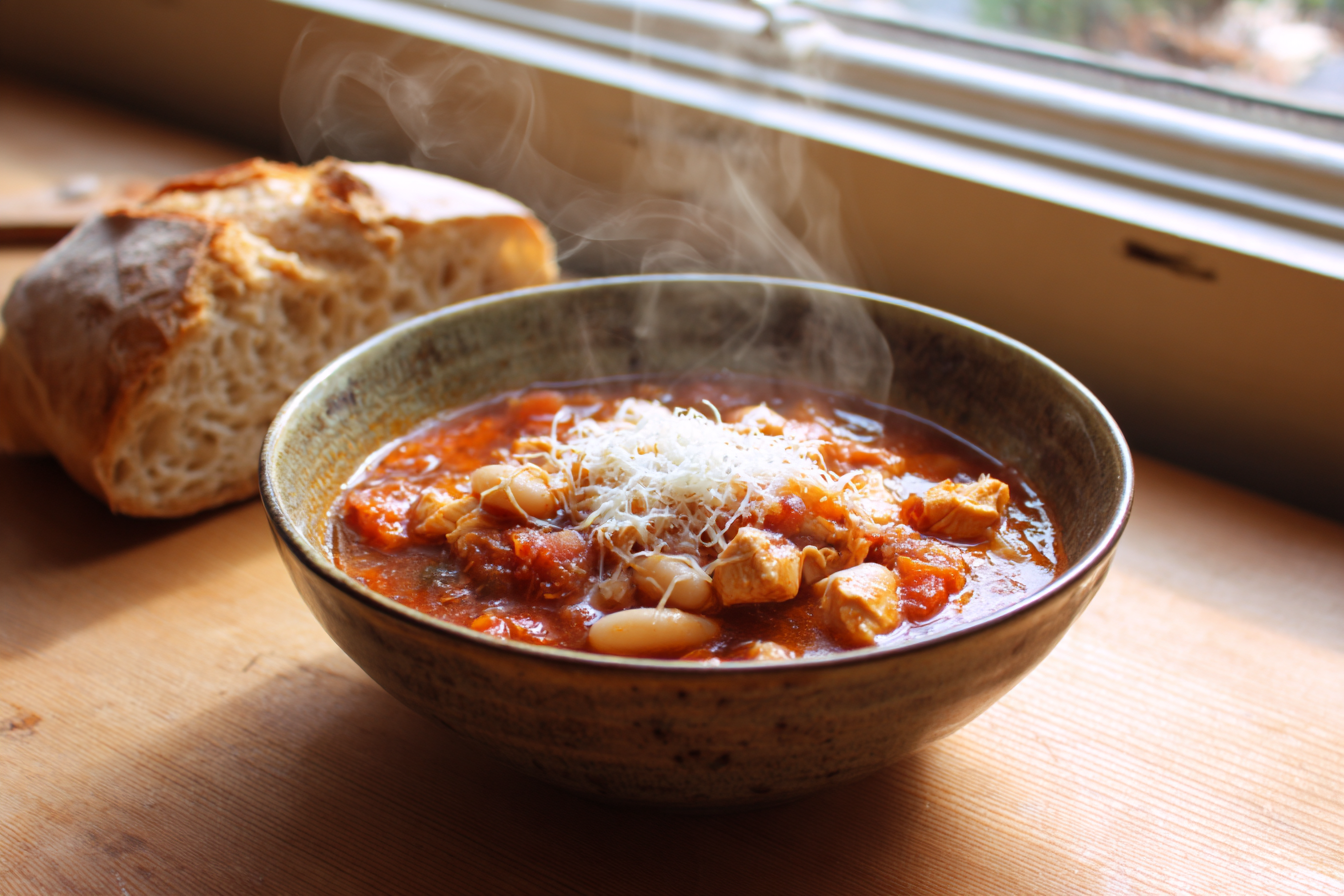
Tomato Basil Chicken Stew
Cuisine: American6
servings5
minutes20
minutes297
kcalA quick and comforting one-pot stew loaded with shredded chicken, white beans, and fresh vegetables in a rich tomato basil broth.
Ingredients
1 tablespoon olive oil
1 small white onion, chopped
2 carrots, peeled and diced
2 stalks celery, diced
4 cloves garlic, minced
2 (28 oz) cans whole tomatoes with juices
1 (14 oz) can cannellini beans, rinsed and drained
3 cups shredded cooked chicken
2 handfuls baby spinach
1/4 cup roughly chopped fresh basil
1 teaspoon salt
1/2 teaspoon black pepper
1/4 teaspoon crushed red pepper flakes
Freshly grated Parmesan cheese for serving
Directions
- Heat the olive oil in a large stockpot or Dutch oven over medium-high heat until it shimmers. Add the chopped onion, diced carrots, and diced celery to the pot. Sauté the vegetables for about 7 minutes, stirring occasionally, until the onion becomes soft and translucent and the other vegetables begin to soften.
- Add the minced garlic to the pot and sauté for an additional 1 to 2 minutes, stirring frequently to prevent burning. The garlic should become fragrant but not browned. This step builds the aromatic base for the entire stew.
- Add the canned whole tomatoes with their juices, drained cannellini beans, shredded cooked chicken, baby spinach, chopped fresh basil, salt, black pepper, and red pepper flakes to the pot. Use a long wooden spoon to crush the whole tomatoes against the side of the pot, breaking them into irregular chunks while stirring everything together.
- Increase the heat to bring the stew to a boil, then reduce the heat to medium-low. Cover the pot partially with the lid slightly ajar to allow steam to escape. Let the stew simmer for 10 minutes, stirring occasionally, until the vegetables are tender and the spinach has wilted completely.
- Taste the stew and adjust the seasoning with additional salt and black pepper if needed. The stew should have a balanced tomato taste with noticeable basil notes. Remove from heat and ladle into serving bowls.
- Serve immediately with freshly grated Parmesan cheese generously sprinkled on top of each bowl. The hot stew will slightly melt the cheese, creating a creamy finish. Accompany with crusty bread if desired for soaking up the broth.
Notes
- For slow cooker preparation, add all ingredients except Parmesan to the crock pot, stir to combine, and cook on high for 3-4 hours or low for 6-8 hours.
- Rotisserie chicken works perfectly for this recipe and saves significant time. Leftover cooked chicken from any preparation method can be substituted.
- The stew thickens as it sits due to the beans and vegetables absorbing liquid. Add a splash of water or chicken broth when reheating to restore the original consistency.
- San Marzano tomatoes provide slightly sweeter notes, but any quality canned whole tomatoes work well in this recipe.
- Store leftovers in airtight containers in the refrigerator for up to 4 days or freeze for up to 2 months.
Frequently asked questions
Q: Can I use chicken breast instead of thighs or rotisserie chicken?
A: Yes, chicken breast works but requires more attention to prevent drying out. If using raw breasts, reduce cooking time and remove them as soon as they reach 165 degrees internally. Thighs stay more tender with longer cooking times due to higher fat content, but breasts are fine if you prefer white meat.
Q: What can I substitute for cannellini beans?
A: Great northern beans or navy beans make excellent substitutes with similar texture and mild taste. Chickpeas also work but add a firmer texture and slightly nuttier note. Any white bean variety will thicken the stew naturally while adding protein.
Q: How do I prevent the garlic from burning?
A: Add garlic after the other vegetables have softened and cook it for only 30 seconds to 1 minute until fragrant. Keep stirring constantly during this brief cooking time. Burned garlic tastes bitter and can ruin the entire pot, so timing matters here.
Q: Can I make this stew ahead of time?
A: Absolutely, this stew actually improves after sitting overnight as the ingredients continue melding together. Make it up to 4 days ahead and store in the refrigerator in airtight containers. Reheat on the stovetop over medium heat, adding liquid if needed to restore consistency.
