

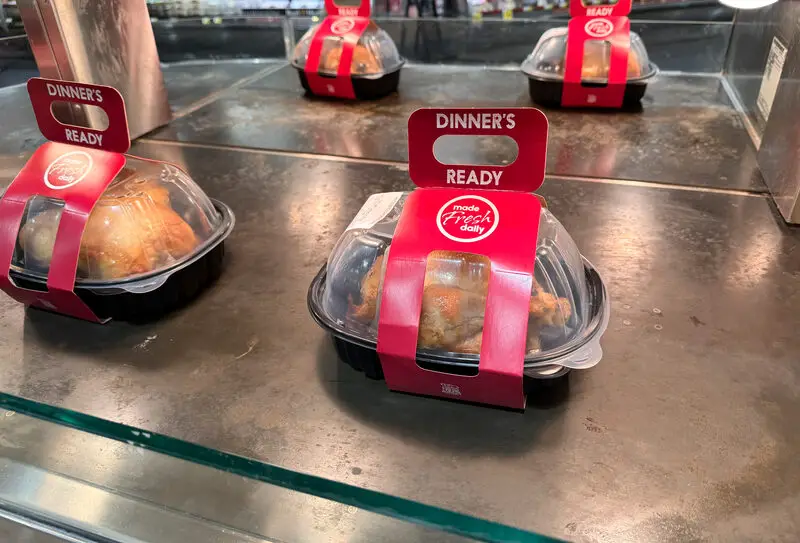
Those golden-brown rotisserie chickens sitting under the hot lamps at your grocery store seem like the perfect dinner solution. They’re cheap, they’re ready to eat, and they smell amazing. But there’s something weird going on with these birds that most shoppers don’t know about. The price tag alone should make you wonder what’s really happening behind the scenes. Before you toss another one of these convenient birds into your cart, there are some things you need to know about what you’re actually buying.
The chicken was probably raw on the shelf yesterday
Walk into any grocery store and you’ll notice something strange right away. The whole raw chickens in the meat department cost more than the fully cooked rotisserie chickens sitting by the deli. This doesn’t make any sense when you think about it. Someone had to season that bird, cook it for hours, and keep it warm under those lamps. That should cost more, not less. The math just doesn’t add up unless something else is going on.
Turns out, those rotisserie chickens sitting under the heat lamps often started their life on the regular meat shelf. When raw chickens get close to their sell-by date, stores have two choices. They can throw them away and lose all that money, or they can cook them up and sell them as rotisserie chickens. Guess which option they pick? This isn’t illegal or even technically wrong, but it’s definitely not something stores advertise on their signs. The chicken isn’t bad or spoiled, but it’s not exactly fresh either.
Nobody knows how long it’s been sitting there
Those warming cases look nice and clean, and the chickens seem fresh because they’re hot. But hot doesn’t always mean fresh. Some of those birds have been sitting under those lamps for hours, slowly drying out while they wait for someone to buy them. Stores are supposed to follow time guidelines for how long cooked food can sit out, but those rules vary from place to place. What you see as a freshly cooked chicken might have been done since morning.
There’s usually no way to tell when that specific chicken was actually cooked. Unlike packaged foods with clear dates printed on them, rotisserie chickens rarely have a specific time stamp you can check. Some stores might have a general posted time, but that doesn’t tell you about the individual bird you’re looking at. The chicken on the left might be two hours old while the one on the right has been there for six. You’re basically guessing every time you reach for one.
The chicken gets recycled into other products
Think about what happens to rotisserie chickens that don’t sell by the end of the day. Stores can’t leave them out overnight and they definitely can’t put them back under the lamps the next morning. But throwing them away means losing money twice – once on the raw chicken that didn’t sell, and again on the cooked version. So stores came up with a clever solution that keeps the waste cycle going even longer than you’d expect.
Those leftover rotisserie birds get pulled apart and turned into chicken salad, soup, and prepared meals in the deli section. The meat gets mixed with mayo and seasonings, tucked into sandwiches, or tossed into pasta dishes. This means a chicken could start as a raw bird on Monday, become a rotisserie chicken on Tuesday, and end up in your chicken salad sandwich on Wednesday. Nothing about this violates food safety rules, but it’s definitely a longer journey than most people imagine when they’re buying what looks like a fresh deli item.
The actual cooking process hides a lot
Cooking makes everything look and smell better. A chicken that was sitting in the meat case looking pale and unremarkable suddenly becomes this gorgeous golden bird once it spins around in a rotisserie oven for a few hours. The seasonings and the browning hide any signs that this bird was about to hit its expiration date. Your eyes and nose can’t tell the difference between a chicken that was packaged yesterday and one that’s been sitting in the cooler for almost a week.
The high heat and long cooking time also make the chicken safe to eat, even if it was getting close to the edge of freshness. Bacteria that might have started growing get killed off during cooking. From a pure safety standpoint, the chicken is fine. But there’s a difference between food that’s safe to eat and food that’s actually fresh. You’re paying for convenience, sure, but you’re also getting a bird that the store needed to move off the shelves one way or another.
The price makes it a loss leader product
Stores price rotisserie chickens low on purpose. They know that if you come in planning to grab a quick chicken for dinner, you’ll probably pick up a few other things while you’re there. Maybe some sides to go with it, or a dessert, or that random stuff you didn’t know you needed until you walked past it. The chicken gets you in the door and into the aisles where you’ll spend more money on other items that have much better profit margins.
This is why rotisserie chickens cost less than raw ones even though more work went into them. The store isn’t trying to make money on the chicken itself. They’re willing to take a smaller profit, or even a small loss, because they know they’ll make it back on everything else you buy. It’s smart business, but it also means that super-low price isn’t because you’re getting an amazing deal. It’s because the chicken is serving a different purpose in the store’s overall strategy.
The meat quality isn’t what you think
Not all raw chickens are created equal, and the ones that become rotisserie chickens aren’t necessarily the best ones in the store. Think about it from the store’s perspective. If they have some premium birds that will sell great as raw chickens, why would they cook those? They save the rotisserie treatment for the chickens that might not move as quickly on the regular meat shelf. These aren’t bad chickens, but they’re probably not the ones you’d pick if you were choosing a raw bird yourself.
The chickens might be smaller than average, or they might not look as plump and perfect as the ones that stay in the fresh meat case. Once they’re cooked and seasoned, nobody can tell the difference. The browning and the spices make every bird look equally good. But underneath all that, you might be getting a chicken that was the last choice among all the raw options. For the price, it’s still a decent dinner, but it’s worth knowing what you’re actually getting for your money.
The seasoning covers up more than you realize
Ever notice how heavily seasoned those rotisserie chickens are? The skin is loaded with salt, pepper, paprika, and a bunch of other spices that give it that appealing golden color and strong smell. Some of that is definitely for taste, but aggressive seasoning also serves another purpose. It masks any off flavors that might be starting to develop in a chicken that’s been sitting around for a while. Fresh chicken needs minimal seasoning because the meat tastes good on its own.
The same thing happens in restaurants when chefs load up dishes with heavy sauces and strong spices. It’s often a way to hide ingredients that aren’t quite at their peak anymore. The rotisserie chicken industry figured this out a long time ago. Pack enough seasonings on there, and nobody will notice if the chicken itself isn’t perfectly fresh. The salt also helps keep the meat from drying out too much under those heat lamps, which is convenient for a bird that might sit there for hours before someone buys it.
Temperature control isn’t always consistent
Those warming cases are supposed to keep chickens at a safe temperature that prevents bacteria from growing while also keeping the meat from drying out completely. But maintaining that perfect temperature zone isn’t always easy, especially in busy stores where the cases get opened constantly. Every time someone reaches in to grab a chicken, hot air escapes and the temperature drops. If the store is really busy, those cases might not have time to get back up to the right temperature before someone opens them again.
Some stores are better at this than others, but there’s no way for you to know which is which just by looking. The chickens might look fine even if they’ve been sitting at slightly lower temperatures than they should be. This is especially true for the chickens in the back of the case that don’t get as much direct heat as the ones in front. If you’re going to buy one of these birds, at least grab one from the front where it’s more likely to have stayed at the proper temperature the whole time.
You can’t tell anything from looking at it
The biggest problem with rotisserie chickens is that they all look basically the same once they’re cooked. A chicken that was processed yesterday looks just like one that’s been in the store for almost a week. The golden-brown skin, the smell of the seasonings, the way they sit there looking all perfect under the lights – none of that tells you anything about how fresh the meat actually is. You’re flying blind every single time you buy one, hoping that what you’re getting is actually as fresh as it appears.
This is totally different from buying raw meat, where you can look at the color, check the date, and make an informed decision. With rotisserie chickens, you’re trusting that the store is following all the rules and doing everything right. Most of the time they probably are, but there’s no way for you to verify that. The system is designed to make everything look good and smell good, whether the chicken underneath is truly fresh or just barely making the cut for what’s considered safe to sell.
Rotisserie chickens aren’t going to make you sick, and they’re still one of the most convenient dinner options out there. But now you know what’s really going on behind those warming cases. These birds are part of a well-oiled system designed to minimize waste and maximize profit, which means you’re not always getting quite the deal you think you are. Next time you reach for one, at least you’ll know the whole story about where it came from and why it costs less than a raw chicken that requires you to do all the work yourself.
