

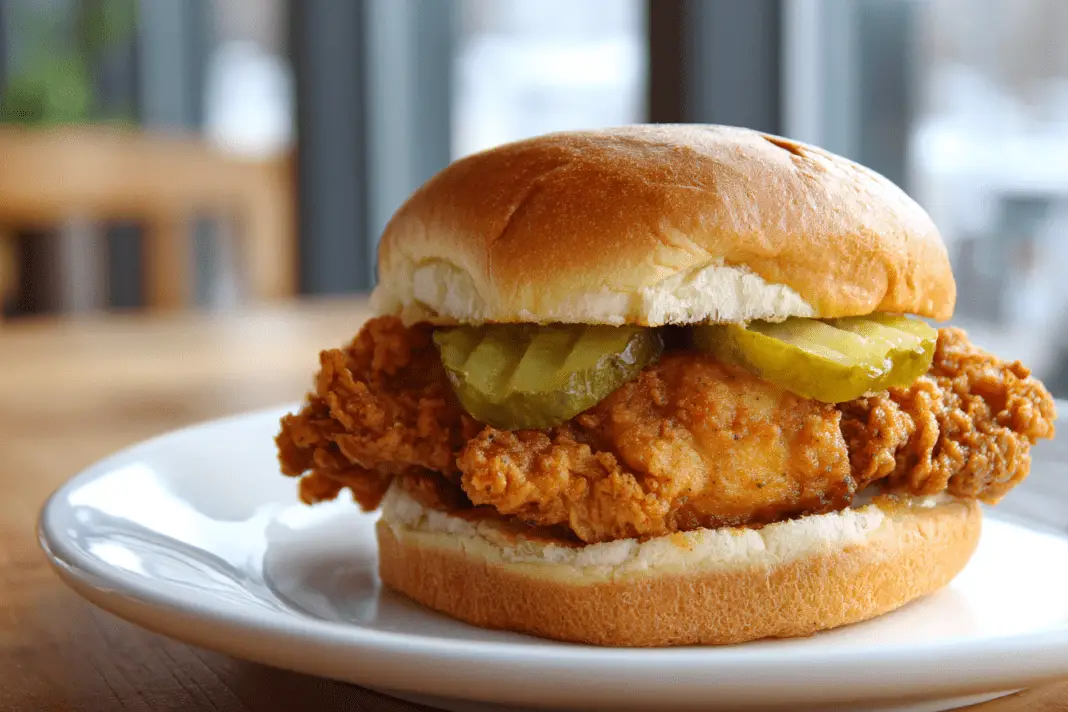
Ever wonder why that chicken sandwich from Chick-fil-A tastes so much better than anything you make at home? The chicken is always perfectly tender, incredibly juicy, and packed with taste. Most people assume it’s some complicated cooking technique or super expensive equipment. The truth is way simpler than that. It all comes down to a few smart tricks that the fast-food chain has perfected over decades. Some of these methods might surprise you, and the best part? You can use them in your own kitchen right now.
The pickle juice secret changes everything
The biggest secret behind Chick-fil-A’s tender chicken isn’t what most people think. While the company won’t officially confirm it, countless employees and food experts point to one ingredient that makes all the difference. That ingredient is pickle juice. Before the chicken gets breaded and fried, it takes a long bath in this tangy liquid. This isn’t just some random choice either. Pickle juice contains salt and other compounds that work magic on chicken breast.
When chicken soaks in pickle juice, several things happen at once. The salt breaks down some of the tough muscle fibers in the meat, making it more tender. At the same time, the liquid gets absorbed into the chicken, which keeps it moist during cooking. Even after sitting under those heat lamps at the restaurant, the chicken stays juicy. The pickle juice also adds a subtle tangy taste that complements the breading perfectly. This brining technique works on any lean meat, not just chicken. Save that jar of pickle juice next time instead of pouring it down the drain.
Pressure cooking makes it fast and perfect
Most people fry chicken in a regular deep fryer or a pan on the stove. Chick-fil-A does something completely different. The founder, Truett Cathy, didn’t want to serve chicken at first because it took too long to cook during lunch rush. Then he remembered a trick his mother used with a pan and a heavy lid. Instead of copying that home method, he bought commercial pressure cookers for his restaurants. These special cookers seal in steam and cook the chicken way faster than normal frying.
The pressure cooker does more than save time though. It keeps all the moisture trapped inside while the chicken cooks. Regular frying lets steam escape, which can dry out the meat. With pressure cooking, the chicken is done in about four minutes and comes out incredibly juicy every single time. The high pressure also helps the breading stick better and get extra crispy. This cooking method changed everything for the restaurant. You can buy smaller pressure cookers for home use that work the same way, though they’re not as fast as the commercial versions.
Real chicken breasts make a huge difference
Walk into any Chick-fil-A kitchen and you’ll see workers hand-cutting whole chicken breasts. The chain doesn’t use processed chicken or meat that’s been ground up and reformed into shapes. Every piece starts as a real, whole chicken breast that gets trimmed by hand. This might seem like a small detail, but it matters more than you’d think. Whole chicken breast has a better texture and holds together better during cooking. Processed chicken often falls apart or gets mushy because the muscle fibers have been broken down too much.
Chick-fil-A also has strict rules about where their chicken comes from. The chickens are raised without any antibiotics, which became company policy back in 2019. If a chicken gets sick and needs antibiotics, that bird won’t be used in any restaurant. This policy makes the meat healthier and more consistent in quality. The chickens aren’t pumped full of water or solutions either, which some companies do to increase weight. What you get is pure chicken breast with nothing added. That natural meat absorbs the pickle juice brine better and cooks more evenly than chicken that’s been injected with solutions.
The secret breading recipe stays locked up
Truett Cathy spent years perfecting his chicken breading recipe back in the 1960s. He tried dozens of different spice combinations before landing on the one that’s still used today. That recipe contains over 20 different seasonings mixed together in exact proportions. The whole formula is so valuable that it’s kept in a safe at the company headquarters in Atlanta. Only a handful of people know the complete recipe, just like KFC guards their 11 herbs and spices blend.
What we do know is that the chicken gets dipped in a milk and egg wash before going into the seasoned flour mixture. This wet coating helps the breading stick to the meat really well. The breading itself has a specific texture that’s not too fine and not too coarse. It creates that signature crispy outside that doesn’t get soggy even after the sandwich sits for a while. The seasoning blend gives every bite that distinctive Chick-fil-A taste that people recognize immediately. Even though copycat recipes exist all over the internet, none of them quite match the original because that exact spice mixture remains a mystery.
Peanut oil adds the right touch
Not all cooking oils are created equal, and Chick-fil-A knows this better than anyone. The chain uses 100% refined peanut oil for all their fried chicken. Truett Cathy chose this oil specifically because it has a mild taste that doesn’t overpower the chicken or the breading. Some oils like olive oil or coconut oil have strong tastes that would clash with the seasonings. Peanut oil lets the chicken be the star while still adding a subtle richness to each bite.
Peanut oil also handles high heat really well, which matters when you’re pressure frying chicken. It doesn’t break down or smoke as quickly as other oils might. The refined version they use is safe for most people with peanut allergies because the refining process removes the proteins that cause reactions. This oil gives the breading that golden color and extra crunch that makes Chick-fil-A chicken so recognizable. The chicken comes out of the fryer looking perfect every time, with no greasy residue or off tastes. If you’re making fried chicken at home, switching to peanut oil can make a noticeable difference in how your chicken turns out.
Those pickle chips aren’t random
Every original chicken sandwich comes with exactly two dill pickle chips. This isn’t just a garnish or an afterthought. Those pickles are a carefully planned part of the whole sandwich experience. The cucumbers get sliced and then marinated for three full days before they’re ready to use. This long marination process makes them extra crunchy and gives them a strong dill taste that cuts through the richness of the fried chicken. The pickles add a fresh, tangy contrast that keeps the sandwich from feeling too heavy.
The placement of those two pickles matters too. They’re positioned so that you get a bit of pickle in most bites without overwhelming the chicken. Some fast-food places pile on pickles randomly or skip them entirely. Chick-fil-A treats them as an essential ingredient, not an optional topping. The acidity from the pickles also helps balance out the fat from the fried chicken and the butter on the bun. Everything works together to create a sandwich that tastes complete. Those pickle chips tie back to the whole pickle juice brining process, creating a consistent pickle theme throughout the sandwich.
The bun gets buttered and toasted perfectly
Most people focus on the chicken and forget about the bun, but Chick-fil-A pays attention to every detail. The buns are buttered on the inside and then toasted until they’re golden brown. This step might seem simple, but it makes a big difference. The toasting creates a slight barrier that keeps the bun from getting soggy from the chicken. At the same time, the butter adds richness and another layer of taste. The outside of the bun stays soft while the inside has a bit of crunch.
The bun itself is a specific recipe too. It’s not just any white bread roll from a supplier. The texture is soft but sturdy enough to hold up to the juicy chicken without falling apart. Some sandwich buns are too dense or too fluffy, but this one hits the sweet spot. The buttery, toasted inside also sticks slightly to the breading, which keeps the chicken from sliding around when you take a bite. Everything about the bun is designed to support the chicken, not compete with it. That’s why the original sandwich stays so simple with just chicken, pickles, and a buttered bun.
Hand breading each piece takes time
In an age where most fast-food restaurants look for shortcuts, Chick-fil-A sticks to a labor-intensive process. Every single piece of chicken gets hand-breaded by an employee. There are no machines dumping chicken into automatic breading systems. A worker dips each piece in the egg wash, then coats it in the seasoned flour, then repeats the process. This double coating creates a thicker, crunchier breading that holds up better during frying and eating. It also means every piece gets proper attention.
Hand breading might slow things down, but it ensures consistency. A machine might miss spots or apply breading unevenly. When a person does it, they can see if a piece needs more coating in certain areas. The breading sticks better when it’s applied by hand too, because the worker can press it gently into the egg wash layer. This creates that signature coating that doesn’t flake off when you bite into it. The company clearly values quality over speed here, even though it means higher labor costs. That commitment to doing things the right way shows in every chicken sandwich.
Simple assembly lets the chicken shine
Walk into most sandwich shops and you’ll see options piled high with lettuce, tomatoes, cheese, and three different sauces. The original Chick-fil-A sandwich takes the opposite approach. It’s just a chicken breast, two pickles, and a buttered toasted bun. No lettuce, no tomato, no cheese, no mayo. This minimalist approach might seem boring at first, but it’s actually brilliant. Every element you taste is there for a reason, and nothing distracts from the chicken itself. The simplicity is the whole point.
This stripped-down sandwich became a template that’s been copied everywhere now. Before Chick-fil-A popularized this style, most chicken sandwiches tried to be everything at once. The original sandwich proved that when your main ingredient is done right, you don’t need to hide it under piles of toppings. Of course, Chick-fil-A now offers sandwiches with more ingredients for people who want them. But that original version with just pickles remains the most popular item on the menu. Sometimes less really is more, especially when the chicken is this good on its own.
The combination of pickle juice brining, pressure cooking, quality chicken, and careful preparation creates something special. Each element builds on the others to make chicken that’s tender, juicy, and packed with taste. These aren’t complicated techniques that require special training or expensive equipment either. Anyone can brine chicken in pickle juice at home or take more care with breading. The real lesson here is that good food comes from attention to detail and refusing to cut corners, even when it would be easier.
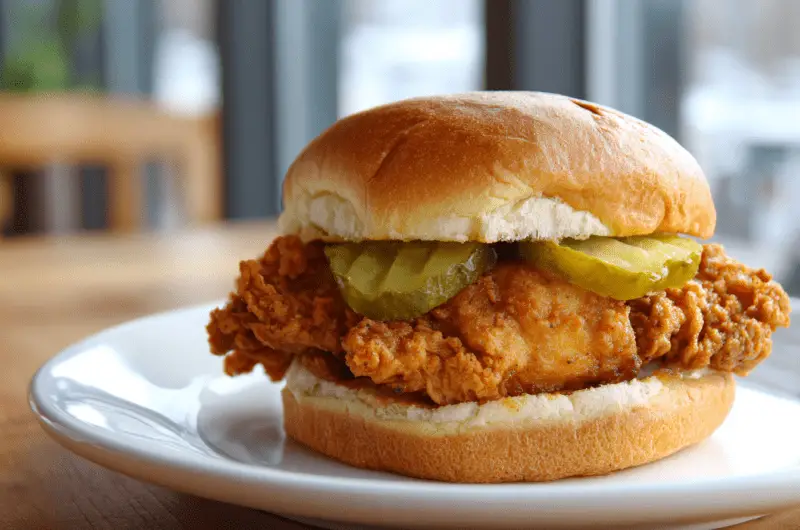
Copycat Chick-fil-A Chicken Sandwich
Cuisine: American4
servings20
minutes15
minutes450
kcalMake that famous chicken sandwich at home with this simple recipe that uses the pickle juice trick.
Ingredients
4 boneless skinless chicken breasts
2 cups dill pickle juice
1 cup whole milk
1 large egg
1½ cups all-purpose flour
2 tablespoons powdered sugar
2 teaspoons paprika, garlic powder, salt, and black pepper
Peanut oil for frying
4 hamburger buns, buttered and toasted
8 dill pickle chips
Directions
- Place the chicken breasts in a large bowl or zip-top bag. Pour the pickle juice over the chicken, making sure each piece is completely covered. Seal the bag or cover the bowl and refrigerate for at least 2 hours, but preferably 3-4 hours. The longer the chicken soaks, the more tender and flavorful it becomes.
- After brining, remove the chicken from the pickle juice and pat each piece completely dry with paper towels. Any excess moisture will prevent the breading from sticking properly. Set the chicken aside while you prepare the coating station.
- In a shallow bowl, whisk together the milk and egg until well combined. In another shallow bowl, mix the flour, powdered sugar, paprika, garlic powder, salt, and black pepper. Stir the dry mixture thoroughly so the seasonings are evenly distributed throughout the flour.
- Take each chicken breast and dip it first in the egg mixture, coating both sides completely. Let any excess drip off, then press the chicken into the seasoned flour mixture, turning to coat all sides. Press the flour firmly into the chicken so it sticks well. For an extra thick coating, repeat this process by dipping back in the egg wash and then the flour again.
- Heat about 2 inches of peanut oil in a deep, heavy pot or Dutch oven to 350°F. Use a thermometer to monitor the temperature. If you don’t have enough oil for deep frying, you can shallow fry by using less oil and flipping the chicken halfway through, though deep frying gives better results.
- Carefully place 2 chicken breasts in the hot oil, being careful not to crowd the pan. Fry for 5-6 minutes, then flip and cook for another 5-6 minutes until the breading is deep golden brown and the internal temperature reaches 165°F. The chicken should be crispy on the outside and cooked through in the middle.
- Remove the cooked chicken to a wire rack or paper towel-lined plate to drain. Let it rest for a few minutes while you fry the remaining pieces. Don’t stack the cooked chicken or the breading will get soggy from trapped steam.
- Butter the inside of each hamburger bun and toast them in a skillet or under the broiler until golden brown. Place one piece of fried chicken on the bottom bun, add two pickle chips on top of the chicken, then cover with the top bun. Serve immediately while the chicken is hot and crispy.
Notes
- If you don’t have pickle juice, you can make a quick brine with 2 cups water, 2 tablespoons salt, and 1 tablespoon of pickle spices. It won’t taste exactly the same but will still tenderize the chicken.
- For thicker chicken breasts, pound them to an even thickness before brining so they cook evenly. You can also cut very large breasts in half horizontally to make two thinner pieces.
- The powdered sugar in the breading helps the chicken brown to that perfect golden color without burning. Don’t skip it even though it seems odd.
- If you have a pressure fryer, use it according to the manufacturer’s instructions for even faster cooking and juicier results. Regular home pressure cookers typically aren’t designed for frying with oil.
Frequently asked questions
Q: Can I use a different type of pickle juice for brining?
A: Yes, any dill pickle juice works well. Bread and butter pickle juice will make the chicken slightly sweeter, which some people prefer. Just avoid pickle juice with added peppers or hot spices unless you want spicy chicken.
Q: How long can chicken sit in pickle juice?
A: You can brine chicken in pickle juice for up to 12 hours safely. Longer than that and the texture might get too soft. The minimum time should be at least 2 hours to get any benefit from the brining process.
Q: What if I don’t have peanut oil for frying?
A: Vegetable oil or canola oil work as substitutes. They won’t add the same subtle richness as peanut oil, but they handle high heat well and won’t overpower the chicken with their own taste.
Q: Can I bake this chicken instead of frying it?
A: Yes, though it won’t be exactly the same. Bake at 400°F for about 25-30 minutes, flipping halfway through. Spray the breaded chicken with cooking spray before baking to help it get crispy. The texture will be different but still good.
