

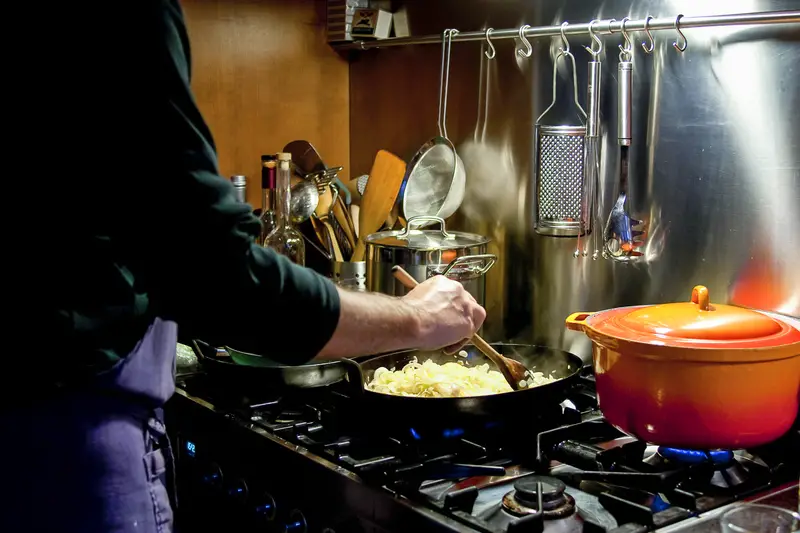
You’d think professional chefs would have these insanely complicated home kitchens, right? I mean, they spend all day in restaurant kitchens, so their personal spaces must be totally decked out with commercial equipment and fancy gadgets. But honestly, the reality is pretty different. Most chefs who work 12-hour shifts in restaurants want something way simpler when they get home.
They don’t crowd their pans
One of the biggest mistakes home cooks make is throwing too much food into a pan at once. And that’s basically guaranteed to give you soggy, gray-looking food that doesn’t taste right. When you overload a hot pan, the temperature drops suddenly, which means your food steams instead of searing properly. After trying to get a good sear on chicken or steak, you’ve probably noticed this yourself—the pan gets too crowded and nothing browns the way it should.
Chefs always cook in batches at home, even when they’re tired. It takes a bit longer, sure. But the texture and flavor are totally different when you give each piece of meat or vegetable enough space to actually caramelize. That’s what creates the deep, complex flavors that make restaurant food taste better than home cooking.
Mise en place is non-negotiable
This French term basically means “everything in its place,” and chefs live by it. Before they start cooking anything at home, they do all their prep work first—washing, measuring, and chopping everything they need. Does it seem like extra work? Kind of. But it actually makes the cooking process way smoother since you’re not scrambling to dice an onion while something’s burning on the stove.
I’ve noticed that when I skip this step, I always forget to add something important or end up with unevenly cooked food because I had to stop mid-recipe. And it’s not just about prepping ingredients—it extends to having a clean, organized kitchen overall. A cluttered workspace makes everything harder.
Their knives are always sharp
Dull knives are dangerous. They slip off food and require way too much pressure, which is how accidents happen. Professional chefs keep their knives super sharp at home, and they don’t own those massive 15-piece knife sets that home cooks think they need. Instead, they have maybe three or four really good knives that they maintain religiously—a chef’s knife, a paring knife, a serrated bread knife, and that’s pretty much it.
Every time I’ve watched someone struggle with a dull knife, it’s painful. The knife just crushes tomatoes instead of slicing through them cleanly. And don’t even get me started on glass cutting boards—they destroy knife edges and make that horrible scraping sound that drives chefs insane.
They toast their spices first
This is such a simple trick that makes a huge difference. When you add spices directly to a dish without toasting them first, they taste kind of flat and one-dimensional. But when you heat them in oil or butter for just a minute or two, it “blooms” the spices and brings out deeper, more complex flavors that you can’t get otherwise.
The last time I made chili, I skipped this step because I was in a hurry. It tasted fine, but something was missing—that depth of flavor that makes you want another bowl. Toasting spices takes like two extra minutes, and the payoff is totally worth it. Even cumin and coriander, which seem pretty straightforward, become way more aromatic and flavorful.
Salt and acid finish every dish
Here’s what nobody talks about enough: most disappointing home-cooked food just needs salt and acid. You can spend hours making a soup or stew, but if you don’t taste it before serving and adjust the seasoning, it’ll taste dull no matter how good your technique was. Chefs always keep multiple types of salt at home—kosher salt for cooking, flaky sea salt for finishing, and sometimes specialty salts for specific dishes.
But salt isn’t the only thing that brightens flavors. A splash of lemon juice or vinegar at the end can totally transform a dish that tastes flat. I mean, it’s not about making food taste sour—it’s about balance. The acid cuts through richness and makes all the other flavors pop in a way that’s hard to describe until you’ve experienced it. Why do restaurant dishes taste more vibrant? This is a big part of it.
They use deli containers for everything
Forget those expensive matching storage container sets. Professional chefs use cheap plastic deli containers at home, and there’s a good reason for it. They come in different sizes but all use the same lid, which means you don’t have that drawer full of mismatched containers and lids that never seem to go together. Plus, they’re dishwasher, microwave, and freezer safe.
These containers are super affordable, so it’s not a big deal if one gets lost or stained. You can write directly on them with a Sharpie to label leftovers, and they stack efficiently in the fridge. Honestly, once you switch to deli containers, you won’t want to go back to anything else. They’re just more practical for everyday use.
First in, first out prevents waste
This restaurant principle works just as well at home. FIFO means using older ingredients before newer ones, which prevents food from spoiling in the back of your fridge while you use fresh stuff in front. It sounds obvious, but how many times have you bought something at the grocery store only to find the same ingredient already in your pantry, now expired?
Chefs label everything at home with dates using tape and a marker. It takes like five seconds but saves money and reduces waste over time. When you can see exactly when you opened that container of chicken stock or made those leftovers, you know whether it’s still safe to eat. And you actually use things up instead of letting them go bad.
Their cutting boards stay put
A sliding cutting board is dangerous, period. Chefs always put a damp paper towel or cloth underneath their cutting board to keep it from moving around while they’re chopping. This simple trick prevents so many potential injuries—when your board shifts unexpectedly, that’s when knives slip and accidents happen.
You can also use those non-slip pads that go under rugs. Either way works fine. The important thing is that your cutting board stays completely stable while you’re working. It makes cutting faster and safer, which matters whether you’re dicing one onion or prepping ingredients for a big meal.
Temperature matters more than time
Stop trusting those baking times in recipes blindly. Every oven is different, and even the same oven performs differently depending on what else is cooking or how recently you opened the door. Professional bakers and chefs use instant-read thermometers at home to know when food is actually done, not just when the timer goes off.
This is especially important for meat and baked goods. A chicken breast that reads 165°F is cooked properly, regardless of whether it took 20 minutes or 30 minutes to get there. Same with bread—internal temperature tells you when it’s done way more accurately than color or time. After trying to rely on visual cues alone, I’ve learned that a cheap thermometer is one of the best investments you can make. Timers are useful reminders that something’s in the oven, but they don’t tell you when it’s actually finished cooking.
Anyway, these aren’t complicated techniques that require years of training. They’re simple habits that professional chefs bring home from work because they actually make cooking easier and food taste better. And you can start using most of them tonight without buying any expensive equipment or taking a single cooking class.
