

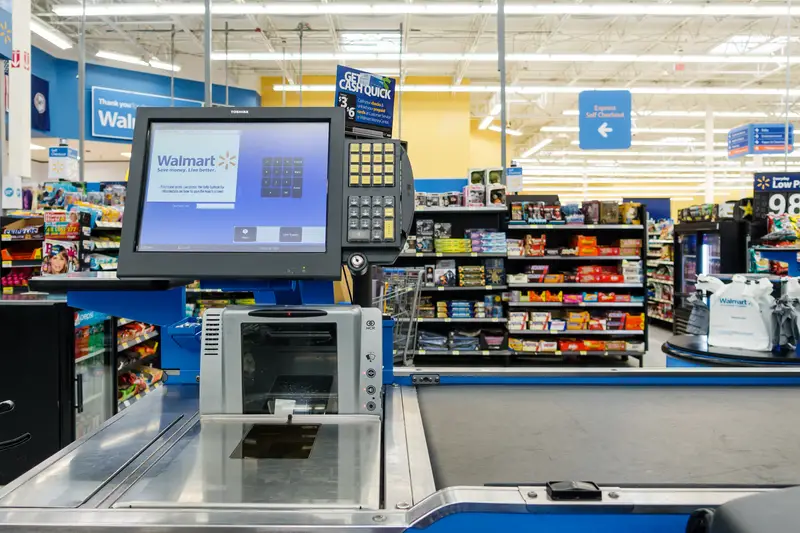
About 72% of American consumers buy Walmart’s Great Value products. Millions more fill their carts with name-brand cereal, frozen fish, and whatever produce looks passable under those fluorescent lights. Walmart is the country’s most popular retailer and the world’s largest. It’s where America shops. But shopping there on autopilot — tossing the same stuff into your cart every week without thinking — is probably costing you more than you realize. And in some cases, it might not even be the best deal in town.
Here’s what the data actually says about Walmart groceries in 2025 and 2026 — the prices, the quality, the recalls, and the tricks most shoppers miss.
Prices Have Gone Up Way More Than You Think
Walmart loves to talk about rollbacks. And sure, they exist. But the broader picture is rougher than most people realize. NPR tracked 114 items at a Walmart superstore in Georgia from 2018 through December 2025, and the results were painful. A dozen eggs hit $4.90 — that’s 83% more than five years ago. A 4-pound bag of Domino sugar jumped to $4.46, up 74% since 2019. Store-brand paper folders made in China went up 46%. Swai fish fillets from Vietnam rose 34%. Dole’s canned pineapple from Southeast Asia climbed 25%.
Almost half the items on NPR’s list got more expensive in 2025 alone, including shrimp, Oreo cookies, Coca-Cola, and Dove soap. A shopper they interviewed said his bill went from $40 to $60 for the exact same items in a single year. Just under a quarter of items actually got cheaper — eggs, milk, and Cheerios among them. So yes, some things came down. But the overall trajectory is clearly up.
Shrinkflation Is Alive and Well
This is the part that really stings. Because it’s not just about prices going up — sometimes the package gets smaller while the price goes up. Tide liquid laundry detergent used to come in a 100-ounce container. Now it’s 84 ounces. And it costs a dollar more. That’s a textbook case of shrinkflation, and it’s happening across the store. Most people don’t notice because who memorizes the ounce count on a jug of detergent? The companies know that. They’re banking on you not reading the fine print.
Walmart’s CEO said in November that the chain had lowered prices on 6,000 items, half of which were groceries. That sounds impressive until you remember Walmart sells tens of thousands of products. And lowering the price on an item that already got 30% more expensive over three years isn’t exactly a gift.
Walmart Isn’t Actually the Cheapest Grocery Store
This might be the biggest surprise. Consumer Reports and the Strategic Resource Group compared food prices at over 30 retailers across six metro areas, using Walmart as the baseline. Costco’s average prices were 21.4% less than Walmart’s. BJ’s Wholesale Club came in 21% lower. In Boston specifically, Costco prices averaged a staggering 37% lower than Walmart.
Lidl, Aldi, WinCo, and H-E-B also beat Walmart on price. Meanwhile, Target was only about 6% higher. So if you’ve been driving past an Aldi to get to Walmart because you assumed it was cheaper, you’ve been leaving money on the table. The difference between the cheapest and most expensive grocery chains in each city was more than 33%. Where you shop matters a lot.
The Quality Problem Nobody Talks About
Low prices are great. But what are you actually getting? Customers routinely report lower seafood quality at Walmart compared to competitors. The frozen salmon consistently gets poor reviews, with complaints about taste, consistency, and general weirdness. Walmart is also widely known for having lower-quality meat than other stores, based on surveys and customer sentiment. The chain has regularly been involved in recalls and headlines about meat quality.
Then there’s the produce. With a business model centered on keeping prices low, quality decisions on fresh fruits and vegetables aren’t always going to go in your favor. Price comparisons show you can sometimes get organic produce for less at Whole Foods, which sounds absurd until you remember Amazon bought them and has been pushing prices down on certain items.
Great Value peanut butter contains three different types of sugar — regular sugar, dextrose, and molasses — plus monoglycerides and diglycerides to keep the oil from separating. Costco and Aldi both sell peanut butter that’s cheaper, better-tasting, and less processed. Great Value canned sliced pears are sweetened with sucralose, which research has linked to reducing good gut bacteria by half.
Recalls Keep Piling Up
In January and February 2026 alone, Walmart issued nationwide recalls on items ranging from food and supplements to children’s products. Gerber recalled limited batches of Arrowroot Biscuits sold at Walmart stores because some contained soft pieces of plastic and paper — a choking hazard. Angry Orange Enzyme Stain Removers sold at Walmart were recalled due to bacterial contamination. The FDA announced an investigation into Salmonella in dietary supplements sold on Walmart.com.
And then there was the listeria situation. Federal health officials warned consumers not to eat certain heat-and-eat pasta meals sold at Walmart because they were contaminated with listeria linked to a deadly outbreak. The affected product was Marketside Linguine with Beef Meatballs & Marinara Sauce. Nineteen people were hospitalized and four died after eating recalled food products connected to the outbreak. Walmart pulled the products, but the damage was done.
Great Value Is Made by Brands You Already Know
Here’s something that doesn’t get talked about enough. Great Value products — Walmart’s massive store brand with over 100 product categories and more than 48,000 items priced under $5 — aren’t made in some mysterious Walmart factory. They’re made by the same companies that produce the name-brand stuff sitting right next to them on the shelf.
Conagra, the $16.72 billion company behind Healthy Choice, Slim Jim, Duncan Hines, and Reddi-Wip, is one of the big manufacturers. Sara Lee produces Great Value bread, coffee, K-cups, and coffee cakes. Perdue Farms was linked to Great Value frozen chicken nuggets through a recall in 2010. Large manufacturing companies use excess factory capacity to produce Walmart’s store-brand groceries. A truck driver once reported seeing many different labels on cans that all came out of the same factory.
So sometimes you’re literally paying less for the same product with a different label. But not always. The recipe can differ even when the manufacturer is the same. This is where reading ingredient labels actually matters.
Grocery Delivery Is a Nightmare
If you’ve been using Walmart’s grocery delivery, you probably already know this. On Sitejabber, Walmart Grocery Delivery has 655 reviews and a brutal 1.1-star rating. Customers report that for 6 to 8 months out of the year in most parts of the country, temperatures above 85°F mean food stored in delivery drivers’ trunks reaches the high 90s or more. Frozen food arrives melted. Fresh produce arrives rotten. One customer received warm, melted ice cream and raw chicken left on their front porch in 90-degree weather.
Missing items that customers still get charged for is a constant complaint. Drivers dump groceries in building lobbies instead of apartment doors with no notification. Substitutions happen on items customers specifically said not to substitute. Walmart uses a third-party delivery service called Spark, which apparently has no customer service number. One customer reported almost a year of biweekly orders with only two good ones out of the bunch.
More Americans Are Shopping There Anyway
Despite all of this, Walmart’s grocery business is booming. A study by Dunnhumby that interviewed 8,500 consumers found that mass retailers like Walmart have hit 79% grocery penetration — matching traditional supermarkets for the first time in the tracker’s nearly four-year history. Walmart’s grocery penetration specifically jumped 6 percentage points year-over-year to reach a record 72%. In its Q4 earnings call, the company reported mid-single-digit grocery sales growth driven by unit volume.
The reason is simple: people are broke. Consumer financial and food insecurity numbers both increased, even as actual inflation moderated. More people are using coupons through store loyalty programs. Dollar General and Dollar Tree gained ground too, with the dollar channel hitting 42% penetration. When money gets tight, people go where they think prices are lowest — even if the data says it’s not always Walmart.
How To Actually Save Money at Walmart
If you’re going to shop there — and most of us are — there are ways to be smarter about it. Walmart bakeries mark down bread and baked goods made the day before. Get there first thing in the morning for the best selection. Original prices always end in seven. First discounts end in five. Maximum clearance items end in one. That’s a code worth memorizing.
Walmart accepts manufacturer coupons, and if the coupon value is greater than the selling price, they apply the overage to your total. The Ibotta app gives you $1.00 back with online grocery pickup orders — not huge, but it adds up over time. Walmart+ members can save up to 10 cents a gallon at more than 14,000 Murphy USA stations. And the pickup discount — look for the emblem on Walmart.com — can save you money versus having items shipped.
Stick with Great Value for basics like eggs, milk, cookware, cleaning supplies, and spices. Skip it for meats, cheese, and specialty diet products where quality tends to drop off. Buy seasonal produce instead of stuff that had to travel across the hemisphere to reach your store. And scan clearance items with the Walmart app — the in-app price is sometimes lower than what’s on the sticker.
Walmart isn’t going anywhere. It’s still convenient, it’s still massive, and for a lot of Americans, it’s still the default. But default doesn’t mean best. Know what to buy, what to skip, and what tricks actually work — and you’ll walk out spending less on better stuff.
