

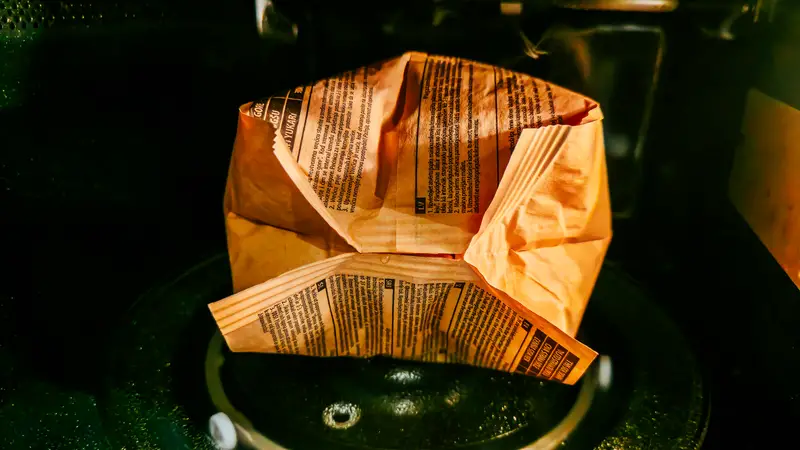
That familiar sound of kernels popping in the microwave might seem harmless, but there’s a dark side to those convenient bags sitting in your pantry. While millions of Americans reach for microwave popcorn as their go-to movie night snack, most have no idea about the concerning chemicals lurking inside those shiny packages. From toxic bag linings to artificial butter that can damage your lungs, microwave popcorn carries risks that go far beyond a simple snack choice.
Those shiny bags contain dangerous chemicals
Ever wonder why that artificial butter never leaks through the bag, even when it gets scorching hot in the microwave? The answer lies in a coating of synthetic chemicals called PFAs that manufacturers spray inside every popcorn bag. These chemicals create an invisible barrier that keeps the fake butter contained, but they come with a serious downside. The same coating that prevents messy leaks also leaches directly into your popcorn during the heating process.
What makes this especially concerning is that PFAs don’t break down easily in your body. Instead, they accumulate in your bloodstream over time, building up with each bag of popcorn you eat. These chemicals are the same ones once used in non-stick cookware before manufacturers realized how dangerous they could be. The scary part? Most people have no idea they’re consuming these industrial chemicals every time they pop a bag for movie night.
The fake butter can seriously damage your lungs
That rich, buttery smell wafting from your microwave isn’t coming from real butter at all. It’s a chemical cocktail designed to trick your nose and taste buds into thinking you’re getting the real deal. The main culprit behind this artificial aroma is a compound called diacetyl, which creates that distinctive buttery scent. While it might smell amazing, breathing in these fumes can cause serious problems with your respiratory system.
Workers in popcorn factories discovered this the hard way when they started developing a condition nicknamed “popcorn lung.” This serious breathing disorder causes the tiny airways in your lungs to become scarred and narrowed, leading to constant coughing and shortness of breath. Popcorn lung got its name after factory workers were diagnosed with this rare condition from inhaling diacetyl fumes all day. Even though most major brands removed diacetyl from their products, some still contain similar chemicals that may pose the same risks.
Each serving packs way too much saturated fat
Here’s something that might shock you: a single serving of many popular microwave popcorn brands contains up to 6 grams of saturated fat. That’s nearly one-third of what health experts recommend you eat in an entire day. The problem gets even worse when you realize that most people don’t stick to the suggested serving size, which is typically just one-third of the bag. Who honestly stops eating popcorn after finishing only a third of the bag?
The main source of all this saturated fat is palm oil, which manufacturers use to create that rich, buttery taste people crave. Compare this to plain air-popped popcorn, which contains less than 0.1 grams of saturated fat in the same amount. Some brands contain up to 4 grams of saturated fat per serving, representing 20% of your daily recommended intake in just a few handfuls of popcorn. This excessive fat content transforms what should be a light snack into something more comparable to eating a fast-food side dish.
The sodium content will shock you
Manufacturers don’t just load microwave popcorn with fat – they also dump in alarming amounts of salt. Many popular brands contain between 250 and 340 milligrams of sodium per serving, which can represent up to 15% of what you should eat in an entire day. This creates what food scientists call the “bliss point” – that perfect combination of salt and fat that makes you want to keep eating until the bag is empty.
The sodium situation gets even worse when you consider real-world eating habits. Movie theater popcorn can contain over 2,650 milligrams of sodium in a large container, which exceeds the daily recommended limit for most adults. This excessive sodium is why you often find yourself reaching for a drink while munching on popcorn – your body is desperately trying to balance out all that salt. The combination of high sodium and saturated fat creates a double whammy that can impact your cardiovascular system over time.
Major brands removed some chemicals but not all
After the popcorn lung scandal broke, major manufacturers like Orville Redenbacher, Act II, Pop Secret, and Jolly Time scrambled to remove diacetyl from their recipes. This happened around 2007, and many companies now advertise their products as “diacetyl-free” on the packaging. However, this doesn’t mean microwave popcorn became completely safe overnight. Many brands simply replaced diacetyl with other similar chemicals that may carry comparable risks.
The removal of some harmful chemicals also doesn’t address the fundamental problems with microwave popcorn’s nutritional profile. The bags still contain those problematic PFA coatings, and the products remain loaded with saturated fat and sodium. Food manufacturers have made some improvements, but they’ve largely focused on the most obviously dangerous ingredients while leaving the underlying issues unaddressed. Reading labels carefully remains essential since not all brands have made these changes.
The FDA banned some chemicals but enforcement varies
In 2024, the FDA announced that certain grease-proofing chemicals would no longer be sold in the United States, but this regulatory action came after decades of use. The ban specifically targets some of the PFA compounds used in food packaging, including microwave popcorn bags. However, the timeline for implementation has been gradual, with some manufacturers given years to phase out these chemicals completely.
The regulatory landscape remains confusing for consumers because diacetyl is still considered “generally recognized as safe” by the FDA for consumption, even though inhalation poses serious risks. This means that while most major brands voluntarily removed it, some products may still contain diacetyl or similar compounds. The FDA’s approach has been reactive rather than proactive, typically addressing these chemicals only after health problems become obvious and widespread among workers or consumers.
Cancer risks from packaging chemicals concern researchers
The chemicals used in microwave popcorn bags don’t just disappear after you eat them – they stick around in your body for extended periods. Research has linked these PFA compounds to several types of cancer, including testicular, kidney, thyroid, prostate, bladder, breast, and ovarian cancers. The International Agency for Research on Cancer has classified some of these chemicals as “possible carcinogens,” which puts them in the same category as other substances known to potentially cause cancer.
What makes this particularly concerning is that these chemicals accumulate over time, meaning the risk may increase with regular consumption. Studies suggest that PFOA, one of the breakdown products of these packaging chemicals, may also cause liver damage, fertility problems, developmental issues, and increased risk of asthma and thyroid disease. While the immediate risk from eating occasional bags of microwave popcorn may be relatively low, the cumulative effect of regular consumption over years or decades remains a legitimate concern for many researchers.
Making your own popcorn takes the same amount of time
Here’s the thing that might surprise you most: popping your own kernels on the stove takes roughly the same amount of time as using the microwave. All you need is a pot with a lid, a tablespoon or two of oil, and some plain popcorn kernels from the grocery store. Heat the oil, add the kernels, cover the pot, and shake it occasionally while the kernels pop. The whole process takes about 3-5 minutes, which is comparable to microwaving a bag.
The best part about making your own popcorn is complete control over what goes into it. You can add real butter, olive oil, or whatever seasoning strikes your fancy. Homemade popcorn opens up endless possibilities for seasonings like everything bagel mix, taco spice, parmesan cheese, or even cinnamon and sugar for a sweet treat. You’ll know exactly what you’re eating, and you can adjust the salt and fat content to your preferences rather than being stuck with whatever the manufacturer decided to dump in the bag.
Air poppers and silicone containers offer safer alternatives
If you want the convenience of microwave popping without the chemical concerns, consider investing in an air popper or silicone microwave container. Air poppers use hot air to pop the kernels without any oil, creating a virtually fat-free snack that you can season however you like. These machines cost between $20-40 and can last for years, making them a smart investment for regular popcorn eaters.
Silicone microwave poppers offer another convenient alternative that eliminates the need for those chemical-lined bags. You simply add kernels to the silicone container, pop it in the microwave, and get fresh popcorn without any of the packaging concerns. These reusable containers cost around $15-25 and completely eliminate exposure to PFA chemicals while giving you control over ingredients. Plus, they’re environmentally friendly since you’re not throwing away a chemical-coated bag every time you want popcorn.
The convenience of microwave popcorn comes with hidden costs that go far beyond the price on the package. From chemical-lined bags to artificial butter compounds and excessive sodium and fat, these products transform a simple whole grain snack into something much more problematic. Making your own popcorn isn’t just safer – it’s also more economical and gives you complete control over taste and ingredients. Next time you’re planning a movie night, consider skipping the microwave aisle and heading to the bulk bins for plain kernels instead.
