

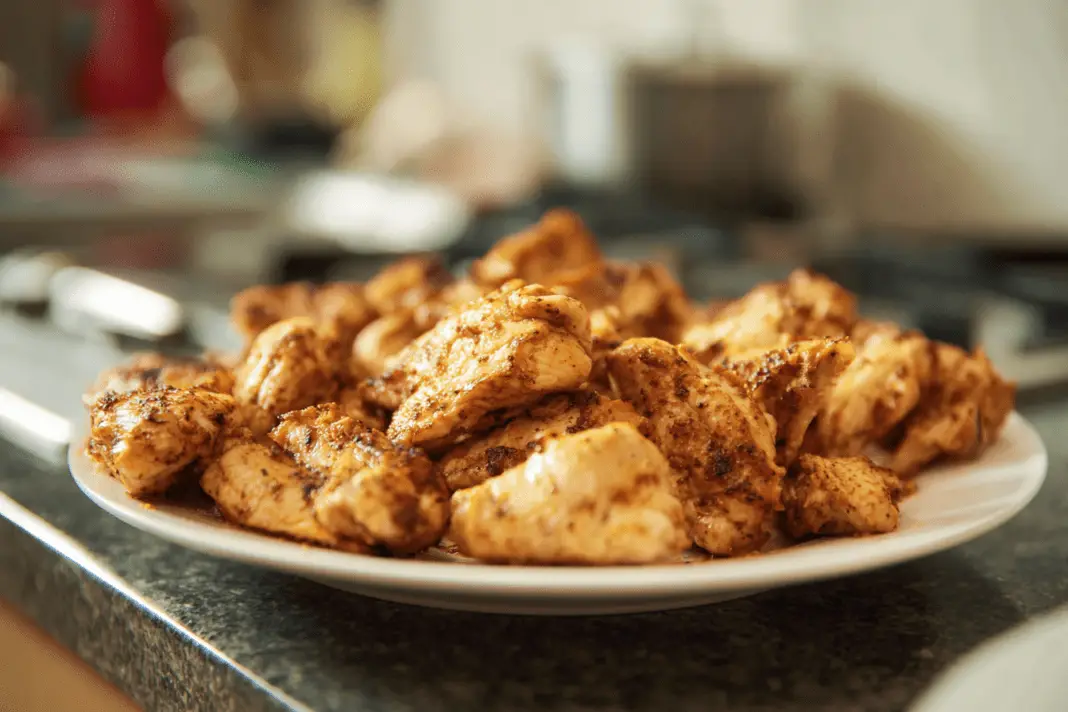
There’s nothing more disappointing than spending time on dinner only to slice into chicken that’s drier than cardboard. I mean, you followed the recipe, you set the timer, and somehow it still turned into something you need a glass of water to choke down. But here’s the thing—dry chicken isn’t just bad luck. It’s basically science working against you, and once you understand what’s happening, you can actually fix it.
Your chicken’s structure is the problem
When you’re cooking chicken, you’re fighting against the bird’s natural makeup. Chicken breast especially doesn’t have much fat in the muscle fibers. And fat is what keeps meat moist during cooking—it melts and creates moisture from the inside out. Without that built-in protection, chicken breast is already at a disadvantage before you even turn on the stove.
The muscle fibers themselves are the real culprit though. As chicken heats up, these fibers contract and squeeze out juice like you’re wringing out a wet towel. Honestly, it’s happening on a cellular level with thousands of tiny muscle fibers all tightening at once. No wonder your chicken ends up dry.
You’re cooking it at the wrong temperature
After trying different methods over the years, I’ve noticed that temperature is where most people mess up. And it’s not just about cooking it too long—it’s about cooking it too hot. When you blast chicken at high heat, those muscle fibers contract super fast, forcing out moisture before the meat even finishes cooking. But if you go too low and slow, the fibers break down into a mushy, dry texture that’s somehow worse.
The sweet spot is around 165 degrees Fahrenheit for safety, but here’s what changed everything for me—pulling it off heat at 155-160°F. The chicken keeps cooking from residual heat even after you remove it from the pan. It’ll hit that safe temperature while resting. And the texture is so much better.
You need a thermometer, period
How are you supposed to know when chicken hits that perfect temperature? You can’t just guess. The last time I tried eyeballing it, I ended up with chicken that was raw in the middle because I was so worried about overcooking it. A decent digital thermometer costs like thirty bucks and it’s pretty much the most valuable tool you’ll own. Way more useful than that fancy knife set collecting dust.
Just probe the thickest part of the breast and pull it when it reads 155-160°F. Done. No more slicing into it to check and losing all those juices onto the cutting board.
Resting isn’t optional
Here’s something nobody talks about enough—resting your chicken after cooking. I mean, you just spent all this effort keeping it moist, and then you slice into it immediately? All those juices you worked so hard to keep inside just run out onto the plate. Total waste.
When chicken rests for 10-20 minutes depending on size, the muscle fibers relax. They gradually reabsorb some of the moisture that got squeezed out during cooking. It’s basically letting the chicken calm down after its time in the oven. And yeah, it’s annoying to wait when you’re hungry, but the difference is huge. The chicken stays juicy instead of turning your plate into a puddle.
Lower your oven temperature way down
Most recipes tell you to roast chicken at 375°F or even 425°F for crispy skin. But that high heat shrinks the proteins super fast, squeezing out moisture before the chicken’s even done. A better approach? Cook at 225°F instead. Yeah, it takes longer. But the gentle heat means the chicken loses way less moisture as it cooks.
The chicken still gets done, it just does it slowly without that aggressive squeezing action happening to the muscle fibers. Every time I’ve used this method, the texture is noticeably more tender. Does it brown as much? Not really, but you can always crank the heat for the last few minutes if you want some color on top.
Brining actually works
I was skeptical about brining for years because it seemed like extra work. Turns out it’s one of the easiest ways to keep chicken moist. You’re basically soaking the meat in saltwater before cooking, and the salt helps the chicken hold onto moisture during the cooking process. It’s not magic—it’s just science working in your favor for once.
A simple brine is just water and salt, though you can add herbs and spices if you want. Let the chicken sit in it for at least an hour, or overnight if you’re planning ahead. The difference in juiciness is pretty obvious. And honestly, it’s worth the minimal effort.
Keep the skin on while cooking
Even if you don’t eat chicken skin, cook with it on. The skin acts like a natural barrier that locks in moisture and keeps the meat underneath from drying out. Plus it crisps up nicely and adds flavor even if you remove it before eating. Why would you throw away that protection before cooking? It doesn’t make sense.
You can always peel it off after the chicken’s done if you’re avoiding the fat. But while it’s cooking, that skin is doing important work keeping your chicken from turning into shoe leather.
Pound it to even thickness
Chicken breasts are annoyingly shaped—thick on one end, thin on the other. So when you cook them, the thin end overcooks and dries out while the thick end is still trying to reach temperature. Basically you can’t win. Unless you pound the breast to an even thickness before cooking.
Put the chicken between plastic wrap and use a meat mallet or even a heavy pan to flatten it out. Aim for about the same thickness throughout. Now the whole piece cooks at the same rate and you don’t end up with dry edges and an undercooked center. Problem solved.
Basting helps more than you think
If you’re roasting chicken, baste it every 15-20 minutes with pan juices, broth, or even wine. Think of it as a hydration station for your chicken—you’re constantly adding moisture back to the surface so it doesn’t dry out. And the flavor from whatever liquid you’re using seeps into the meat.
Yeah, it means opening the oven more often which technically increases cooking time. But the tradeoff is worth it. The chicken stays moist on the outside which helps the inside stay juicy too. At least that’s been my experience with it.
Dry chicken doesn’t have to be your default anymore. Once you control temperature with a thermometer, let it rest properly, and maybe try one or two of these other techniques, you’ll actually get tender, juicy chicken. And honestly? It’s not even that hard once you know what you’re doing wrong. The science is working against you, but now you know how to work with it instead.
